To say that GPL licenses are in decline, is inaccurate stateement, as
there is every year more and more GPL software.
So it definitely do not decline. The thread subject is inaccurate.

If there are more and more packages with GPL licenses in all the
GNU/Linux distributions, and others, that does not speak of any
decline, it speaks of growth.

Just last week, several software have been published as GPL.

Measuring statistics of improvement or growth or decline, would need
to have number or the value per each year or period of time, and then
such has to be compared to each other.

If there is no such number anywhere registered, there is no
mathematical reason to say it is in decline. I can see more and more
packages published, more and more software.

The other issue is comparison to other licenses. That cannot speak of
decline or growth, as measuring proportions to others is only that,
proportions, not growth, not decline.

Every year there can be more and more GPL software, like 10, 20, 30,
40 but other types of licenses could be larger in number, that does
not mean that GPL number of licenses are in decline. They are in
growth trend.

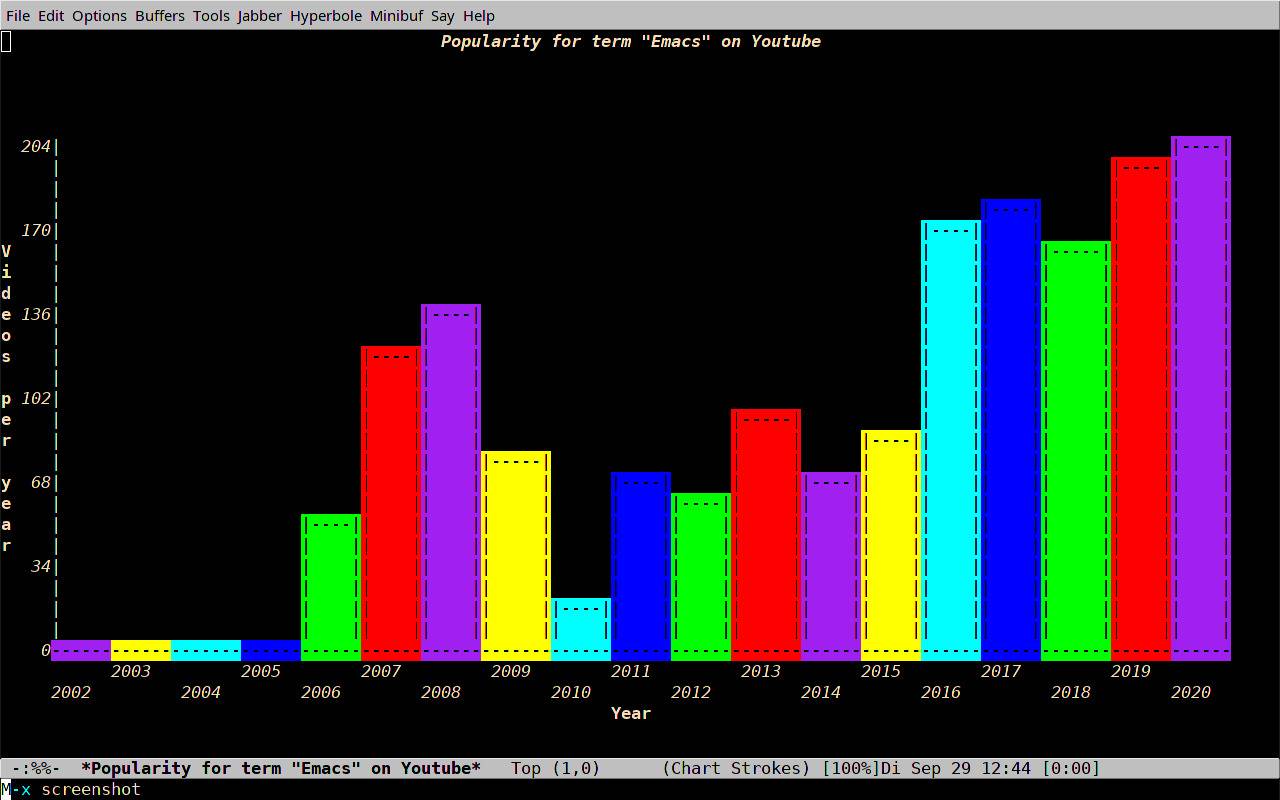
I have represented the YouTube count for term Emacs year by year on
emacs-devel list, so there is file that clearly shows similar
statistics of popularity of Emacs, while somebody was claiming that
Emacs popularity is declining, only because that person wanted to say
that proportion related to other editors changed.

See:
https://lists.gnu.org/archive/html/emacs-devel/2020-09/msg02177.html

and the graph of statistics:
https://lists.gnu.org/archive/html/emacs-devel/2020-09/jpg4ro5Zg8XQQ.jpg

This thread subject is misleading people.

Jean

_______________________________________________
libreplanet-discuss mailing list
[email protected]
https://lists.libreplanet.org/mailman/listinfo/libreplanet-discuss