If you enjoyed this article about R.D. Donaldson, you can find many others
like it in the Lincoln Squirrel. Just go to the home page at
www.lincolnsquirrel.com and select "history" under the Categories dropdown
in the left hand column. That will give you all stories having to do with
Lincoln history (those by the Lincoln Historical Society as well as
others). Here's the direct link:
https://lincolnsquirrel.com/blog/category/history/


Alice Waugh

Editor, The Lincoln Squirrel <https://www.lincolnsquirrel.com> and The
Lincoln Chipmunk <http://chipmunk.lincolnsquirrel.com>

[email protected]

617-710-5542 (mobile)


On Mon, Jul 19, 2021 at 2:53 PM Lincoln Historical Society <
[email protected]> wrote:

> … that one of Lincoln’s foremost builders started with house plans from a
> Sears Roebuck catalog?
>
> Robert Douglass Donaldson was born in Tatamagouche, Nova Scotia, in 1870.
> He migrated to Boston in 1888. Like many immigrants, he came without formal
> schooling past the eighth grade, but with farming and building experience,
> family and community values, and motivation.
>
> In the banner year of 1900, he married Charlotte Alcock, daughter of Irish
> immigrants, and became a U.S. citizen. In 1902, the couple acquired the
> house at 7 Old Lexington Rd., the original part of which was completed by
> the town in 1786 as the poorhouse. At the time, Lincoln was a farm town
> with a scattering of rural estates and summer homes, sufficiently close to
> Boston for farmers to take their produce to market and for Bostonians to
> escape via road or railroad for fresh air.
>
> The Donaldsons quickly got busy raising a family (four boys and two
> girls), expanding a contracting business, farming, and engaging in civic
> activities. To his kids and grandkids as well as employees, R.D. Donaldson
> was well known as “the boss.” The well-kept secret was that his bride,
> Charlotte, was at least the co-boss, with her bookkeeping and communication
> skills. Other Nova Scotians from his home community migrated to Lincoln for
> work with Donaldson, including his brother James and the Langilles, Isaac
> and Claire.
>
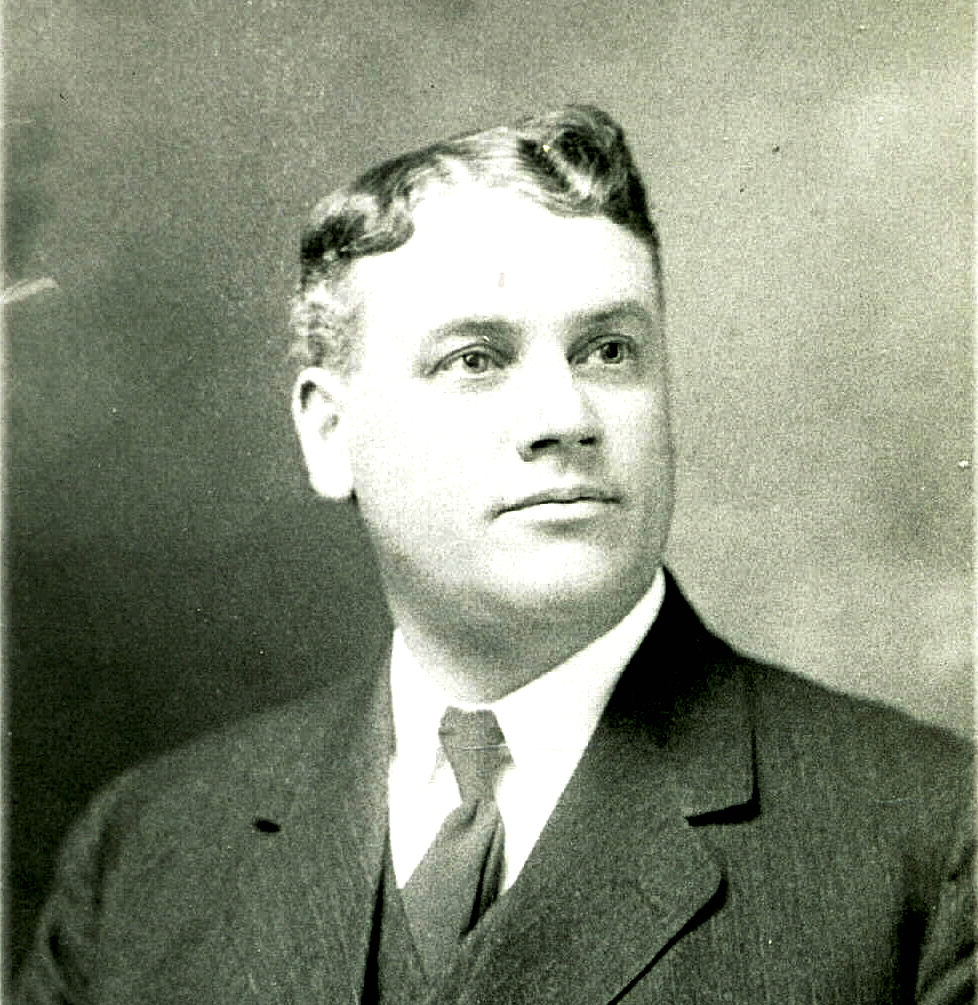
> <https://lincolnsquirrel.com/wp-content/uploads/2021/07/RD-Donaldson-photo.jpg>
> R.D. Donaldson at the age of about 40 (ca. 1910).
>
> Donaldson served as a Selectman from 1913-1939 and on the Board of Health
> and the Cemetery Commission. The Lincoln chestnut tree on Lincoln Common,
> included on the town seal, was salvaged by Donaldson after it succumbed to
> the chestnut blight. He milled and stored the boards, some of which now
> line the conference room at Town Office Building. By 1942, he was a leader
> of the Congregational Stone Church on Bedford Road when it merged with the
> Unitarian Church to form the consolidated First Parish, sealing the deal by
> handshake with Dr. Robert L. DeNormandie. The Donaldsons’ Glendale Dairy of
> Guernsey cows functioned until 1947 on land at 16 Weston Rd. acquired from
> John H. Pierce.
>
> Donaldson constructed his first house in Lincoln in 1895 at 27 Tower Rd.,
> using plans bought from the Sears Roebuck catalogue. His later projects
> included moving the Old Town Hall from its adopted site beside the
> Unitarian white church to its current location on Lincoln Road across from
> the Town Office Building. Because it was in use as a general store and post
> office, the Old Town Hall was kept open during its ride on rollers to the
> new site. The Center School (now the Town Office Building) was completed by
> Donaldson in 1908.
>
> Scattered along the south side of Trapelo Road are many houses displaying
> Donaldson’s craft, including one that was cut off from a piece of a house
> on Weston Road and rolled across the field. More than 90 Lincoln buildings
> were constructed or altered by Donaldson, including the Farrington
> Memorial, the current Massachusetts Audubon headquarters, and the
> Storrow/Carroll School.
>
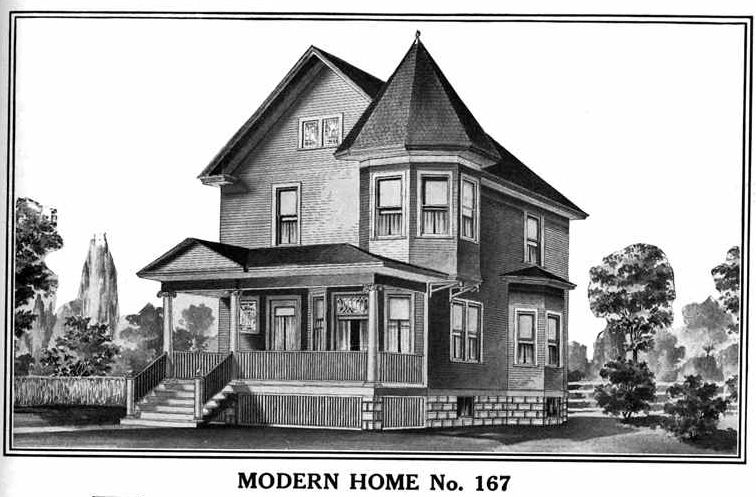
> <https://lincolnsquirrel.com/wp-content/uploads/2021/07/Sears-Roebuck-Catalog-Home-1912.jpg>
> An image from a 1912 Sears Roebuck catalog of a complete home via mail
> order. This model resembles one of the R.D. Donaldson houses still standing
> in Lincoln. Sears sold this house — blueprints and all building materials
> delivered to the site — for $753.
>
> R.D. Donaldson placed a distinctive mark on the town’s architecture. Rob
> Loud has described the style as “vernacular.” A unique feature of the style
> is a sleeping porch, examples of which are evident at 3 Pierce Hill, 1 Old
> Lexington Rd., and 27 Lexington Rd.
>
> Robert and Charlotte’s kids also placed their mark on the town. Three of
> the four Donaldson boys played baseball in school and college and were
> members of the Lincoln Mohawks, coached at one time by Robert. All six
> offspring were put through college in pursuit of careers in business, law,
> medicine, hospital care, and resort hospitality. During the 1950s and ’60s,
> they all lived at one time or another in Lincoln Center’s “Fertile Valley
> <https://lincolnsquirrel.com/blog/2021/03/17/recalling-lincolns-fertile-valley-era/>”
> neighborhood with families totaling 11 grandchildren. The original
> Donaldson house in Lincoln is now occupied by one such grandson, with
> another grandson and three great-grandchildren still currently in town.
>
> Robert Douglass Donaldson, builder of Lincoln, died in 1964.
>
>
>
> Craig Donaldson
> Lincoln Historical Society
> --
> The LincolnTalk mailing list.
> To post, send mail to [email protected].
> Search the archives at http://lincoln.2330058.n4.nabble.com/.
> Browse the archives at https://pairlist9.pair.net/mailman/private/lincoln/
> .
> Change your subscription settings at
> https://pairlist9.pair.net/mailman/listinfo/lincoln.
>
>
--
The LincolnTalk mailing list.
To post, send mail to [email protected].
Search the archives at http://lincoln.2330058.n4.nabble.com/.
Browse the archives at https://pairlist9.pair.net/mailman/private/lincoln/.
Change your subscription settings at
https://pairlist9.pair.net/mailman/listinfo/lincoln.