"Vpp is below Vpp"? Not sure what you meant there?

And "And chip pin 27 pulled to VCC"? ; Since you're talking about Vpp in
this post I think you're confusing /PGM (27) with Vpp.(1)?
We're not programming, so Vpp should indeed be at Vcc and normally /PGM
should indeed be pulled high.

To enable the data outputs to read, /CE and /OE should be low, and /PGM
high, which is what you want. /OE *high* and /PGM low turns the data lines
into inputs, i.e. disables output..

I'm just curious what happens when /OE is *low* and /PGM is also low, which
we want to disable the outputs. I expect /OE will enable the outputs
regardless of /PGM, but if by chance /PGM also turns the data line into
inputs then that'd be what you want (i.e. /PGM  = active-high CE)

Just wasting bandwidth with idle speculation... ;-)

m


On Mon, Nov 14, 2022 at 9:12 AM Brian White <[email protected]> wrote:

> The datasheet says to rest vpp at vcc. Most do, even if elsewhere they
> also say that writing is disabled as long as vpp is below vpp and the only
> low limit is pretty much the same as for any other pin, like 0.5 or 0.7
> below vcc.
>
> I never saw a reason why, but it's definitely a consistent suggestion in
> datasheets to hold vpp at vcc rather than gnd.
>
> Maybe holding it at gnd wastes a little power or stresses a gate somewhere
> through reverse leakage and vcc is closer to where that gate is when
> running. So, it may still be true that any voltage from gnd to vcc is legal
> and functional, yet one is still better than the other.
>
>
> bkw
>
> On Mon, Nov 14, 2022, 12:19 AM Mike Stein <[email protected]> wrote:
>
>> Too bad I don't have a 200; you're probably right but since it's not
>> clearly defined in the data sheet I'll have to dig out one of my other
>> systems using a 2764 and check it for myself ;-)
>>
>> But I have to ask: why pull pin 27 to Vcc? What happens if you pull it
>> low?
>>
>> On Sun, Nov 13, 2022 at 9:06 PM Brian K. White <[email protected]>
>> wrote:
>>
>>> 27C64 can't be used as-is.
>>> pin 27 is A15 and needs to needs to go to a non-existing 2nd OE or CE.
>>>
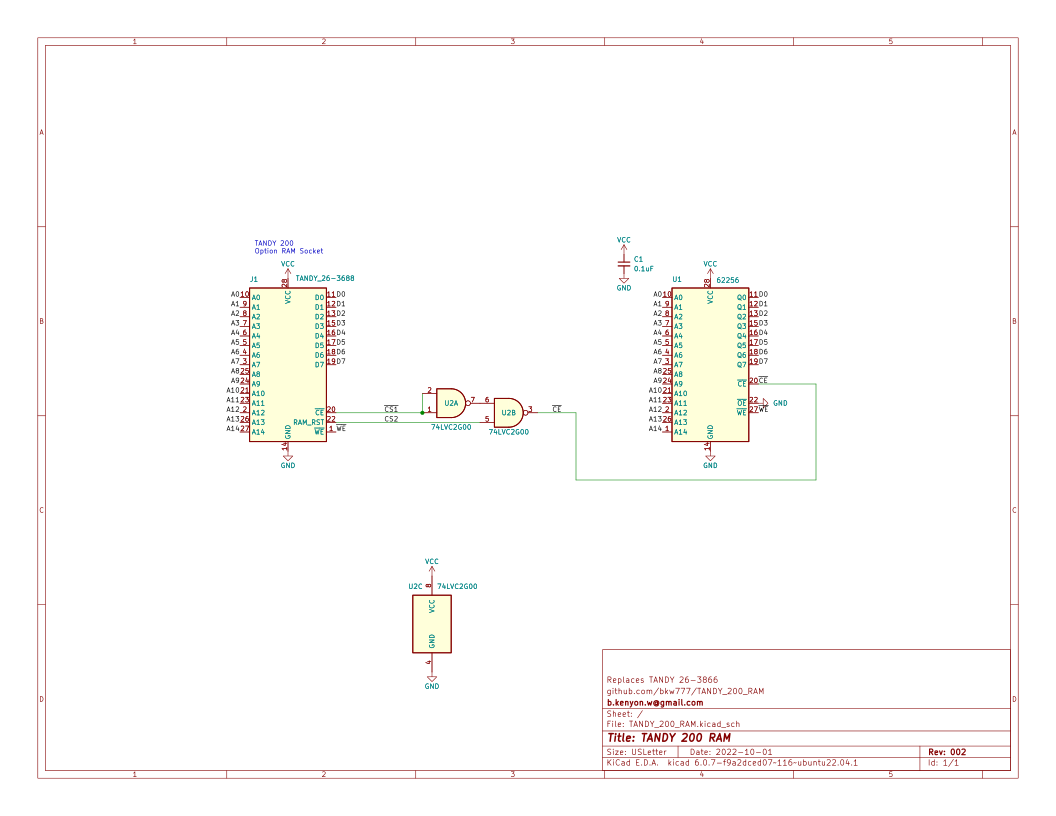
>>> You'd need an adapter board that combines pin 27 (A15) from the socket,
>>> with pin 22 /CE0 (/BANK#1) from the socket, to produce a single /CE to
>>> pin 22 of the chip.
>>>
>>> You could do that with a single 2-gate NAND part the same as in this
>>> model 200 RAM
>>> https://github.com/bkw777/TANDY_200_RAM#single-bank---sop
>>>
>>> https://raw.githubusercontent.com/bkw777/TANDY_200_RAM/main/TANDY_200_RAM.svg
>>>
>>> That is using one nand gate just to invert /CS1 to CS1,
>>> then ANDing those to make a single CS, and inverting that to make a
>>> single /CS output to the chip's /CE
>>>
>>> The point is getting the job done with only 2 gates of the same type so
>>> it's all from a single part.
>>> They even make little 8-leg parts with just the 2 needed gates.
>>>
>>> For 27C64 you'd need to do that with /CE0 from bus pin 22 and CE1 from
>>> bus pin 27, to produce a single /OE to chip pin 22. And chip pin 27
>>> pulled to VCC by anything from 100k to a plain trace. All other pins
>>> including /CS would go 1:1 socket to chip.
>>>
>>>
>>> On 11/13/22 19:38, Mike Stein wrote:
>>> > Duh; shoulda looked more carefully; it really IS A15 (not A13) and it
>>> > goes to /CE1 (or CE1); double duh! Thanks, Brian.
>>> >
>>> > So it looks like the only non-standard pin is pin 27, since 26 is not
>>> > used. Has anyone actually tried a JEDEC standard  27C64?
>>> >
>>> > Pin 27 is the Program pin which looks like it might effectively be an
>>> > active high OE (since there is no program voltage.
>>> >
>>> > m
>>> >
>>> >
>>> >
>>> > On Sun, Nov 13, 2022 at 5:27 PM Brian White <[email protected]
>>> > <mailto:[email protected]>> wrote:
>>> >
>>> >     8k.
>>> >
>>> >     HN61364 = 8k
>>> >     A15 is connected to a chip select to enable/disable the whole chip
>>> >     (really just output enable not chip enable despite the /CEx
>>> labels),
>>> >     and the actual address lines are only A0-A12
>>> >
>>> >     It's mostly like 27C64 but with 3 OE lines, customer programmable
>>> to
>>> >     be either active high or low as part of the mask programming.
>>> >     Although the schematic labels them as /CE0 /CE1 /CE2, really they
>>> >     are all OE not CE, and it appears that /CE1 should be shown as
>>> >     active-high, so really: /OE0, OE1, /OE2 , and /CS is a normal
>>> actual
>>> >     whole chip enable, active low.
>>> >
>>> >     I was just now in the middle of drawing up an adapter for that chip
>>> >     like FlexROM_102 but for that chip, to facilitate using the main
>>> rom
>>> >     replacement feature of REX Classic in a 200 the way I have already
>>> >     for 100 and 102.
>>> >
>>> >     But it may be simpler to make a different kind of adapter that
>>> >     replaces both chips with a single larger chip on a single adapter
>>> in
>>> >     the main rom socket and simply remove the 8k chip. The /BANK1 line
>>> >     goes to both chips the same, and A15 ends up activating one or the
>>> >     other exclusively at any given moment.
>>> >
>>> >     bkw
>>> >
>>> >     On Sun, Nov 13, 2022, 4:48 PM Mike Stein <[email protected]
>>> >     <mailto:[email protected]>> wrote:
>>> >
>>> >         Looking at the schematic, are you sure it's 8K and not 16
>>> (27x128)?
>>> >
>>> >         Looks standard except for pins 26 & 27
>>> >
>>> >         On Sun, Nov 13, 2022 at 4:23 PM Stephen Adolph
>>> >         <[email protected] <mailto:[email protected]>> wrote:
>>> >
>>> >             Georg,
>>> >             What type of ROM chips did you use, when you replaced your
>>> >             ROMs with patched versions?
>>> >             I've been pondering what the simplest way to do that is.
>>> >             The 8K M13 socket is wired oddly, and doesnt seem
>>> compatible
>>> >             with a 27C64.
>>> >             thx
>>> >             Steve
>>> >
>>> >             On Sun, Nov 13, 2022 at 12:30 PM Georg Käter
>>> >             <[email protected]
>>> >             <mailto:[email protected]>> wrote:
>>> >
>>> >                 Hello together,
>>> >
>>> >                 I own a M200 "German/EU Version" (Art.Nr. 26-3860H)
>>> >                 w/modem, for German market it was delivered with set of
>>> >                 keyboard
>>> >
>>> >                 caps and a data tape including driver for keyboard and
>>> >                 printer. I tried this in VirtualT and it seems to work
>>> >                 so far. To run REX
>>> >
>>> >                 on my M200 I replaced original ROM by ROM from VirtualT
>>> >                 patched to serve german keyboard mapping.
>>> >
>>> >                 For your reference I´ve added original ROM files and
>>> >                 files from tape for your reference.
>>> >
>>> >                 Regards
>>> >
>>> >                 Georg
>>> >
>>> >
>>> >                 Georg Käter
>>> >                 Gangolfsweg 44
>>> >                 D-52076 Aachen
>>> >                 Tel.        : +49  2408 7194987
>>> >                 Fax.        : +49  2408 7196758
>>> >                 Mobil    : +49  171 4839954
>>> >                 E-Mail   :
>>> >
>>> >                 [email protected]
>>> >                 <mailto:[email protected]>
>>> >
>>> >                 ========== Ihre Nachricht
>>> >                 ==========================================
>>> >
>>> >                 *von*      : Cedric Amand <[email protected]
>>> >                 <mailto:[email protected]>>
>>> >                 *gesendet* : Sonntag, 13. November 2022, 15:37
>>> >                 *an*       : [email protected]
>>> >                 <mailto:[email protected]>
>>> >                 *Betreff*  : [M100] custom key mapping generator for
>>> >                 Tandy 200
>>> >
>>> >                 __________ Originalnachricht
>>> >                 _______________________________________
>>> >
>>> >                     My point exactly Brian !
>>> >                     How did they come up with that idea ? It makes no
>>> >                     sense. It really prevents you from using the option
>>> >                     rom socket.
>>> >                     The docs does not talk about removing it.
>>> >                     And even if you could remove it ; the installation
>>> >                     procedure of that ROM is not easy at all, requires
>>> >                     to type two "calls" with the freaking keyboard
>>> inverted.
>>> >                     OK - us nerds 40 years later can do it easily, just
>>> >                     type "CQLL", but imagine explaining that to a
>>> random
>>> >                     journalist in 1984 ?!
>>> >                     Especially as the french doc (which I happen to
>>> >                     have) says to type "CALL" not CQLL.
>>> >                     I also wonder if other markets are affected by this
>>> >                     plague,
>>> >                     If anyone here lives in germany and owns a qwertz
>>> >                     (or other keyboard variant) of the M200 : do you
>>> >                     have a "stock option ROM" as well ?
>>> >                     I also wish to thank Stephen publicly for the time
>>> >                     he invested into helping me, as indeed, you can't
>>> >                     use an option ROM (and even less a REX#) in those
>>> >                     non-qwerty  M200s, and I think this research might
>>> >                     help some other people at some stage (this hobby is
>>> >                     booming right ? :) )
>>> >                     We're (and I am) in the process of replacing the
>>> >                     main rom + 8KB rom with a 27C512 flashed with a
>>> >                     custom "native Azerty" firmware
>>> >                     Which should free up to option socket, for a REX#
>>> >                     I also plan to make other modifications to that
>>> >                     custom ROM, but we'll see if I get there.
>>> >                     I've also been experimenting in the past with
>>> custom
>>> >                     firmware for the my M102 for different reasons.
>>> >                     I'm a "modem" nerd and I have all the equipment
>>> >                     (PABX, etc) to make voice calls between my vintage
>>> >                     laptops - so it's important for me to have my
>>> modems
>>> >                     work. This required a custom firmware to make my
>>> >                     M102 work, with modem, with a REX#. ( OK I think
>>> >                     this kind of stuff is only relevant to me this time
>>> >                     :) :)
>>> >                     Le 2022-11-13 14:53, Brian White
>>> >                     <[email protected] <mailto:[email protected]
>>> >>
>>> >                     a écrit :
>>> >
>>> >                         Nice.
>>> >                         So the point would be to make the main rom
>>> >                         natively azerty to match the hardware, free up
>>> >                         the option rom slot for normal use, without
>>> >                         otherwise changing the main rom so that it
>>> >                         becomes incompatible with application software?
>>> >                         I guess you might even be able to make a dvorak
>>> >                         version and move the keycaps around?
>>> >                         I'm just trying to imagine the sales pitch for
>>> >                         that azerty 200 that needs the option rom, thus
>>> >                         preventing the use of any other option rom (or
>>> >                         at least making it pretty inconvenient by
>>> having
>>> >                         to swap them on every reset I guess?)
>>> >                         "Here's your new model 200. It's only half as
>>> >                         useful as others with no modem and no option
>>> rom
>>> >                         but you can still pay full price please."
>>> >                         --
>>> >                         bkw
>>> >
>>> >                         On Sun, Nov 13, 2022, 8:28 AM Stephen Adolph
>>> >                         <[email protected]
>>> >                         <mailto:[email protected]>> wrote:
>>> >
>>> >                             hi folks,
>>> >                             Thought I would share this work.  It is a
>>> >                             spreadsheet for computing the keyboard
>>> table
>>> >                             in the T200 so you can make native custom
>>> >                             keyboards for T200.
>>> >                             Why?
>>> >                             The AZERTY keyboard in Europe was
>>> >                             accommodated using an option ROM that kinda
>>> >                             hacked the keyboard.  Keystrokes get
>>> >                             intercepted and corrected to be AZERTY even
>>> >                             though the main ROM is set up for QWERTY.
>>> >                             An alternative is to have the main rom
>>> >                             directly support AZERTY.
>>> >                             To do this, there are 6 keyboard mapping
>>> >                             tables that start at 9763h.  Each table are
>>> >                             44 bytes long.
>>> >                             This spreadsheet lets you assign the ascii
>>> >                             codes for each of the 44 affected keys, for
>>> >                             all 6 tables. (unshifted, shifted, GRAPH,
>>> >                             shift GRAPH, CODE, Shift CODE).
>>> >                             It is an excel spreadsheet that included
>>> the
>>> >                             analysis add it so that certain needed
>>> >                             functions are present.
>>> >                             Once you make the correct keyboard mapping,
>>> >                             the spreadsheet provides the 6x44 bytes in
>>> >                             assembly compatible form, so you can
>>> compile
>>> >                             and patch the tables with a hex editor.
>>> >                             This approach could be used for other
>>> >                             machines also.
>>> >                             Note - the AZERTY keyboard did NOT modify
>>> >                             the actual character set, so that is out of
>>> >                             scope.  Of course it is possible to patch
>>> >                             the main ROM to change the bitmaps as
>>> well.
>>> >                             Not handled by this spreadsheet.
>>> >                             Comments welcome.
>>> >                             Steve
>>> >
>>> >
>>> >
>>> >                 __________ Ende Originalnachricht
>>> >                 __________________________________
>>> >
>>> >                 *Vertraulichkeitsinformation:
>>> >                 *Diese Nachricht ist vertraulich. Die Informationen
>>> >                 dieser Nachricht sind ausschließlich für die
>>> persönliche
>>> >                 und vertrauliche Verwendung durch den/die oben
>>> genannten
>>> >                 Empfänger bestimmt. Wenn Sie kein beabsichtigter
>>> >                 Empfänger sind, bitte lesen, kopieren und verwenden Sie
>>> >                 die Nachricht nicht. Machen Sie sie nicht anderen
>>> >                 zugänglich. Bitte informieren Sie uns umgehend über den
>>> >                 Zustellfehler und senden Sie die Originalnachricht
>>> >                 per E-Mail an uns zurück.
>>> >
>>> >                 *Confidentiality Notice:
>>> >                 *This message is confidential. The information
>>> contained
>>> >                 in this message is intended only for the personal
>>> >                 and confidential use of the recipient(s) named above.
>>> If
>>> >                 you are not the intended recipient, please do not
>>> >                 read, copy, or use it and do not disclose it to others.
>>> >                 Please inform us immediately of the delivery error
>>> >                 and return the original message to us via e-mail.
>>> >
>>>
>>> --
>>> bkw
>>>
>>>