On Mon, Mar 23, 2009 at 12:47 AM, Ryan Schmidt <[email protected]>wrote:
>
> On Mar 22, 2009, at 13:19, Darren Weber wrote:
>
>  On balance, I'm both impressed and disappointed with the complexity of the
>> macports system to date.  For example, dependency resolution needs a lot of
>> work during upgrades, binary distributions are a great idea in the making
>> (perhaps forever in the making), and the whole issue of dependency on
>> variants is a massive conference debate.  I've certainly come across these
>> issues and tried to submit reasonable trac suggestions for enhancements,
>> etc. on a couple of ports.  My main issue seems to be in getting a few ports
>> with a lot of dependencies to cooperate, esp. with regard to variants (eg,
>> Qt, Postgresql, MySQL, VTK, etc.).  I do think that package maintainers
>> should think very carefully about their default variants and try to provide
>> as many options as possible - that seems to be the way with Debian packages.
>>
>
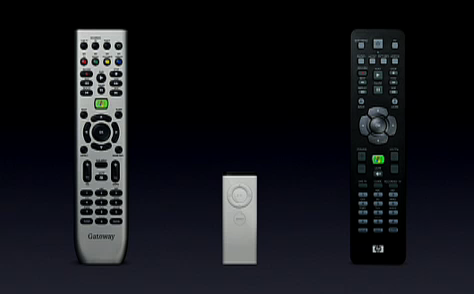
> Mac OS X is not Debian. The Mac way is to provide not as many options as
> possible, but as few options as possible. Meet the needs of most of the
> users with the default setup, and provide a few options for everyone else.
>
> As a consumer, I do not enjoy having to select amongst 37 different types
> of toothpaste at the grocery store. More choices is not always better.
>
> http://www.cafeaulait.org/images/remotes.png
>
>

Well, most of the free software in macports is not programmed for OSX.  It's
mostly c and c++ programs that are designed for BSD or GNU/Linux (and other
free operating systems).  I think it is wise to learn from the lessons of
those operating systems and distributions (eg, BSD, Debian, etc.).  Although
I too appreciate Apple design principles and I do enjoy learning more about
the OSX platform, I do think that the majority of packages in macports were
designed decades before Apple jumped onto BSD, so those different design
fundamentals have been tried and tested and I think macports does and should
respect that.  Hence, when I look at a Portfile, I also take a little time
to check out darwinports and Debian packages to learn something about how
these software are built and distributed.

Let's not forget that Apple is now a big player in major packages used in
the free software system.  Apple contribute to GCC and I think they now own
CUPS (http://www.cups.org/).  I think congratulations to Apple (NeXTStep)
for making a wise move to a solid platform and moving forward with the
open-source community (OpenStep, etc.).  OSX is very interesting combination
of free software and licenced layers on top.  For the most part, we interact
with the licenced layers without seeing the foundations, but please never
forget that those foundations have all the design features that support
everything on OSX.  I assume many of those same foundations are a part of
just about every free operating system that has a *nix flavour to it.

Take care, Darren

PS,  As for plug and play, my experience with Debian (incl. Ubuntu) is just
that; plug and play (for the most part).  The entire system is designed,
built, and *tested* from the ground up, and it's all free software.  Package
dependency and conflict resolution is usually right-on and the binary
distros install fast.  The system even cleans up older packages that are no
longer required.  I assume all of this is why fink opted to bring that
distribution system onto OSX.  If your curious and you've never read it,
please do take a look at the basics of Debian package management:
http://www.debian.org/doc/FAQ/ch-pkg_basics.en.html
_______________________________________________
macports-users mailing list
[email protected]
http://lists.macosforge.org/mailman/listinfo.cgi/macports-users