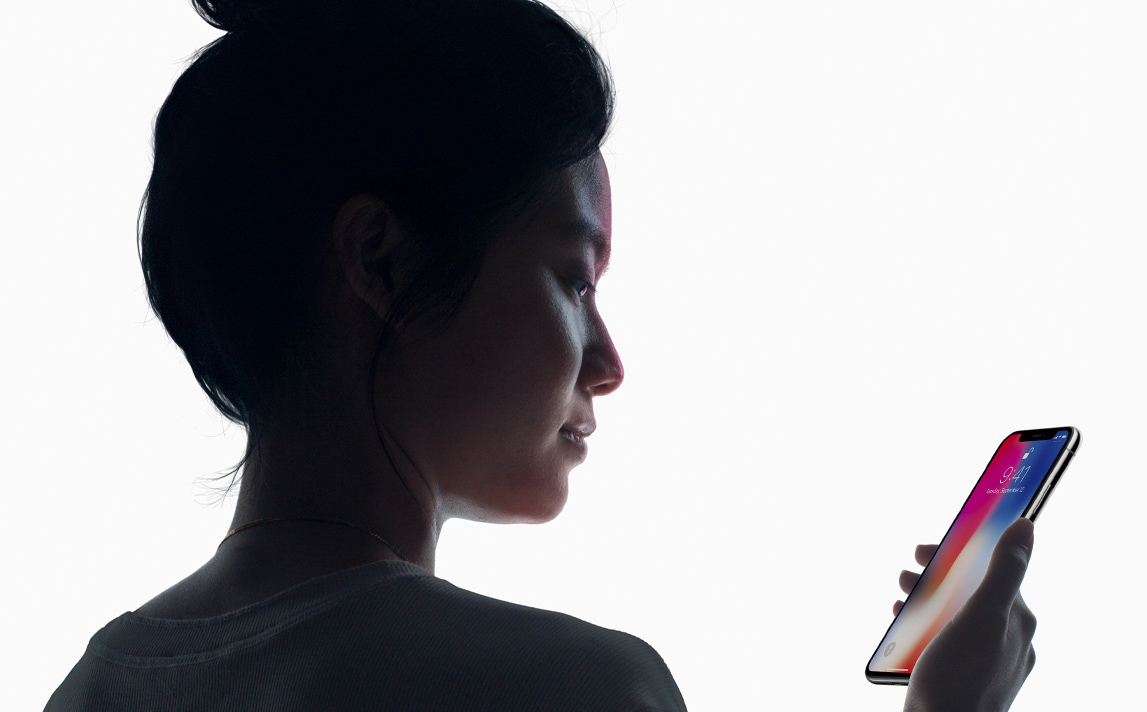
Interesting,

Samsung have a full screen no buttons face recognition and a finger print
sensor.

Why can’t apple do that also.
From: [email protected]
[mailto:[email protected]] On Behalf Of Mary Otten
Sent: Wednesday, 13 September 2017 3:40 PM
To: [email protected]; [email protected];
[email protected]
Subject: I’m worried that FaceID is going to suck—and here’s why


I’m worried that FaceID is going to suck—and here’s why
Ars Technica  /  Ron Amadeo

[Image removed by sender.]
Enlarge<https://cdn.arstechnica.net/wp-content/uploads/2017/09/10-1.jpg> /
This right here. This gesture. Doing this 80 times a day sucks.

The all-new iPhone
X<https://arstechnica.com/gadgets/2017/09/apples-radically-different-smartphone-is-called-the-iphone-x/>
is out, and it's packed with technology. But one thing it's not packed with
is a fingerprint sensor. Like many phones in 2017, the iPhone X goes for a
nearly all-screen design, which means there's no more room for a front Touch
ID sensor. Rather than locate a fingerprint sensor on the back, like many
phones have done, Apple chose to do away with Touch ID entirely. Instead,
the X is relying only on the new "Face ID" facial recognition feature for
biometric security.
Face ID on the iPhone X uses a "TrueDepth" camera setup, which blasts your
face with more than 30,000 infrared dots and scans your face in 3D. Apple
says this can "recognize you in an instant" and log you into your phone.

None of that matters. Face ID is still going to suck.

This is not the first phone we've tried with a facial recognition feature,
and they all have the same problem. It doesn't matter how fast or accurate
Face ID is, the problem is the ergonomics: you need to aim it at your face.
This is slow and awkward, especially when compared to a fingerprint reader,
which doesn't have to be aimed at anything.

Consider the "taking it out of your pocket" use case: If you're good, you'll
stick your hand in your pocket and grip the phone so your finger lands on
the fingerprint reader. Touch ID works as both an "on" button and an
"authentication" button. In one touch, you've turned on the phone and logged
in. You haven't even fully taken the phone out of your pocket yet, and it's
already on and unlocked. By the time you bring the phone to your face, the
unlock process is finished and you're looking at the home screen.

To use the iPhone X's Face ID, you have take the phone out of your pocket,
lift it up to your face, swipe up to turn it on, and only then can can you
start the unlock process. The difference is probably one or two seconds, but
for something you do 80 times a
day<https://techpinions.com/apples-penchant-for-consumer-security/45122>,
having the fastest possible unlock system really matters.
[Image removed by sender.]
Hardware involved in Apple's True Depth Camera system.
[Image removed by sender.]
Example of how Face ID maps and learns your face.
[Image removed by sender.]
Demo of Face ID setup.
[Image removed by sender.]
Animojis, which move to mimic your facial expressions.
[Image removed by sender.]
3D mask produced with facial recognition on the iPhone X.
[Image removed by sender.]
Face ID recognition along with a tap of the side button can authenticate
Apple Pay.

Consider authenticating with Apple Pay. With a fingerprint reader, you can
slam your iPhone on the credit card terminal while holding your finger on
the Touch ID button, and everything will just work. You're continuously
authenticating and beaming credit card data at the same time, which is easy,
intuitive, and hard to mess up. According to Craig Federighi's Face ID demo
during the keynote, you now have to open up Apple Pay first, then aim the
phone at your face so Face ID can work. Only then can you tap against the
credit card terminal. That's two extra steps.

A fingerprint sensor, because it works by touch, is basically active all the
time. Anytime you need it, you just press it, and it will work. Facial
recognition has to be specifically started by an app though. So to
authenticate a payment, you now have to open Apple Pay first, because
something has to tell the facial recognition system to turn on. If you
ignore this and just put the phone against a credit card terminal without
authenticating, I suspect Apple Pay will open and ask for a Face ID scan,
which won't work because the phone won't be aimed at your face.

There's also the "on a table" use case: where before you could just press
the home button to unlock the phone, now you'll need to pick it up and,
again, aim it at your face.
We've kind of already experienced this with the Galaxy
S8<https://arstechnica.com/gadgets/2017/04/samsung-galaxy-s8-review-shiny-new-hardware-meets-old-software-habits/>
(and Note
8<https://arstechnica.com/gadgets/2017/08/hands-on-with-the-galaxy-note8-havent-we-seen-this-before/>).
On that phone, Samsung didn't do away with the fingerprint sensor entirely,
but it has such an awkward size and
location<https://arstechnica.com/gadgets/2017/04/samsung-galaxy-s8-review-shiny-new-hardware-meets-old-software-habits/3/#h1>
that the S8 might as well have not had a fingerprint sensor at all. The
phone design asks users to rely on its Iris or face recognition for
biometrics, and it's just so slow. The "Let me take a selfie" pose that you
have to make every time you unlock the phone is slow, tiring, and annoying.
It requires a pause and a level of precision that just isn't needed with a
fingerprint reader.

I will admit I have not tried Face ID yet, but it's hard to imagine a facial
recognition system that solves the problem of having to carefully aim a
phone at your face. We won't get a chance to try many of these scenarios
until we get some extended time with the phone, but it would take some
serious magic to solve them.

With a nearly $1000 price tag, Apple is billing the iPhone X as its
super-high-end, no-compromise phone, but the lack of a fingerprint sensor is
going to be a big downside. Sure, there's no room on the front anymore, but
plenty of phones have an easy and ergonomic rear fingerprint reader, and
it's something Apple could have done while it waits for that mythical
under-screen fingerprint
technology<https://arstechnica.com/gadgets/2017/06/qualcomm-vivo-show-off-slow-but-convenient-under-display-fingerprint-sensor/>
to work.

Facial recognition is just not a good idea for a device that doesn't always
need to be aimed directly at your face. I can't imagine Face ID won't feel
like a big step backwards compared to Touch ID. If my experience with the
Galaxy S8 is anything to go by, I suspect a lot of users will just opt to
type in a PIN.


Original Article: https://arstechnica.com/?p=1164837


Sent from my iPhone
--
The following information is important for all members of the Mac
Visionaries list.

If you have any questions or concerns about the running of this list, or if
you feel that a member's post is inappropriate, please contact the owners or
moderators directly rather than posting on the list itself.

Your Mac Visionaries list moderator is Mark Taylor. You can reach mark at:
[email protected] and your owner is Cara Quinn - you
can reach Cara at [email protected]

The archives for this list can be searched at:
http://www.mail-archive.com/[email protected]/
---
You received this message because you are subscribed to the Google Groups
"MacVisionaries" group.
To unsubscribe from this group and stop receiving emails from it, send an
email to
[email protected]<mailto:[email protected]>.
To post to this group, send email to
[email protected]<mailto:[email protected]>.
Visit this group at https://groups.google.com/group/macvisionaries.
For more options, visit https://groups.google.com/d/optout.

--
The following information is important for all members of the Mac
Visionaries list.

If you have any questions or concerns about the running of this list, or if
you feel that a member's post is inappropriate, please contact the owners or
moderators directly rather than posting on the list itself.

Your Mac Visionaries list moderator is Mark Taylor.  You can reach mark at:
[email protected] and your owner is Cara Quinn - you
can reach Cara at [email protected]

The archives for this list can be searched at:
http://www.mail-archive.com/[email protected]/
---
You received this message because you are subscribed to the Google Groups
"MacVisionaries" group.
To unsubscribe from this group and stop receiving emails from it, send an
email to [email protected].
To post to this group, send email to [email protected].
Visit this group at https://groups.google.com/group/macvisionaries.
For more options, visit https://groups.google.com/d/optout.