Dear Colleagues,

On behalf of all co-authors, I am pleased to announce the publication of our
article about highly divergent herpesviruses in river dolphins from Brazil.
Exposto Novoselecki H, Catão-Dias JL, Ewbank AC, Navas-Suárez PE,
Duarte-Benvenuto A, Lial HC, Costa Silva S, Sánchez-Sarmiento AM, Gravena W, da
Silva VMF, Carvalho VL, Marmontel M, Bertozzi CP, Lanes Ribeiro V, Del Rio do
Valle R, Marigo J, das Neves CG, Esperón F, Sacristán C. Highly divergent
herpesviruses in threatened river dolphins from Brazil. Sci Rep. 2021 Dec
31;11(1):24528. doi: 10.1038/s41598-021-04059-0. PMID: 34972839; PMCID:
PMC8720088.

In this manuscript we surveyed the presence of herpesviruses by PCR in skin
and/or blood samples of live-captured Amazon (Inia geoffrensis, n = 25) and
Bolivian (Inia boliviensis, n = 22) river dolphins of the Amazon basin and in
selected tissue samples of franciscanas (Pontoporia blainvillei, n = 27)
stranded or bycaught in southeastern Brazil. Additionally, available
franciscana tissue samples were examined by histopathology. Herpesvirus DNA was
amplified in 13 Bolivian river dolphins (59.1%, 95% CI 38.5–79.6%) and 14
franciscanas (51.9%, 95% CI 33.0–70.7%). All Amazon river dolphins were
herpesvirus-negative. Two different herpesviruses were found in Bolivian river
dolphins: a previously known gammaherpesvirus detected in blood and/or skin
samples of all positive individuals and a novel alphaherpesvirus in the skin of
one animal. A new gammaherpesvirus was found in several franciscana samples—the
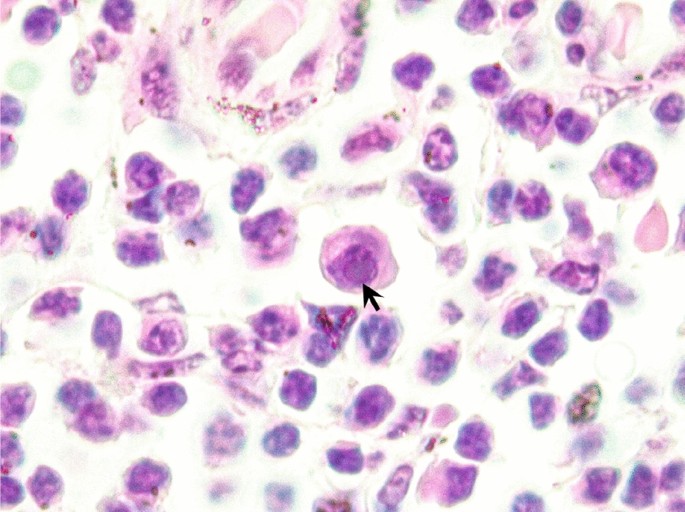
first herpesvirus recorded in Pontoporiidae. Intranuclear inclusion bodies
consistent with herpesvirus were observed in the lymph node of one franciscana.
The high divergence among the obtained herpesviruses and those previously
described can be explained by viral-host coevolution, and by the fact that
these populations are fairly isolated.


You can discover more in the link:


https://www.nature.com/articles/s41598-021-04059-0

[https://media.springernature.com/m685/springer-static/image/art%3A10.1038%2Fs41598-021-04059-0/MediaObjects/41598_2021_4059_Fig1_HTML.jpg]<https://www.nature.com/articles/s41598-021-04059-0>
Highly divergent herpesviruses in threatened river dolphins from Brazil |
Scientific Reports<https://www.nature.com/articles/s41598-021-04059-0>
Samples Family Iniidae. Samples of 47 Inia (39 males and eight females) were
collected in expeditions conducted in the Brazilian Amazon basin in 2015 and
2017 (Fig. 2).In February and December ...
www.nature.com


Best regards,

Carlos Sacristan

DVM, MSc, PhD
Laboratory of  Wildlife Comparative Pathology - LAPCOM
School of  Veterinary Medicine and Animal Sciences - FMVZ
University of São Paulo (Brazil)
https://www.researchgate.net/profile/Carlos_Sacristan/info
_______________________________________________
MARMAM mailing list
[email protected]
https://lists.uvic.ca/mailman/listinfo/marmam