Washington Post, August 15, 2020
<https://www.washingtonpost.com/news/posteverything/>
 Democrats can’t win until they recognize how bad Obama’s financial
 policies were


   He had opportunities to help the working class, and he passed them up.

Here's Obama's advice to the Democratic Party
President Obama shares his advice to Democrats following their defeat in
the 2016 election. (Reuters)
ByMatt Stoller
Matt Stoller is a fellow at the Open Markets Institute. He is writing a
book on monopoly power in the 20th century for Simon and Schuster.
Jan. 12, 2017 at 8:25 a.m. EST
Add to list
During his final news conference
<http://www.politico.com/story/2016/12/obama-press-conference-transcript-232763> of
2016, in mid-December, President Obama criticized Democratic efforts
during the election. “Where Democrats are characterized as coastal,
liberal, latte-sipping, you know, politically correct, out-of-touch
folks,” Obama said, “we have to be in those communities.” In fact, he
went on, being in those communities — “going to fish-fries and sitting
in VFW halls and talking to farmers” — is how, by his account, he became
president. It’s true that Obama is skilled at projecting a populist
image; he beat Hillary Clinton in Iowa in 2008, for instance, partly by
attacking agriculture monopolies <https://www2.gwu.edu/> .
But Obama can’t place the blame for Clinton’s poor performance purely on
her campaign. On the contrary, the past eight years of policymaking have
damaged Democrats at all levels. Recovering Democratic strength will
require the party’s leaders to come to terms with what it has become —
and the role Obama played in bringing it to this point.
Two key elements characterized the kind of domestic political economy
the administration pursued: The first was the foreclosure crisis and the
subsequent bank bailouts. The resulting policy framework of Tim
Geithner’s Treasury Department was, in effect, a wholesale attack on the
American home (the main store of middle-class wealth) in favor of
concentrated financial power. The second was the administration’s
pro-monopoly policies, which crushed the rural areas that in 2016 lost
voter turnout and swung to Donald Trump.
AD
Obama didn’t cause the financial panic, and he is only partially
responsible for the bailouts, as most of them were passed before he was
elected. But financial collapses, while bad for the country, are
opportunities for elected leaders to reorganize our culture. Franklin
Roosevelt took a frozen banking system and created the New Deal. Ronald
Reagan
<https://www.amazon.com/Right-Turn-Democrats-American-Politics/dp/0809001705>
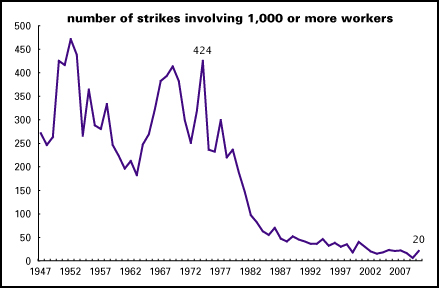
used the sharp recession of the early 1980s
<https://doughenwood.files.wordpress.com/2010/08/strikes.jpg> to
seriously damage unions
<http://www.nytimes.com/2011/08/03/opinion/reagan-vs-patco-the-strike-that-busted-unions.html>.
In January 2009, Obama had overwhelming Democratic majorities in
Congress, $350 billion of no-strings-attached bailout money and enormous
legal latitude. What did he do to reshape a country on its back?
Warren grills Yellen on Dodd-Frank
During a banking committee hearing, Sen. Elizabeth Warren (D-Mass.)
questioned Federal Reserve Chair Janet Yellen about the central bank’s
actions regarding provisions of the Dodd-Frank reform law. (C-SPAN)
First, he saved the financial system. A financial system in collapse has
to allocate losses. In this case, big banks and homeowners both
experienced losses, and it was up to the Obama administration to decide
who should bear those burdens. Typically, such losses would be shared
between debtors and creditors, through a deal like the Home Owners Loan
Corporation
<http://rooseveltforward.org/home-owners-loan-corporation/> in the 1930s
or bankruptcy reform. But the Obama administration took a different
approach. Rather than forcing some burden-sharing between banks and
homeowners through bankruptcy reform or debt relief, Obama prioritized
creditor rights, placing most of the burden on borrowers. This kept big
banks functional and ensured that financiers would maintain their
positions in the recovery. At a 2010 hearing
<http://dailybail.com/home/video-we-can-either-have-a-rational-resolution-to-the-forecl.html>,
Damon Silvers, vice chairman of the independent Congressional Oversight
Panel, which was created to monitor the bailouts, told Obama’s Treasury
Department
<http://www.huffingtonpost.com/2010/10/27/cop-slams-obama-treasury-foreclosure_n_775054.html>:
“We can either have a rational resolution to the foreclosure crisis, or
we can preserve the capital structure of the banks. We can’t do both.”
Second, Obama’s administration let big-bank executives off the hook for
their roles in the crisis. Sen. Carl Levin (D-Mich.) referred criminal
cases
<http://www.hsgac.senate.gov/imo/media/doc/Financial_Crisis/FinancialCrisisReport.pdf?attempt=2> to
the Justice Department and was ignored
<http://www.huffingtonpost.com/eric-zuesse/why-wont-obama-go-after_b_4661086.html>.
Whistleblowers from the government
<http://www.rollingstone.com/politics/news/why-isnt-wall-street-in-jail-20110216> and
from large banks
<https://www.theguardian.com/commentisfree/2013/jan/23/untouchables-wall-street-prosecutions-obama>noted
a lack of appetite among prosecutors. In 2012, then-Attorney General
Eric Holder ordered prosecutors
<http://dailycaller.com/2016/07/11/report-holder-blocked-hsbc-trial-on-drug-cartel-money-laundering-scandal/> not
to go after mega-bank HSBC for money laundering. Using prosecutorial
discretion to not take bank executives to task, while legal, was neither
moral nor politically wise; in a 2013 poll, more than half of Americans
<http://www.reuters.com/article/us-wallstreet-crisis-idUSBRE98E06Q20130915> still
said they wanted the bankers behind the crisis punished. But the Obama
administration failed to act, and this pattern seems to be continuing.
No one, for instance, from Wells Fargo has been indicted for mass fraud
in opening fake accounts
<https://www.washingtonpost.com/news/business/wp/2016/10/12/wells-fargo-ceo-to-retire-in-wake-of-sham-accounts-scandal/?utm_term=.2f847a86cc34&itid=lk_inline_manual_11>.
Third, Obama enabled and encouraged roughly 9 million foreclosures. This
was Geithner’s explicit policy
<https://www.washingtonpost.com/news/wonk/wp/2014/05/14/why-tim-geithner-is-wrong-on-homeowner-debt-relief/?utm_term=.11c349bd5bf7&itid=lk_inline_manual_12> at
Treasury. The Obama administration put together a foreclosure program
that it marketed as a way to help homeowners
<https://www.whitehouse.gov/the-press-office/remarks-president-mortgage-crisis>,
but when Elizabeth Warren, then chairman of the Congressional Oversight
Panel, grilled Geithner on why the program wasn’t stopping foreclosures,
he said that really wasn’t the point. The program, in his view, was
working. “We estimate that they can handle 10 million foreclosures, over
time,” Geithner said
<http://www.huffingtonpost.com/richard-zombeck/its-business-as-usual-whe_b_3197538.html> —
referring to the banks. “This program will help foam the runway for
them.” For Geithner, the most productive economic policy was to get
banks back to business as usual.
Reckoning with Obama’s legacy won’t be easy for Democrats. But it has to
be done. (Michael Reynolds/European Pressphoto Agency)
Reckoning with Obama’s legacy won’t be easy for Democrats. But it has to
be done. (Michael Reynolds/European Pressphoto Agency)
Nor did Obama do much about monopolies. While his administration engaged
in a few mild challenges toward the end of his term, 2015 saw a record
wave
<http://www.wsj.com/articles/2015-becomes-the-biggest-m-a-year-ever-1449187101> of
mergers and acquisitions, and 2016 was another busy year. In nearly
every sector of the economy, from pharmaceuticals
<https://www.theguardian.com/commentisfree/2013/feb/22/hiv-aids-deaths-pharmaceutical-industry> to
telecom
<http://www.nytimes.com/2013/05/20/business/media/telecoms-big-players-hold-back-the-future.html> to
Internet platforms
<http://www.economist.com/news/briefing/21635077-online-businesses-can-grow-very-large-very-fastit-what-makes-them-exciting-does-it-also-make> to
airlines
<http://www.denverpost.com/2015/07/17/airline-consolidation-has-created-airport-monopolies-increased-fares/>,
power has concentrated. And this administration, like George W. Bush’s
before it, did not prosecute a single significant monopoly under Section
2 of the Sherman Act. Instead, in the past few years, the Federal Trade
Commission has gone after such villains as music teachers
<https://www.ftc.gov/enforcement/cases-proceedings/131-0118/music-teachers-national-association-inc-matter>and
ice skating instructors
<https://www.ftc.gov/enforcement/cases-proceedings/131-0168/professional-skaters-association-inc-matter> for
ostensible anti-competitive behavior. This is very much a parallel of
the financial crisis, as elites operate without legal constraints while
the rest of us toil under an excess of bureaucracy.
AD
With these policies in place, it’s no surprise that Thomas Piketty and
others have detected skyrocketing inequality
<http://www.nytimes.com/interactive/2016/12/16/business/economy/nine-new-findings-about-income-inequality-piketty.html>,
that most jobs
<http://dataspace.princeton.edu/jspui/bitstream/88435/dsp01zs25xb933/3/603.pdf> created
in the past eight years have been temporary or part time, or that
lifespans in white America are dropping
<http://www.wsj.com/articles/life-expectancy-for-white-americans-declines-1461124861>.
When Democratic leaders don’t protect the people, the people get poorer,
they get angry, and more of them die.
Yes, Obama prevented an even greater collapse in 2009. But he also
failed to prosecute the banking executives responsible for the housing
crisis, then approved a foreclosure wave under the guise of helping
homeowners. Though 58 percent of Americans
<http://www.gallup.com/poll/152213/majority-americans-gov-help-stop-foreclosures.aspx>were
in favor of government action to halt foreclosures, Obama’s
administration balked. And voters noticed. Fewer than four in 10
<http://www.pewresearch.org/key-data-points/us-economy/> Americans were
happy with his economic policies this time last year (though that was an
all-time high for Obama). And by Election Day, 75 percent of voters
<http://www.reuters.com/article/us-usa-election-poll-mood-idUSKBN1332NC?il=0>were
looking for someone who could take the country back “from the rich and
powerful,” something unlikely to be done by members of the party that
let the financiers behind the 2008 financial crisis walk free.
This isn’t to say voters are, on balance, any more thrilled with what
Republicans have to offer, nor should they be. But that doesn’t
guarantee Democrats easy wins. Throughout American history, when voters
have felt abandoned by both parties
<http://www.nytimes.com/2016/11/21/us/many-in-milwaukee-neighborhood-didnt-vote-and-dont-regret-it.html>,
turnout has collapsed
<http://www.alternet.org/americans-are-sick-death-both-parties-why-our-politics-worse-shape-we-thought>—
and 2016, scraping along 20-year turnout lows
<http://www.cnn.com/2016/11/11/politics/popular-vote-turnout-2016/>, was
no exception. Turnout in the Rust Belt
<http://www.pbs.org/newshour/updates/voter-turnout-2016-elections/>,
where Clinton’s path to victory dissolved, was especially low in
comparison to 2012.
AD
Trump, who is either tremendously lucky or worryingly perceptive, ran
his campaign like a pre-1930s Republican. He did best in rural areas
<http://www.pewresearch.org/fact-tank/2016/11/17/behind-trumps-win-in-rural-white-america-women-joined-men-in-backing-him/>,
uniting white farmers, white industrial workers and certain parts of big
business behind tariffs and anti-immigration walls. While it’s
impossible to know what he will really do for these voters, the
coalition he summoned has a long, if not recent, history in America.
Democrats have long believed that theirs is the party of the people.
Therefore, when Trump co-opts populist language, such as saying he
represents the “forgotten
<http://time.com/4567949/forgotten-man-donald-trump/>” man, it seems
absurd — and it is. After all, that’s what Democrats do, right? Thus,
many Democrats have assumed that Trump’s appeal can only be explained by
personal bigotry — and it’s also true that Trump trafficks in racist and
nativist rhetoric. But the reality is that the Democratic Party has been
slipping away from the working class for some time, and Obama’s
presidency hastened rather than reversed that departure. Republicans,
hardly worker-friendly themselves, simply capitalized on it.
There’s history here: In the 1970s, a wave of young liberals, Bill
Clinton among them, destroyed the populist Democratic Party
<http://www.theatlantic.com/politics/archive/2016/10/how-democrats-killed-their-populist-soul/504710/> they
had inherited from the New Dealers of the 1930s. The contours of this
ideological fight were complex, but the gist was: Before the ’70s,
Democrats were suspicious of big business. They used anti-monopoly
policies to fight oligarchy and financial manipulation. Creating
competition in open markets, breaking up concentrations of private
power, and protecting labor and farmer rights were understood as the
essence of ensuring that our commercial society was democratic and
protected from big money.
AD
Bill Clinton’s generation, however, believed that concentration of
financial power could be virtuous, as long as that power was in the
hands of experts. They largely dismissed the white working class as a
bastion of reactionary racism. Fred Dutton, who served on the
McGovern-Fraser Commission
<https://poliscinews.wordpress.com/tag/mcgovern-fraser-commission/> in
1970 , saw the white working class
<https://books.google.com/books?id=XMm9QZeexV0C&pg=PA65&lpg=PA65&dq=%E2%80%9Ca+major+redoubt+of+traditional+Americanism+and+of+the+antinegro,+antiyouth+vote.%E2%80%9D&source=bl&ots=6YsxcNeBJ0&sig=airdaTiFL9B4LuMCZSkcKhtCKkY&hl=en&sa=X&ved=0ahUKEwiJybWCvqbRAhUBZCYKHXiRBi4Q6AEIHDAA%22%20%5Cl%20%22v=onepage&q=%E2%80%9Ca%20major%20redoubt%20of%20traditional%20Americanism%20and%20of%20the%20antinegro,%20antiyouth%20vote.%E2%80%9D&f=false> as
“a major redoubt of traditional Americanism and of the antinegro,
antiyouth vote.” This paved the way for the creation of the modern
Democratic coalition. Obama is simply the latest in a long line of party
leaders who have bought into the ideology of these “new” Democrats, and
he has governed likewise, with commercial policies that ravaged the
heartland.
As a result, while our culture has become more tolerant over the past 40
years, power in our society has once again been concentrated in the
hands of a small group of billionaires. You can see this everywhere, if
you look. Warren Buffett, who campaigned with Hillary Clinton, recently
purchased chunks
<http://www.cnbc.com/2016/11/14/buffetts-berkshire-takes-stakes-in-four-major-airlines.html> of
the remaining consolidated airlines, which have the power not only to
charge you to use the overhead bin but also to kill cities simply by
choosing to fly elsewhere
<http://washingtonmonthly.com/magazine/marchapril-2012/terminal-sickness/>.
Internet monopolies increasingly control the flow of news and media
revenue. Meatpackers have re-created a brutal sharecropper-type system
<https://www.washingtonpost.com/opinions/that-turkey-on-your-plate-could-use-some-more-industry-competition/2013/11/22/045fc470-5177-11e3-a7f0-b790929232e1_story.html?utm_term=.e07487aaa261&itid=lk_inline_manual_28> of
commercial exploitation. And health insurers, drugstores and hospitals
continue to consolidate, partially as a response to Obamacare
<http://www.usnews.com/opinion/articles/2016-08-11/obamacare-gave-rise-to-the-health-care-mergers-its-advocates-oppose> and
its lack of a public option for health coverage.
Many <https://www.youtube.com/watch?v=rmFh9iH9s8s> Democrats
<http://talkingpointsmemo.com/dc/republican-guerrilla-warfare-obamacare> ascribe
problems with Obama’s policies to Republican opposition. The president
himself does not. “Our policies are so awesome,” he once told staffers
<http://www.politico.com/magazine/story/2016/04/narrative-message-media-president-barack-obama-administration-communications-213830>.
“Why can’t you guys do a better job selling them?” The problem, in other
words, is ideological.
AD
Many Democrats think that Trump supporters voted against their own
economic interests
<https://www.nytimes.com/2016/11/25/opinion/the-populism-perplex.html?action=click&pgtype=Homepage&clickSource=story-heading&module=opinion-c-col-left-region®ion=opinion-c-col-left-region&WT.nav=opinion-c-col-left-region&_r=0>.
But voters don’t want concentrated financial power that deigns to
redistribute some cash, along with weak consumer protection laws. They
want jobs. They want to be free to govern themselves. Trump is not
exactly pitching self-government. But he is offering a wall of sorts to
protect voters against neo-liberals who consolidate financial power,
ship jobs abroad and replace paychecks with food stamps. Democrats
should have something better to offer working people. If they did, they
could have won in November. In the wreckage of this last administration,
they didn’t.
Matt Stoller
Matt Stoller is a fellow at the Open Markets Institute. He
-=-=-=-=-=-=-=-=-=-=-=-
Groups.io Links: You receive all messages sent to this group.
View/Reply Online (#425): https://groups.io/g/marxmail/message/425
Mute This Topic: https://groups.io/mt/76217479/21656
-=-=-
POSTING RULES & NOTES<br />#1 YOU MUST clip all extraneous text when replying to a
message.<br />#2 This mail-list, like most, is publicly & permanently archived.<br
/>#3 Subscribe and post under an alias if #2 is a concern.
-=-=-
Group Owner: [email protected]
Unsubscribe: https://groups.io/g/marxmail/leave/8674936/1316126222/xyzzy
[[email protected]]
-=-=-=-=-=-=-=-=-=-=-=-