Dear Reader, we make this and other articles available for free online
to serve those unable to afford or access the print edition of/Monthly
Review/. If you read the magazine online and can afford a print
subscription, we hope you will consider purchasing one.Please visit the
MR store for subscription options
<https://monthlyreview.org/press/subscriptions/>. Thank you very much.—Eds.
REVIEW OF THE MONTH <https://monthlyreview.org/section/review-of-the-month/>
 Repairing the Soil Carbon Rift


     Enhancing Agriculture and Environment

/by/Fred Magdoff <https://monthlyreview.org/author/fredmagdoff/>
(Apr 01, 2021)
Topics:Agriculture
<https://monthlyreview.org/subjects/agriculture/>,Ecology
<https://monthlyreview.org/subjects/ecology/>,Marxist Ecology
<https://monthlyreview.org/subjects/marxist-ecology/>
Places:Global <https://monthlyreview.org/geography/global/>
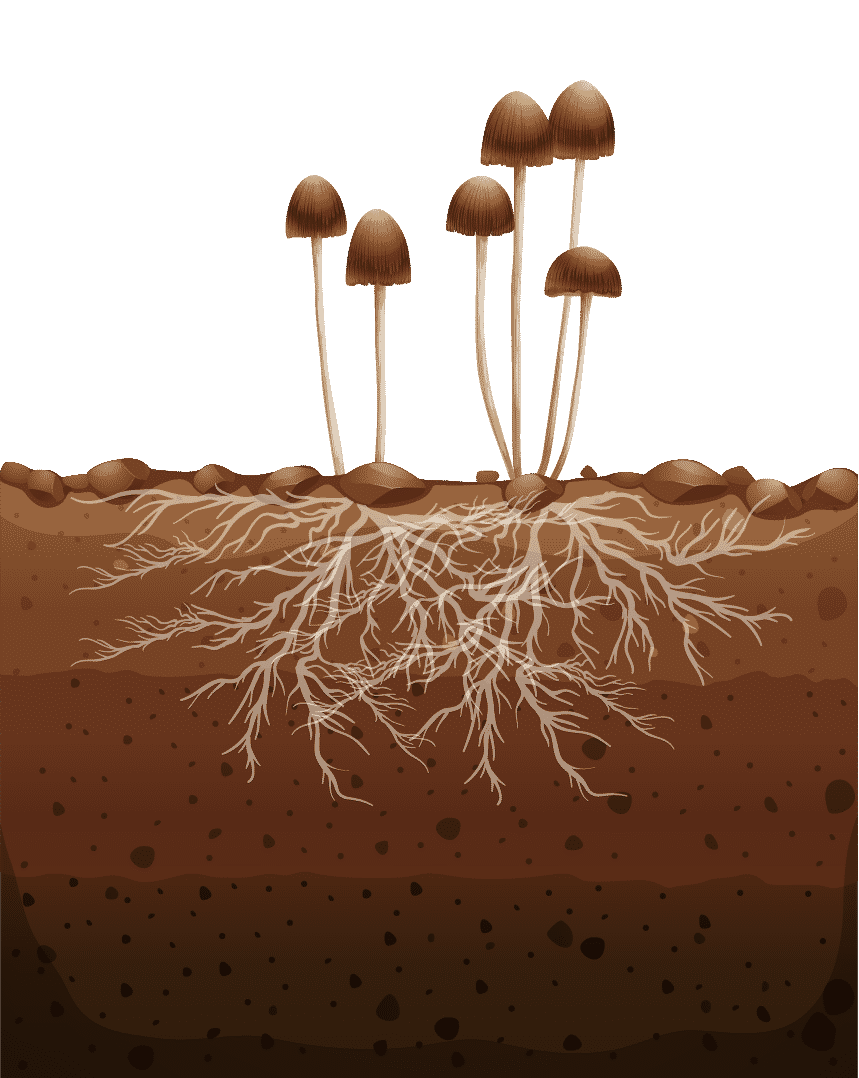
Mushrooms and mycelium in soil
<https://monthlyreview.org/wp-content/uploads/2021/04/soil-mushrooms.png>
Fred Magdoffis professor emeritus of plant and soil science at the
University of Vermont. He is the author and editor of numerous books,
includingCreating an Ecological Society
<https://monthlyreview.org/product/creating_an_ecological_society/>(coauthored
with Chris Williams, Monthly Review Press, 2017) andWhat Every
Environmentalist Needs to Know About Capitalism
<https://monthlyreview.org/product/what_every_environmentalist_needs_to_know_about_capitalism/>(coauthored
with John Bellamy Foster, Monthly Review Press, 2011). He would like to
thank Bruce R. James for his helpful comments and suggestions.
   Shall I not have intelligence with the earth?

   Am I not partly leaves and vegetable mould myself?

   —Henry David Thoreau^1
   <https://monthlyreview.org/2021/04/01/repairing-the-soil-carbon-rift/#en1>
When I studied soil fertility as a graduate student in the mid–1960s,
soil organic matter was recognized as something that occurred, but it
received little emphasis in textbooks or class discussions. There were a
few courses on soil biology, but the focus of practical soil fertility
studies was on individual elements needed by plants, how they behaved in
soil, and how to determine if they were present in sufficient amounts in
forms that were available for plants to use. We, of course, concentrated
on the elements taken up from the soil in relatively large amounts that
were commonly found to be deficient—nitrogen, phosphorus, and potassium.
If additions of particular nutrients were needed, we learned how much
should be added, which fertilizer should be used, and how and when best
to apply it. Growing legumes to supply the following crops with nitrogen
may have been mentioned in passing, but the overwhelming emphasis was on
commercial fertilizers. The “law of the minimum” holds that there will
be one element, for example nitrogen, that will be most deficient. But
if we added the right amount of nitrogen fertilizer to correct the
deficiency, then lack of sufficient phosphorus or potassium (or some
other nutrient) might limit yield. Thus, we needed to be sure that no
elemental deficiency would limit plant growth. But having a sufficiency
of the essential elements is only one characteristic of soil health, a
much broader concept than the old-fashioned one of “soil fertility.”
https://monthlyreview.org/2021/04/01/repairing-the-soil-carbon-rift/


-=-=-=-=-=-=-=-=-=-=-=-
Groups.io Links: You receive all messages sent to this group.
View/Reply Online (#8074): https://groups.io/g/marxmail/message/8074
Mute This Topic: https://groups.io/mt/82191059/21656
-=-=-
POSTING RULES & NOTES
#1 YOU MUST clip all extraneous text when replying to a message.
#2 This mail-list, like most, is publicly & permanently archived.
#3 Subscribe and post under an alias if #2 is a concern.
#4 Do not exceed five posts a day.
-=-=-
Group Owner: [email protected]
Unsubscribe: https://groups.io/g/marxmail/leave/8674936/21656/1316126222/xyzzy
[[email protected]]
-=-=-=-=-=-=-=-=-=-=-=-