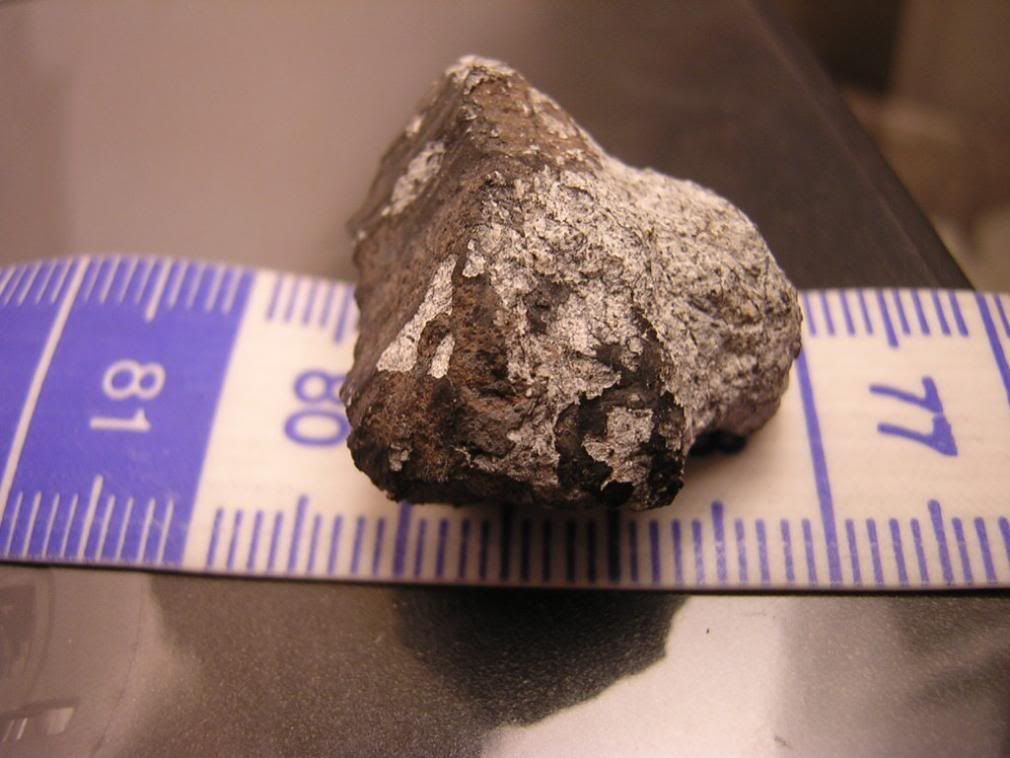
Hi Bernd, Bob, All,

Bernd asked...re photos below.
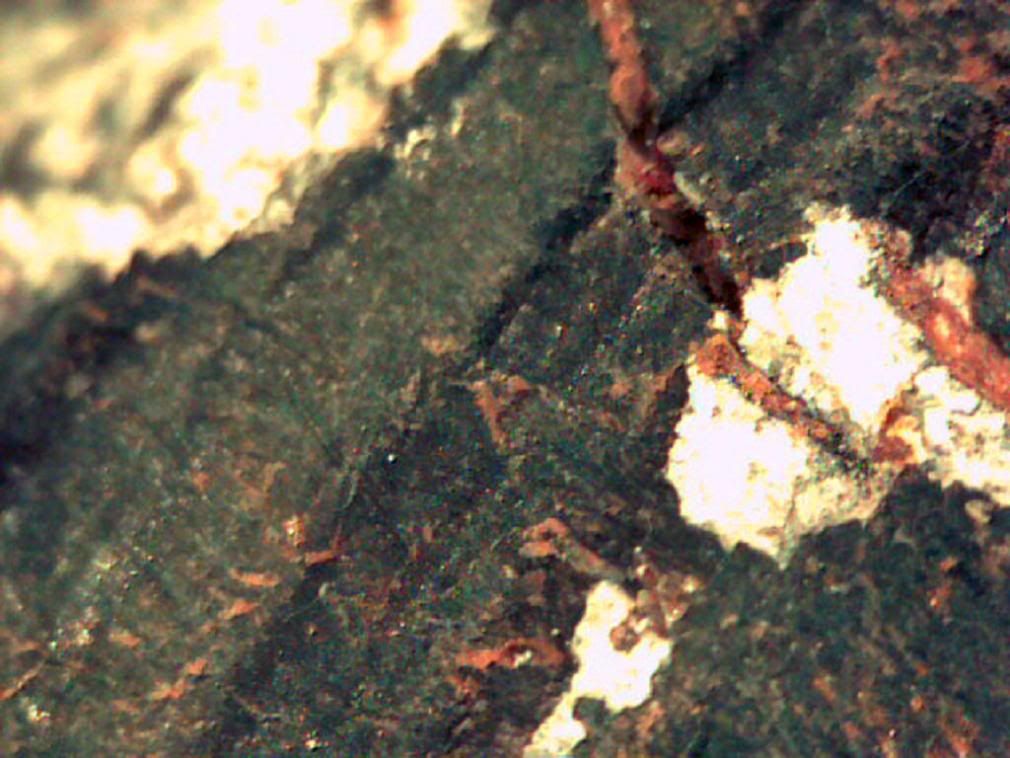
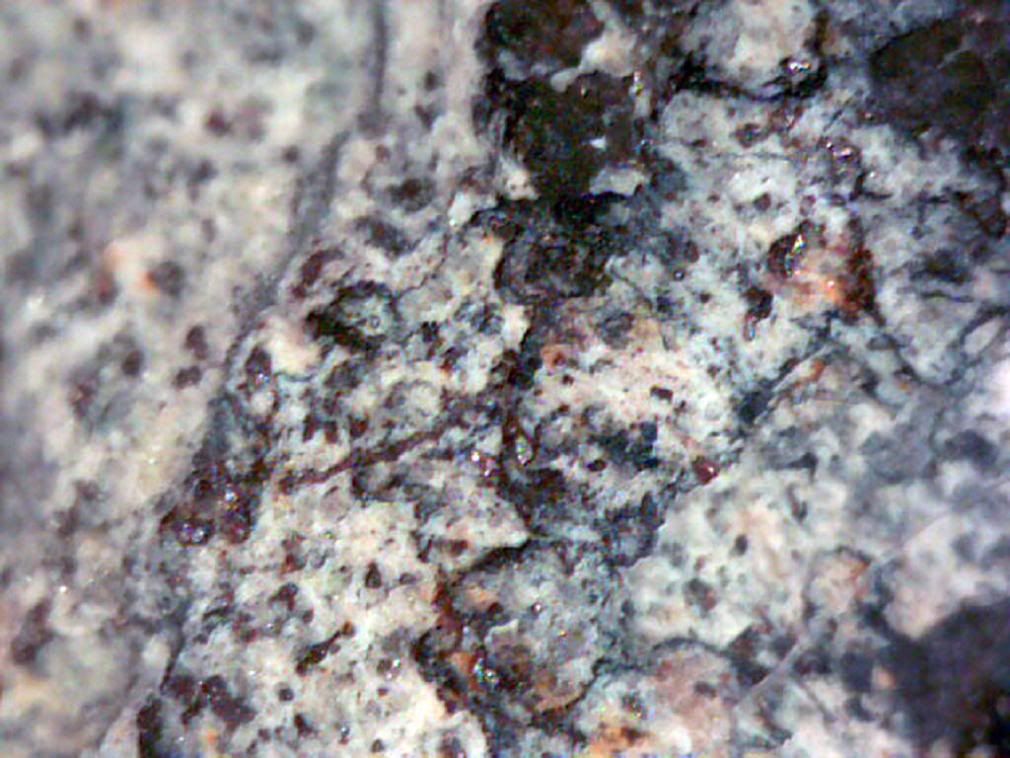
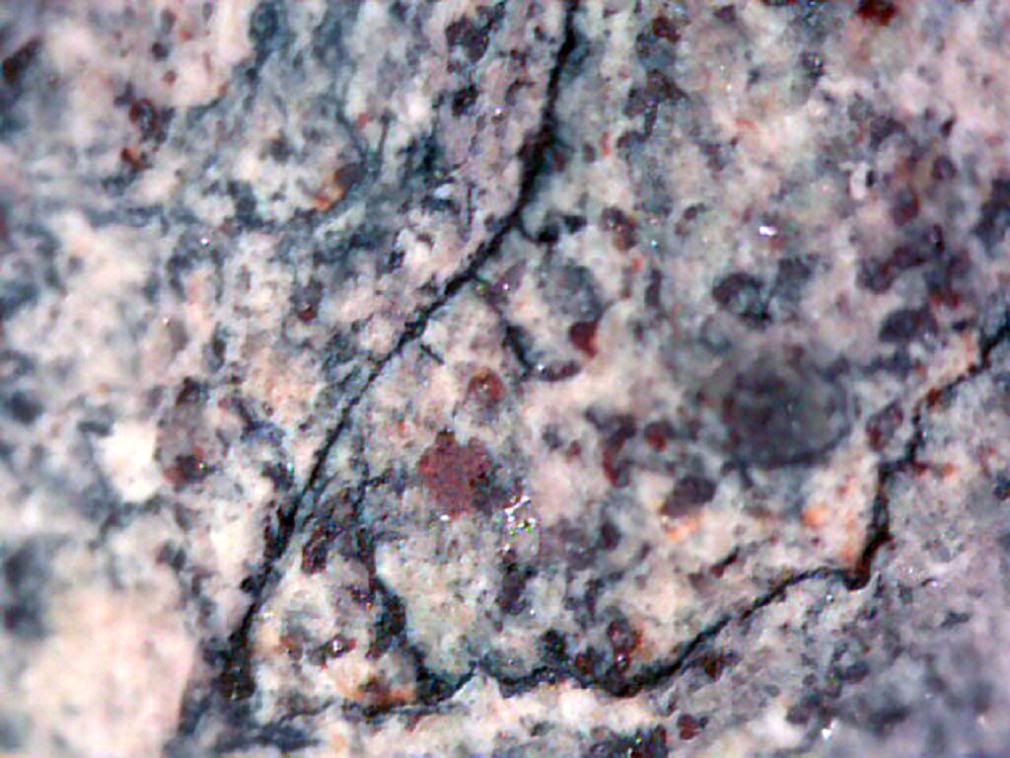
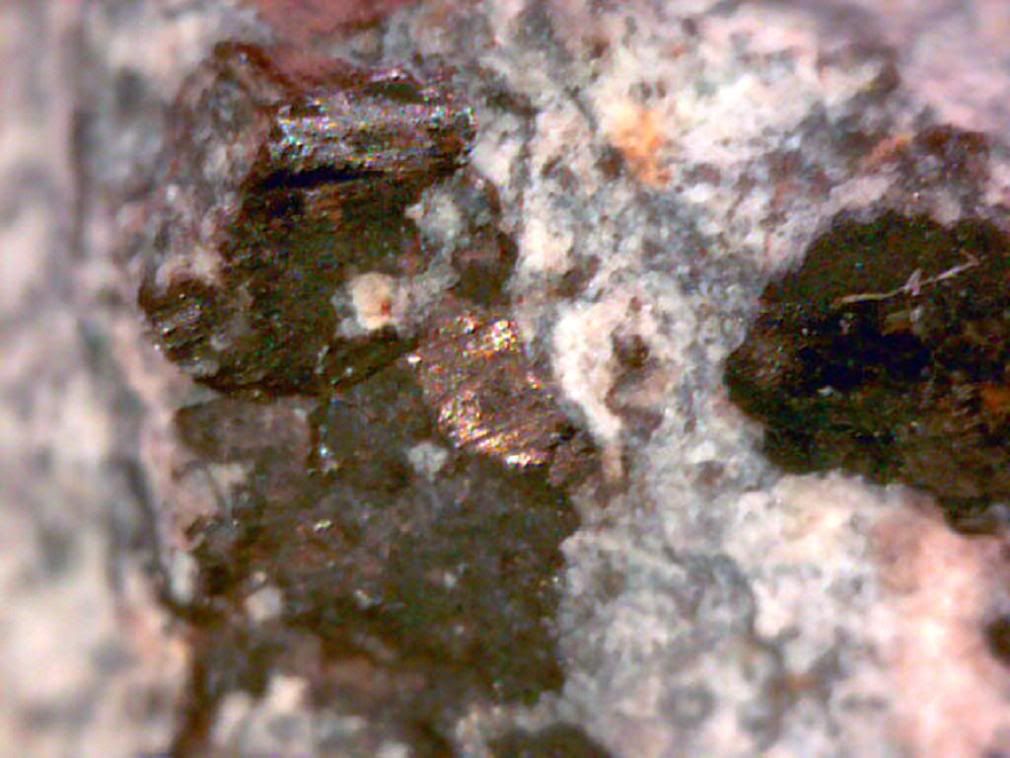
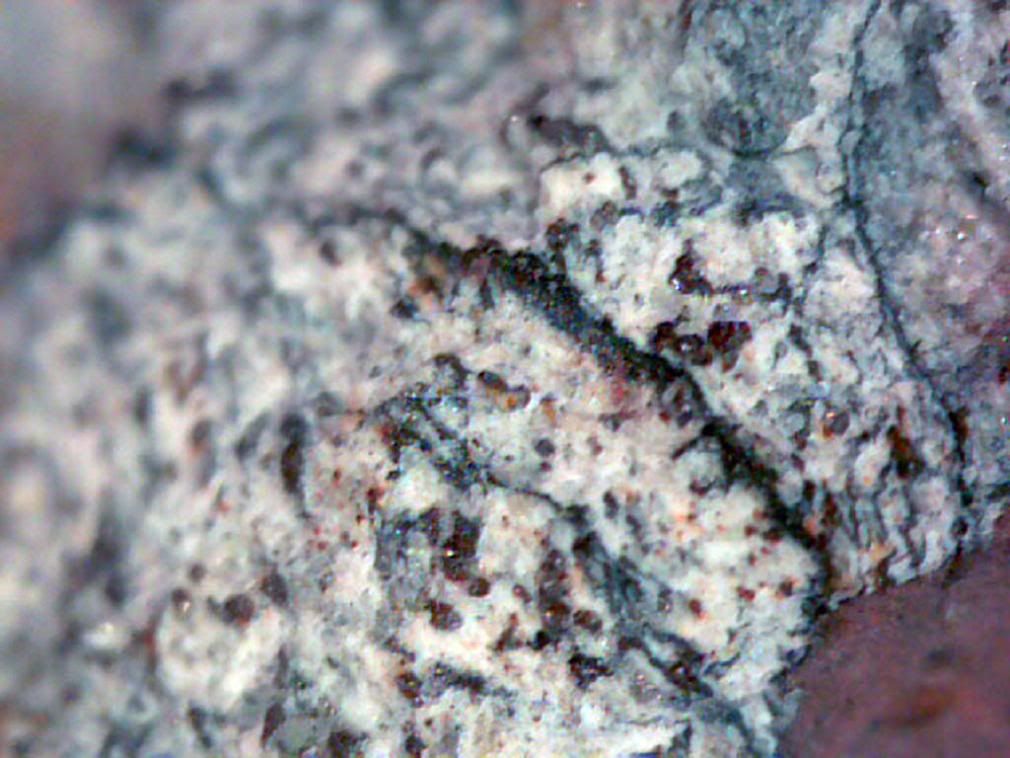
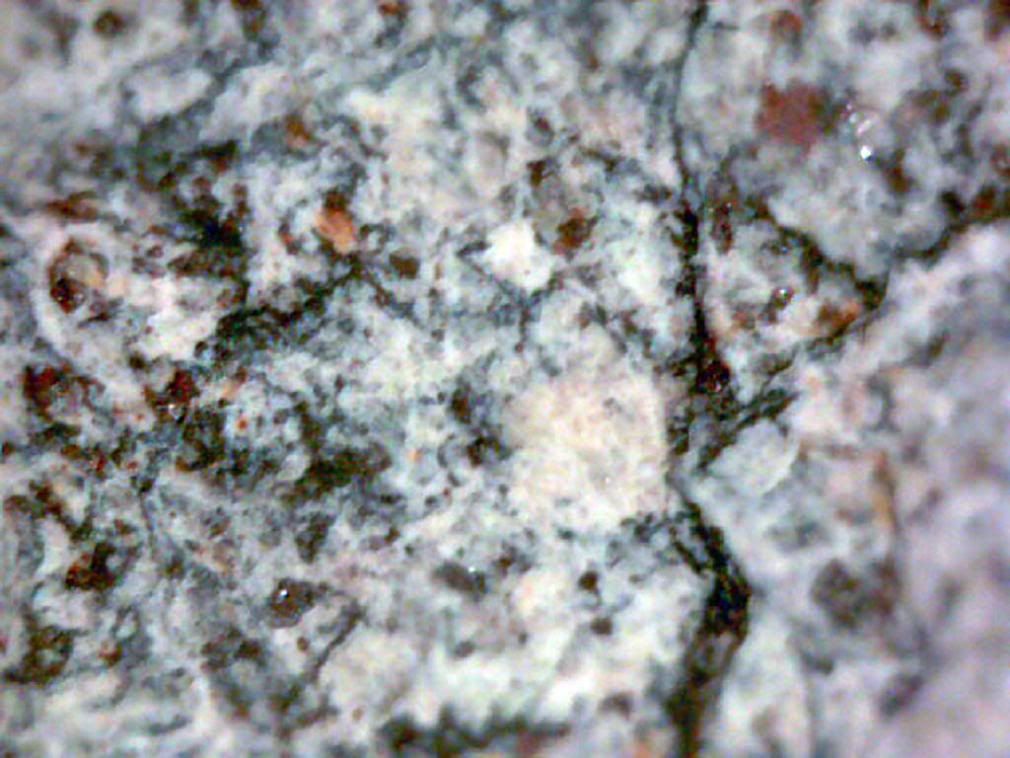
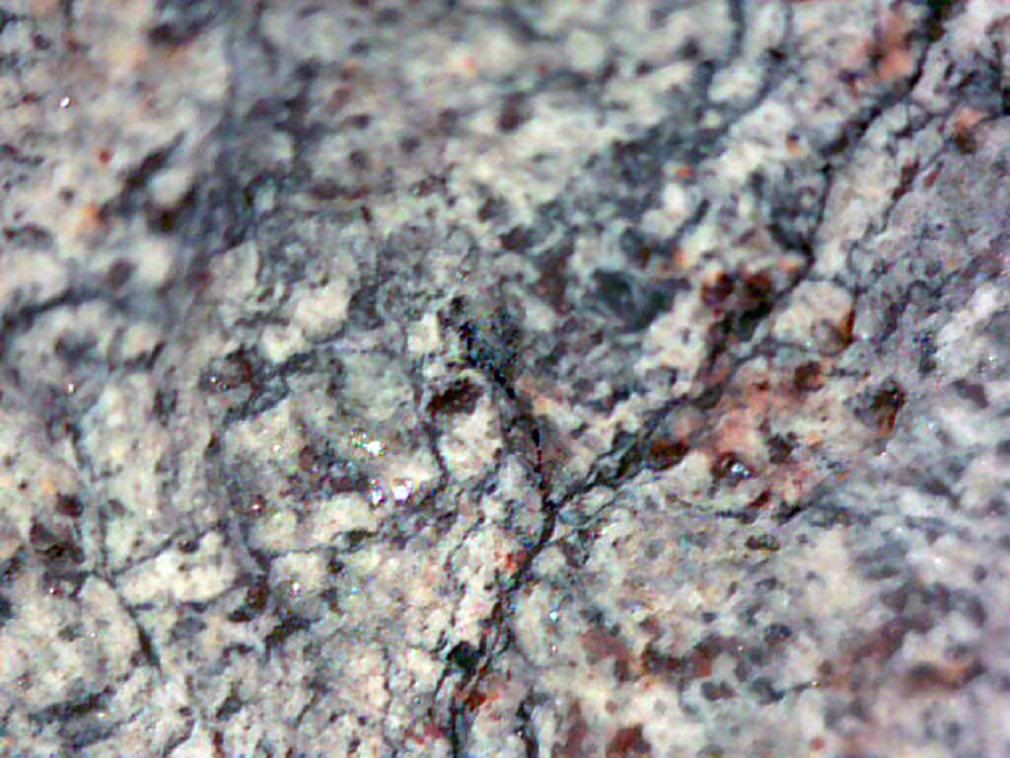
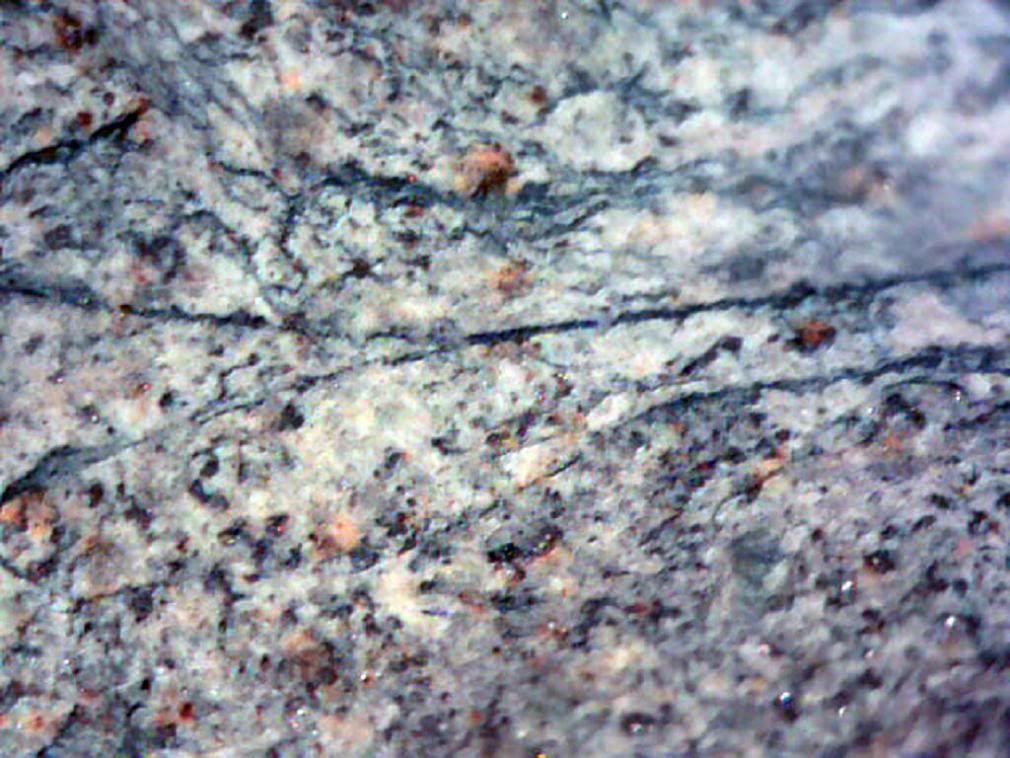
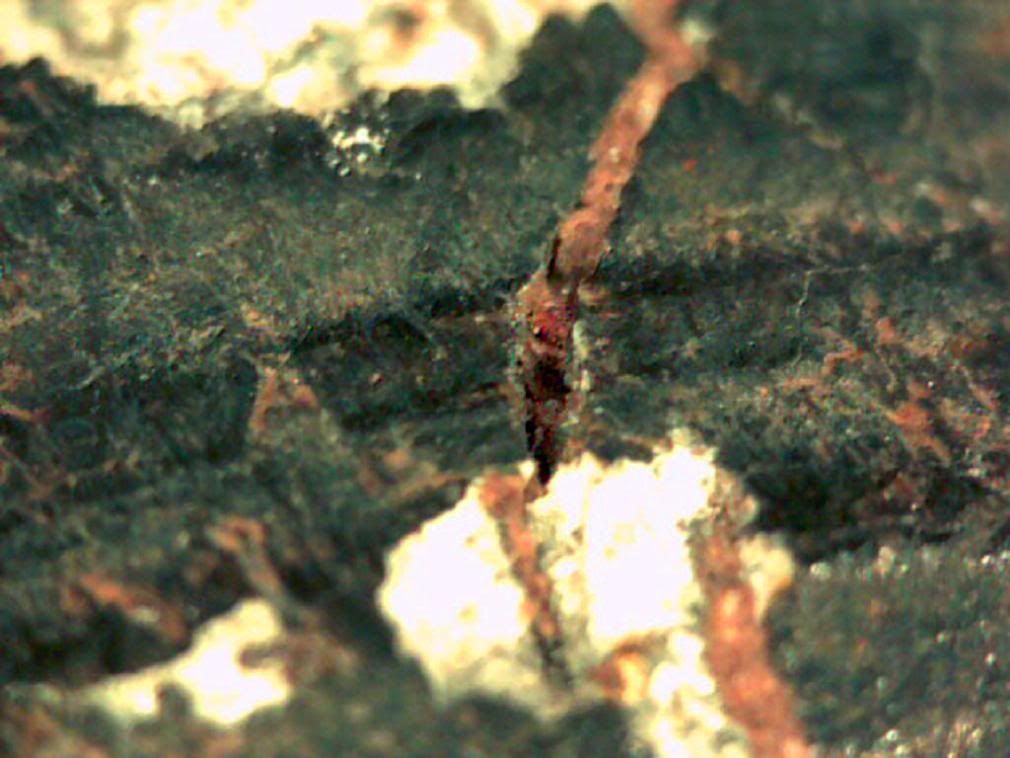
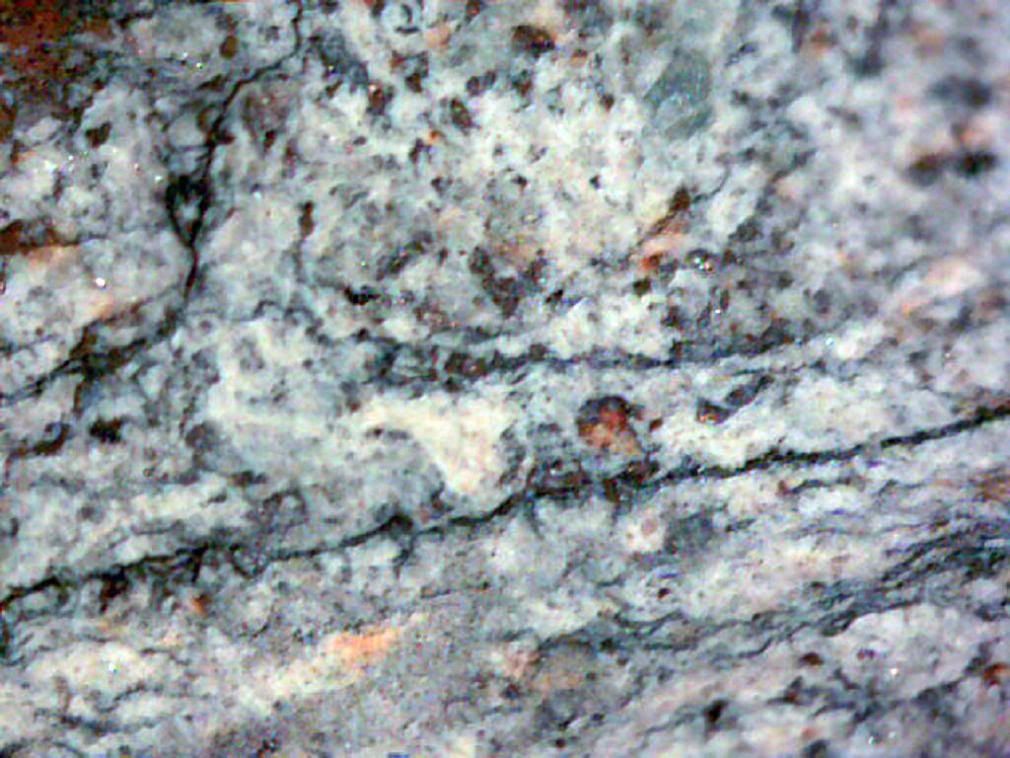
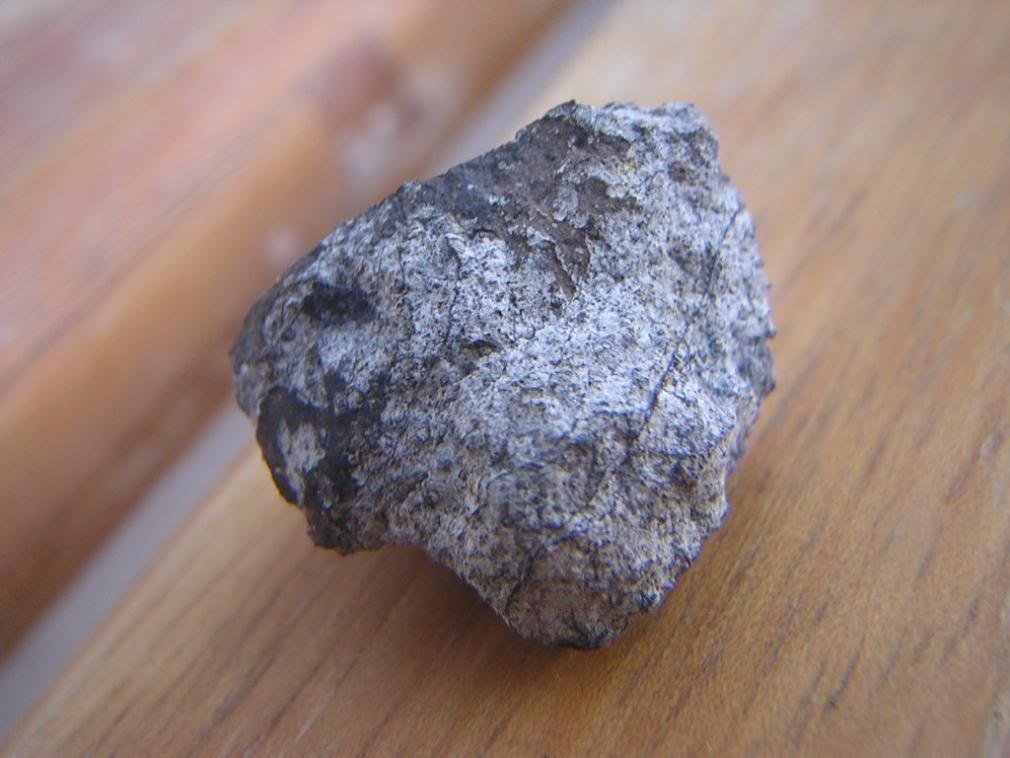
What are those rusty-red vein-like features? Soil from the crater?
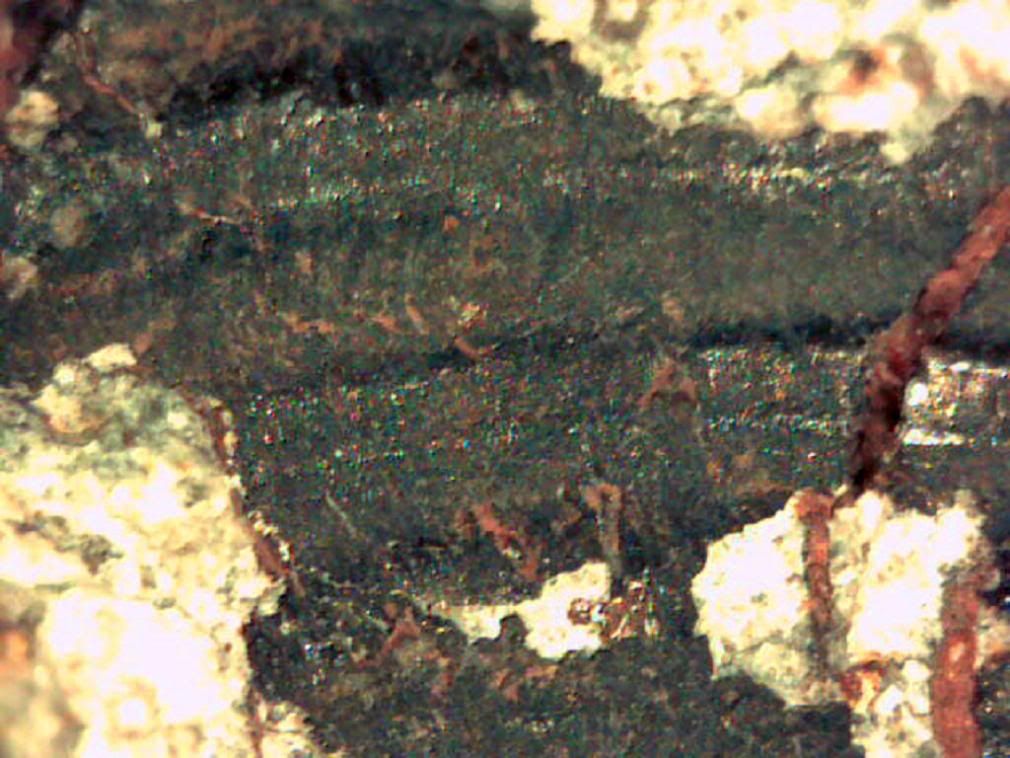
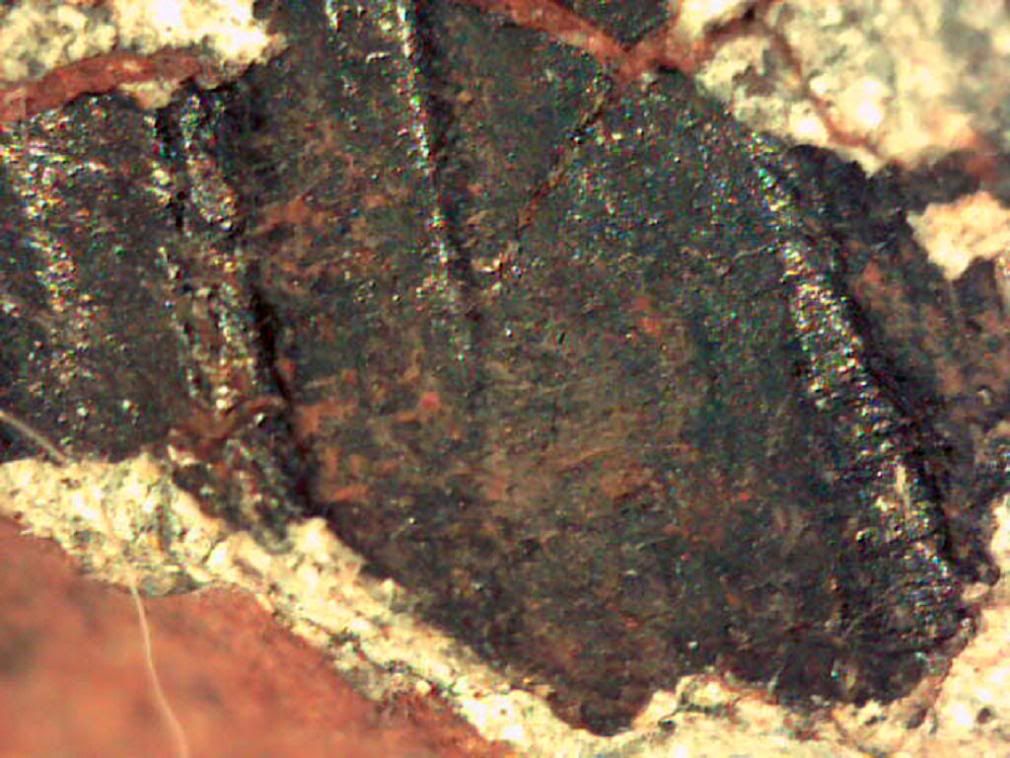
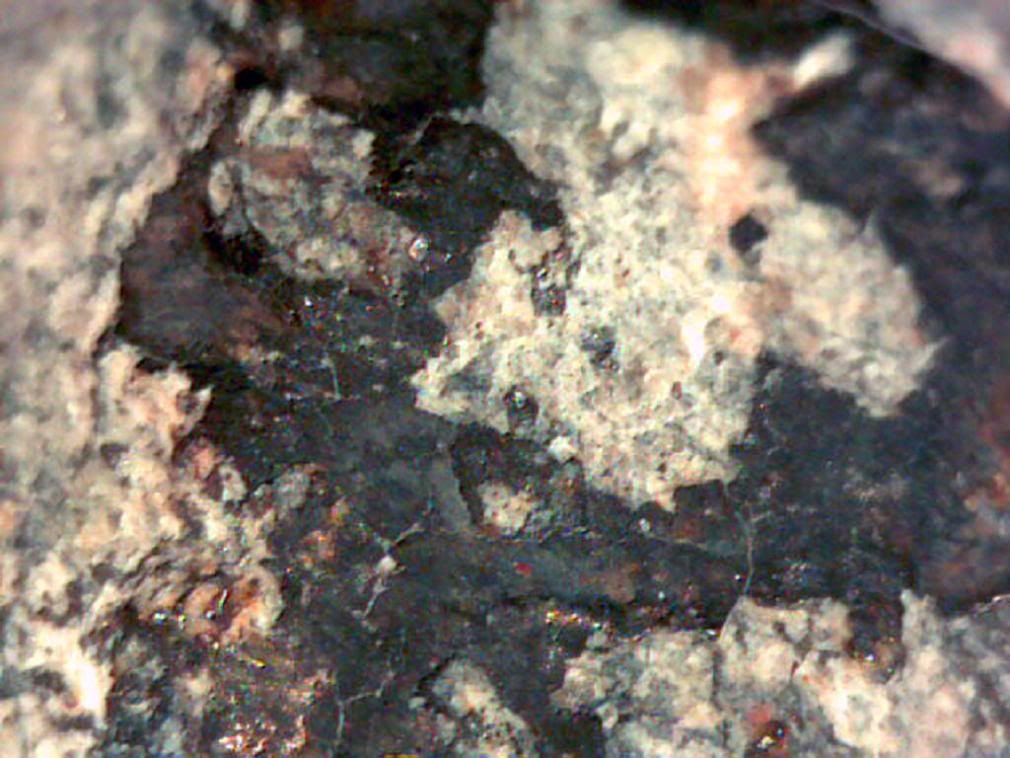
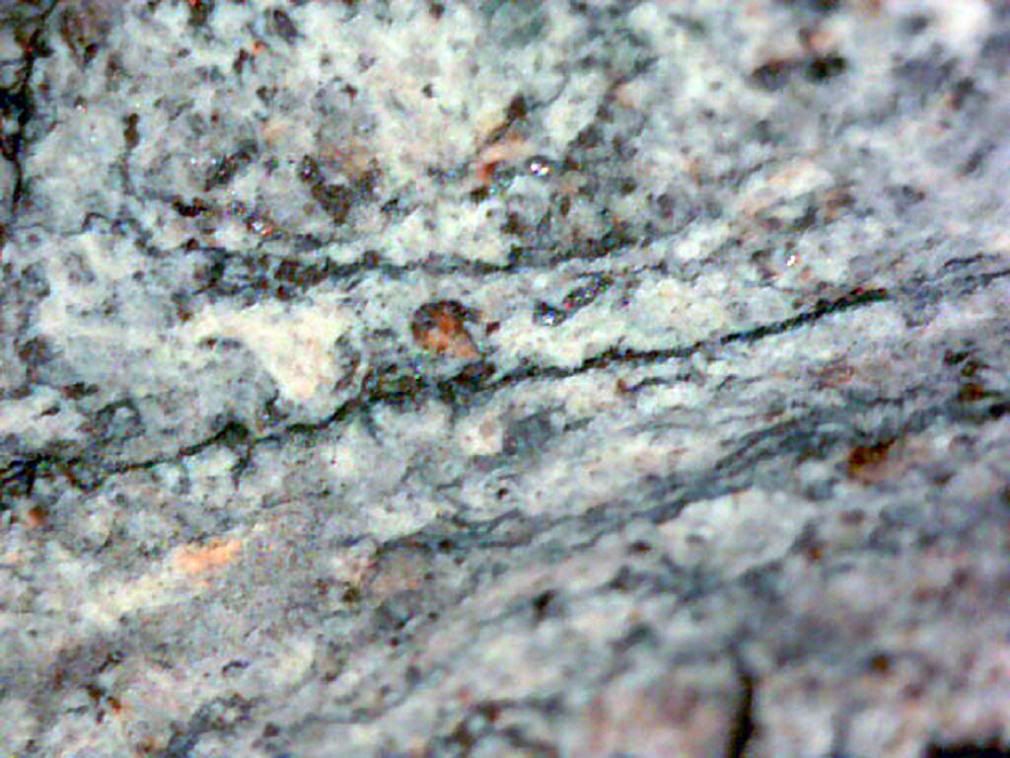
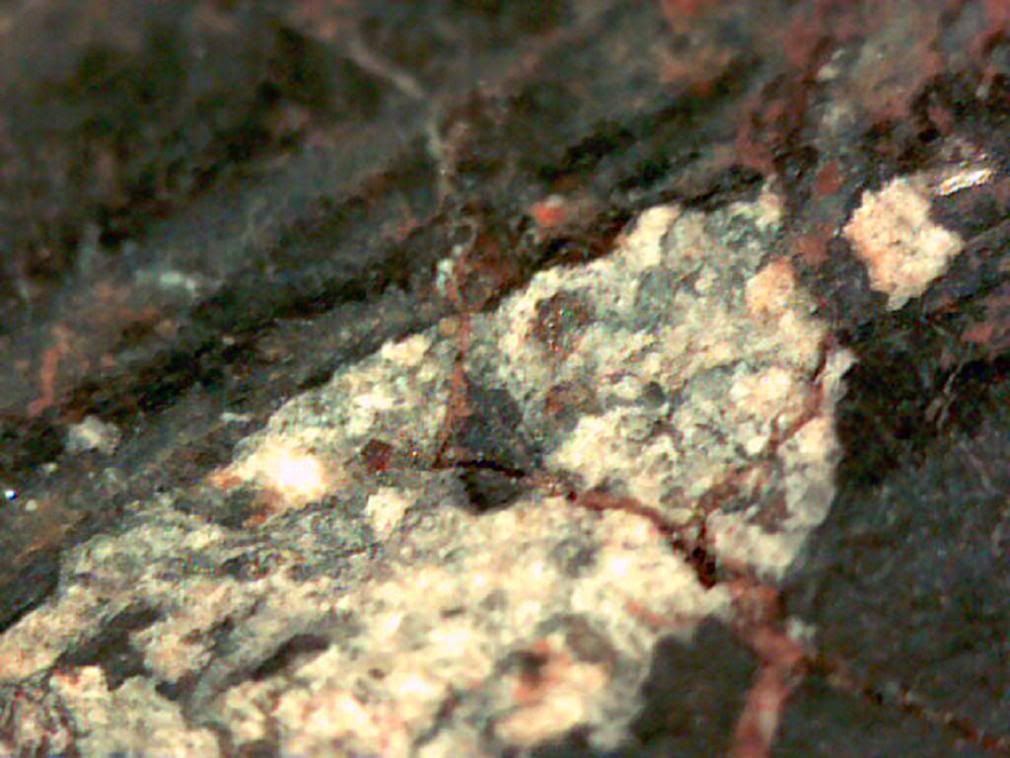
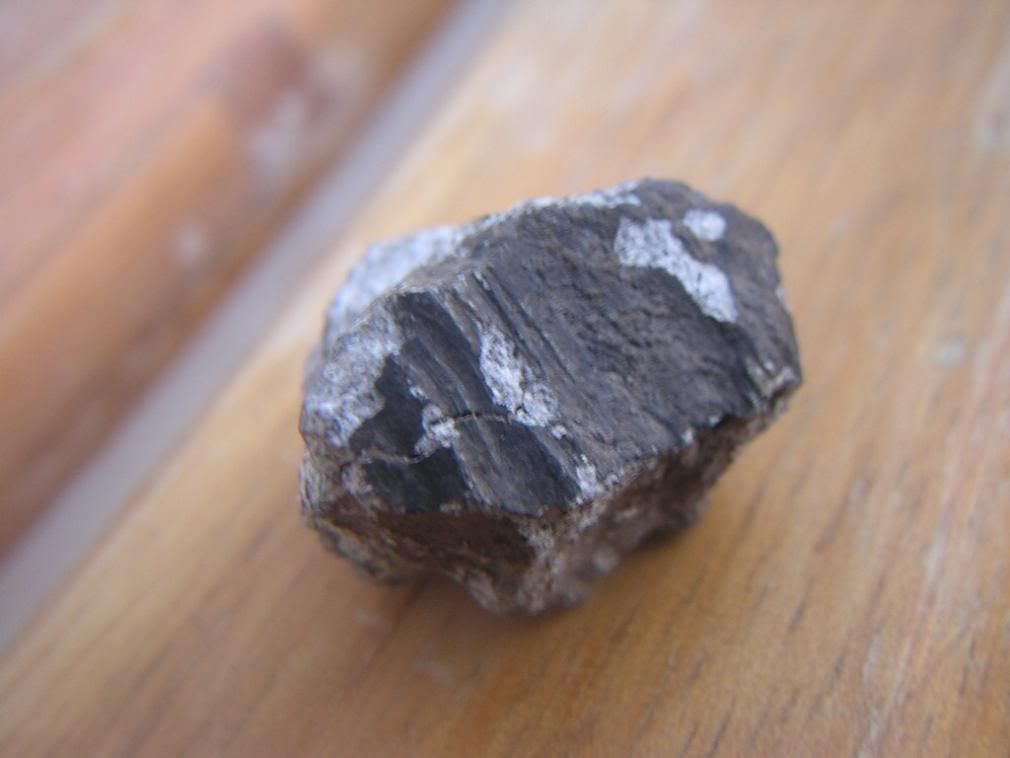
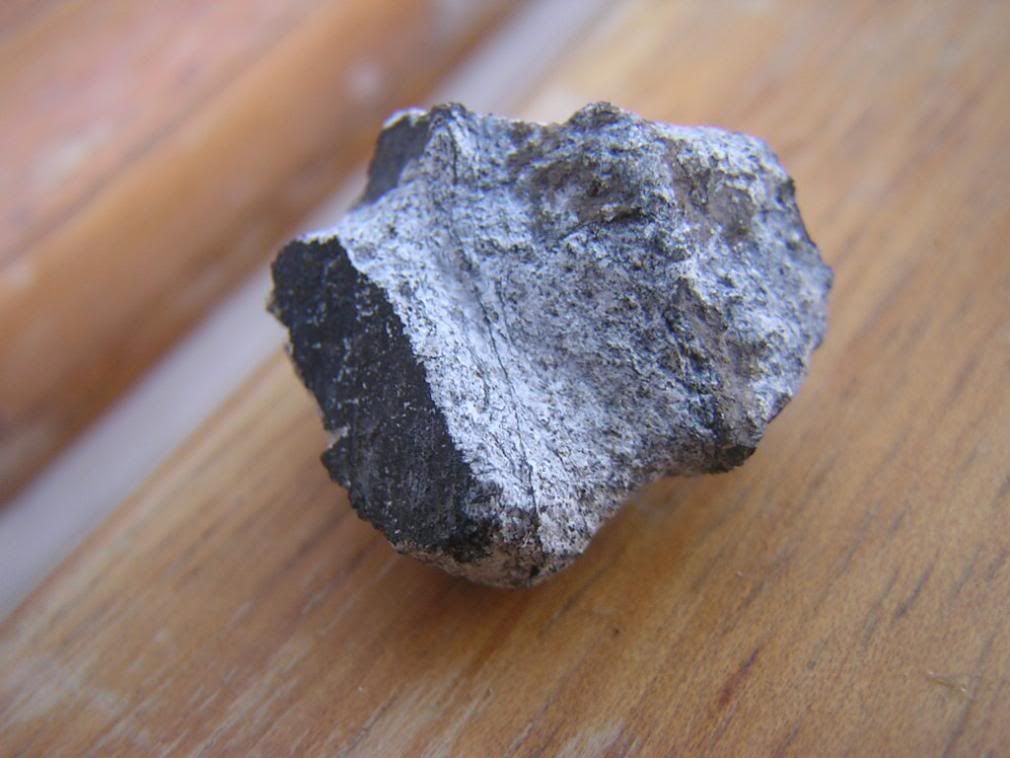
Are those slickensides real or are they an optical illusion?
Does it still have that sulphurous smell of rotten eggs?
Any there any chondrules definitely discernible?
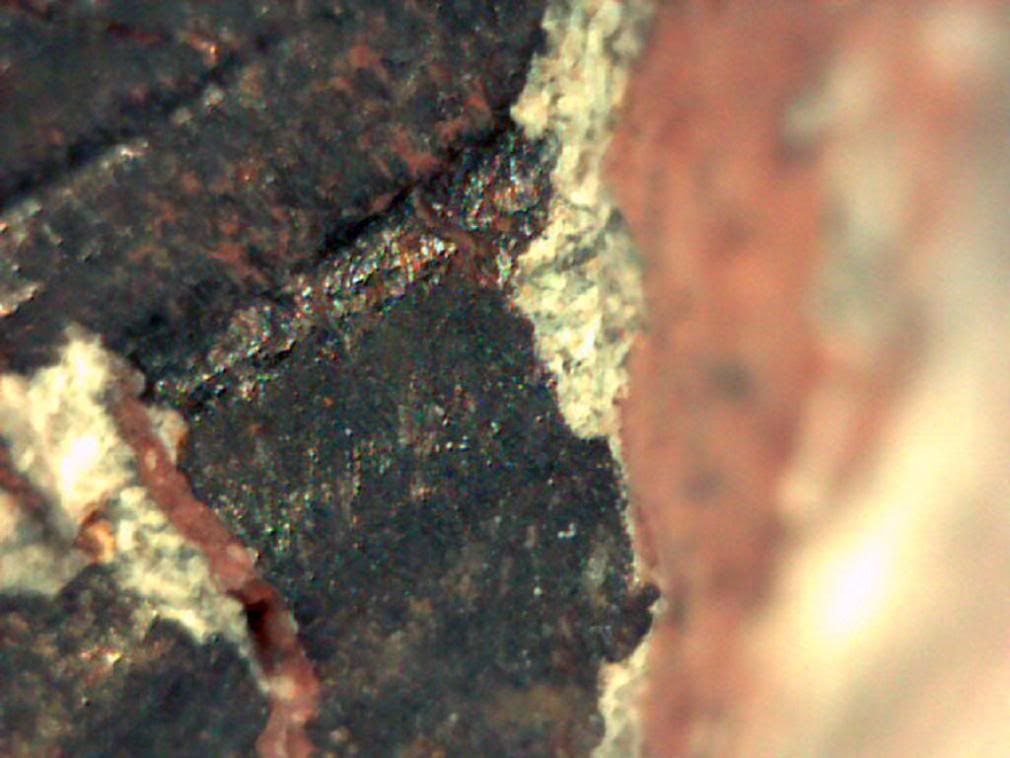
Does the FeS have particular features?
Any troilite patches or aggregates?
Other exotic or special features?

My reply...

I'm pretty sure that the red veins are fractures filled with soil from the
crater.

The black crust like areas are heavily ridged just as they appear...they almost
look like surfaces that have been extruded...so I would imagine they should be
slikenslides (but to be truthful, I do not really understand the mechanism that
causes slikenslides). One of my shots shows such a surface which is half
exposed and has not quite cleaved all through. Shot 17 I think. This shot also
shows some metal...centre picture. Could this be troilite or nickel iron? It
also appears striated.

I was hoping to track down some of the relict chondrules but I cannot
definitely identify any. There are some small round features that the shock
lines seem to curl around...could they be them?
I have not noticed any particular smell from my sample...but I tend to agree with the theories that heat produced on impact released vapour from the troilite causing sulphurous smells.
I have a *13kg*! NWA chondrite (80% crusted) which I have worked on recently to
remove the caliche and expose a wonderful thick frothy fusion crust with loads
of thumbprints, rollover rim and flight markings. This gave off a very heavy
sulphurous odour during restoration...much to my wifes dismay, who had to leave
the house until I had finished!!!!
I am taking this Carancas piece to the labs at the PSSRI (Planetary an Space
Sciences Research Institute) for anaysis by Prof. Colin Pillinger
(remember the eccentric guy of Beagle II fame) and Dr R Greenwood (
Curation of PSSRI meteorite collection and classification of new
meteorites.) next week. They seemed particularly interested in these features, even though it is likely just an H5.
Colin and Richard are likely to be able to answer many more questions about any
special features if there are any. I will let you know.

Colin worked on the lunar samples with Elbert King in his early days. Anyone seen
anything of his new book just out. "Space is a Funny Thing" Quite an amusing
collection of cartoons collected throughout the last 50 years of space exploration, which
he uses to hang the more serious story and science on. One section is dedicated to
meteoritics...his specialism. Most of the cartoons are actually very British in there
origins and sense of humour...so it may not amuse all. But full of interesting history,
facts etc...

I have a signed copy.  If anyone is interested in a copy I can make inquiries
next week about availability/signing. This is not an ad...I dont expect to get
involved in sales etc.

Regards

Graham Ensor


Bobs reply...

[EMAIL PROTECTED] wrote:
Hi Bernd,

I can't seem to post to the list but I have one crusted piece of Carancas and
here is what I see: The slickensides are real and I don't think I've ever seen
anything quite like them. They're black and look like crust but their laminar
appearance suggests either slickensides or some kind of two-dimensional
"shock sheath." It's as if you took a shock vein and spread it out across a
surface. On the other hand, the crust has the appearance of being cleaved so
maybe it really is slickensides. In addition there are a number of fine black
shock veins threading the matrix. Part of the matrix is grey and a bit dusty in
appearance. Under the slickensides however it's very white and I can see a
shock vein or two in the white. I searched my 1.5g piece carefully but couldn't
find any sign of a chondrule. This surprised me given its H4/5 classification.
No
obvious troilite inclusions stand out. Some of the matrix appears to be stained
brown, no doubt from clay. And as for smell, there was none that I could detect
but I was overcome with .... curiosity :-) Bob

______________________________________________
Meteorite-list mailing list
[email protected]
http://six.pairlist.net/mailman/listinfo/meteorite-list
Just been looking more closely at my Carancas piece and took some
detailed shots. Seems packed with shock veins and slickenslides. Not the
sharpest of pictures but only using a cheap digital microscope.
Magnified shots at about 60x.
Any observations and comments welcome. Happy browsing.

http://i117.photobucket.com/albums/o43/LaburnumStudio/Carancas985A.jpg
http://i117.photobucket.com/albums/o43/LaburnumStudio/CarancasSlickShock9.jpg
http://i117.photobucket.com/albums/o43/LaburnumStudio/CarancasSlickShock8.jpg
http://i117.photobucket.com/albums/o43/LaburnumStudio/CarancasSlickShock7.jpg
http://i117.photobucket.com/albums/o43/LaburnumStudio/CarancasSlickShock5.jpg
http://i117.photobucket.com/albums/o43/LaburnumStudio/CarancasSlickShock4.jpg
http://i117.photobucket.com/albums/o43/LaburnumStudio/CarancasSlickShock3.jpg
http://i117.photobucket.com/albums/o43/LaburnumStudio/CarancasSlickShock2.jpg
http://i117.photobucket.com/albums/o43/LaburnumStudio/CarancasSlickShock17.jpg
http://i117.photobucket.com/albums/o43/LaburnumStudio/CarancasSlickShock16.jpg
http://i117.photobucket.com/albums/o43/LaburnumStudio/CarancasSlickShock15.jpg
http://i117.photobucket.com/albums/o43/LaburnumStudio/CarancasSlickShock14.jpg
http://i117.photobucket.com/albums/o43/LaburnumStudio/CarancasSlickShock13.jpg
http://i117.photobucket.com/albums/o43/LaburnumStudio/CarancasSlickShock12.jpg
http://i117.photobucket.com/albums/o43/LaburnumStudio/CarancasSlickShock11.jpg
http://i117.photobucket.com/albums/o43/LaburnumStudio/CarancasSlickShock10.jpg
http://i117.photobucket.com/albums/o43/LaburnumStudio/CarancasSlickShock1.jpg
http://i117.photobucket.com/albums/o43/LaburnumStudio/Carancas985D.jpg
http://i117.photobucket.com/albums/o43/LaburnumStudio/Carancas985C.jpg
http://i117.photobucket.com/albums/o43/LaburnumStudio/Carancas985.jpg

Graham Ensor


______________________________________________
Meteorite-list mailing list
[email protected]
http://six.pairlist.net/mailman/listinfo/meteorite-list


--
No virus found in this incoming message.
Checked by AVG Free Edition. Version: 7.5.488 / Virus Database:
269.15.3/1082 - Release Date: 20/10/2007 14:59
______________________________________________
Meteorite-list mailing list
[email protected]
http://six.pairlist.net/mailman/listinfo/meteorite-list