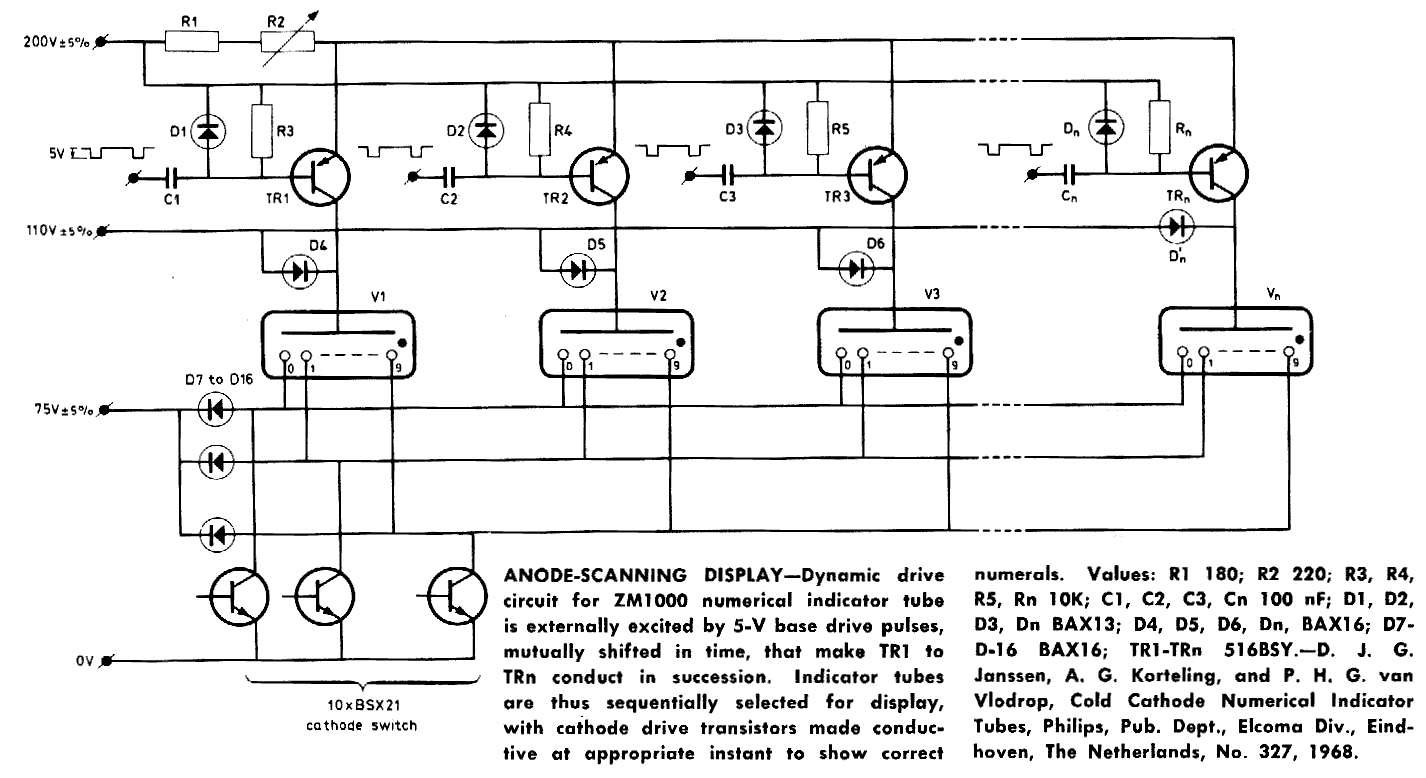
I've seen similar circuits when the Nixies have been driven from digital
clock ic's like the MM5309-series but then the Nixies have had separate
anode resistors too.
/Martin

On Tuesday, 11 June 2019 22:45:22 UTC+2, Paul Andrews wrote:
>
> I just came across this: http://www.glowbug.nl/neon/944125938_2356.gif
> (which seems to be an excerpt from
> https://archive.org/details/ElectronicCircuitsManual/page/n209) and would
> be interested in a critique of it from people who know more than I do about
> electronics - which is just about everyone here!
>
> The cathode controls are pretty standard fare for multiplexed tubes -
> including clamping the off cathodes to 75V (it is low enough to stop them
> acting as anodes, but high enough that they won't glow). I'm more
> interested in the anode controls. In particular:
>
>
>    - Using capacitors to de-couple the 5V signal from the 200V rail (I
>    assume)?
>    - Tying the collector of the transistors to 110V, presumably to keep
>    the voltage across the transistor within its limits, though I'm not sure
>    what actual voltage would be present across them, because:
>    - The anode resistor, which is shared by all anodes here, apparently
>    varies from 180 to 300 Ohms. Is that a misprint? Can it be that low
> because
>    of the multiplexing? Or is there something else going on here.
>
> Naturally now that I've seen it, I want to build it. Like I don't have
> enough projects going on.
>
>

--
You received this message because you are subscribed to the Google Groups
"neonixie-l" group.
To unsubscribe from this group and stop receiving emails from it, send an email
to [email protected].
To post to this group, send an email to [email protected].
To view this discussion on the web, visit
https://groups.google.com/d/msgid/neonixie-l/ab43bb42-40ad-4ca4-a510-e594a043cebd%40googlegroups.com.
For more options, visit https://groups.google.com/d/optout.