This is an automated email from the ASF dual-hosted git repository.

baoyuan pushed a commit to branch master
in repository https://gitbox.apache.org/repos/asf/apisix-website.git
The following commit(s) were added to refs/heads/master by this push:
new 868ce6705c1 docs: Add new blog post "API monetization using an API
Management and a billing provider" (#1316)
868ce6705c1 is described below
commit 868ce6705c17fc585a224e9cb215f404190de7ca
Author: Livermore <[email protected]>
AuthorDate: Mon Sep 12 09:58:10 2022 +0300
docs: Add new blog post "API monetization using an API Management and a
billing provider" (#1316)
---
.../2022/09/08/api-monetization-using-stack.md | 150 +++++++++++++++++++++
1 file changed, 150 insertions(+)
diff --git a/blog/en/blog/2022/09/08/api-monetization-using-stack.md
b/blog/en/blog/2022/09/08/api-monetization-using-stack.md
new file mode 100644
index 00000000000..87c798ca64f
--- /dev/null
+++ b/blog/en/blog/2022/09/08/api-monetization-using-stack.md
@@ -0,0 +1,150 @@
+---
+title: "API monetization using an API Management and a billing provider"
+authors:
+ - name: Bobur Umurzokov
+ title: Author
+ url: https://github.com/Boburmirzo
+ image_url: https://avatars.githubusercontent.com/u/14247607
+keywords:
+- API Gateway
+- Apache APISIX
+- Monetization
+- API
+- Microservices
+- Rate limiting
+- Quota
+description: 💁🏼 This blog post gives you an idea of building your technology
stack with an API Gateway and a payment provider that can help you run quickly
and securely your API monetization system which simply provides flexibility for
your customers.
+tags: [Case Studies]
+---
+
+> 💁🏼 This blog post gives you an idea of building your technology stack with
an [API
Gateway](https://apisix.apache.org/docs/apisix/terminology/api-gateway/) and a
[payment
provider](https://en.wikipedia.org/wiki/List_of_online_payment_service_providers)
that can help you run quickly and securely your API monetization system which
simply provides flexibility for your customers.
+
+<!--truncate-->
+
+
+
+## API Monetization
+
+As an owner of API, you develop some code and deploy it to a server. That
server might have a bunch of HTTP/HTTPs endpoints that do something useful.
Maybe like retrieving data about all current discounts and voucher information
from different markets in your city. And other developers want to use this data
but they do not want to implement the same solution on their own. So, they
reach out to you for permission to make requests to your server.
+
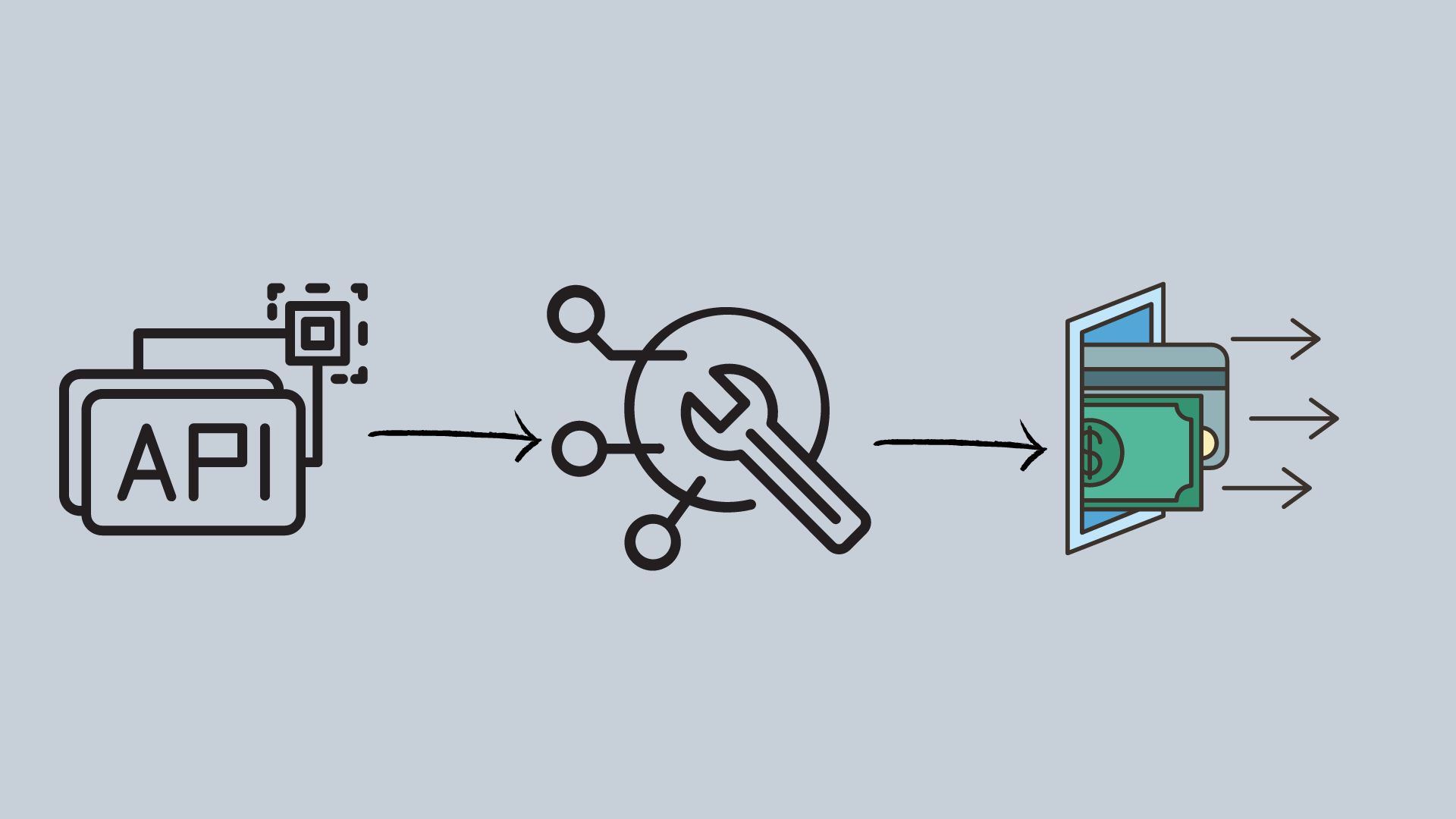
+Using **APIs** is an ideal way to **monetize your services**. An API lets you
reach customers through multiple channels and allows third-party applications
or developers to consume your data. API monetization is a way that businesses
can use APIs to convert usages of the data into money 💸. When it comes to
making money from your APIs, there are multiple ways. Most often you think
about how to get started with the right tools and how to set up billing for
your APIs.
+
+### Here is a quick overview of what we covered 👇
+
+- ✅ Monetization options.
+- ✅ Two common ways to monetize APIs.
+- ✅ Simple API monetization stack components: an API Management and a billing
provider.
+- ✅ How API Management and a payment platform work together.
+- ✅ How to apply rate limiting policies.
+- ✅ How Apache APISIX can be useful to monitor and limit API usage.
+
+
+
+## API monetization models
+
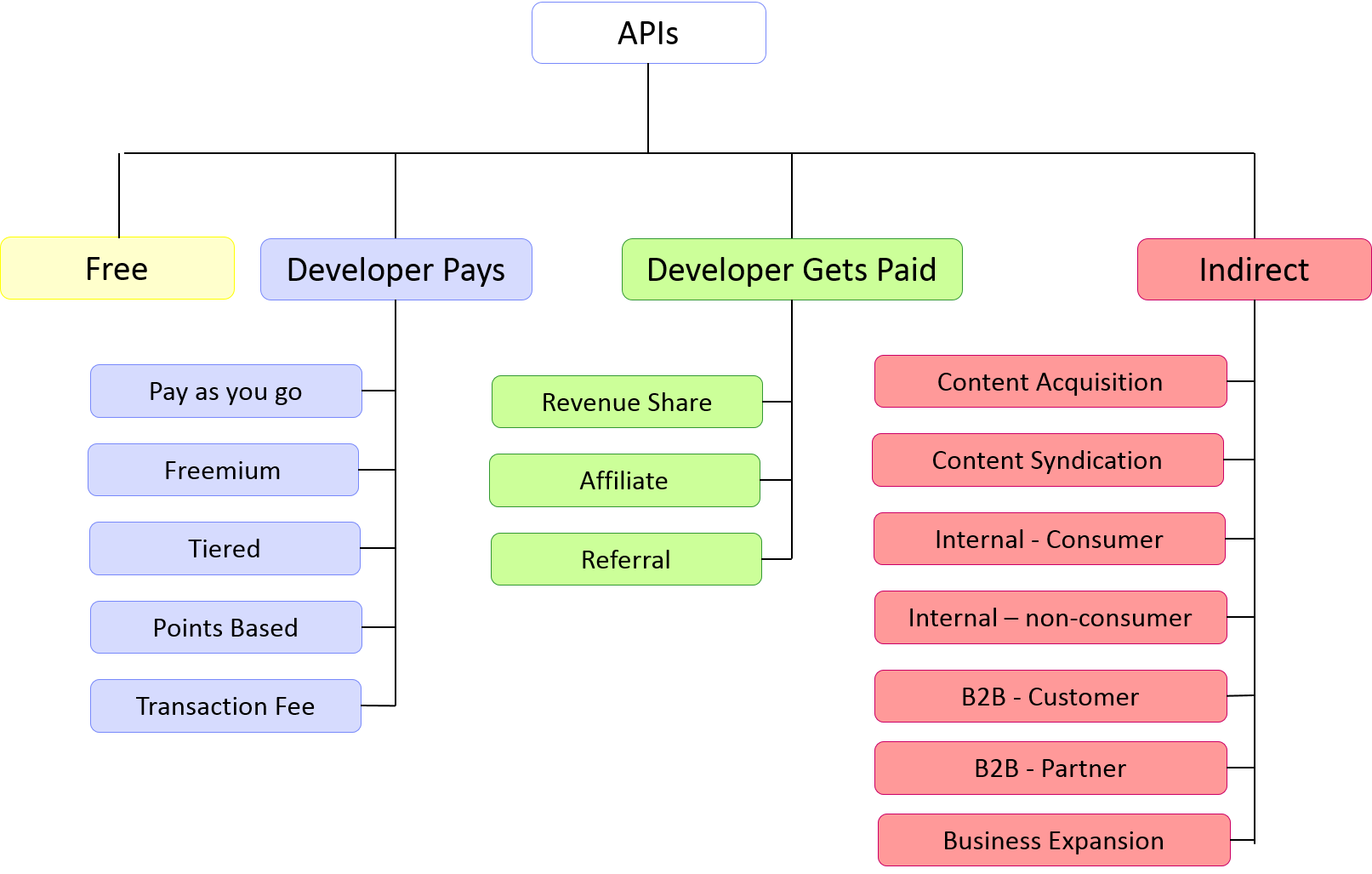
+There are several pricing approaches you can take for monetization. When you
are developing **API monetization strategies**, you should always consider that
you deliver high-quality, consistent value to your API users. As the API
Provider, you talk to your current API users to identify problems your service
is solving and offer pricing models according to the target customer. For
example, if customers use one specific feature of your API more than others,
you could spin that feature off [...]
+
+
+
+Some API billing models for monetization include:
+
+- [Freemium](https://en.wikipedia.org/wiki/Freemium).
+- [Pay as you go](https://en.wikipedia.org/wiki/Pay-as-you-use).
+- [Subscription](https://en.wikipedia.org/wiki/Subscription_business_model).
+- [Pay-per-transaction](https://en.wikipedia.org/wiki/Pay_per_sale).
+- [Revenue share](https://en.wikipedia.org/wiki/Revenue_sharing).
+- [Pay for ad-free content](https://en.wikipedia.org/wiki/Pay-per-click).
+- [Paid
partner](https://www.softwareag.com/en_corporate/resources/what-is/api-monetization.html#:~:text=low%2Dcost%20apps.-,Paid%20partner%3A,-In%20this%20model).
+
+
+
+In the freemium model, Developers have access to a basic API for free up to a
specific threshold and transition to pay-per-use in a tiered pricing model when
they exceed that limit. This model is quite often used to explore API use
cases, test your APIs, or make quick a proof of concept. You can learn more
about other models in depth
[here](https://www.softwareag.com/en_corporate/resources/what-is/api-monetization.html).
+
+## Two common ways to monetize APIs
+
+Let’s take a look closely at the most common ways to directly monetize your
APIs like the **Subscription billing model**, where you charge your customers a
flat monthly fee to access your APIs; and **Metered billing model**, where you
charge your customers based on the number of API calls they make.
+
+### Subscription Billing Model
+
+In this model, API Consumer pays for a set of numbers of calls per month. For
example, a consumer pays $100 to access up to 10,000 API calls per month.
Whether they make 0 API calls or 10,000 API calls, the consumer is charged $100
each month.
+
+### Metered Billing Model
+
+With a **Metered Billing model**, API Consumers can make as many calls as they
want per month and you only charge the consumer a fee for each API call they
make. If the customer makes 7,000 API calls at $0.01 per call then the bill at
the end of the month would be $70.
+
+### Calculating bills
+
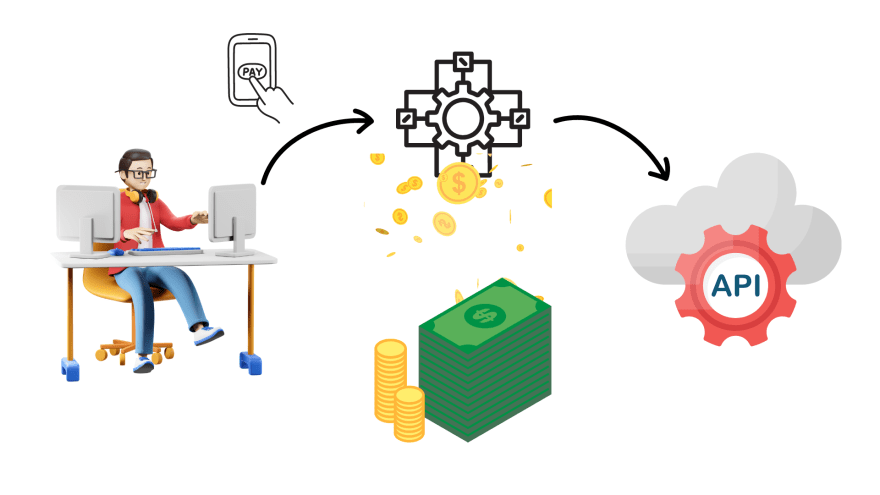
+Calculating bills in subscription-based pricing model is very straightforward
because you don’t need to count how many API calls were made. Instead, you
charge each user a flat monthly fee. However, calculating bills for metered
users might be a little bit challenging since we need to have custom code in
your API service that not only tracks API usage but it should be also capable
of applying rate limiting policies to the APIs depending on users accessing
your APIs.
+
+
+
+In this case, we might need to consider a suitable API monetization stack with
existing solutions to build a solid foundation for your API monetization that
reduces the time and investment required to build your own service to measure
API usage.
+
+## Two simple API monetization stack components
+
+We can choose the combination of two elements for our API monetization stack
that most modern businesses are using nowadays: API Management like **an API
Gateway** and **a billing provider**. Let’s break down each component and
understand the role of each in API monetization.
+
+### API Management
+
+API Management service itself offers two helpful features such as _API Gateway
and API Analytics_). **API analytics feature** can be used for tracking API
usage because the analytics is able to collect API consumption metrics around
every API call made by each of your API consumers. This usage data can be used
to bill each consumer and send an invoice to collect monthly payments.
+
+For example, [Apache APISIX](https://apisix.apache.org/) can also integrate
with a variety of observability platforms like
[Prometheus](https://prometheus.io/),
[OpenTelemetry](https://opentelemetry.io/), [Apache
Skywalking](https://skywalking.apache.org/) and etc. by using its [connector
plugins](https://apisix.apache.org/plugins/) 🔌 to further analyze API
performance and gain complete visibility.
+
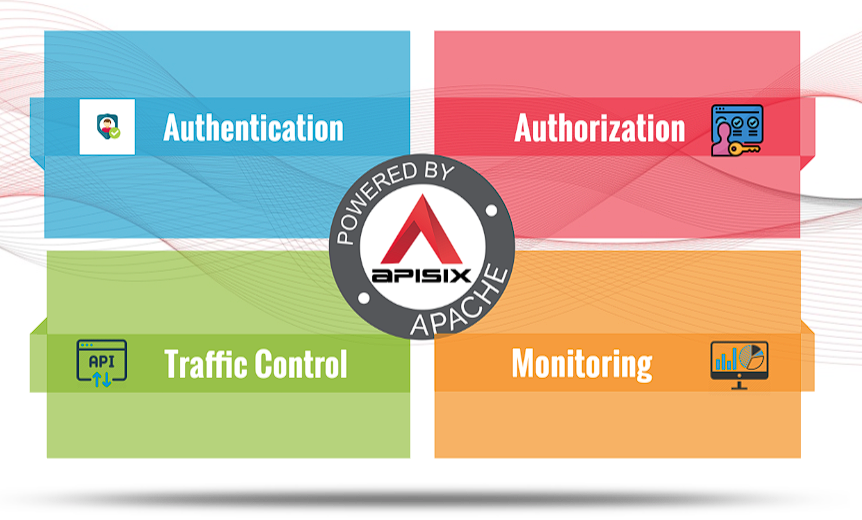
+**API Gateway** can help with the challenges that you meet with implementing
cross-cutting concerns for APIs. As an API Gateway acts as a central proxy to
route all incoming requests from your clients to intended destinations (backend
services), it can make securing and managing your APIs much easier. Most
gateways support a wide variety of authorization and authentication protocols
to control API access, caching mechanisms for API responses, or support for
rate limiting and exposing quo [...]
+
+There are many popular open-source projects available like [Apache
APISIX](https://apisix.apache.org/) or alternative enterprise SaaS solutions
such as [Azure API
Management](https://docs.microsoft.com/en-us/azure/api-management/), [API7
Cloud](https://api7.ai/cloud) in a public cloud. You can investigate the pros
and cons of each to choose the more suitable one for your needs.
+
+
+
+#### Apply rate limit policies
+
+Resources cost money 💰. We can protect an API by adding _a rate limit policy_
with Apache APISIX as it is a basic step toward API Monetization. Apache APISIX
allows you to set throttling limits per each API consumer and quotas to your
APIs and allows you to control third-party usage of your API by ensuring you
are able to monetize your API.
+
+APISIX uses its `limit-count` (_rate limiting_) plugin. [API rate limiting
plugin](https://apisix.apache.org/docs/apisix/plugins/limit-count/) can prevent
an API not only from being overwhelmed or from possible malicious attacks but
also it can enforce a limit on the number of data clients can consume. Later
you can charge API consumers by the quantity of data used (the number of
requests).
+
+With the help of APISIX `rate-limiting` plugin, you can also configure the
different rate limits for authenticated and unauthenticated requests. It also
defines the limit quota in the [response
headers](https://apisix.apache.org/docs/apisix/plugins/limit-count/) to track
the maximum number of requests you are permitted to make or the number of
requests remaining in the current rate limit window.
+
+Refer to the documentation to understand [Consumer
concept](https://apisix.apache.org/docs/apisix/terminology/consumer/) and learn
the different ways to set up [rate
limiting](https://apisix.apache.org/docs/apisix/plugins/limit-count/) with
Apache APISIX.
+
+### A billing provider
+
+Next, for your API monetization stack, you need a 3rd-party recurring billing
solution, such as [Stripe](https://stripe.com/en-gb-ee),
[Recurly](https://recurly.com/), [Hypercurrent](https://www.hypercurrent.io/),
and many more. But again, we do not recommend any particular payment service in
this post and leave the choice of which payment provider to use up to you. The
billing provider obviously needs to receive usage charges for each customer,
issue an invoice, and support multiple bil [...]
+
+### How API Management and a billing platform work together
+
+To make these two API monetization components work well together, you need to
integrate API Management and billing software. For instance, Apache APISIX
tracks API usage in real-time saves consumption details and exposes a dedicated
endpoint with an API usage report. On the other hand, the billing provider
enables you to send a monthly invoice to each of your consumer’s API usage.
+
+You’ll also want to be aware of what it takes to integrate the billing
provider with your current solution by considering the fact that different
providers have different ways to integrate mainly through _API communication_.
We will describe the integration process with Apache APISIX with a step-by-step
tutorial in our next post in this series.
+
+## Conclusion
+
+As we went through the post, there is an effortless way to monetize your API
that consists of two components an API Management service and a billing
provider. To get started, identify your API monetization model as the first
step. Next, manage your APIs with an API Gateway, and set throttling limits and
quotas to your APIs. Then, choose a proper payment provider to deal with
processing payment transactions, issuing invoices, and managing subscriptions.
On a later stage, apply API analyt [...]
+
+### Related resources
+
+➔ [What is API
monetization?](https://www.softwareag.com/en_corporate/resources/what-is/api-monetization.html).
+
+➔ [Best SaaS Subscription Billing
Solution](https://www.zeni.ai/blog/best-saas-subscription-billing-solution-chargebee-vs-recurly-vs-stripe-billing).
+
+➔ [API Monetization
Models](https://medium.com/@madhukaudantha/api-monetization-models-f9d21c95bdc8).
+
+### Recommended content 💁
+
+➔ Watch Video Tutorial:
+
+- [Getting Started with Apache APISIX](https://youtu.be/dUOjJkb61so).
+
+- [APIs security with Apache APISIX](https://youtu.be/hMFjhwLMtQ8).
+
+➔ Read the blog posts:
+
+- [Overview of Apache APISIX API Gateway
Plugins](https://dev.to/apisix/overview-of-apache-apisix-api-gateway-plugins-2m8o).
+
+- [API Observability with Apache APISIX
Plugins](https://dev.to/apisix/apis-observability-with-apache-apisix-plugins-1bnm).
+
+### Community⤵️
+
+🙋 [Join the Apache APISIX
Community](https://apisix.apache.org/docs/general/join/)
+🐦 [Follow us on Twitter](https://twitter.com/ApacheAPISIX)
+📝 [Find us on
Slack](https://join.slack.com/t/the-asf/shared_invite/zt-vlfbf7ch-HkbNHiU_uDlcH_RvaHv9gQ)
+📧 [Mail to us]([email protected]) with your questions.






