This is an automated email from the ASF dual-hosted git repository.

juzhiyuan pushed a commit to branch master
in repository https://gitbox.apache.org/repos/asf/apisix-website.git
The following commit(s) were added to refs/heads/master by this push:
new bf0443beab2 docs: add new blog "How to choose the right API Style and
Technology" (#1433)
bf0443beab2 is described below
commit bf0443beab2a684f18cbd3320eeee08714ef9536
Author: Livermore <[email protected]>
AuthorDate: Wed Dec 7 08:30:08 2022 +0200
docs: add new blog "How to choose the right API Style and Technology"
(#1433)
Co-authored-by: boburumurzokov <[email protected]>
---
.../12/06/choose-the-right-api-style-technology.md | 140 +++++++++++++++++++++
1 file changed, 140 insertions(+)
diff --git a/blog/en/blog/2022/12/06/choose-the-right-api-style-technology.md
b/blog/en/blog/2022/12/06/choose-the-right-api-style-technology.md
new file mode 100644
index 00000000000..0fdccb241c5
--- /dev/null
+++ b/blog/en/blog/2022/12/06/choose-the-right-api-style-technology.md
@@ -0,0 +1,140 @@
+---
+title: How to choose the right API Style and Technology
+authors:
+ - name: Bobur Umurzokov
+ title: Author
+ url: https://github.com/Boburmirzo
+ image_url: https://avatars.githubusercontent.com/u/14247607
+keywords:
+ - API Style
+ - Rest
+ - Event driven
+ - API Technologies
+ - API resources
+description: "How to decide on the right API style and which technology to
choose for a style."
+tags: [Case Studies]
+image: https://static.apiseven.com/2022/12/06/638e30968ec3e.png
+---
+
+> In this post, we’ll go through **the 5 most popular API styles** and look at
very common questions like “_How to decide on the right API style and which
technology to choose for a style_” and provide practical scenarios where an
[API Gateway](https://apisix.apache.org/docs/apisix/terminology/api-gateway/)
can supplement their weaknesses.
+
+<!--truncate-->
+
+<head>
+ <link rel="canonical"
href="https://iambobur.com/2022/12/06/how-to-choose-the-right-api-style-and-technology/";
/>
+</head>
+
+## No best API style
+
+[API](https://en.wikipedia.org/wiki/API)s are an essential design element in
any software architecture that interconnects components digitally and allows
various systems and devices to communicate easily with each other. When we
built a new API, initially we think about the API design, and how the API
interacts with the external world by using which **style and technology**.
+
+Note that there is no single best way of approaching all problems in a
software design. The same is true with API styles. There is no “_best_” API
style. They all have strengths and weaknesses that depend on the problem that
is being addressed.
+
+Let’s go through each style and understand the main properties, interaction
model, and limitations.
+
+1. Resource.
+2. Hypermedia.
+3. Query.
+4. Tunnel.
+5. Event-Based.
+
+Then we pick a suitable style and technology that works well for the given
style.
+
+## Resource style
+
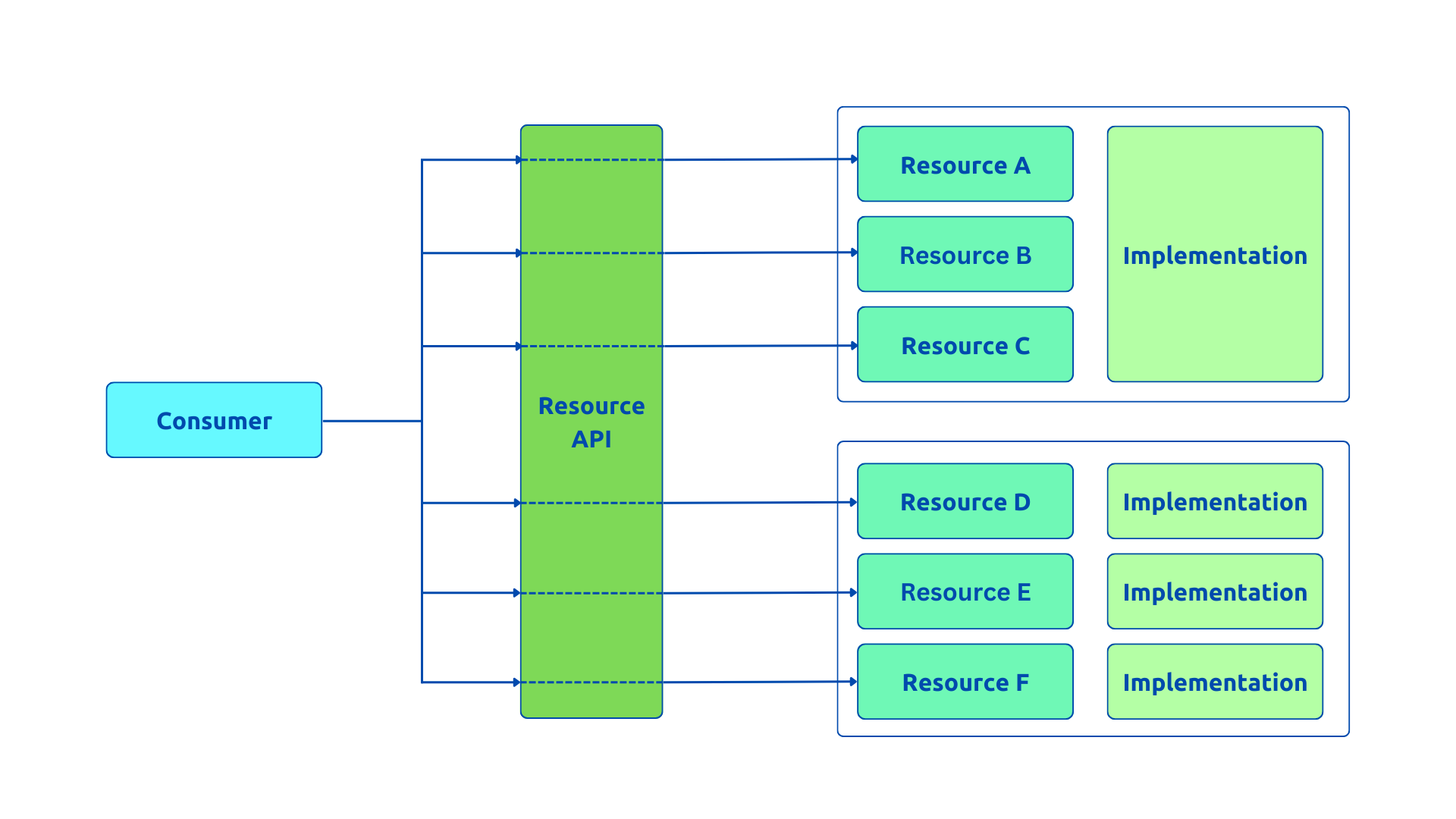
+The **resource style** as the name implies is _resource-oriented_. Many of
today’s APIs use the resource style, and this can be easily verified by the
popularity of [OpenAPI](https://www.openapis.org/), which is the most popular
way of describing resource-oriented APIs. In this style, the main focus is on
which resources to expose to consumers so that they can interact with these
resources.
+
+
+
+The resource in this context can be assumed to be similar in scope to what you
would have in resources such as web pages when designing a website. The idea of
resources gives us a great way to expose the relevant aspects of an API’s
functionality and at the same time allows us to hide implementation details
behind the resources. There can be resources for persistent concepts such as
products, product categories, and customer information. Also, there can be
resources for process-oriented [...]
+
+For the resource style, there is
[REST](https://en.wikipedia.org/wiki/Representational_state_transfer) as an
architectural pattern, but that doesn’t mean that REST gives you concrete
technologies. For REST, choosing
[HTTP](https://en.wikipedia.org/wiki/Hypertext_Transfer_Protocol) as a protocol
is a preferred choice, and for the representation format, it’s probably safe to
say that [JSON](https://www.json.org/json-en.html) by far overshadows any other
representation (such as the [XML](ht [...]
+
+In developing REST APIs with many collections of resources that are integrated
with backend HTTP endpoints, you can use [API Gateway
features](https://apisix.apache.org/docs/apisix/getting-started/) to help you
with all aspects of the API lifecycle, from creation to monitoring your
production APIs. API Gateway REST APIs use a request/response model where a
client sends a request to a service and the service responds back
synchronously. You can read more about [how to choose the right API [...]
+
+Resource style lacks is the ability to better represent workflows across these
resources. The **hypermedia style** adds a key component to the resource style
to address resource-linking concerns.
+
+## Hypermedia Style
+
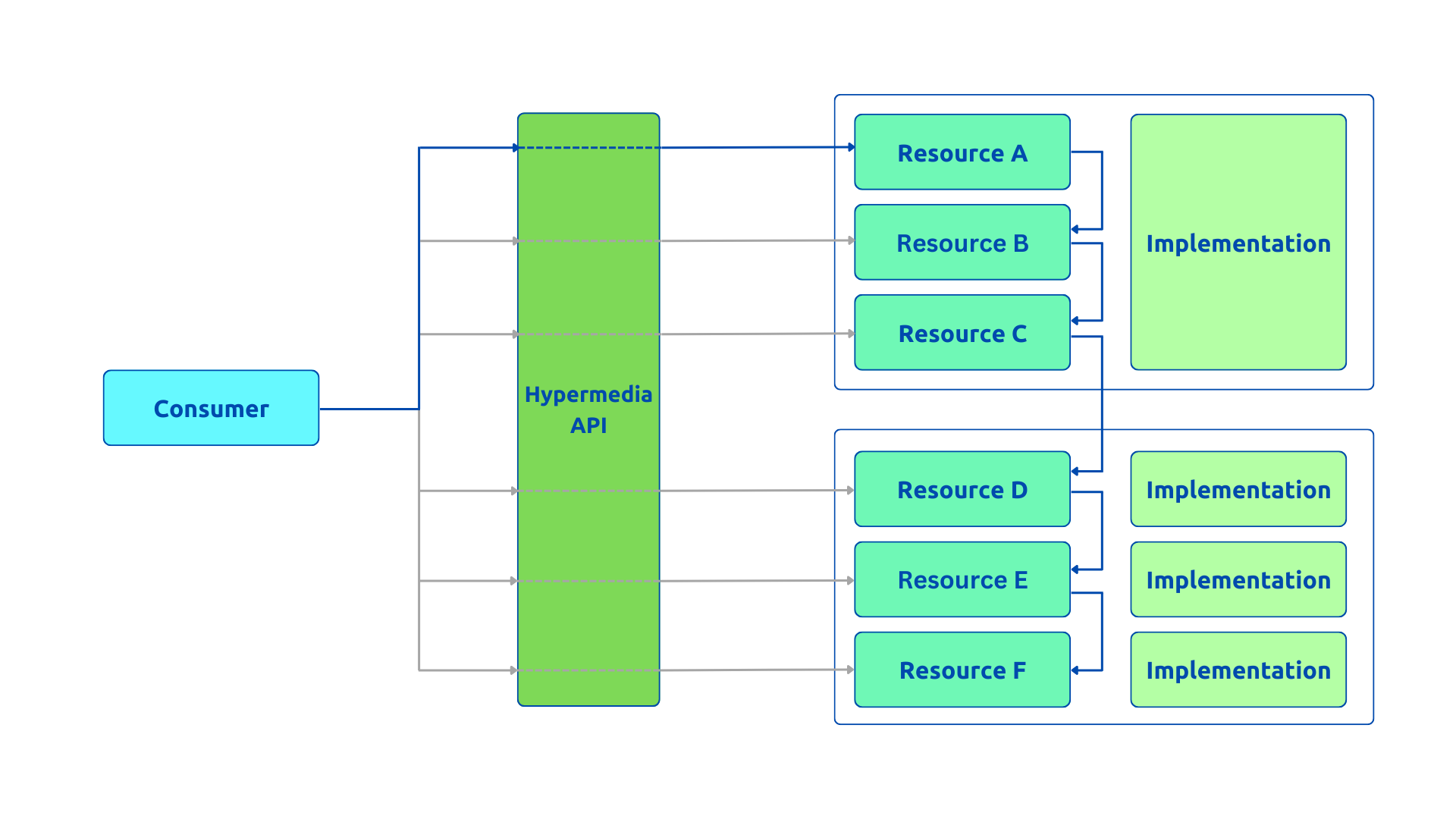
+Just as on the web, the most important paths across resources can be navigated
by simply _using links_ between them (instead of having to know each resource
individually and enter its URI in the browser’s address bar); the [hypermedia
style](https://www.infoq.com/articles/hypermedia-api-tutorial-part-one/) does
the same but for the resources of an API.
+
+
+
+On the web, humans read pages and then decide which link to follow. For
hypermedia APIs, this decision is usually made by a machine. This means that
links need to have machine-readable labels so that machines can identify the
available options and then make a choice. These labels are conceptually similar
to the text of a link that humans click on web pages, but the labels are
represented in the machine-readable representation of resources, which nowadays
in many cases will be JSON. In a [...]
+
+> _HATEOAS_ is an abbreviation for Hypermedia As The Engine Of Application
State. HATEOAS is the aspect of REST, which allows for dynamic resource routing.
+
+There are two main advantages of **hypermedia APIs over resource-style APIs**:
+
+- They provide all the links necessary in the previous response to choose the
available resources in the next step.
+- Links span resources, and it doesn’t matter whether these resources are
provided by one API or several APIs.
+
+All of this sounds very positive because the Hypermedia style provides the
necessary knowledge for API consumers to discover your API themselves and what
resources you offer to them. You can build a hypermedia-driven REST service
with any programming language and framework used in your stack. For example,
using [ASP.NET Web
API](https://learn.microsoft.com/en-us/archive/msdn-magazine/2013/january/asp-net-building-hypermedia-web-apis-with-asp-net-web-api)
or [Spring Boot Rest API](https:/ [...]
+
+However, the ease of browsing may increase the risk of the learner skipping
through the materials and getting fragmented information. Also, since data is
shared between client and server, it can also lead to “_chatty_” APIs that
require a number of interactions for the client to access all required
information, and what if API endpoints are exposed by multiple backend services
(microservices and serverless APIs)?. The latter challenge can be solved by
leveraging an API Gateway with _a re [...]
+
+Moreover, API consumers do not know what they want from the very beginning and
it is more efficient to write a query to get exactly what they want as is
offered by the **query style** in the next section.
+
+## Query Style
+
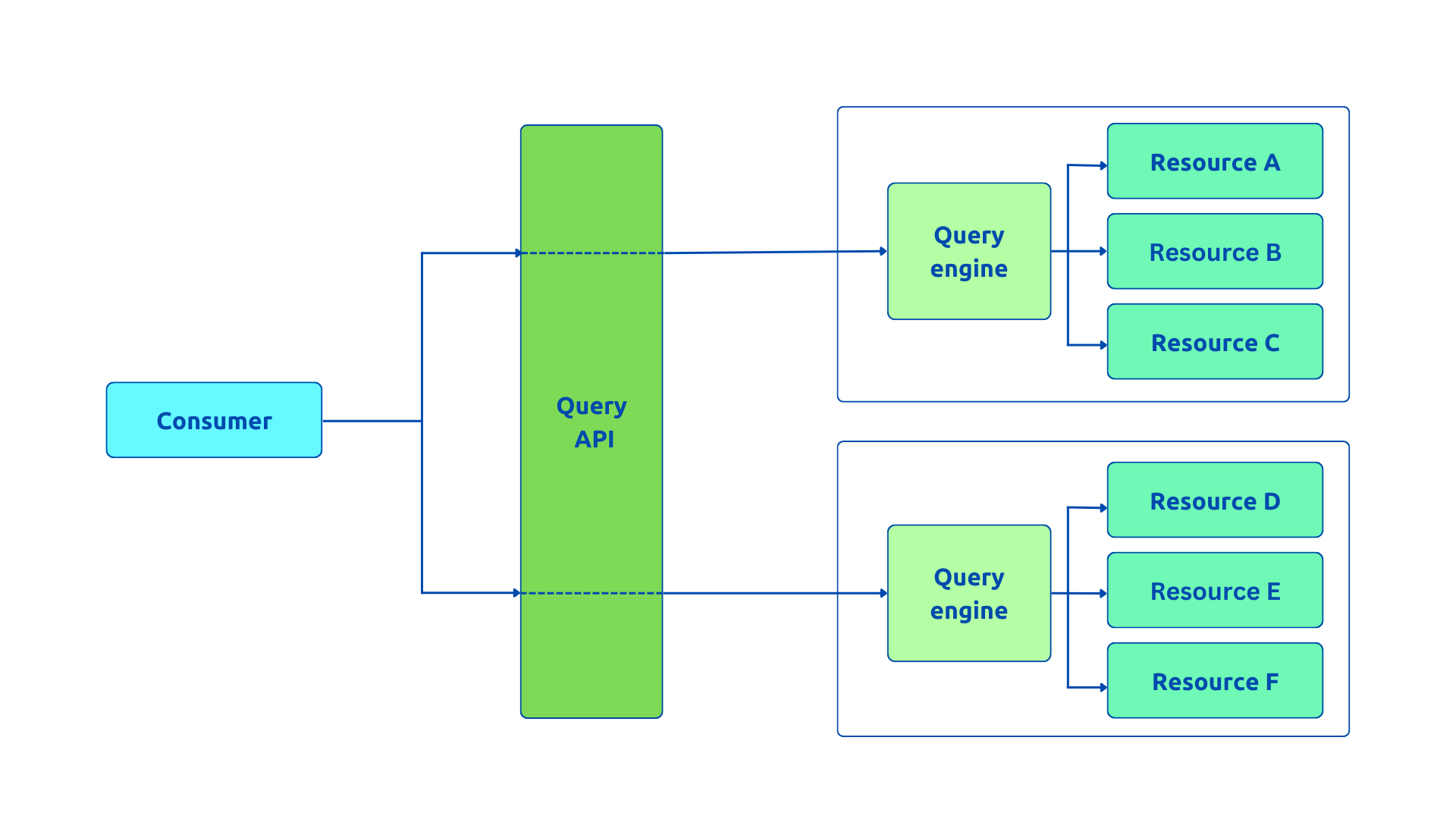
+The _query style_ is rather different from the resource and hypermedia styles
because it provides _a single entry point_ to access a potentially large set of
resources. The idea of the query style is that these resources are managed in a
structured form by the API provider. This structure can be queried, and the
response contains the query results. At some level, this can be seen as similar
to how databases work. They have an underlying data model for the data they
store, and a query lan [...]
+
+
+
+One benefit of the query style is that each consumer can request exactly what
they want. This means that with a well-constructed query, it may be possible to
combine results that would have required numerous requests in
resource/hypermedia APIs. For example, instead of sending several HTTP requests
to different endpoints, you can `POST` a single “_query_” for all you need.
+
+For the query style, it’s probably fair to say that
[GraphQL](https://graphql.org/) by now is by far the most popular choice when
it comes to building [single-page
applications](https://en.wikipedia.org/wiki/Single-page_application) (SPAs). It
is a language for querying databases from client-side applications. The big
advantage that GraphQL has is that it plugs into a JSON-based ecosystem. While
GraphQL does not use JSON for queries, it returns results in JSON which make it
easy to proce [...]
+
+Although query style has negligible disadvantages over its advantages, we can
identify one of them is the query complexity. API consumers need to have a good
understanding of the underlying data and query models (so that they know how to
use the query API properly and make efficient requests to avoid recursion or
getting too many nested resources). Also, it is more complicated to implement a
simplified cache with GraphQL than implement it in resource style because REST
APIs have multiple [...]
+
+Nevertheless, the last two mentioned downsides (caching and rate-limiting) can
be developed by introducing the API Gateway between the client and data store
to win in this situation. For example, an open-source [Apache
APISIX](https://apisix.apache.org/) API Gateway has the matching ability to
recognize GraphQL syntax. By efficiently matching GraphQL statements carried in
requests, it can filter out abnormal traffic to further apply [rate-limiting
policies](https://apisix.apache.org/doc [...]
+
+## Tunnel Style
+
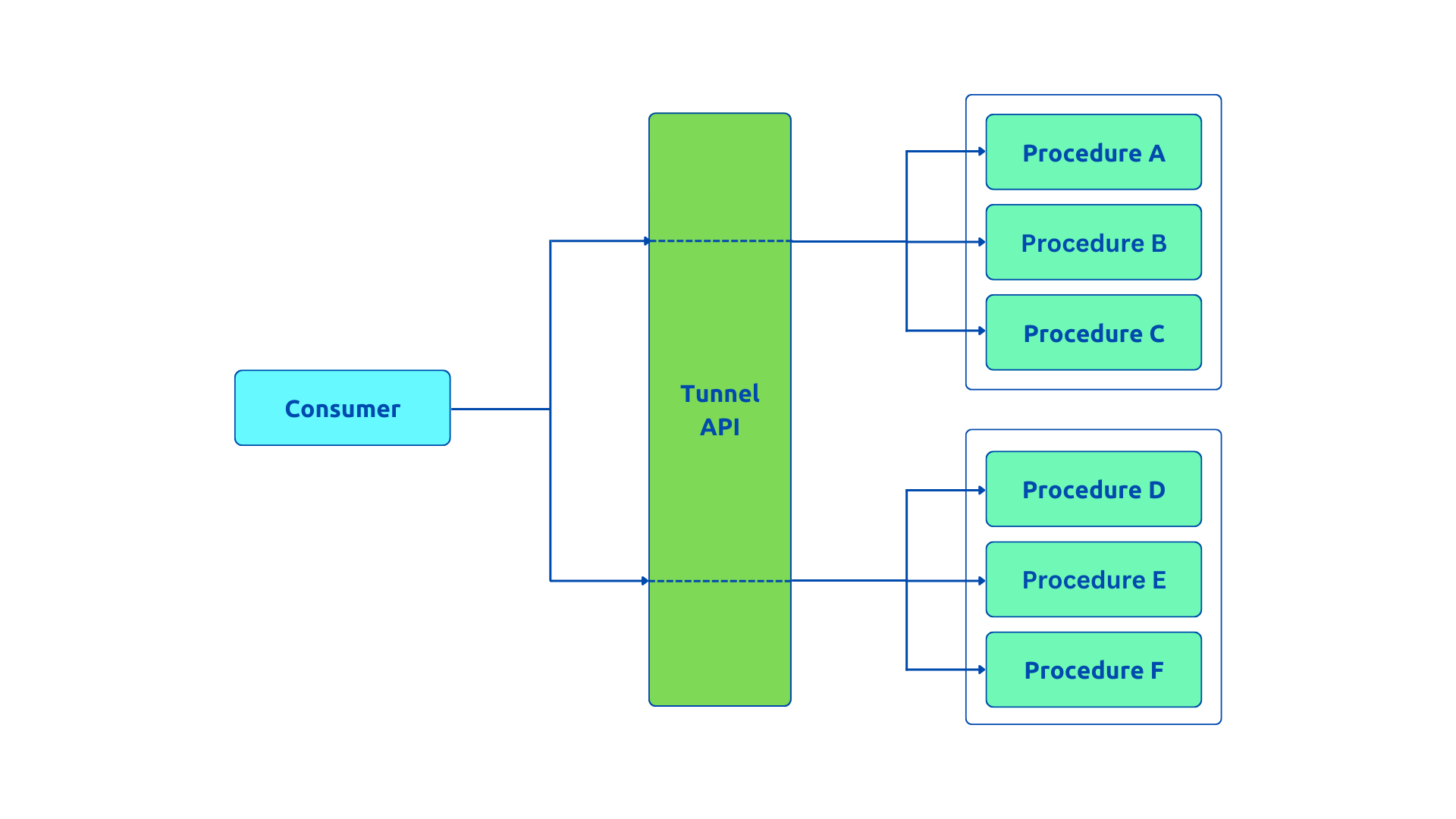
+In _tunnel style_, an API is a collection of functions that can be invoked
remotely. APIs become a simple extension of what is in a local programming
scenario where all exposed procedures are available as APIs. The tunnel style
is convenient for developers because it can take very little effort to create
APIs.
+
+
+
+A common technique used in this style is the [Remote Procedure
Call](https://en.wikipedia.org/wiki/Remote_procedure_call) method. RPC is a
request-response protocol, where a client sends a request to a remote server to
execute a specific procedure, and then the client receives a response back.
However, RPC APIs are much more difficult to maintain and update than REST
APIs, so again RPC APIs aren’t used as much in modern API development.
+
+[gRPC](https://grpc.io/) is an efficient tunnel-style (RPC) implementation and
is well-suited for distributed systems. It has SDKs for many languages and
platforms, so it can be used widely, for communication across platforms and
languages. gRPC is super fast and efficient because it uses [Protocol
Buffers](https://en.wikipedia.org/wiki/Protocol_Buffers) (protobufs) to
serialize and deserialize, the HTTP/2 standard for optimized binary transfers,
and bidirectional streaming to avoid (lo [...]
+
+Tools can be used to expose procedures as APIs, in which case a lot of the
task of “creating the API” can be automated. There still should be some
management layer for securing the APIs, but that can be addressed by using a
component such as an API gateway and its [gRPC
proxying](https://apisix.apache.org/blog/2021/12/30/apisix-proxy-grpc-service/)
ability to convert payloads from one format to another over the same transport
(from REST to gRPC or vice versa) if different API protocols a [...]
+
+## Event-Based Style
+
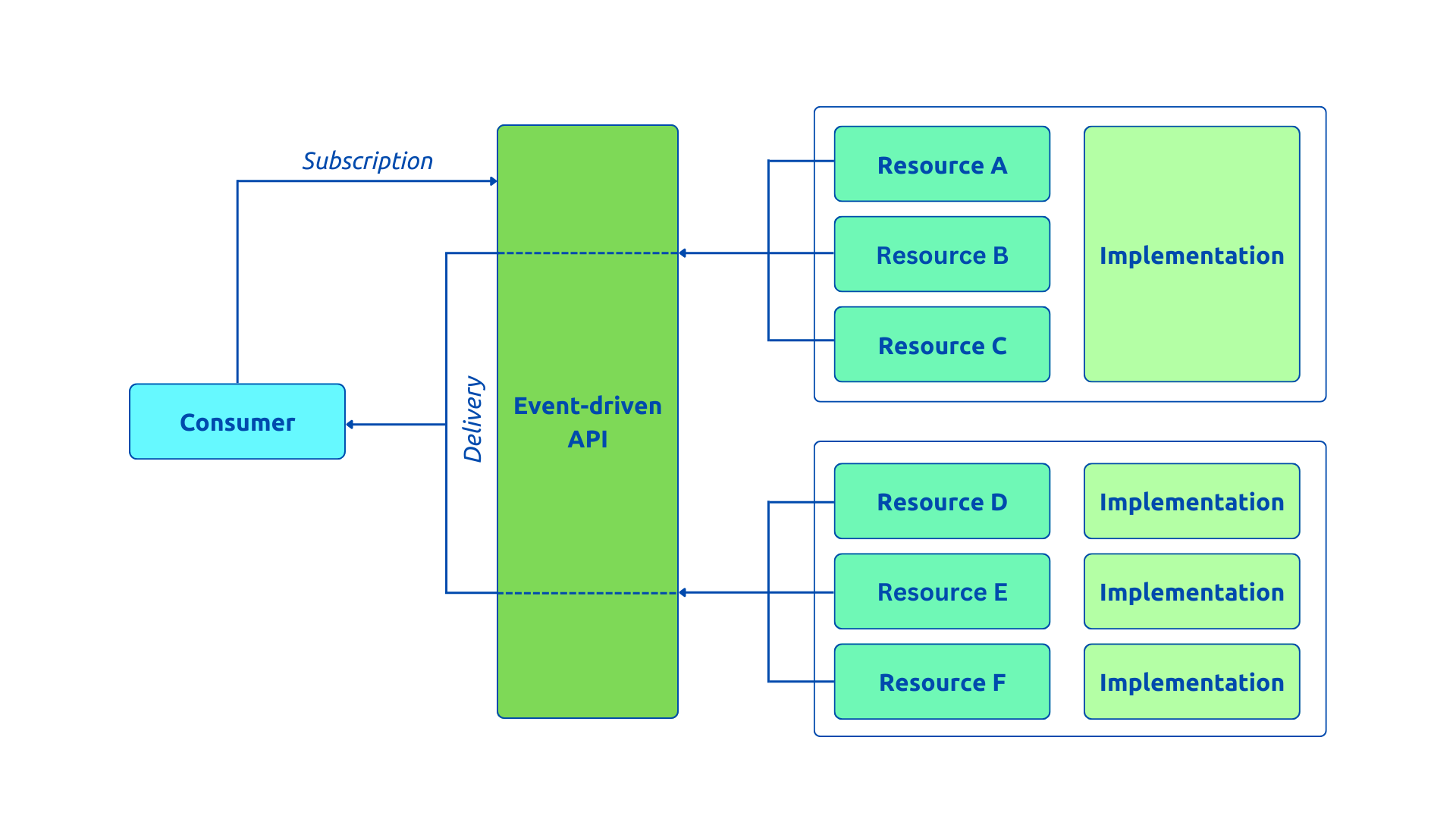
+In the _event-based style_, the API provider creates events that are then
delivered to consumers of the API instead of consumers requesting something
from the provider. Consuming applications expect to be informed of any change
of state on a specific record or records on API. There are many ways and
technology options to consider when implementing an event-driven API. For
example, we explored [how to build Event-Driven APIs with Webhook and API
Gateway](https://apisix.apache.org/blog/202 [...]
+
+
+
+Another approach is that event consumers connect to a _message broker_ that
decouples them from event producers. The message broker takes care of managing
events, and consumers must subscribe to certain event types so that the broker
can make sure that events of this type are delivered to subscribers. In this
case, the architecture is much more centered around the delivery broker, and
all event producers and consumers are connected to this message broker. In this
case, a good technology [...]
+
+Some drawbacks of choosing an event-based style are, it takes more time to
implement compared to other styles, it may trigger multiple duplicate messages
across different services if the style is not properly applied, error handling
and troubleshooting can be challenging without installing & configuring
third-party tools to monitor the event flow effectively. However, you can put
the API Gateway in front of even-driven APIs when [observing modern
applications](https://dev.to/apisix/apis- [...]
+
+## Wrapping Up
+
+As we reviewed, 5 styles were the foundation of popular approaches and
technologies such as
[REST](https://en.wikipedia.org/wiki/Representational_state_transfer),
[OpenAPI](https://www.openapis.org/),
[HTTP](https://en.wikipedia.org/wiki/Hypertext_Transfer_Protocol),
[gRPC](https://grpc.io/), [GraphQL](https://graphql.org/), and
[Kafka](https://kafka.apache.org/). The most important lesson to learn about
these **5 API styles** is that there is no “best style”. When it comes to
choosing [...]
+
+**Problem** - As discussed in the individual styles, each style has a certain
focus and certain strengths. Thus, it is important to think about the problem
that is addressed with an API.
+
+**Consumer** - Every API is built for consumption, and thus an API’s consumers
always should be an important design aspect. Since APIs ideally are reused,
it’s not always possible to plan for all consumers and their constraints, but
it makes sense to design with at least some consumers in mind and to make
assumptions about others.
+
+**Context** - Most APIs are part of an API landscape. That landscape can have
a different audience and scope, depending on whether the API is meant for
internal, partner, or public use.
+
+Ultimately, the style that you and your team are more familiar with and easier
to build might be a good fit for your project. Sometimes, we need to use
different styles together in one software project.
+
+### Related resources
+
+- [API fundamentals](https://developer.ibm.com/articles/api-fundamentals/).
+
+- [API Styles: SOAP, REST, RPC, GraphQL and
more](https://api-university.com/blog/styles-for-apis-soap-rest-and-rpc/).
+
+### Recommended content
+
+- [How to build Event-Driven APIs with Webhook and API
Gateway](https://apisix.apache.org/blog/2022/11/07/webhook-api-gateway-event-driven-apis/)
+
+- [10 most common use cases of an API
Gateway](https://apisix.apache.org/blog/2022/10/27/ten-use-cases-api-gateway/).
+
+- [How to choose the right API
Gateway](https://iambobur.com/2022/11/22/how-to-choose-the-right-api-gateway/).
+
+- [A poor man's API](https://apisix.apache.org/blog/2022/11/23/poor-man-api/).






