This is an automated email from the ASF dual-hosted git repository.

yilinzeng pushed a commit to branch master
in repository https://gitbox.apache.org/repos/asf/apisix-website.git
The following commit(s) were added to refs/heads/master by this push:
new 8fa80621198 docs: add datavisor-uses-apisix.md (#1746)
8fa80621198 is described below
commit 8fa8062119830051a7e83c035fb30ff0faac8225
Author: Jing Yan <[email protected]>
AuthorDate: Fri Dec 22 17:07:10 2023 +0800
docs: add datavisor-uses-apisix.md (#1746)
---
blog/en/blog/2023/12/19/datavisor-uses-apisix.md | 131 +++++++++++++++++++++++
1 file changed, 131 insertions(+)
diff --git a/blog/en/blog/2023/12/19/datavisor-uses-apisix.md
b/blog/en/blog/2023/12/19/datavisor-uses-apisix.md
new file mode 100644
index 00000000000..31a66db6122
--- /dev/null
+++ b/blog/en/blog/2023/12/19/datavisor-uses-apisix.md
@@ -0,0 +1,131 @@
+---
+title: "Enhancing Security and Performance: DataVisor's Dynamic Use of APISIX"
+authors:
+ - name: Xiaobiao Zhao
+ title: Author
+ url: https://github.com/xiaobiaozhao
+ image_url: https://github.com/xiaobiaozhao.png
+ - name: Jing Yan
+ title: Technical Writer
+ url: https://github.com/JYan00
+ image_url: https://github.com/JYan00.png
+keywords:
+ - open source
+ - API gateway
+ - Apache APISIX
+ - DataVisor
+ - API gateway best practice
+description: DataVisor not only uses APISIX in its production environment but
also enhances APISIX through customization, and these efforts have proven
successful in optimizing DataVisor's production processes.
+tags: [Case Studies]
+image:
https://static.apiseven.com/uploads/2023/12/05/gM8zRGh1_Cover_Datavisor.png
+---
+
+> Author: Xiaobiao Zhao, DataVisor Senior Architect, Apache Kvrocks Committer,
OpenResty and Apache APISIX Contributor. This article is based on a
presentation given by Xiaobiao Zhao at the APISIX Shanghai Meetup in November
2023.
+<!--truncate-->
+
+DataVisor specializes in risk control, focusing on preventing activities such
as counterattacks and fraud. In our development at DataVisor, we not only use
APISIX in our production environment but also enhance it through customization,
including the secondary development of plugins, and these efforts have proven
successful in optimizing DataVisor's production processes. Read on for a
practical overview of how APISIX is applied at DataVisor.
+
+## Challenges
+
+* **Performance Pressure:** In the risk control industry, where performance
metrics are crucial, DataVisor faces the challenge of ensuring the timely and
efficient execution of risk control calculations. Delays in these calculations
could lead to a loss of control over potential risks in this competitive and
risk-prone environment.
+* **Balancing Security and User Experience:** The primary goal of risk control
tasks is to intercept potentially harmful user actions while preserving a
seamless user experience. DataVisor's system must ensure user safety without
compromising the natural flow of user interactions, posing a challenging
balance.
+* **Difficulty with Gateway Tools Meeting Requirements:** Many API gateway
tools on the market face issues like high latency or erratic performance. Such
challenges can impact the stability and availability of DataVisor's system,
especially when efficiently managing business traffic is crucial. Therefore,
choosing a stable, low-latency API gateway tool is crucial for maintaining the
system's smooth operation.
+
+## Implementing APISIX in the Production Environment
+
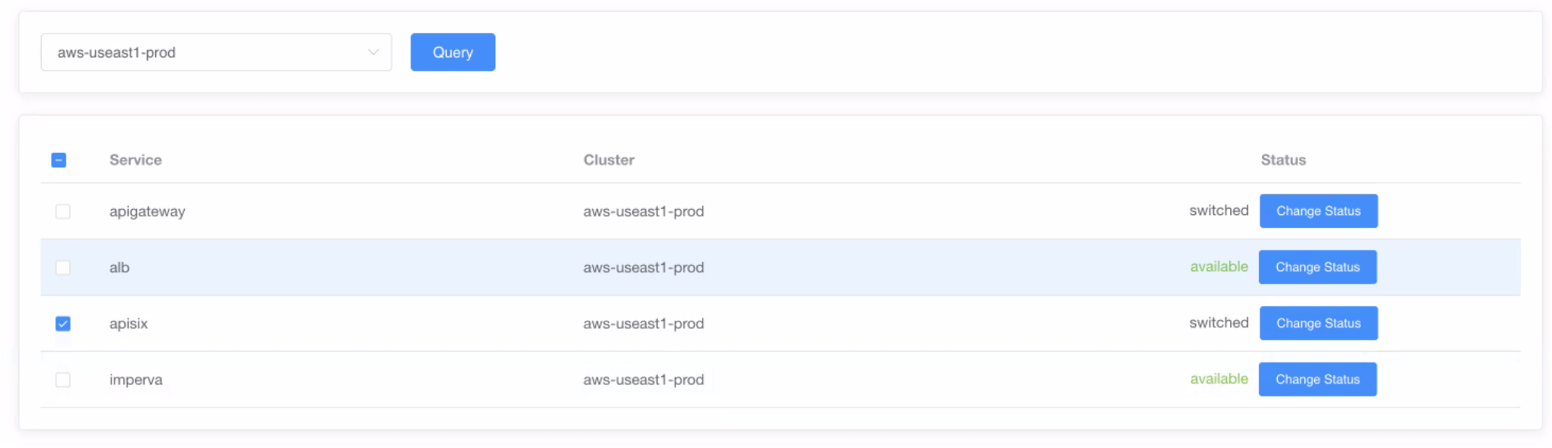
+In product development, DataVisor has adopted a comprehensive gateway and
authentication solution. APISIX is not just a standalone component within the
product ecosystem; it collaborates with other products like AWS API Gateway,
Application Load Balancer (ALB), Imperva, and an integrated OAuth
authentication mechanism. All these tools, each equipped with gateway
functionalities, work together to facilitate traffic access within our system.
+
+
+
+### Why We Chose APISIX
+
+When deciding on a solution for our production setup, we carefully compared
options and settled on APISIX for several reasons:
+
+1. **Cost-Effectiveness:** Compared to basic application gateways from cloud
providers (like ALB), APISIX offers significant cost savings for our operations.
+2. **High Performance, Low Latency:** APISIX stands out for its outstanding
performance. Unlike other API Gateway tools, APISIX not only avoids noticeable
delays but is also less prone to performance spikes, such as P99 or P9999,
which ensures a smoother experience without significant latency issues.
+3. **Industry-Specific Focus:** In the field of risk control, our business
system requires a rapid risk control computation time of 50 milliseconds.
Failing to complete this computation promptly results in the immediate
dismissal of the risk control result. The main goal of risk control is to
intercept potentially harmful user actions without disrupting their normal
activities.
+
+### Utilizing APISIX in Practice
+
+Currently, we are expanding the usage of APISIX across a growing range of
business scenarios.
+
+Given that DataVisor does not engage in direct business activities and
primarily serves various vendors who call upon our services, APISIX acts as the
gateway for traffic deployed on the public network. This deployment approach
may seem somewhat unconventional in practical scenarios. Typically, APISIX
might be situated on an intranet or one layer below the public network.
However, our strategy to deploy it directly on the public network allows APISIX
to efficiently manage traffic origina [...]
+
+
+
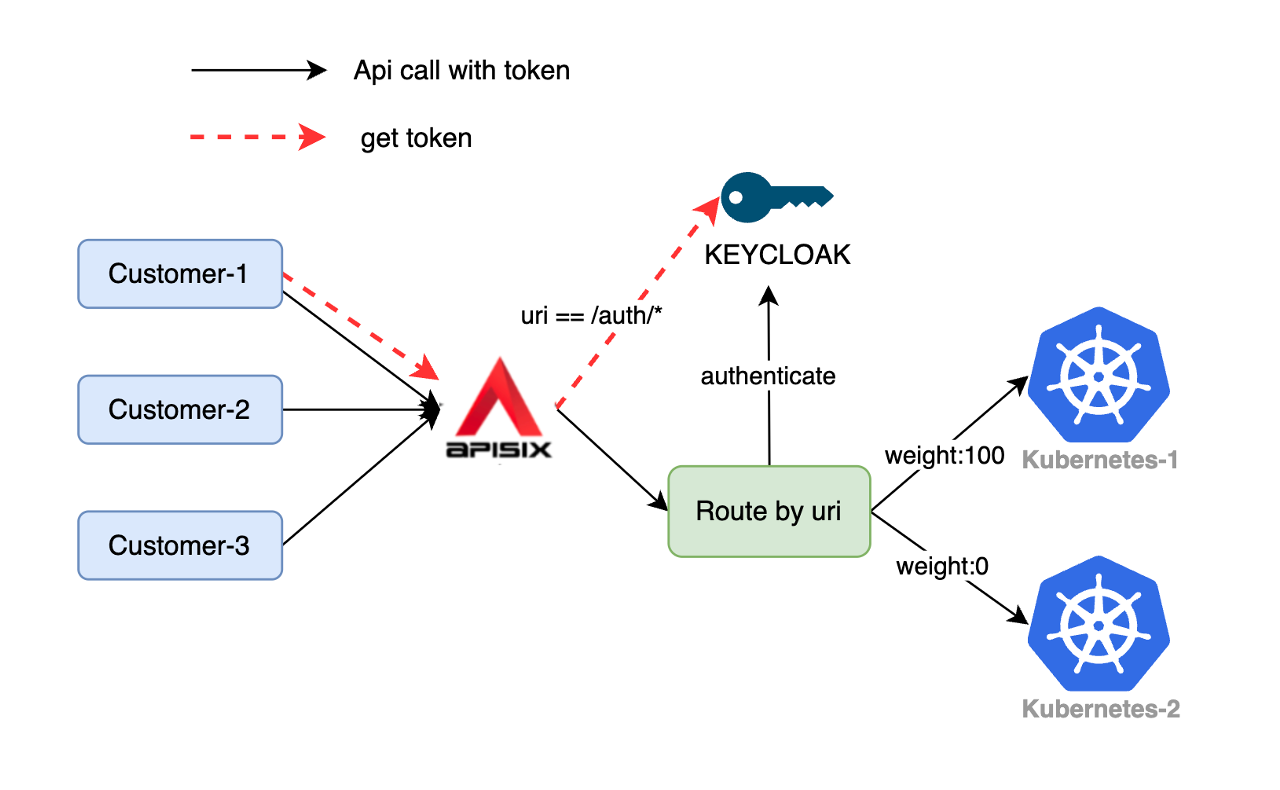
+To offer a more concrete understanding of how we implement APISIX in our
production environment, a typical use case is provided below.
+
+Customer A initiates access to our system via the red route to acquire an
authorization access token. Subsequently, it interacts with our internal
authorization server or connects to other authorization servers, such as the
widely used Okta, through APISIX. Our primary authentication mechanism involves
routing all traffic to Okta for the initial authentication process.
+
+Once customers obtain different tokens, APISIX's routing capabilities will
direct this authenticated traffic to various Kubernetes clusters. Presently, we
have deployed an active-active Kubernetes cluster, with traffic being routed to
either Cluster A or Cluster B. Typically, we direct traffic to one Kubernetes
cluster, while the other serves as a reserve, only handling traffic during
extensive upgrades or cluster updates.
+
+
+
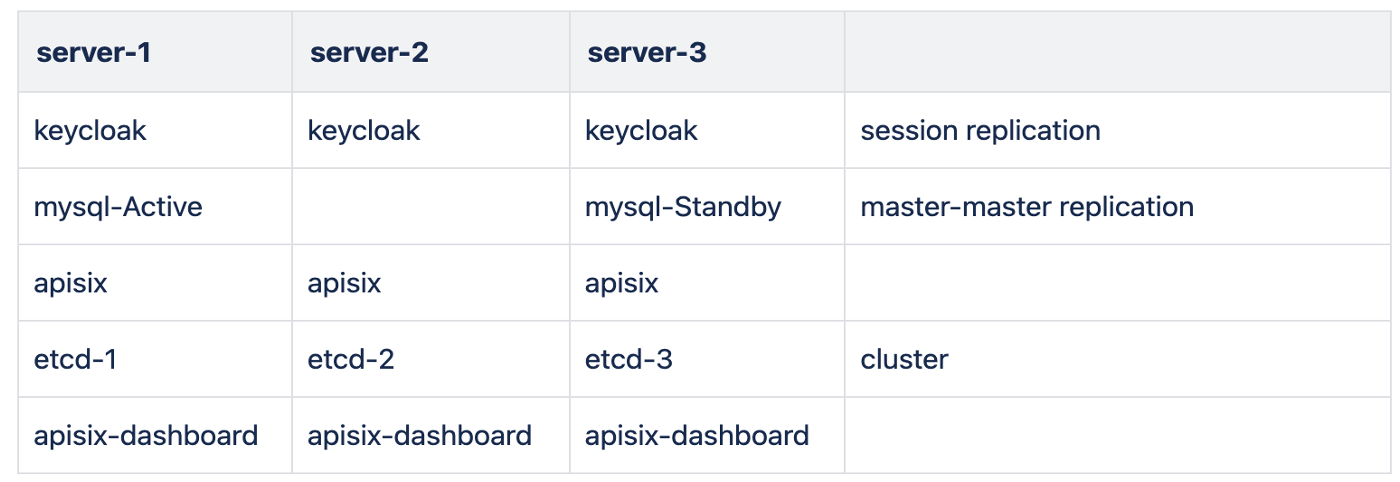
+Regarding the usage of the gateway, we have opted for a relatively
straightforward and standard deployment approach. An interesting observation is
that we can place APISIX outside our Kubernetes cluster. This step is made
possible by APISIX's outstanding performance, requiring minimal CPU resources.
Utilizing smaller instances outside the cluster to deploy APISIX has proven
effective in handling significant network traffic.
+
+In our production setting, we have deployed three APISIX nodes, each
potentially configured with only two cores. We employ minicomputers with 2G or
4G of memory to manage the traffic load. If there are concerns about APISIX's
performance, I am confident they can be put to rest. Its performance is
expected to rival that of NGINX and OpenResty, and perhaps even surpass my
initial expectations.
+
+## Customizing APISIX
+
+### Enhancing the Privileged Process
+
+While there is not a concept of privileged process in NGINX, it is present in
OpenResty, where it stands at the same level as worker processes. This process
is somewhat special because it doesn't handle incoming network traffic—it does
not listen on any ports. However, it can perform various computations and data
collection tasks. As a result, we have extended this privileged process to
cater to our specific needs.
+
+
+
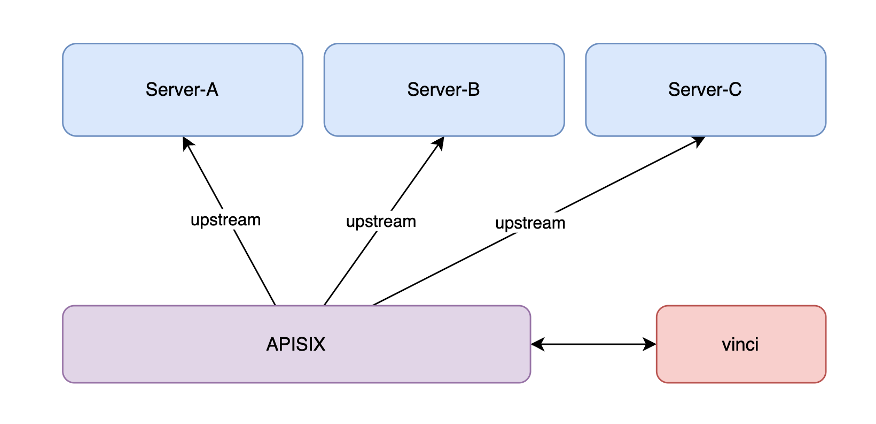
+The diagram above provides a clear overview of the relationship between APISIX
and our backend services. Our primary utilization of APISIX is for receiving
and distributing traffic.
+
+At the gateway level, APISIX conducts pre-processing before the traffic
enters. What sets our configuration apart is the introduction of a small
process at the APISIX layer. This process, functioning akin to a Sidecar,
operates concurrently with the APISIX process, responsible for executing its
designated tasks. Following this step, it transmits the gathered data to
APISIX, which, in turn, conveys it back to the upper layer of the system to
perform specific business rules. While this usa [...]
+
+
+
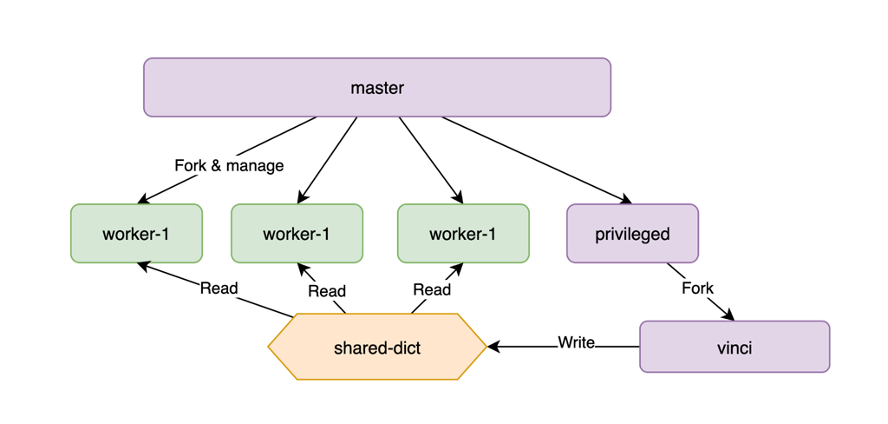
+How is the implementation of the privileged process handled? Our model
typically follows a master-worker structure, with worker processes responsible
for managing business traffic and the master process forking a unique
privileged process. In our development, we restrict the privileged process to
just one. Thus, we have devised a distinct strategy: within the privileged
process, we fork another process to handle additional tasks, ensuring it does
not interfere with the demanding responsi [...]
+
+For data collection, communication between the privileged process and worker
processes is facilitated through a shared-dict. The performance of shared-dict
is notably robust, meeting the demands of the majority of scenarios.
+
+### Expanding ssl-certificate-phase
+
+
+
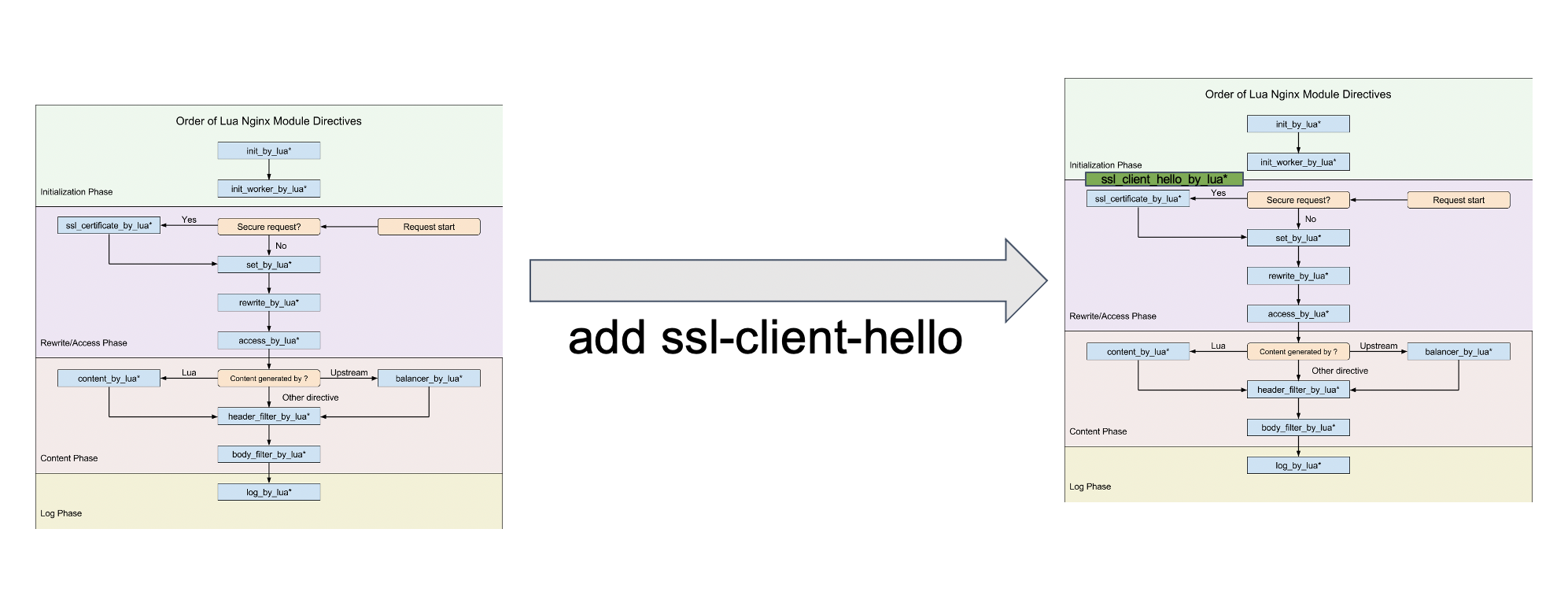
+Expanding the ssl-certificate-phase involves integrating APISIX using the
NGINX + Lua framework. Initially, APISIX lacked support for extensive script
injection during the TLS handshake phase. When the OpenResty community later
introduced the ability to inject code during the ssl-client-hello phase, we
noticed a lag in the APISIX community's adoption. Consequently, we had to
manually modify APISIX.
+
+Referencing the existing code structure, we introduced our code into the
APISIX process, enabling its execution during the client-hello phase. While Lua
provides several capabilities during this phase, it has some limitations. In
many scenarios, we find it beneficial to utilize NGINX for module development
or create a small dynamic library for NGINX to accomplish specific tasks.
+
+Presently, OpenResty and Lua showcase exceptional capabilities in loading
dynamic libraries. The Foreign Function Interface (FFI) feature allows seamless
integration of dynamic libraries. Defining the necessary external interfaces in
the dynamic library and exporting functions to Lua through simple FFI commands
results in unexpectedly improved performance. Code written in this FFI + Lua
pattern performs comparably to code written purely in the C language, achieving
around 70% of its perf [...]
+
+### Developing Plugins
+
+
+
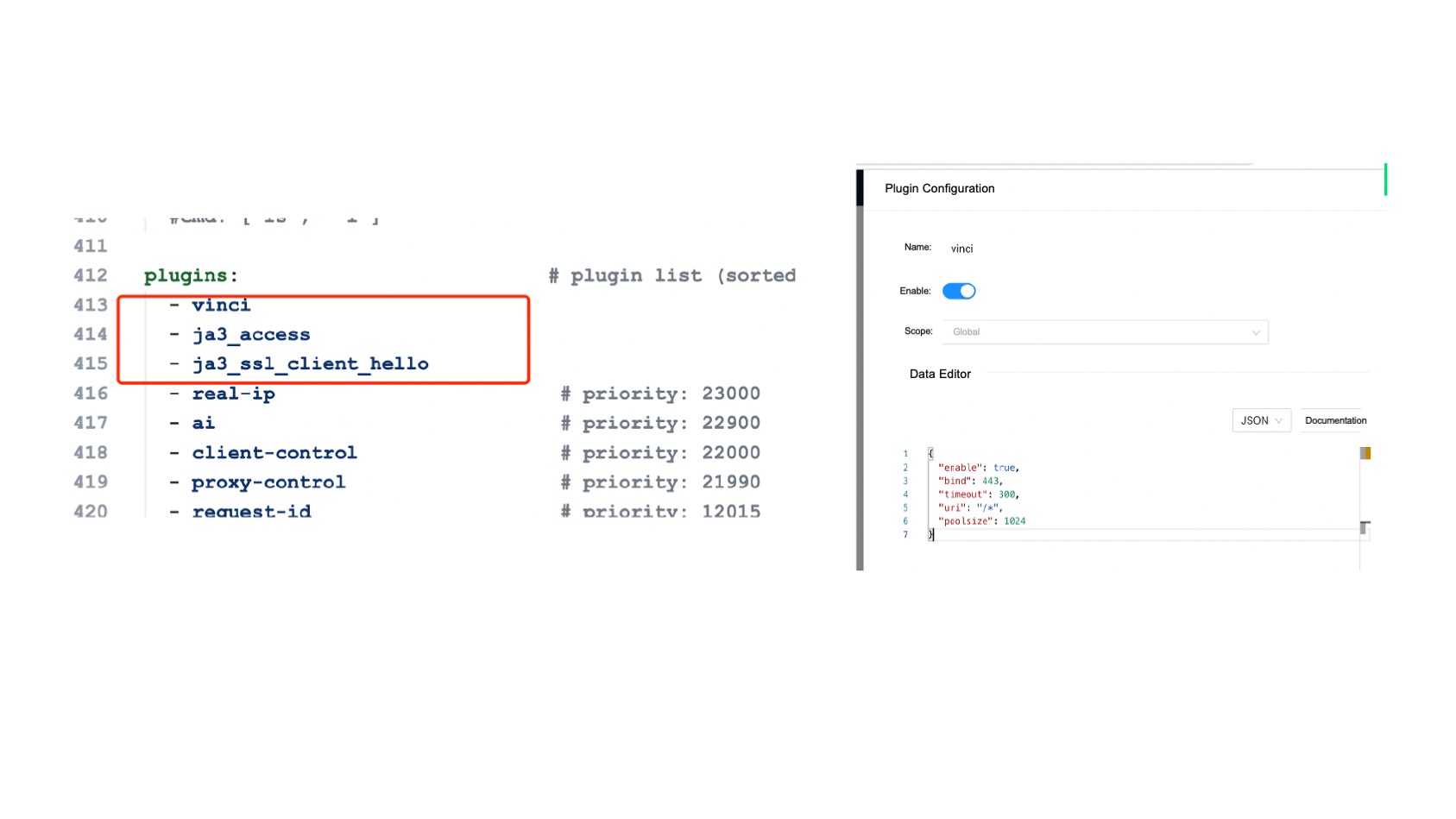
+As a result of our modifications to APISIX, numerous functionalities in the
packaged product are embedded deeply within the project, making dynamic
adjustments challenging. Accordingly, we opted to package specific plugins,
integrate them into the APISIX project, and then make modifications using the
Dashboard.
+
+The process of developing plugins with APISIX is highly convenient and
facilitates the effortless creation of high-performance plugins. Presently,
APISIX supports not only Lua for plugin development but also multiple
programming languages such as Java, Go, and Python. This versatility empowers
users to implement a diverse array of functionalities.
+
+## Benefits of APISIX on Production
+
+The deployment of APISIX has resulted in an overall enhancement of our
system's performance, yielding exceptional production outcomes.
+
+* **Latency Reduction:** One of the standout features of APISIX is its
remarkable ability to substantially reduce latency. In comparison to
alternative solutions, we have observed shorter processing times for user
requests, a critical factor in delivering a better user experience.
+* **Throughput Boost:** The introduction of APISIX has led to a significant
increase in throughput, allowing the system to handle concurrent requests with
greater efficiency. Unlike using other API gateway products, we have achieved
successful large-scale request processing, ensuring the stability and
reliability of the system under high loads through APISIX. This outcome
solidifies a dependable foundation for managing spikes in user traffic.
+
+
+
+## Outlook for APISIX
+
+APISIX stands as a vibrant community committed to monthly version iterations.
Therefore, we have two anticipated functional improvements for the upcoming
development of APISIX.
+
+### Dynamic Addition and Update via the Dashboard
+
+Currently, completing plugin development does not allow for hot updates.
Transmitting plugins directly to the APISIX server through the post method is
not feasible; it necessitates repackaging the APISIX server and restarting,
particularly when it comes to the Dashboard. Hence, we hope APISIX can
introduce hot update functionality, facilitating more convenient dynamic
addition and updating of plugins through the Dashboard.
+
+### Support for CPU-Intensive Calculations using run_worker_thread
+
+NGINX introduced a specialized mechanism known as thread. These threads
primarily handle non-network-related tasks, such as activities with high CPU
utilization (data encryption/decryption and compression). Despite being
unrelated to network I/O, high CPU usage may potentially cause some blocking of
other network requests within the process.
+
+With this in mind, I hope APISIX can implement a similar feature. The ability
of APISIX to handle certain intricate functional computations, such as data
encryption/decryption and caching, would be a valuable enhancement.
+
+### Summary
+
+To sum up, DataVisor's application experience with APISIX is noteworthy. We
prioritized the performance demands within the risk control domain and
successfully addressed practical challenges through a distinctive approach to
secondary development. These experiences have not only proven successful in
technical implementation but have also established a sturdy foundation for our
company's resilient operation in the risk control industry.
+
+Through sharing these insights, we aim to offer beneficial references for
other companies in the industry, collectively driving the ongoing innovation
and progress of risk control technology.