yzeng25 commented on a change in pull request #6695:
URL: https://github.com/apache/apisix/pull/6695#discussion_r833883688
##########
File path: docs/en/latest/FAQ.md
##########
@@ -21,74 +21,80 @@ title: FAQ
#
-->
-## Why a new API gateway?
+## Why do I need a new API gateway?
-There are new requirements for API gateways in the field of microservices:
higher flexibility, higher performance requirements, and cloud native.
+As organizations move towards cloud native microservices, there is a need for
an API gateway that is performant, flexible, secure and scalable.
-## What are the differences between Apache APISIX and other API gateways?
+APISIX outperforms other API gateways in these metrics while delivering
functions like dynamic routing, a plugin mechanism, a low code dashboard and
more.
-Apache APISIX is based on etcd to save and synchronize configuration, not
relational databases such as Postgres or MySQL.
+## How does Apache APISIX differ from other API gateways?
-This not only eliminates polling, makes the code more concise, but also makes
configuration synchronization more real-time. At the same time, there will be
no single point in the system, which is more usable.
+Apache APISIX differs in the following ways:
-In addition, Apache APISIX has dynamic routing and hot loading of plug-ins,
which is especially suitable for API management under micro-service system.
+- It uses etcd to save and synchronize configurations rather than relational
databases like PostgreSQL or MySQL. This eliminates the need for polling,
synchronizes the configuration in real-time, makes the code concise and avoids
a single point of failure.
+- Supports dynamic routing.
+- Supports [hot loading of Plugins](/docs/apisix/plugins/#hot-reload).
-## What's the performance of Apache APISIX?
+## What is the performance impact of using Apache APISIX?
-One of the goals of Apache APISIX design and development is the highest
performance in the industry. Specific test data can be found
here:[benchmark](benchmark.md)
+Apache APISIX delivers the best performance among other API gateways with a
single-core QPS of 23,000 with an average delay of 0.6 ms.
Review comment:
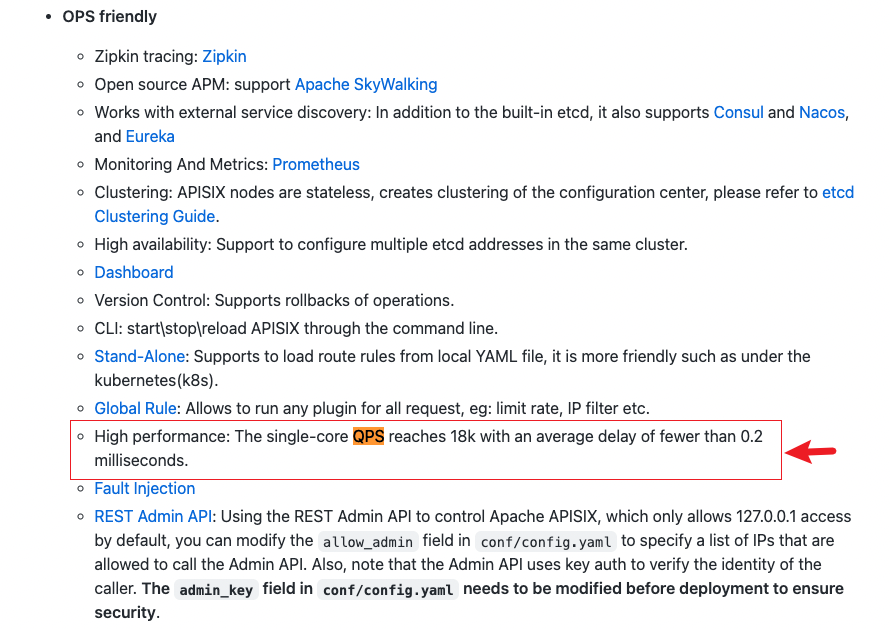
Could you double check on the QPS and the latency stats? I remember the
stats are 18,000 QPS and 0.2 ms latency on the [GitHub intro
page](https://github.com/apache/apisix).
##########
File path: docs/en/latest/FAQ.md
##########
@@ -21,74 +21,80 @@ title: FAQ
#
-->
-## Why a new API gateway?
+## Why do I need a new API gateway?
-There are new requirements for API gateways in the field of microservices:
higher flexibility, higher performance requirements, and cloud native.
+As organizations move towards cloud native microservices, there is a need for
an API gateway that is performant, flexible, secure and scalable.
-## What are the differences between Apache APISIX and other API gateways?
+APISIX outperforms other API gateways in these metrics while delivering
functions like dynamic routing, a plugin mechanism, a low code dashboard and
more.
-Apache APISIX is based on etcd to save and synchronize configuration, not
relational databases such as Postgres or MySQL.
+## How does Apache APISIX differ from other API gateways?
-This not only eliminates polling, makes the code more concise, but also makes
configuration synchronization more real-time. At the same time, there will be
no single point in the system, which is more usable.
+Apache APISIX differs in the following ways:
-In addition, Apache APISIX has dynamic routing and hot loading of plug-ins,
which is especially suitable for API management under micro-service system.
+- It uses etcd to save and synchronize configurations rather than relational
databases like PostgreSQL or MySQL. This eliminates the need for polling,
synchronizes the configuration in real-time, makes the code concise and avoids
a single point of failure.
+- Supports dynamic routing.
+- Supports [hot loading of Plugins](/docs/apisix/plugins/#hot-reload).
-## What's the performance of Apache APISIX?
+## What is the performance impact of using Apache APISIX?
-One of the goals of Apache APISIX design and development is the highest
performance in the industry. Specific test data can be found
here:[benchmark](benchmark.md)
+Apache APISIX delivers the best performance among other API gateways with a
single-core QPS of 23,000 with an average delay of 0.6 ms.
Review comment:
I mean either of them or all of them could be right. But we need to keep
stats correct.
##########
File path: docs/en/latest/FAQ.md
##########
@@ -21,74 +21,80 @@ title: FAQ
#
-->
-## Why a new API gateway?
+## Why do I need a new API gateway?
-There are new requirements for API gateways in the field of microservices:
higher flexibility, higher performance requirements, and cloud native.
+As organizations move towards cloud native microservices, there is a need for
an API gateway that is performant, flexible, secure and scalable.
-## What are the differences between Apache APISIX and other API gateways?
+APISIX outperforms other API gateways in these metrics while delivering
functions like dynamic routing, a plugin mechanism, a low code dashboard and
more.
-Apache APISIX is based on etcd to save and synchronize configuration, not
relational databases such as Postgres or MySQL.
+## How does Apache APISIX differ from other API gateways?
-This not only eliminates polling, makes the code more concise, but also makes
configuration synchronization more real-time. At the same time, there will be
no single point in the system, which is more usable.
+Apache APISIX differs in the following ways:
-In addition, Apache APISIX has dynamic routing and hot loading of plug-ins,
which is especially suitable for API management under micro-service system.
+- It uses etcd to save and synchronize configurations rather than relational
databases like PostgreSQL or MySQL. This eliminates the need for polling,
synchronizes the configuration in real-time, makes the code concise and avoids
a single point of failure.
+- Supports dynamic routing.
+- Supports [hot loading of Plugins](/docs/apisix/plugins/#hot-reload).
-## What's the performance of Apache APISIX?
+## What is the performance impact of using Apache APISIX?
-One of the goals of Apache APISIX design and development is the highest
performance in the industry. Specific test data can be found
here:[benchmark](benchmark.md)
+Apache APISIX delivers the best performance among other API gateways with a
single-core QPS of 23,000 with an average delay of 0.6 ms.
-Apache APISIX is the highest performance API gateway with a single-core QPS of
23,000, with an average delay of only 0.6 milliseconds.
+Specific results of the performance benchmarks can be found
[here](benchmark.md).
## Does Apache APISIX have a user interface?
-Yes. Apache APISIX has an experimental feature called [Apache APISIX
Dashboard](https://github.com/apache/apisix-dashboard), which is an independent
project apart from Apache APISIX. You can deploy Apache APISIX Dashboard to
operate Apache APISIX through the user interface.
+Yes. Apache APISIX has an experimental feature called [Apache APISIX
Dashboard](https://github.com/apache/apisix-dashboard), which is independent
from Apache APISIX. To work with Apache APISIX through a user interface, you
can deploy the Apache APISIX Dashboard.
-## Can I write my own plugin?
+## Can I write my on Plugins for Apache APISIX?
Review comment:
```suggestion
## Can I write my own Plugins for Apache APISIX?
```
--
This is an automated message from the Apache Git Service.
To respond to the message, please log on to GitHub and use the
URL above to go to the specific comment.
To unsubscribe, e-mail: [email protected]
For queries about this service, please contact Infrastructure at:
[email protected]

