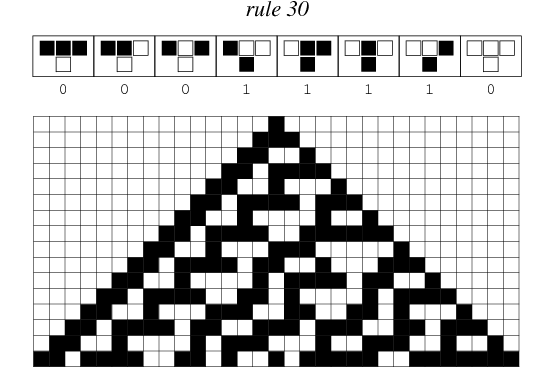
A good description of Cellular Automata.

https://www.youtube.com/watch?v=QxQBkgCdHGU
On Mon, Jan 19, 2015 at 5:23 AM, cogmission1 . <[email protected]>
wrote:

> Ok that helps. I guess I understand code better than English :)
>
> Anyway, very cool.
>
> David
>
> On Sun, Jan 18, 2015 at 5:46 PM, Matthew Taylor <[email protected]> wrote:
>
>> It's actually deceivingly simple.
>>
>> Each automata starts with a single bit on. Think of it as an
>> ever-expanding table with rows and columns, and the first state is a
>> 1x1 table with one on bit. The next row would have 3 columns, the next
>> 5, then 7, etc. Each new row has 2 more elements than the last, new
>> elements being added on the right and left of the structure.
>>
>> The "rule" for the automata defines it's behavior. For example, I've
>> been talking about Rule 30, which I think is best explained by this
>> image:
>>
>> http://mathworld.wolfram.com/images/eps-gif/ElementaryCARule030_1000.gif
>>
>> Each cell within a new row depends on the state of the three cells
>> above it (top left, top center, top right). Those cells decide whether
>> the current cell is "on" or not.
>>
>> There are 256 possible rules for this type of cellular automata,
>> because there are 8 possible states to be evaluated (2^8 == 256). Some
>> rules don't to anything interested at all, but a handful of them
>> generate spectacularly interesting behavior (notably rule 30 [1], rule
>> 90 [2], rule 110 [3] among others).
>>
>> If you're still confused, the algorithm I've written to generate
>> automaton is under 100 lines of code:
>>
>> https://github.com/rhyolight/automatatron/blob/master/automatatron/engine.py
>>
>> [1] http://mathworld.wolfram.com/Rule30.html
>> [2] http://mathworld.wolfram.com/Rule90.html
>> [3] http://mathworld.wolfram.com/Rule110.html
>>
>> ---------
>> Matt Taylor
>> OS Community Flag-Bearer
>> Numenta
>>
>>
>> On Sun, Jan 18, 2015 at 3:11 PM, cogmission1 .
>> <[email protected]> wrote:
>> > I did, and I read it. I just don't get how the patterns start and
>> progress,
>> > how one line becomes another line, or how a rule is used to produce the
>> next
>> > pixel - or whatever the hell is happening. That article explains things
>> as
>> > if you are someone who's seen it before, which is useless if starting
>> from
>> > nothing.
>> >
>> > On Sun, Jan 18, 2015 at 4:51 PM, Matthew Taylor <[email protected]>
>> wrote:
>> >>
>> >> David, didn't you see the document I linked in my first email?
>> >>
>> >> http://mathworld.wolfram.com/ElementaryCellularAutomaton.html
>> >>
>> >> The idea was popularized by Stephen Wolfram in "Celluar Automata and
>> >> Complexity"[1] and the (presumptuously) titled "A New Kind of
>> >> Science"[2]
>> >>
>> >> The intriguing thing about the ideas is that a very simple set of
>> >> rules can generate very complex pseudo-random behavior that mimic some
>> >> natural processes. Some cellular automata rules are actually used as
>> >> random number generators.
>> >>
>> >> [1]
>> >>
>> http://www.amazon.com/Cellular-Automata-Complexity-Collected-1-2150-/dp/0201626640/ref=sr_1_4?s=books&ie=UTF8&qid=1421621337&sr=1-4&keywords=stephen+wolfram
>> >> [2]
>> >>
>> http://www.amazon.com/New-Kind-Science-Stephen-Wolfram/dp/1579550088/ref=sr_1_1?s=books&ie=UTF8&qid=1421621337&sr=1-1&keywords=stephen+wolfram&pebp=1421621340100&peasin=1579550088
>> >>
>> >> ---------
>> >> Matt Taylor
>> >> OS Community Flag-Bearer
>> >> Numenta
>> >>
>> >>
>> >> On Sun, Jan 18, 2015 at 2:22 PM, cogmission1 .
>> >> <[email protected]> wrote:
>> >> > *knock, knock*
>> >> >
>> >> > uh oh, the Nerd Police are at my door shouting, "Mr. Ray, your geek
>> card
>> >> > has
>> >> > been revoked!"
>> >> >
>> >> > On Sun, Jan 18, 2015 at 4:19 PM, cogmission1 .
>> >> > <[email protected]>
>> >> > wrote:
>> >> >>
>> >> >> Uhm... can you pleez esplain (for us dummies)? I don't get the
>> >> >> progression
>> >> >> or how the rules are used and what they result in?
>> >> >>
>> >> >> On Sun, Jan 18, 2015 at 3:31 PM, Matthew Taylor <[email protected]>
>> >> >> wrote:
>> >> >>>
>> >> >>> If anyone wants to play around with it, I've created a python
>> project
>> >> >>> that can create all elementary cellular automaton easily.
>> >> >>>
>> >> >>> https://github.com/rhyolight/automatatron
>> >> >>>
>> >> >>> It's truly amazing to me that only about 80 lines of python code
>> can
>> >> >>> create the whole library of ECAs. It's a testament to the idea
>> that a
>> >> >>> very simple ruleset can create extraordinarily complex behavior.
>> >> >>>
>> >> >>> You can currently use a handler function to get iteration output
>> rows,
>> >> >>> but I'm going to have to add the ability to stream a subset of
>> columns
>> >> >>> from a running automata so specific columns can be pushed into
>> NuPIC
>> >> >>> instead of the entire output (as soon as I find time).
>> >> >>>
>> >> >>> ---------
>> >> >>> Matt Taylor
>> >> >>> OS Community Flag-Bearer
>> >> >>> Numenta
>> >> >>>
>> >> >>>
>> >> >>> On Sun, Jan 18, 2015 at 2:18 AM, Fergal Byrne
>> >> >>> <[email protected]> wrote:
>> >> >>> > Hi Matthew,
>> >> >>> >
>> >> >>> > This would be a great demo (Wolfram's CA stuff appeals to most
>> of us
>> >> >>> > nerds).
>> >> >>> > I predict that if you feed a fixed set of bits into NuPIC, the TM
>> >> >>> > will
>> >> >>> > learn
>> >> >>> > the rule you've picked and will be able to predict the next
>> pattern
>> >> >>> > for
>> >> >>> > all
>> >> >>> > but the edge bits (which will be partly random as far as it can
>> >> >>> > tell).
>> >> >>> > I'd
>> >> >>> > also predict that a single-order TM (one cell per column) will be
>> >> >>> > also
>> >> >>> > able
>> >> >>> > to do this learning.
>> >> >>> >
>> >> >>> > These two predictions come directly from the CLA theory (Subutai
>> can
>> >> >>> > verify
>> >> >>> > this), so it could be a good integration test for new
>> >> >>> > implementations
>> >> >>> > (assuming NuPIC matches my predictions, of course!).
>> >> >>> >
>> >> >>> >
>> >> >>> > Regards,
>> >> >>> >
>> >> >>> > Fergal Byrne
>> >> >>> >
>> >> >>> > On Sat, Jan 17, 2015 at 10:23 PM, Jeff Fohl <[email protected]>
>> wrote:
>> >> >>> >>
>> >> >>> >> I used to be a bit of a cellular automata nerd. I would be
>> >> >>> >> interested
>> >> >>> >> in
>> >> >>> >> seeing what you discover. You could also possibly just feed in
>> the
>> >> >>> >> values
>> >> >>> >> for the center column of rule 30 - though that has been shown
>> to be
>> >> >>> >> highly
>> >> >>> >> random, so I am not sure what the utility of it would be?
>> >> >>> >>
>> >> >>> >> - Jeff
>> >> >>> >>
>> >> >>> >> On Sat, Jan 17, 2015 at 1:59 PM, Matthew Taylor <
>> [email protected]>
>> >> >>> >> wrote:
>> >> >>> >>>
>> >> >>> >>> I've always been fascinated by elementary cellular automata
>> [1].
>> >> >>> >>> Some
>> >> >>> >>> rules produce interesting pseudo-random patterns with repeating
>> >> >>> >>> features. I think it would be interesting to see if NuPIC can
>> >> >>> >>> decipher
>> >> >>> >>> these features from the randomly generated output of the
>> automaton
>> >> >>> >>> and
>> >> >>> >>> predict the continuation of partially-developed features. I
>> also
>> >> >>> >>> wonder what the anomaly scores would say after NuPIC has seen
>> >> >>> >>> several
>> >> >>> >>> thousand rows of data.
>> >> >>> >>>
>> >> >>> >>> I've put together a *very* simple program [2] to generate the
>> >> >>> >>> output
>> >> >>> >>> of Rule 30 [3], but I did it in JavaScript out of habit. I
>> really
>> >> >>> >>> need
>> >> >>> >>> it implemented in Python to get decent integration with NuPIC.
>> >> >>> >>>
>> >> >>> >>> To feed cellular automaton data into NuPIC, I assume I'll need
>> to
>> >> >>> >>> choose some number of adjacent columns within the automatons'
>> >> >>> >>> output
>> >> >>> >>> (maybe 10 fields?). Each field would be simply binary, and I've
>> >> >>> >>> got
>> >> >>> >>> some code in place now that can extract the columns and print
>> them
>> >> >>> >>> to
>> >> >>> >>> the console [4].
>> >> >>> >>>
>> >> >>> >>> Is anyone else interested in this crackpot idea? I have no idea
>> >> >>> >>> what
>> >> >>> >>> any applications might be, I'm just fiddling around. Let me
>> know
>> >> >>> >>> if
>> >> >>> >>> you're interested and we can discuss.
>> >> >>> >>>
>> >> >>> >>> [1]
>> http://mathworld.wolfram.com/ElementaryCellularAutomaton.html
>> >> >>> >>> [2] https://github.com/rhyolight/cellular-automata-engine
>> >> >>> >>> [3] http://en.wikipedia.org/wiki/Rule_30
>> >> >>> >>> [4] http://youtu.be/TT2-aXrmJ6k
>> >> >>> >>>
>> >> >>> >>> Regards,
>> >> >>> >>> ---------
>> >> >>> >>> Matt Taylor
>> >> >>> >>> OS Community Flag-Bearer
>> >> >>> >>> Numenta
>> >> >>> >>>
>> >> >>> >>
>> >> >>> >
>> >> >>> >
>> >> >>> >
>> >> >>> > --
>> >> >>> >
>> >> >>> > Fergal Byrne, Brenter IT
>> >> >>> >
>> >> >>> > http://inbits.com - Better Living through Thoughtful Technology
>> >> >>> > http://ie.linkedin.com/in/fergbyrne/ -
>> >> >>> > https://github.com/fergalbyrne
>> >> >>> >
>> >> >>> > Founder of Clortex: HTM in Clojure -
>> >> >>> > https://github.com/nupic-community/clortex
>> >> >>> >
>> >> >>> > Author, Real Machine Intelligence with Clortex and NuPIC
>> >> >>> > Read for free or buy the book at
>> >> >>> > https://leanpub.com/realsmartmachines
>> >> >>> >
>> >> >>> > Speaking on Clortex and HTM/CLA at euroClojure Krakow, June 2014:
>> >> >>> > http://euroclojure.com/2014/
>> >> >>> > and at LambdaJam Chicago, July 2014: http://www.lambdajam.com
>> >> >>> >
>> >> >>> > e:[email protected] t:+353 83 4214179
>> >> >>> > Join the quest for Machine Intelligence at http://numenta.org
>> >> >>> > Formerly of Adnet [email protected] http://www.adnet.ie
>> >> >>>
>> >> >>
>> >> >>
>> >> >>
>> >> >> --
>> >> >> We find it hard to hear what another is saying because of how loudly
>> >> >> "who
>> >> >> one is", speaks...
>> >> >
>> >> >
>> >> >
>> >> >
>> >> > --
>> >> > We find it hard to hear what another is saying because of how loudly
>> >> > "who
>> >> > one is", speaks...
>> >>
>> >
>> >
>> >
>> > --
>> > We find it hard to hear what another is saying because of how loudly
>> "who
>> > one is", speaks...
>>
>>
>
>
> --
> *We find it hard to hear what another is saying because of how loudly "who
> one is", speaks...*
>