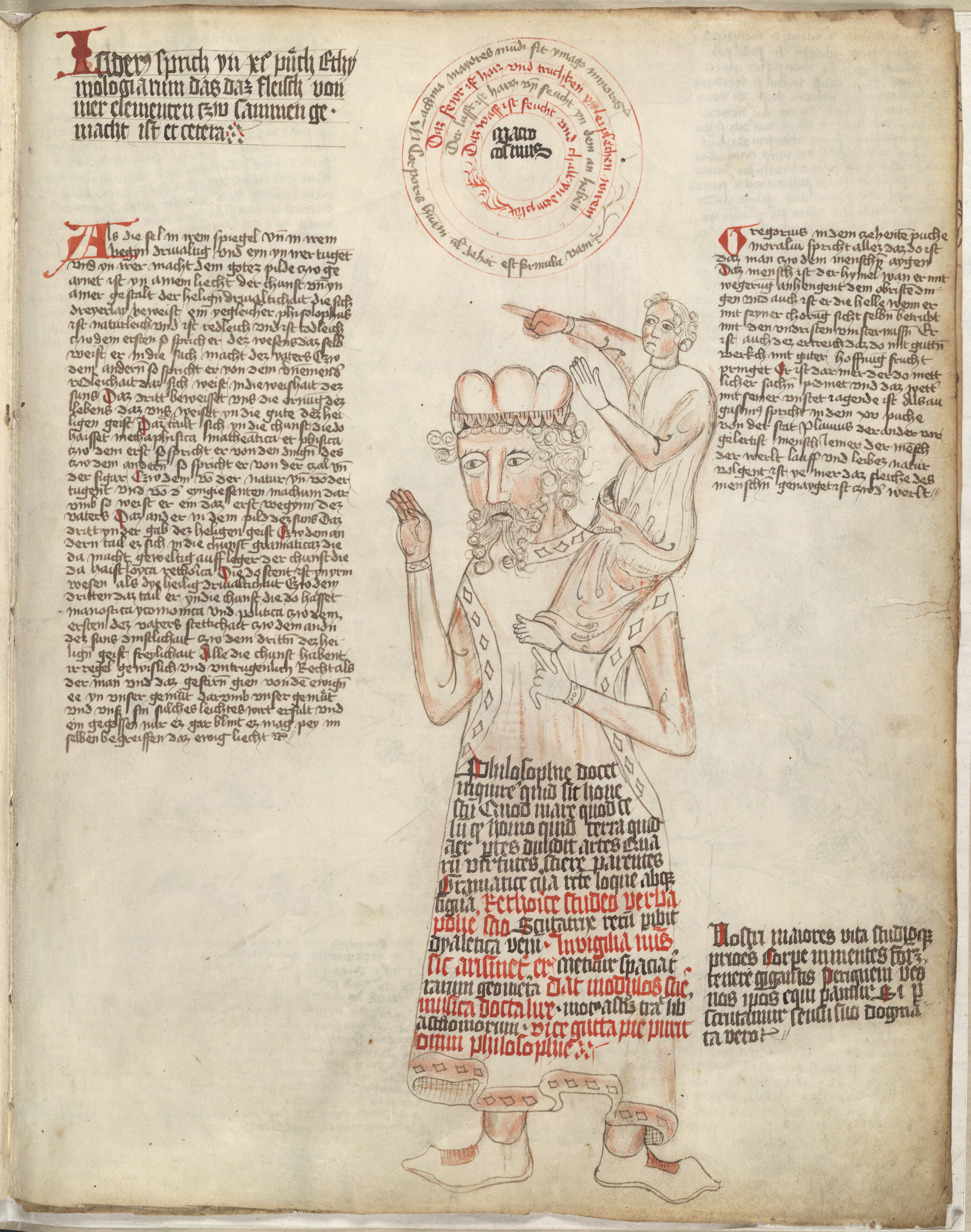
The dwarf sitting on the shoulder of a giant, moves forward faster, but
sees things the giant cannot see.
They cooperate.

http://upload.wikimedia.org/wikipedia/commons/4/4a/Library_of_Congress%2C_Rosenwald_4%2C_Bl._5r.jpg

On 11/28/2013 02:24 PM, Ingram, David wrote:
>
> Dear Bert,
>
> On behalf of the founding fathers of openEHR, with the longest memory
> and record of its evolution from the early nineties, this is just to
> say thank you for your Thanksgiving Day Hallelujah -- best Leonard
> Cohen style, no doubt!  I have to say, slightly ruefully, that if, as
> you suggest, we were entrepreneurially driven, then we were somewhat
> mad to be so -- a 20 year start up is not seen as good business in the
> modern era, I fear!
>
> Not for nothing did we describe the three top priorities of openEHR as
> implementation, implementation and implementation, mindful of its very
> steep learning curve as it was always very steep for us, too. The
> implementers, and we should include the clinical data modellers as
> well as the software developers in that term, are the heroes of the
> transformation that is coming in health care IT, as a modular and
> interoperable architecture gains currency, as it inevitably will. It's
> with great pride that we see different and independent foci of openEHR
> implementation growing apace in Western Europe, where it all started,
> Central and Eastern Europe, Asia and the Far East, Australasia, South
> America, and no doubt elsewhere as well, since most hits to the web
> site historically have come from North America. In my new parallel
> world in OpenEyes, we are seeing  its open source applications
> beginning to spread and take root, similarly widely.
>
> It was one of the privileges of my career to meet and correspond with
> Octo Barnett when he was transforming health care IT and I was a PhD
> student travelling the world to meet the founders of the field. In
> MUMPS he created a new database paradigm for its time, informed by the
> practical needs of medicine and inspired too by his concern for
> medical education. In the New Pathways programme at Harvard, as well,
> which was one of the early initiatives exploring how innovation was
> changing the nature and craft of medicine, and therefore how new
> students needed to be taught and learn differently, he showed the
> talents of visionary, doughty pioneer and craftsman that are needed to
> turn the world upside down. It's a good tradition and example for the
> implementers of today to seek to follow.
>
> I'm confident that openEHR is in safe new hands and is not going away.
> As always, it's there to play and support whatever roles seem most
> fitting, as the modular ecosystem of digital care records, that health
> care sorely needs, comes into being.
>
> Thanks again for your kind words and best wishes,
>
> David (Ingram)
>
>
> So think beyond that. That is one of the good things of the designers
> of OpenEHR, and more, the designers of the side effects, like AOM,
> which are important beyond the boundary of OpenEHR.
>
> Today is thanksgiving? Let us thank those people for their wonderful
> work which started about in the beginning of this millennium, or even
> in the end of the previous millennium.
>
> They designed an eco-system without having a technical reference to
> build it. They showed the courage of Henry Ford. They were inventing
> technical solutions, instead of conforming to technical solutions of
> the that time current which is now the past.
> I know, through the years, people struggled a lot with how to
> implement it. And I know, most of them do not admit that. Every
> implementor has to solve his own secret problems. OpenEHR is not an
> open developer-community, but it is a community of entrepreneurs which
> all want to be the number one.
>
> What would have happened if OpenEHR was designed conforming the
> technical possibilities of 1999, would we still have been talking
> about it right now?
>
> OK, enough of hallelujah.
> ----------------------------
> What's next....
>
> - Tooling is good, but tooling is always situation/platform depending.
> It is not a fundamental solution.
> - Simplification in order to solve technical problems is conforming to
> the past and is not a good way.
>
> We need to think deeper about this.
> I did not get in this any further then the path/value combinations,
> and insuccession, the short path notation (which makes it in fact more
> complicated).
>
> Bert
>
>
>
> _______________________________________________
> openEHR-technical mailing list
> openEHR-technical at lists.openehr.org
> http://lists.openehr.org/mailman/listinfo/openehr-technical_lists.openehr.org

-------------- next part --------------
An HTML attachment was scrubbed...
URL:
<http://lists.openehr.org/pipermail/openehr-technical_lists.openehr.org/attachments/20131129/20acd24c/attachment.html>