http://www.eurasiareview.com/analysis/terrorism-in-latin-america-peru-cuba-a
nd-venezuela-13032011/
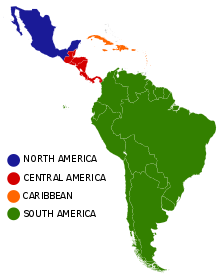
Terrorism In Latin America: Peru, Cuba And Venezuela Written by: Eurasia Review <http://www.eurasiareview.com/author/admin/> By Mark P. Sullivan Over the years, the United States has been concerned about threats to Latin American and Caribbean nations from various terrorist or insurgent groups that have attempted to influence or overthrow elected governments. Although Latin America has not been the focal point in the war on terrorism, countries in the region have struggled with domestic terrorism for decades and international terrorist groups have at times used the region as a battleground to advance their causes. The State Departments annual Country Reports on Terrorism highlights U.S. concerns about terrorist threats around the world, including in Latin America. The 2009 report (issued in August 2010) maintained that terrorist attacks in the region was primarily perpetrated by terrorist organizations in Colombia and by the remnants of radical leftist Andean groups. Overall, however, the report maintained that the threat of a transnational terrorist attack remained low for most countries in the hemisphere. The report also asserted that there were no know operational cells of either Al Qaeda or Hezbollah-related groups in the hemisphere, but noted that ideological sympathizers in South America and the Caribbean continued to provide financial and moral support to these and other terrorist groups in the Middle East and South Asia.1 The report also stated that regional governments took modest steps to improve their counterterrorism capabilities and tighten border security but that progress was limited by corruption, weak government institutions, insufficient interagency cooperation, weak or nonexistent legislation, and reluctance to allocate sufficient resources. The report singled out Argentina, Colombia, and Mexico for undertaking serious prevention and preparedness efforts, but noted that some other countries lacked urgency and resolve to address counterterrorism deficiencies. It also noted that most hemispheric nations had solid cooperation with the United States on terrorism issues, especially at the operational level, with excellent intelligence, law enforcement, and legal assistance relations. Caribbean nations were reported to have strong political will to combat terrorism despite limited resources and capabilities. <http://www.eurasiareview.com/wp-content/uploads/2011/02/Latin-America.png> Common subregions in Latin America Common subregions in Latin America The State Department currently lists two Latin American countriesCuba and Venezuelaon its annual list of countries that are not cooperating fully with United States antiterrorism efforts pursuant to Section 40A of the Arms Export Control Act. The most recent annual determination was made in May 2010.2 In addition, Cuba has been on the State Departments state sponsors of terrorism list pursuant to Section 6(j) of the Export Administration Act (EAA) of 1979 since 1982. The state sponsors of terrorism list is not an annual list. Rather, countries remain on the list until either the President or Congress take action to remove a country. The EAA sets forth procedures for the President to remove a country from the list. Peru The brutal Shining Path (Sendero Luminoso or SL) insurgency, which the Department of State has designated as an FTO, was significantly weakened in the 1990s with the capture of its leader Abimael Guzman, who, after a new trial in 2006, was sentenced to life in prison. According to the 2009 State Department terrorism report, there are two SL remnants in Peru operating in the Upper Huallaga River Valley and in the Apurimac and Ene River Valley, which combined were reported to have several hundred armed combatants. Both groups engage in drug trafficking and carried out more than 100 terrorist acts in 2009, with 3 police officers and 26 civilians killed. Cuba The Department of State, pursuant to Section 6(j) of the Export Administration Act (EAA) of 1979, has included Cuba among its list of states sponsoring terrorism since 1982 (the other states currently on the list are Iran, Sudan, and Syria). Communist Cuba had a history of supporting revolutionary movements and governments in Latin America and Africa, but in 1992, then Cuban leader Fidel Castro said that his countrys support for insurgents abroad was a thing of the past. Most analysts accept that Cubas policy generally did change, largely because the breakup of the Soviet Union resulted in the loss of billions in subsidies. The State Departments 2009 terrorism report maintained that the Cuban government and its official media publicly condemned acts of terrorism by Al Qaeda and its affiliates, but at the same time remained critical of the U.S. approach to combating international terrorism. The report noted that while Cuba no longer supports armed struggle in Latin America or elsewhere, that it continued to provide physical safe haven and ideological support to members of three terrorist organizationsBasque Homeland and Freedom (ETA ) and the Colombian FARC and ELN. The report noted that Cuba cooperated with the United States on a limited number of law enforcement matters, but also pointed out that the Cuban government continued to permit U.S. fugitives to live legally in Cuba, including convicted murders and hijackers. Cubas retention on the terrorism list has been questioned by some observers. In general, those who support keeping Cuba on the list point to the governments history of supporting terrorist acts and armed insurgencies in Latin America and Africa. They point to the governments continued hosting of members of foreign terrorist organizations and U.S. fugitives from justice. Critics of retaining Cuba on the terrorism list maintain that it is a holdover of the Cold War. They argue that domestic political considerations keep Cuba on the terrorism list while North Korea and Libya have been removed, and maintain that Cubas presence on the list diverts U.S. attention from struggles against serious terrorist threats. Both the President and Congress have powers to take a country off the state sponsors of terrorism list. As set forth in Section 6(j) of the Export Administration Act, a countrys retention on the list may be rescinded in two ways. The first option is for the President to submit a report to Congress certifying that there has been a fundamental change in the leadership and policies of the government and that the government is not supporting acts of international terrorism and is providing assurances that it will not support such acts in the future. The second option is for the President to submit a report to Congress, at least 45 days in advance justifying the rescission and certifying that the government has not provided any support for international terrorism during the preceding six-months, and has provided assurances that it will not support such acts in the future. If Congress disagrees with the Presidents decision to remove a country from the list, it could seek to block the rescission through legislation. Congress also has the power on its own to remove a country from the terrorism list. For example, legislation introduced on Cuba in the 111th Congress, H.R. 2272 (Rush), included a provision that would have rescinded the Secretary of States determination that Cuba has repeatedly provided support for acts of international terrorism. Cuba has been the target of various terrorist incidents over the years. In 1976, a Cuban plane was bombed, killing 73 people. In 1997, there were almost a dozen bombings in the tourist sector in Havana in which an Italian businessman was killed and several others were injured. Two Salvadorans were convicted and sentenced to death for the1997 bombings in March 1999 (although the sentences were commuted in 2010 to 30 years in prison), and three Guatemalans were sentenced to prison terms ranging from 10 to 15 years in January 2002 for plans to conduct bombings in 1998. In December 2010, another Salvadoran, Francisco Chávez Abarca, was convicted for involvement in the 1997 bombings in Havana and sentenced to 30 years in prison. In November 2000, four anti-Castro activists were arrested in Panama for a plot to kill Fidel Castro. One of the accused, Luis Posada Carriles, is also alleged to be involved in the 1976 Cuban airline bombing and the series of bombings in Havana in 1997 noted above.6 The four stood trial in March 2004 and were sentenced on weapons charges to prison terms ranging from seven to eight years. In late August 2004, Panamanian President Mireya Moscoso pardoned the four men before the end of her presidential term. Posada entered the United States illegally in 2005. In subsequent removal proceedings, an immigration judge found that Posada could not be removed to Cuba or Venezuela because of concerns that he would face torture, and he was thereafter permitted to remain in the United States pending such time as he could be transferred to a different country. Posada subsequently applied for naturalization to become a U.S. citizen. This application was denied, and criminal charges were brought against him for allegedly false statements made in his naturalization application and interview. Although a federal district court dismissed the indictment in 2007, its ruling was reversed by an appellate court in 2008. In April 2009, the United States filed a superseding indictment, which included additional criminal charges based on allegedly false statements made by Posada in immigration removal proceedings concerning his involvement in the 1997 Havana bombings. His trial originally was set to begin in August 2009, but was rescheduled three times until it finally began on January 10, 2011. Venezuela7 U.S. officials have expressed concerns over the past several years about Venezuelas lack of cooperation on antiterrorism efforts, President Hugo Chávezs sympathetic statements for Colombian terrorist groups, and Venezuelas relations with Cuba and Iran. Since May 2006, the Secretary of State has made an annual determination that Venezuela has not been cooperating fully with United States antiterrorism efforts pursuant to Section 40A of the Arms Export Control Act (AECA). The most recent determination was made in May 2010. As a result, the United States imposed an arms embargo on Venezuela in 2006, which ended all U.S. commercial arms sales and retransfers to Venezuela. (Other countries currently on the Section 40A list include Cuba, Eritrea, Iran, North Korea, and Syria, not to be confused with the state sponsors of terrorism list under Section 6(j) of the Export Administration Act of 1979.) In its 2009 terrorism report (issued in August 2010), the State Department maintained that President Chávez persisted in his public criticism of U.S. counterterrorism efforts and repeatedly referred to the United States as a terrorist nation. It noted that Venezuelas cooperation with the United States on counterterrorism was reduced to an absolute minimum after the United States and Colombia signed a defense cooperation agreement in 2009. The State Department also noted that President Chávez continued to strengthen Venezuelas relationship with Iran, and that both countries continued weekly flights connecting Tehran and Damascus with Caracas (see discussion below on Growing Relations with Iran). The State Department also reiterated in its terrorism report a concern that has been raised for several yearsthat Venezuelan citizenship, identity, and travel documents remained easy to obtain, making the country a potentially viable way for terrorists to travel internationally. The State Department also stated in its terrorism report that the FARC and ELN often crossed into Venezuelan territory to rest and regroup as well as to extort protection money and kidnap Venezuelans in order to finance their operations. The State Department maintained that some weapons and ammunition from official Venezuelan stocks and facilities have turned up in the hands of the FARC and ELN. As noted above, outgoing Colombian President Uribe asserted at the OAS in July 2010 that Venezuela was harboring FARC guerrillas. While Venezuela suspended diplomatic relations, less than three weeks later new Colombian President Santos met with Venezuelan President Chávez and the two leaders agreed to reestablish diplomatic relations and to improve military patrols along their border. In the 111th Congress, President Obama signed into law the Comprehensive Iran Sanctions, Accountability, and Disinvestment Act of 2010 (P.L. 111-195) on July 1, 2010, which includes a provision making gasoline sales to Iran subject to U.S. sanctions. As noted below, in 2009, Venezuela promised to supply some gasoline to Iran in the case of U.S. sanctions (see discussion below on Venezuela and Iran-Related Sanctions). Several other measures with Venezuela provision were considered or introduced in the 111th Congress, but action was not completed on these initiatives. In June 2010, the Senate Committee on Armed Services reported S. 3454, the National Defense Authorization Act for FY2011, with a provision that would have required a report on Venezuela related to terrorism issues. In June 2009, the House approved H.R. 2410, the Foreign Relations Authorization Act for FY2010 and FY2011, with a provision in section 1011 that would have required a report within 90 days on Irans and Hezbollahs actions in the Western Hemisphere. On July 23, 2009, the Senate had approved its version of the National Defense Authorization Act for FY2010, S. 1390 (Levin), with a provision that would have required the Director of National Intelligence to provide a report on Venezuelas military purchases, its potential support for the FARC and Hezbollah, and other Venezuelan activities, but the final enacted measure dropped the provision. Other resolutions and bills related to Venezuela that were introduced in the 111th Congress include: H.R. 375 (Ros-Lehtinen), introduced January 9, 2009, would have, among its provisions, placed restrictions on nuclear cooperation with countries assisting the nuclear programs of Venezuela. H.R. 2475 (Ros-Lehtinen), introduced May 19, 2009, included a provision identical to that in H.R. 375 described above that would have placed restrictions on nuclear cooperation with countries assisting the nuclear programs of Venezuela. H.Res. 872 (Mack), introduced October 27, 2009, would have called on Venezuela to be designated a state sponsor of terrorism because of its alleged support of Iran, Hezbollah, and the FARC. Growing Relations with Iran There has been increasing concern in recent years about Irans growing interest in Latin America, particularly its relations with Venezuela under President Chávez. Venezuelas relations with Iran have been longstanding because they were both founding members of OPEC in 1960, but not until President Mahmoud Ahmadinejads rule began in 2005, however, did Iran aggressively work to increase its diplomatic and economic linkages with Latin American countries. A major rationale for this increased focus on Latin America appears to be Irans efforts to overcome its international isolation. The personal relationship between Ahmadinejad and Chávez has driven the strengthening of bilateral ties. The two nations have signed a variety of agreements in agriculture, petrochemicals, oil exploration in the Orinoco region of Venezuela, and the manufacturing of automobiles, bicycles, and tractors. During an April 2009 trip to Tehran, Chávez and Ahmadinejad inaugurated a new development bank for economic projects in both countries, with each country reportedly providing $100 million in initial capital. Weekly flights between the two countries began in 2007. As noted above, the State Department has expressed concern about these flights in its annual terrorism report, maintaining that the flights, which connect Iran and Syria with Caracas, are only subject to cursory immigration and customs controls. An April 2010 unclassified Department of Defense report to Congress on Irans military power (required by Section 1245 of the National Defense Authorization Act for FY2010, P.L. 111-84) maintained that Irans Islamic Revolutionary Guard CorpsQods Force (IRGC-QF), which maintains operational capabilities around the world, has increased its presence in Latin America in recent years, particularly in Venezuela.8 Despite the report, the commander of the U.S. Southern Command, General Douglas Fraser, maintains that the focus of Iran in the region has been diplomatic and commercial, and that he has not seen an increase in Irans military presence in the region.9 Venezuela also has played a key role in the development of Irans expanding relations with other countries in the region. In recent years, Irans relations have grown with Bolivia under President Evo Morales, with Ecuador under President Rafael Correa, and with Nicaragua under President Daniel Ortega. While Iran has promised significant assistance and investment to these countries, observers maintain that there is little evidence to show that such promises have been fulfilled.10 In Nicaragua for example, Iran has not followed through on its promise to finance the construction of a deep-water port. An Iranian project that has gone forward in Nicaragua is the construction of a hospital in 2009.11 Likewise in Bolivia and Ecuador, there has been little evidence showing that Iran has followed up on its promises of investment. Nevertheless, in late August 2010, Iran announced that it would provide a $250 million loan to Bolivia for the construction of dairy, textile cement and other plants, and geological prospecting for minerals such as uranium and lithium.12 According to February 2011 testimony by Director of National Intelligence James Clapper, we expect Tehran to continue offering economic and other incentives to try to expand its outreach.13 On the diplomatic front, Iran has opened embassies over the past several years in Bolivia, Ecuador, and Nicaragua, as well as in Colombia, Chile, and Uruguay. This is in addition to existing embassies in Cuba, Argentina, Brazil, Mexico, and Venezuela.14 Reports that Iran was building a large embassy in Managua, Nicaragua (which even Secretary of State Hillary Clinton noted in public remarks) turned out to be erroneous.15 As noted above, President Ahmadinejad has visited Venezuela several times, and has also visited Bolivia, Brazil, Nicaragua, and Cuba. In early May 2009, a scheduled first trip by Ahmadinejad to Brazil was unexpectedly postponed until after Irans election in June. There had been some protests in Brazil against Ahmadinejads visit, but the trip ultimately took place in November 2009. Brazilian President Lula da Silva maintains that the West should not isolate Iran. On the same trip, the Iranian President once again visited Bolivia and Venezuela.16 Venezuela and Iran-Related Sanctions To date, the United States has imposed sanctions on two companies in Venezuela because of connections to Irans proliferation activities. In August 2008, the State Department imposed sanctions on the Venezuelan Military Industries Company (CAVIM) pursuant to the Iran, North Korea, and Syria Nonproliferation Act (P.L. 109-353) for allegedly violating a ban on technology that could assist Iran in the development of weapons systems.17 The sanctions prohibit any U.S. government procurement or assistance to the company. In October 2008, the U.S. Treasury Department imposed sanctions on an Iranian-owned bank based in Caracas, the Banco Internacional de Desarollo, C.A., under Executive Order 13382 that allows the President to block the assets of proliferators of weapons of mass destruction and their supporters. The bank is linked to the Export Development Bank of Iran (EDBI), which the Treasury Department asserts has provided or attempted to provide services to Irans Ministry of Defense and Armed Forces Logistics.18 In September 2009, during President Chávezs visit to Tehran, Venezuela and Iran signed several energy sector memorandums of understanding. As reported in the press, one of these agreements would provide for Venezuelas state-owned oil company, Petroleos de Venezuela S.A. (PdVSA), to acquire a 10% stake in Irans South Pars gas project valued at some $760 million. Such investment, if it occurs, would appear to subject PdVSA to sanctions under the Iran Sanctions Act (P.L. 104-172). Under another accord, Venezuela agreed to help Iran circumvent any potential U.S. or UN sanctions against Iranian gasoline imports by supplying Iran with gasoline (reportedly some 20,000 barrels per day) with the money earned from the gasoline sales to be deposited to a fund that would be set up by Iran to finance Venezuelan purchases of Iranian machinery and technology.19 Under Iran sanctions legislation signed into law July 1, 2010 (P.L. 111-195, Comprehensive Iran Sanctions Accountability, and Disinvestment Act of 2010), gasoline sales to Iran valued at more than $1 million (or $5 million over a 12-month period) would subject PdVSA to U.S. sanctions.20 A number of observers raised questions about whether Venezuela would have the ability to provide significant amounts of gasoline to Iran since it has had problems in the past meeting its own domestic demands for gasoline.21 In July 2010, press reports maintained that that a gasoline shipment from Venezuela was headed to Iran as part of a deal agreed to in 2009.22 In 2011, press reports alleged that additional shipments of gasoline from Venezuela were headed to Iran to arrive in late February 2011.23 Assistant Secretary of State for Western Hemisphere Affairs Arturo Valenzuela maintained in congressional testimony on February 15, 2011, that the United States was examining the issue of whether Venezuela is in violation of the Iran sanctions legislation.24 Venezuelan comments about support for Irans nuclear program and about potential Iranian support for the development of nuclear energy in Venezuela have raised concerns among U.S. officials and other observers. President Chávez repeatedly has expressed support for Irans development of nuclear energy for peaceful purposes, including during a September 2009 visit to Iran.25 President Chávez also announced during the visit that Venezuela is working on a preliminary plan for the construction of a nuclear village in Venezuela with Iranian assistance so that the Venezuelan people can count in the future on this marvelous resource for peaceful purposes.26 The transfer of Iranian nuclear technology from Iran would be a violation of U.N. Security Council Resolutions1737 (2006), 1747 ( 2007), and 1803 (2008)that imposed restrictions on Irans nuclear technology transfers. In late September 2010, President Chávez maintained that his government was carrying out initial studies into starting a nuclear energy program while in mid-October 2010, Russia agreed to help Venezuela build its first nuclear power plant.27 In late September 2009, comments by Venezuelan officials offered conflicting information about Irans support for Venezuelas search for uranium deposits. Venezuelan Minister of Basic Industry and Mining Rodolfo Sanz said that Iran was assisting Venezuela in detecting uranium reserves in the west and southwest of Venezuela.28 Subsequently, however, Venezuelas Minister of Science, Technology, and Intermediary Industry Jesse Chacon denied that Iran was helping Venezuela seek uranium, while Venezuelas Minister of Energy Rafael Ramirez maintained that Venezuela has yet to develop a plan to explore or exploit its uranium deposits.29 U.N Security Council Resolution 1929 (June 9, 2010) bars Iranian investment in uranium mining projects abroad. Another reason for U.S. concerns about Irans deepening relations with Venezuela is Irans ties to the radical Lebanon-based Islamic group Hezbollah (Party of God), which is reported to have been linked to two bombings against Jewish targets in Argentina in the early 1990s. On June 18, 2008, the U.S. Treasury Departments Office of Foreign Assets Control (OFAC) announced that it was freezing the U.S. assets of two VenezuelansGhazi Nasr al Din (a Venezuelan diplomat serving in Lebanon) and Fawzi Kananfor providing financial and other support to Hezbollah. U.S. citizens are also prohibited from engaging in any transactions with the two Venezuelans, including any business with two travel agencies in Caracas owned by Kanan. Author: Mark P. Sullivan Specialist in Latin American Affairs Source: This article is an edited selection of the longer February 23, 2011 report Latin America: Terrorism Issues by the Congressional Research Service Notes: 1 U.S. Department of State, Country Reports on Terrorism 2009, August 5, 2010, available at http://www.state.gov/s/ ct/rls/crt/2009/index.htm 2 Department of State, Determination and Certification Under Section 40A of the Arms Export Control Act, 75 Federal Register 28848, May 24, 2010. 6 Frances Robles, An Old Foe of Castro Looks Back on His Fight, Miami Herald, September 4, 2003. 7 For additional background on Venezuela, see CRS Report R40938, Venezuela: Issues in the 111th Congress, by Mark P. Sullivan. 8 Department of Defense, Unclassified Report on Military Power of Iran, April 2010. For the full text of the report, see http://www.politico.com/static/PPM145_link_042010.html. For background on the Qods Force, see CRS Report RL32048, Iran: U.S. Concerns and Policy Responses, by Kenneth Katzman. 9 Anne Flaherty, Pentagon Says Irans Reach in Latin America Doesnt Pose Military Threat, AP Newswire, April 27, 2010. 10 For example, see Kavon Hak Hakimzadeh, Iran & Venezuela: The Axis of Annoyance, Military Review, May 1, 2009; and Anne-Marie OConnor and Mary Beth Sheridan, Irans Invisible Nicaragua Embassy; Feared Stronghold Never Materialized, Washington Post, July 13, 2009. 11 Steve Stecklow and Farnaz Fassihi, Irans Global Foray Has Mixed Results, Wall Street Journal, September 28, 2009. 12 Iran Announces 250m Dollar-Loan to Bolivia to Assist Uranium Prospecting, BBC Monitoring Americas, September 1, 2010. 13 James R. Clapper, Director of National Intelligence, Statement for the Record on the Worldwide Threat Assessment of the U.S. Intelligence Community, House Permanent Select Committee on Intelligence, February 10, 2011, available at http://intelligence.house.gov/sites/intelligence.house.gov/files/documents/D NISFR021011.pdf 14 Anne-Marie OConnor and Mary Beth Sheridan, Irans Invisible Nicaragua Embassy; Feared Stronghold Never Materialized, Washington Post, July 13, 2009. 15 Ibid; and Sylvie Lanteaume, Irans Hand in Latin America Not as U.S. Feared, Agence France Presse, July 14, 2009. 16 Juan Forero, Ahmadinejad Boosts Latin American Ties, Washington Post, November 28, 2009. 17 Although the sanction became effective in August 2008, it was not published in the Federal Register until October 2008. See Federal Register, pp. 63226-63227, October 23, 2008. 18 U.S. Department of the Treasury, Press Release, Export Development Bank of Iran Designated as a Proliferator, October 22, 2008. 19 Venezuela Pledges to Help Iran with Investment, Gasoline Supplies, The Oil Daily, September 10, 2009. 20 For further information, see CRS Report RS20871, Iran Sanctions, by Kenneth Katzman. 21 Iran Sanctions (Special Series), Part 3, Preparing for the Worst, Stratfor, September 25, 2009; Venezuelan Oil Expert Questions Viability of Chávez Energy Accords, BBC Monitoring Americas, September 14, 2009; and Marianna Parraga, Venezuela in No Position to Boost Iran Oil Exports, Reuters News, July 26, 2010. 22 Marianna Parraga, Venezuela in No Position to Boost Iran Oil Exports, Reuters News, July 26, 2010; and Amena Bakr and Luke Pachymuthu, Iran Fuel Imports Nosedive as Sanction Bite, Reuters News, July 26, 2010. 23 Irene Tang, Iran Resumes Gasoline Imports With Venezuela Deal: Sources, Platts Commodity News, February 1, 2011; and Luke Pachymuthu and Humeyra Pamuk, Venezuelas PDVSA Sends Gasoline to Iran Trade, Reuters News, January 31, 2011. 24 House Foreign Affairs Subcommittee on Western Hemisphere Holds Hearing on U.S.-Latin America Relations, CQ Congressional Transcripts, February 15, 2011. 25 Visiting Chávez Backs Iran Nuclear Programme, Tehran Press TV Online, September 5, 2009. 26 Iran Will Not Back Down on Nuclear Energy: Hugo Chávez Agence France Presse, September 4, 2009. 27 Hugo Chávez Says Venezuela Is Studying Idea of Starting Peaceful Nuclear Energy Program, AP Newswire, September 28, 2010; Russia to Build Nuclear Power Plant in Venezuela, Reuters News, October 15, 2010. 28 See the following press reports: Iran Helps Venezuela Find Uranium Deposits, BBC Monitoring Caucasus, September 26, 2009; and Iran Helps Venezuela Find Uranium Deposits, Tehran Press TV Online, September 26, 2009. 29 Venezuela Denies Iran is Helping It, New York Times, September 27, 2009; and Fabian Cambero, Interview: Venezuela Says No Plans Yet on Exploring Uranium, Reuters, September 27, 2009. <http://www.eurasiareview.com/analysis/terrorism-in-latin-america-peru-cuba- and-venezuela-13032011/> [Non-text portions of this message have been removed] ------------------------------------ -------------------------- Want to discuss this topic? Head on over to our discussion list, [email protected]. -------------------------- Brooks Isoldi, editor [email protected] http://www.intellnet.org Post message: [email protected] Subscribe: [email protected] Unsubscribe: [email protected] *** FAIR USE NOTICE. This message contains copyrighted material whose use has not been specifically authorized by the copyright owner. OSINT, as a part of The Intelligence Network, is making it available without profit to OSINT YahooGroups members who have expressed a prior interest in receiving the included information in their efforts to advance the understanding of intelligence and law enforcement organizations, their activities, methods, techniques, human rights, civil liberties, social justice and other intelligence related issues, for non-profit research and educational purposes only. We believe that this constitutes a 'fair use' of the copyrighted material as provided for in section 107 of the U.S. Copyright Law. If you wish to use this copyrighted material for purposes of your own that go beyond 'fair use,' you must obtain permission from the copyright owner. For more information go to: http://www.law.cornell.edu/uscode/17/107.shtmlYahoo! Groups Links <*> To visit your group on the web, go to: http://groups.yahoo.com/group/osint/ <*> Your email settings: Individual Email | Traditional <*> To change settings online go to: http://groups.yahoo.com/group/osint/join (Yahoo! ID required) <*> To change settings via email: [email protected] [email protected] <*> To unsubscribe from this group, send an email to: [email protected] <*> Your use of Yahoo! Groups is subject to: http://docs.yahoo.com/info/terms/