The religious character of economics and finance has been apparent to me
from childhood simply from the finance industry's choices of
architecture, which has often tended to borrow the same classical themes
used by states and for the same reasons; using the typology of sacred
spaces to create impressions of power, authority, permanence, and reverence;
New York Stock Exchange -
https://timsanchezdotnet.files.wordpress.com/2013/10/new-york-stock-exchange-nyse-nyc-ratti.jpg
Royal Stock Exchange London -
http://www.bugbog.com/images/galleries/london-pictures/City-of-London/royal-exchange.jpg
Early 20th century banks of Chicago -
http://www.heyhochicago.com/2013/10/why-do-old-chicago-banks-look-like.html
Even our stereotypes or iconographic representations follow this form,
the more contemporary type of bank being too indefinite in stereotype;
stock graphic bank -
http://thumbs.dreamstime.com/z/bank-building-isolated-white-d-render-35678339.jpg
Sacred design has very specific psychological impact such use clearly
seems intended to exploit. Unable to directly use the symbols and
architecture of established religions for state use, America and Europe
appropriated the sacred design of obsolete yet still western culture to
symbolize their modern governments' roots in Greek and Roman
Republicanism. Banks and others in finance seemed to borrow this in
order to relate themselves to the state and its authority while also
cultivating a religious reverence for their activity. The bank became a
place of holy communion where everyone speaks in hushed tones and cues
up in lines like supplicants. This manipulation seemed quite blatant to
me, after the fashion of fascist architecture or the similarly scary
architecture of the Mormon church. An attempt to craft a kind of
mystical Neoplatonism built on capitalism and the state as godhead or
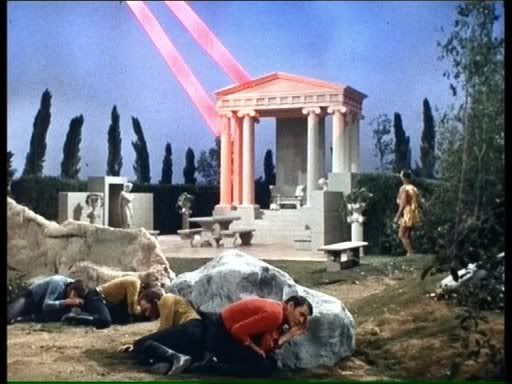
divine source of order. As a young nerd, I knew just how one should deal
with such divine pretenders;
http://i2.photobucket.com/albums/y28/Sir_Lance/Ad28.jpg


On 11/16/15 5:08 AM, [email protected] wrote:
Subject:
Re: [P2P-F] Fwd: The Church of Economism and Its Discontents (GTN
Discussion)
From:
Denis Postle <[email protected]>
Date:
11/16/15, 5:07 AM

To:
[email protected]


A Must Read and the Norgaard essay referred to as well.
All very welcome not least because some decades ago I tried to get
'capitalism as a religion' on the agenda of science and society media
series but the Marxist scholar we were working with dismissed the
notion, 'back to the drawing board' I was told. It shut down that line
of inquiry for a long time.
I'd offer a caveat re the Noorgard article, he writes as though he
believes we can somehow get outside nature. Might it also be
sacreligious to try to insist that along with us capitalism and all
its artefacts are intrinsicly a part of nature? An essential
perspective I now find personally. But has it perhaps become an
orthodoxy I haven't noticed?
Denis Postle
--
Eric Hunting
[email protected]
_______________________________________________
P2P Foundation - Mailing list

Blog - http://www.blog.p2pfoundation.net
Wiki - http://www.p2pfoundation.net

Show some love and help us maintain and update our knowledge commons by making
a donation. Thank you for your support.
https://blog.p2pfoundation.net/donation

https://lists.ourproject.org/cgi-bin/mailman/listinfo/p2p-foundation