potentially of interest to many here:

---------- Forwarded message ----------
From: Dennis Allison <[email protected]>
Date: Fri, May 25, 2012 at 11:08 AM
Subject: [EE CS Colloq] Tribler: 4th generation peer-to-peer technology *
4:15PM, Wed May 30, 2012 in Skilling Auditorium
To: [email protected]
 Stanford EE Computer Systems Colloquium
4:15PM, Wednesday, May 30, 2012
Skilling Auditorium, Stanford Campus
http://ee380.stanford.edu

 Tribler: 4th generation peer-to-peer technology

 Johan Pouwelse
Delft University of Technology *About the talk:*

We aim for a more virtuous society by transforming media and money. Our
ideology-driven methodology is replacing speculation, volatility and greed
with cooperation, stability and rewarding of goodness. Our first goal is
creating a smartphone-based infrastructure which is capable of withstanding
all known government attacks on media freedom and privacy. Second, based on
this self-organizing infrastructure we are designing our bank-of-bits,
aiming to alter the essence of capitalism (rich get richer) by abolishing
compound interest rates and facilitation safe zero-cost money transfers
plus lending.

During this talk the first prototype will be unveiled of our
attack-resilient QMedia app for microblogging. QMedia goal for future
versions is news dissemination from a single smartphone to an audience of
millions in the form of microblogging, enriched with pictures and streaming
video which is guarded against all known forms of government censorship
such as cyberspace sabotage, digital eavesdropping, infiltration, fraud,
Internet kill switches and especially lawyer-based attacks. We hope new
Open Source developers will join our Internet-deployed project and help
realize our QMedia goal for the end of 2012: building next-generation
anonymity technology, founded on social networking, traffic hiding and a
global reputation system.

For over a decade Delft University of Technology has been measuring and
building P2P systems, aided by millions of Euros in research funding from
the European Union and Dutch government. We are continuously improving our
own attack-resilient sharing software called Tribler. With one million
downloads, Tribler provides us with vital behavioral feedback of novel
algorithms. Tribler is not dependent and completely decoupled from
unreliable servers such as DNS servers, web servers, swarm trackers and
access portals. Using fully self-organising P2P technology we aim to create
an overlay which is unbreakable: the only way to take it down is to take
the Internet down.

We dream of transforming media and money with five innovations we have
developed within Tribler:

   1. The Libswift P2P engine,
   2. Dispersy elastic database,
   3. Bartercast reputation system,
   4. bandwidth-as-a-currency resource based cybercurrency, and
   5. the Skynet V0.1 self-organizing and self-learning Artificial
   Intelligence engine (joined work University of Szeged) with a very limited
   form of self-awareness.

 *Live Webcast:*

Join the live webcast
<http://stanford-online.stanford.edu/live/ee380.asx>beginning at
4:15PM Pacific and continuing until 5:30PM.

*Archived Video:*

The archived video for this presentation will be available sometime in the
evening following the presentation. CLICK
HERE<http://www.stanford.edu/class/ee380/Abstracts/120530.html>to view
the presentation.

*Slides:*

There is no downloadable version of the slides for this talk available at
this time.

*About the speaker:*

 Dr. ir. J.A. Pouwelse is an assistant professor at Delft University of
Technology, specialized in Peer-to-Peer file sharing. He leads the P2P
research team of a dozen people which created the Tribler P2P system. The
Tribler group is the largest experimental research group in the field of
P2P and responsible for several world-first innovations. With over one
million downloads Tribler serves as a living laboratory and proving ground
for next-generation P2P technology. Dr. Pouwelse is scientific director of
P2P-Next and technical leader of QLective, EU projects with a combined
research budget of 26 million Euro. Previously Dr. Pouwelse delivered a
statement for the FTC in Washington, was a visiting scientist at MIT, and
spent several summers at Harvard to study mechanisms for cooperation.

*Contact information:*

Johan Pouwelse
Delft University of Technology


 *ABOUT THE COLLOQUIUM:*

See the Colloquium website, http://ee380.stanford.edu, for scheduled
speakers, FAQ, and additional information. Stanford and SCPD students can
enroll in EE380 for one unit of credit. Anyone is welcome to attend; talks
are webcast live and archived for on-demand viewing over the web.

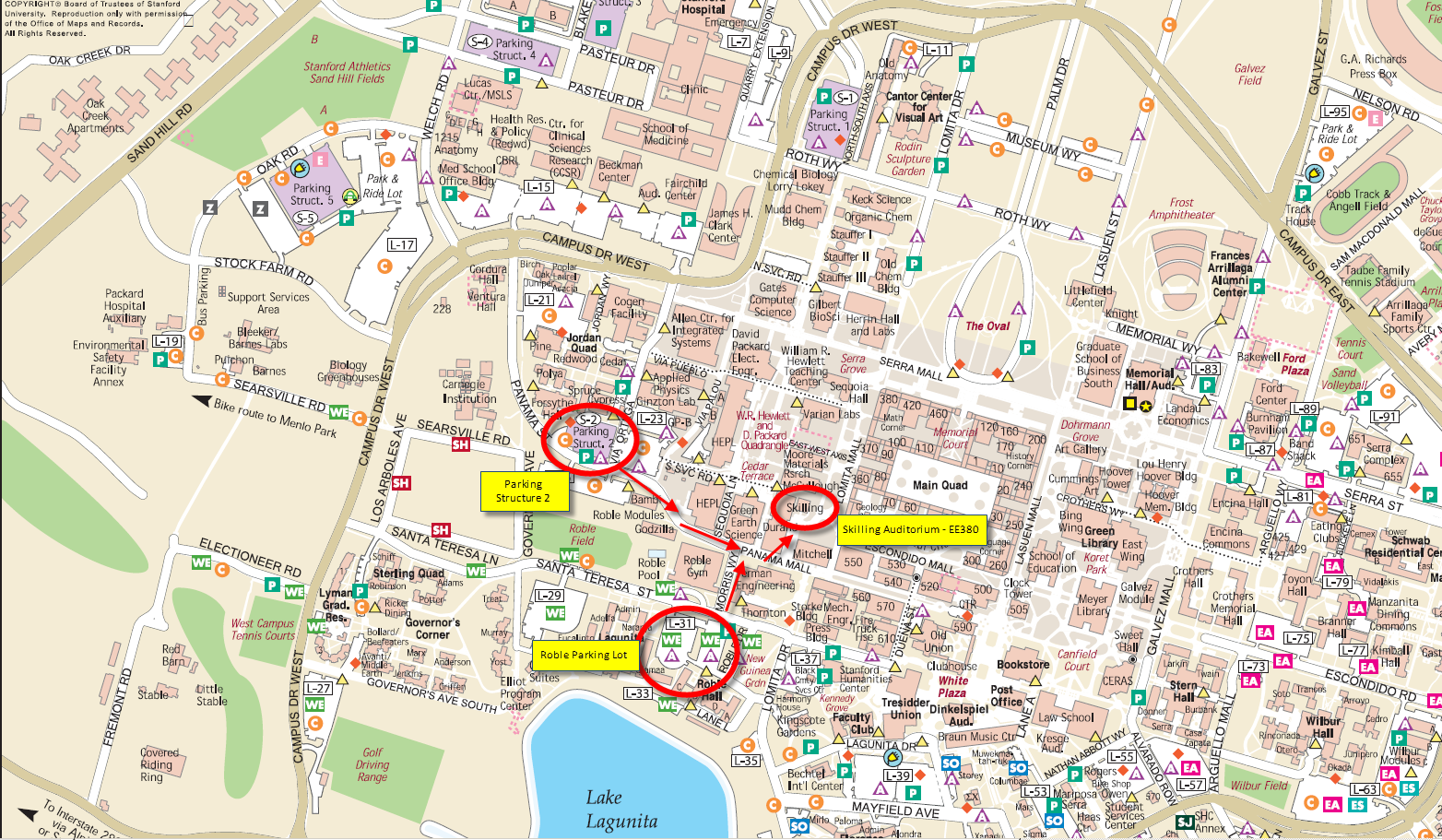
*WHERE IN THE WORLD IS SKILLING AUDITORIUM:*

The Colloquium meets in Skilling Auditorium on the Stanford Campus. For a
map showing the location of Skilling Auditorium and recommended parking, CLICK
HERE <http://ee380.stanford.edu/Skilling-Map.png>. Parking restrictions is
free and unrestricted in most lots after 4PM.

*MAILING LIST INFORMATION:*

This announcement is sent to multiple mailing lists. If you are signed up
on our private EE380 list you can remove yourself using the widget at the
upper left hand corner of the Colloquium web page. Other lists have other
management protocols.
_______________________________________________
p2p-hackers mailing list
[email protected]
http://lists.zooko.com/mailman/listinfo/p2p-hackers