kr=: [: ,./^:2 *"0 2

   a kr b
2  2 2 3  3 3
2  4 2 3  6 3
2  2 2 3  3 3
5  5 5 7  7 7
5 10 5 7 14 7
5  5 5 7  7 7
On Sat, Oct 14, 2017 at 8:25 AM, Cliff Reiter <[email protected]> wrote:

> The idea is to write a verb which gives the Kronecker product.
> https://en.wikipedia.org/wiki/Kronecker_product
> For example:
>    ]a=:2 2$2 3 5 7
> 2 3
> 5 7
>    ]b=:1+4=i.3 3
> 1 1 1
> 1 2 1
> 1 1 1
>    a kr b
> 2  2 2 3  3 3
> 2  4 2 3  6 3
> 2  2 2 3  3 3
> 5  5 5 7  7 7
> 5 10 5 7 14 7
> 5  5 5 7  7 7
>
> Note each entry in a times b appears as a block in the Kronecker product.
> This may have been discussed in this forum before, but let's try to
> rethink the problem.
>
> The first time I was challenged with this question was in June of 1999 at
> a "J in the Math classroom" workshop at Messiah College. My (possibly
> faulty) recollection was that their were four established Jers there (Ken
> Iverson, Richard Brown, Donald McIntyre?? and myself). We investigated
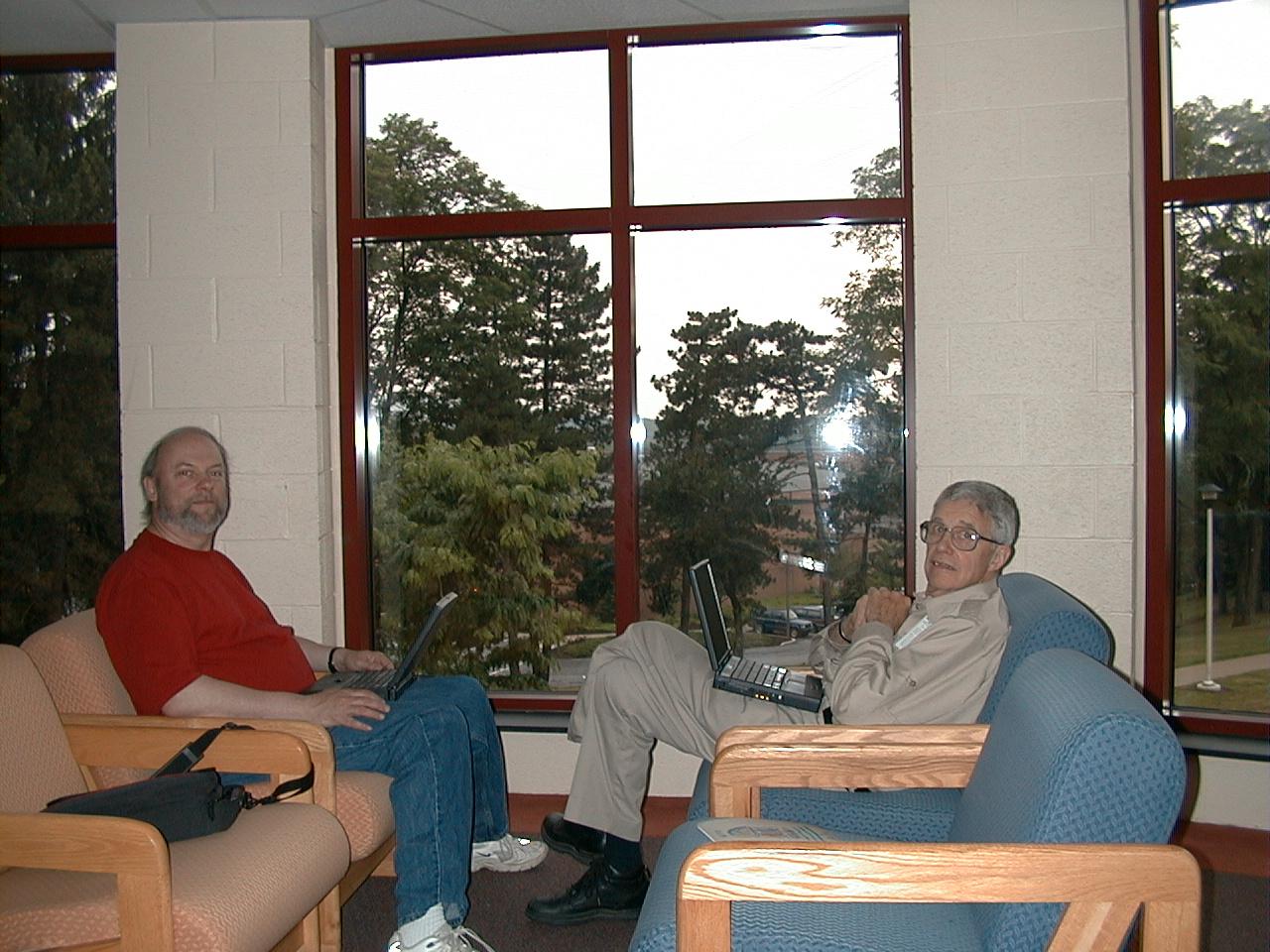
> defining kr. We each had a laptop, sitting in the 4 chairs in the picture:
> http://webbox.lafayette.edu/~reiterc/j/ke_iverson/wdsc00017.jpg
> It was revolutionary for the era that we were computing, but we were not
> in a laboratory.
> Happy Jing,
> Cliff
>
> ----------------------------------------------------------------------
> For information about J forums see http://www.jsoftware.com/forums.htm
----------------------------------------------------------------------
For information about J forums see http://www.jsoftware.com/forums.htm