<http://www.icr.org/icr-magazines/>
Evidence for Creation <http://www.icr.org/evidence/>  > Evidence from Nature
<http://www.icr.org/nature/> > The Earth Is Unique
<http://www.icr.org/planet-earth/> > The Earth Itself

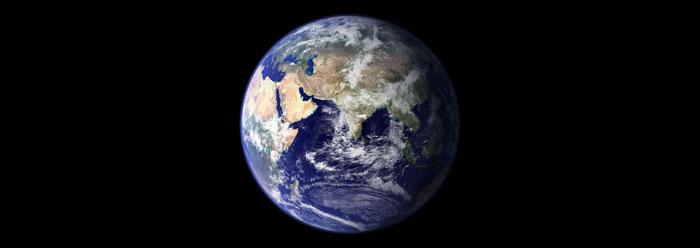
http://static.icr.org/i/wide/earth_east_wide.jpg

 <http://www.icr.org/earth-unique/> http://www.icr.org/img/send-this.jpgSend
<http://www.icr.org/earth-unique/>  This


The Earth Itself


Earth is the only planet circling our sun on which life as we know it could
(and does) exist.

Like no other planet, ours is covered with green vegetation, enormous
blue-green oceans containing over a million islands, hundreds of thousands
of streams and rivers, huge land masses called continents, mountains, ice
caps, and deserts that produce a spectacular variety of color and texture.
Some form of life is found in virtually every ecological niche on the
earth's surface. Even in the extremely cold Antarctica, hardy microscopic
beings thrive in ponds, tiny wingless insects live in patches of moss and
lichen, and plants grow and flower yearly. From the apex of the atmosphere
to the bottom of the oceans, from the coldest part of the poles to the
warmest part of the equator, life thrives here. To this day, no evidence of
life has been found on any other planet.

The earth is immense in size, about 8,000 miles in diameter, with a mass
calculated at roughly 6.6 x 1,021 tons. The earth is on average 93 million
miles from the sun. If the earth traveled much faster in its
584-million-mile-long journey around the sun, its orbit would become larger
and it would move farther away from the sun. If it moved too far from the
narrow habitable zone, all life would cease to exist on earth. If it
traveled slightly slower in its orbit, the earth would move closer to the
sun, and if it moved too close, all life would likewise perish. The earth's
365-days, 6-hours, 49-minutes and 9.54-seconds trip around the sun (the
sidereal year) is consistent to over a thousandth of a second!

If the yearly average temperature on earth's surface changed by only a few
degrees or so, much of the life on it would eventually roast or freeze. This
change would upset the water-to-ice ratio and other critical balances, with
disastrous results. If the earth rotated slower on its axis, all life would
die in time, either by freezing at night because of lack of heat from the
sun or by burning during the day from too much heat.

Our "normal" earth processes are assuredly unique among our solar system
and, according to what we know, in the entire universe.


[Non-text portions of this message have been removed]


------------------------------------

Post message: [email protected]
Subscribe   :  [email protected]
Unsubscribe :  [email protected]
List owner  :  [email protected]
Homepage    :  http://proletar.8m.com/Yahoo! Groups Links

<*> To visit your group on the web, go to:
    http://groups.yahoo.com/group/proletar/

<*> Your email settings:
    Individual Email | Traditional

<*> To change settings online go to:
    http://groups.yahoo.com/group/proletar/join
    (Yahoo! ID required)

<*> To change settings via email:
    [email protected]
    [email protected]

<*> To unsubscribe from this group, send an email to:
    [email protected]

<*> Your use of Yahoo! Groups is subject to:
    http://docs.yahoo.com/info/terms/