On Tue, Oct 31, 2023 at 05:42:37PM +0100, Kevin Wolf wrote:
> Am 31.10.2023 um 14:48 hat Richard W.M. Jones geschrieben:
> > On Tue, Oct 31, 2023 at 02:17:56PM +0100, Kevin Wolf wrote:
> > > Am 17.10.2023 um 16:01 hat Philippe Mathieu-Daudé geschrieben:
> > > > Access QOM parent with the proper QOM VIRTIO_SCSI_COMMON() macro.
> > > >
> > > > Signed-off-by: Philippe Mathieu-Daudé <[email protected]>
> > > > ---
> > > >  hw/scsi/virtio-scsi.c | 2 +-
> > > >  1 file changed, 1 insertion(+), 1 deletion(-)
> > > >
> > > > diff --git a/hw/scsi/virtio-scsi.c b/hw/scsi/virtio-scsi.c
> > > > index 45b95ea070..fa53f0902c 100644
> > > > --- a/hw/scsi/virtio-scsi.c
> > > > +++ b/hw/scsi/virtio-scsi.c
> > > > @@ -761,7 +761,7 @@ static void virtio_scsi_fail_cmd_req(VirtIOSCSIReq
> > > > *req)
> > > >
> > > >  static int virtio_scsi_handle_cmd_req_prepare(VirtIOSCSI *s,
> > > > VirtIOSCSIReq *req)
> > > >  {
> > > > -    VirtIOSCSICommon *vs = &s->parent_obj;
> > > > +    VirtIOSCSICommon *vs = VIRTIO_SCSI_COMMON(s);
> > > >      SCSIDevice *d;
> > > >      int rc;
> > >
> > > Why is a dynamic cast more "proper" than a static type-safe access, even
> > > more so in a hot I/O path?
> > >
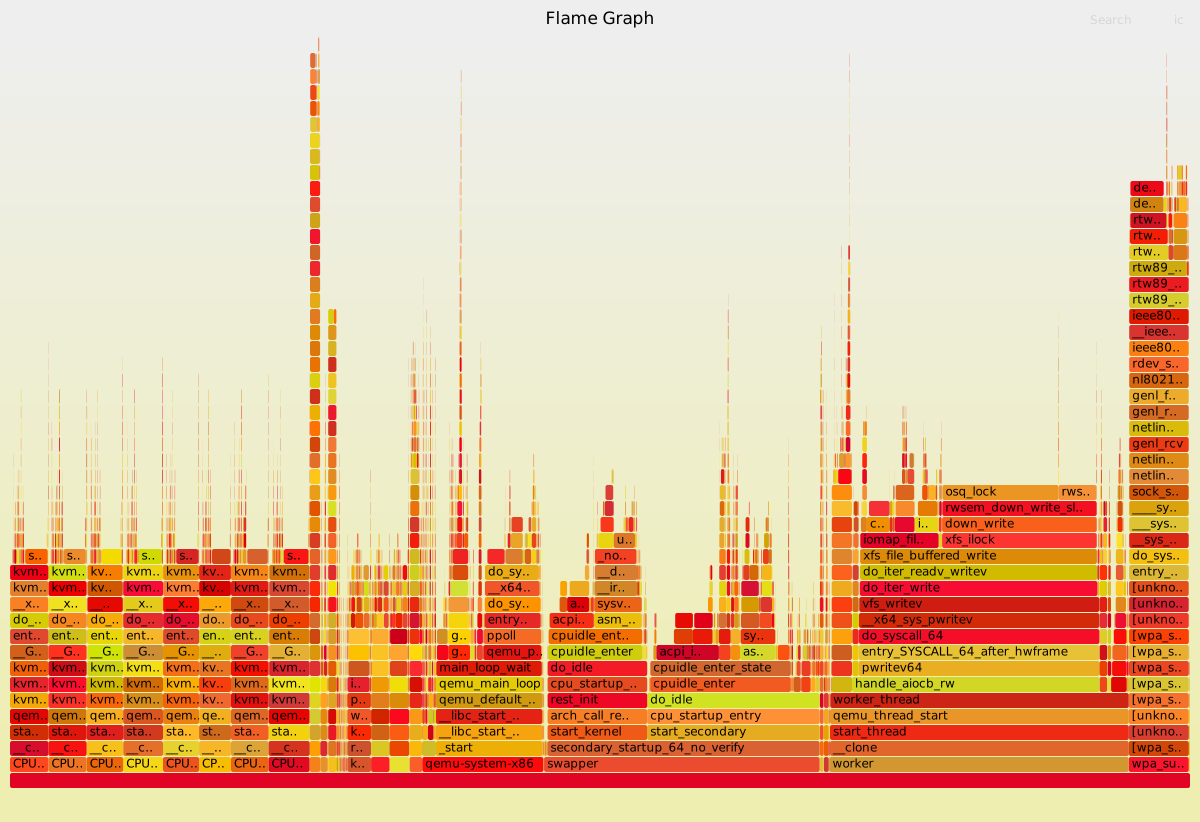
> > > Rich Jones posted a flamegraph the other day that surprised me because
> > > object_class_dynamic_class_assert() and object_dynamic_cast_assert()
> > > were shown to be a big part of scsi_req_new(). In the overall
> > > performance, it's probably dwarved by other issues, but unnecessary
> > > little things can add up, too.
> >
> > I think Kevin is referring to one of these flamegraphs:
> >
> >   http://oirase.annexia.org/tmp/2023-kvm-build-on-device.svg
> >   http://oirase.annexia.org/tmp/2023-kvm-build.svg
> >
> > Here's a zoom showing scsi_req_new (hopefully this URL is stable ...):
> >
> >
> > http://oirase.annexia.org/tmp/2023-kvm-build-on-device.svg?s=scsi_req_new&x=512.9&y=501
>
> Oh, this one (kvm-build-on-device) doesn't even show the object cast.
> I was looking at kvm-build, it seems, where both the class and the
> object cast are visible:
>
> http://oirase.annexia.org/tmp/2023-kvm-build.svg?s=scsi_req_new&x=455.4&y=533
Not sure if this is the reason why, but the difference between these
two runs is that kvm-build is backed by a qcow2 file and
kvm-build-on-device is backed by a host block device.  I believe they
both were otherwise identically configured qemu.

More background in this Fedora thread:

https://lists.fedoraproject.org/archives/list/[email protected]/thread/MSJAL7OE2TBO6U4ZWXKTKQLDSGRFK6YR/

Rich.

--
Richard Jones, Virtualization Group, Red Hat http://people.redhat.com/~rjones
Read my programming and virtualization blog: http://rwmj.wordpress.com
virt-p2v converts physical machines to virtual machines.  Boot with a
live CD or over the network (PXE) and turn machines into KVM guests.
http://libguestfs.org/virt-v2v