Sri Sathya Sai gives us ‘The Essence of the Four Vedas’ – Part 2


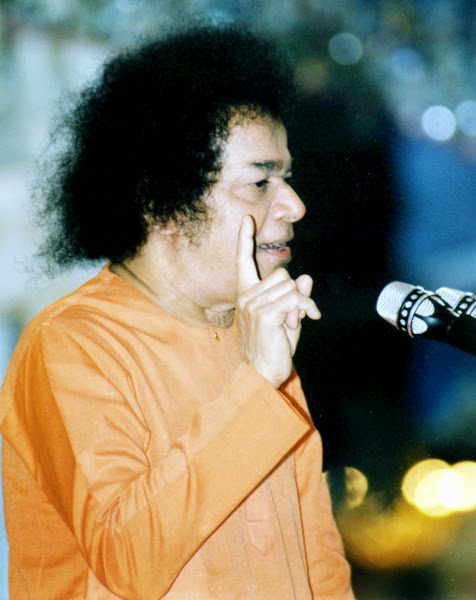
<http://2.bp.blogspot.com/-e5DNw4ARTMY/VC0VmjbgUqI/AAAAAAAAFF4/eMxaC_FFcVU/s1600/DISCOURSE.jpg>


… Continued from Part 1
<http://sathyasaiwithstudents.blogspot.in/2014/09/sri-sathya-sai-gives-us-essence-of-four.html>


Tat Twam Asi


‘Tat Twam Asi’, That Thou Art, is the holy declaration of the Sama Veda. Tat
(That) was in existence before creation and will remain subsequently too. It is
the principle of Total Consciousness, the totality of Being and Becoming,
encompassing and transcending the physical, mental and spiritual realms – Yato
Vaacho Nivartante, Apraapya Manasaa Saha, beyond the horizon of expression and
imagination. The cosmos did not originate from God. It is God. There is nothing
‘other’. There is no second. Some people ask, “Have you seen God?” You reply,
“Yes. I have seen God.” Then they might ask, “Where is He? Show Him to us.” If
God is in one specific place, you can point your finger in that direction and
say “He is there”. But there is nothing in the Universe different, distinct, or
higher than God. This microphone, this garland, this handkerchief, all these
are God. He is the ‘Tat’ (That), the Omnipresent (Eternal Awareness –
Chaitanya). It is referred to as ‘Tat’ (That), since we now imagine It to be
distant, far from us. But far from where? Far from your body, your senses, your
mind, your reasoning faculty, which are all equipped with limited capabilities?
But once your intuitive consciousness is aroused, that which appears to be
‘far’ becomes ‘close’.


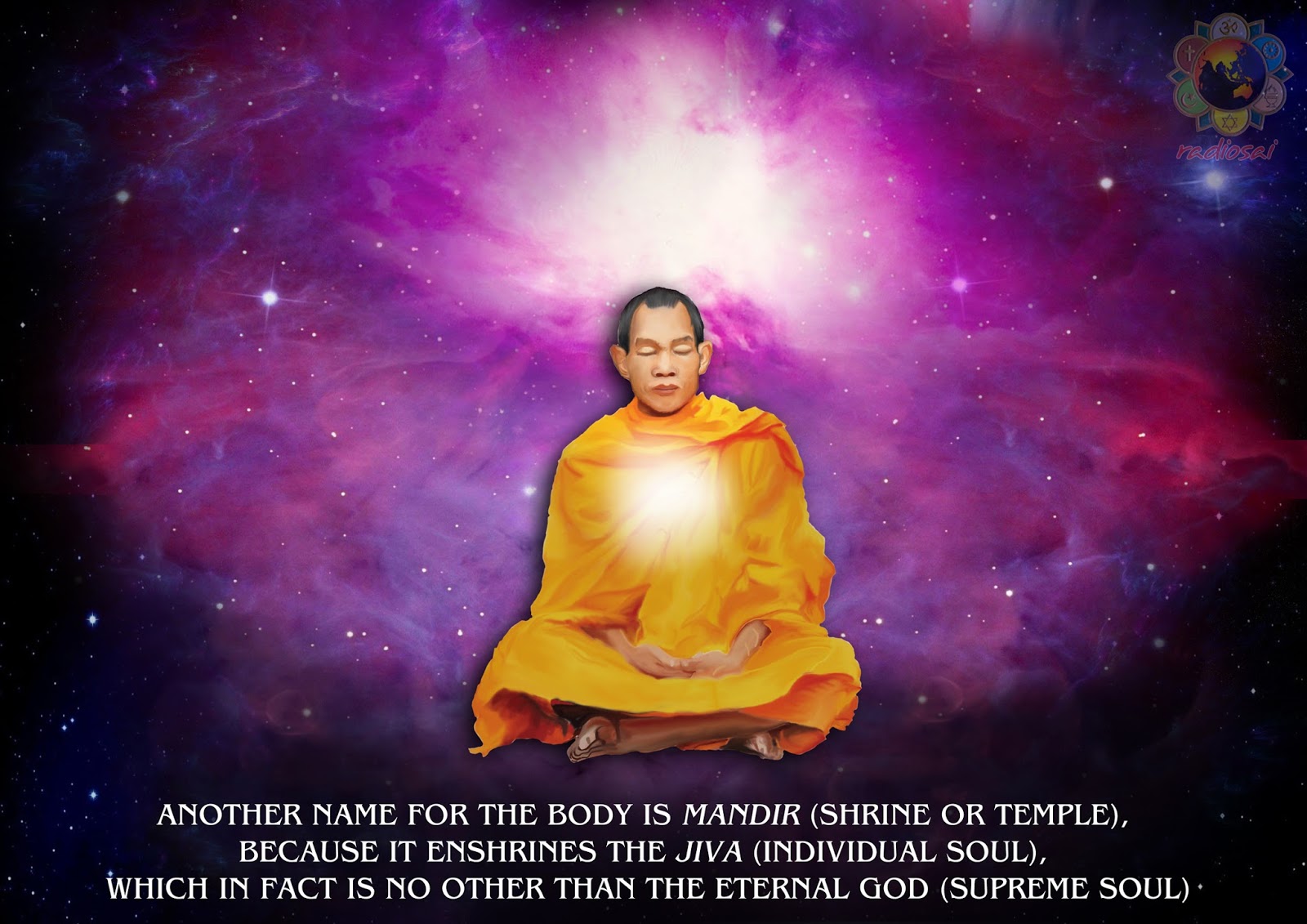
<http://1.bp.blogspot.com/-ABhZVlchNYQ/VC0VnJQF7VI/AAAAAAAAFGE/0PaRQgqrSJg/s1600/DISCOURSE%2B2.jpg>


The Vedas announce It to be ‘Duuraat Duure, Antike Cha’ (farther than the
farthest, closer than the closest). ‘Twam’ (Thou) is the body-sense-mind-reason
complex. This too is That, as confirmed by the verb ‘Asi’ (art). Have you
considered what happens when you are engaged in reading prayers from a book?
The hand holds, the eyes see, the faculty of reason judges, and the mind reacts
to the flood of feeling. ‘Thou’ is the composite of hand and eye, reason and
mind. ‘Thou’ is the mould, the Aakara (the form). ‘That’ is the core, the
genuineness, the Swabhava  (the real nature). To realise the identity of the
two, one has to resort to the Sadhana (spiritual discipline) of meditation.
Meditation is the process of sublimating concentration (which concerns itself
with the realm of the senses), into contemplation (which concerns itself with
the realm of mind and reason), leading to real meditation (which concerns
itself with the realm unreachable by logic, thought or even imagination). This
declaration is enshrined in the Sama Veda, whose hymns are musical and have to
be sung as part of holy rites. Music is an excellent medium for harmonising
‘Thou’ and ‘That’, the human with the Divine. Of course, the songs must emerge
from Prema (selfless love), not from greed for fame or profit. When rain pours,
the sheet of water brings together earth and sky. So too, the shower of
Love-lit songs can bring ‘Thou’ and ‘That’ together. ‘Asi’ (art) can be
consummated.


Ayam Atma Brahma


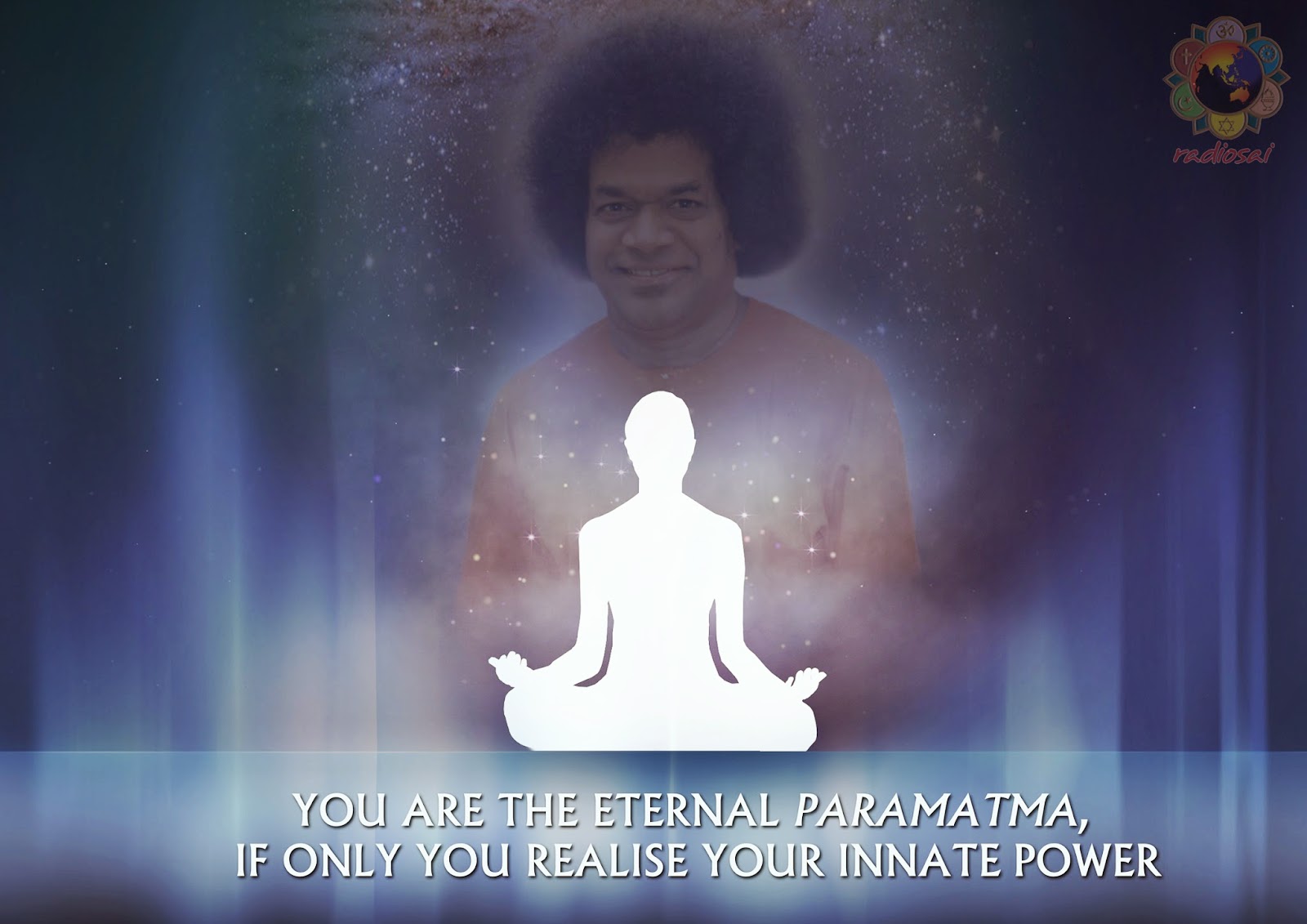
<http://2.bp.blogspot.com/-pJnTPIMTnfE/VC0VnN3ER7I/AAAAAAAAFF8/C9X7-ZntyAI/s1600/DISCOURSE%2B3.jpg>


‘Ayam Atma Brahma’ is the holy declaration of the Atharva Veda. It means, ‘This
Atma is Brahman’. It implies that the Individual Self is the untarnished,
unaffected witness of the activities of the body-mind complex. The lamp
illumines the area around it. One person, within the lightened area, fudges his
accounts to evade taxes, while another writes the name of Rama, and yet another
lays his hands on articles to steal. All these activities take place in the
area illumined by the lamp. Yet the lamp itself remains a mere witness. The
Atma too shines within the cave of the heart. One should engage oneself in
sacred activity, with the inspiration of that illumination.


Many people who come to Me ask, “Swami! We are striving to control the mind,
but it runs about like a mad dog. How am I to succeed?” In the question lies
its fallacy. The mind is beyond contact, for it is attached to the senses.
Control the senses. Let them not draw you into the objective world. By this
means, the mind can be made an instrument of illumination and not of delusion.
The truth that this Atma is Brahman, will then dawn upon you. The splendor of
this Awareness will drive away the darkness of ignorance. There can be no Tamas
(ignorance) where there is Jyoti (light). The Atma (Self) is Jyoti
(self-luminous). The Gayatri Mantra helps uproot darkness and ignorance by
invoking the splendour of the sun to illumine the Buddhi (intellect), the
faculty of thought. That splendor will reveal the identity of ‘Ayam Atma’, of
this self (individual self), with Brahman (the Cosmic Over-Self).


Source: The Essence of the Mahavakyas, Discourse 18, My Dear Students Volume 4,
Divine Discourse delivered on January 1, 1983 at the Prasanthi Nilayam Campus
Auditorium <http://www.saipublications.com/b003_my_dear_students_vol_4.html>

--

---
You received this message because you are subscribed to the Google Groups
"saimsg" group.
To unsubscribe from this group and stop receiving emails from it, send an email
to [email protected].
For more options, visit https://groups.google.com/d/optout.