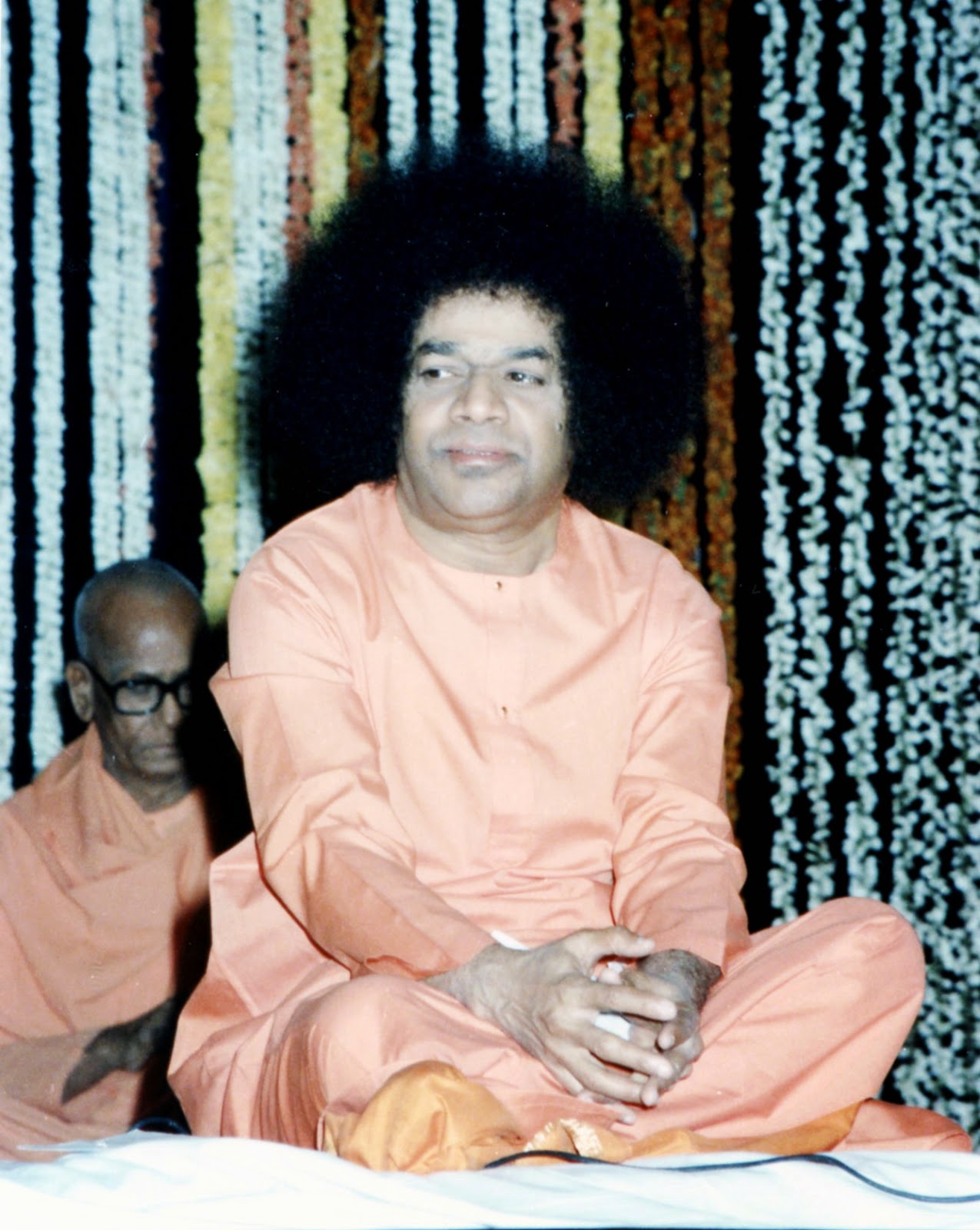
Sri Sathya Sai gives a Message for Sadhus and Ashrams


<http://4.bp.blogspot.com/-GU1jkbC3Edo/VKQPNyF_VCI/AAAAAAAAFss/Qya22N9aUqw/s1600/THIS%2BDAY%2BTHAT%2BAGE.jpg>

http://4.bp.blogspot.com/-GU1jkbC3Edo/VKQPNyF_VCI/AAAAAAAAFss/Qya22N9aUqw/s1600/THIS%2BDAY%2BTHAT%2BAGE.jpg


Sri Sathya Sai presiding over the Akhila Andhra Sadhu Parishad - January 1987


The Annual Conference of Akhila Andhra Sadhu Parishad was held at Prashanti
Nilayam between the 2nd and 4th of January 1987. More than 300 hundred monks
and nuns of various orders from Andhra Pradesh, the neighbouring states,
Varanasi and Rishikesh attended the conference. Bhagavan blessed the Conference
with His Inaugural Address. He was present in their midst during the
deliberations. He delivered His Valedictory Address on the 4th and directed
them to accept with faith, the message of spiritual elevation of society as the
essential path towards Self-realisation.


Excerpts from that Inaugural Discourse given on January 2nd are given below:


“The Sanatana Dharma (the Eternal Religion) which is the basis of Bharatiya
Culture is the essence of the lessons enunciated in all the Vedic texts. This
Dharma (righteousness) is the source and spring of various systems of
philosophy, codes of morality and even of the different forms and streams of
literature. Through these means the Dharma has taught that man cannot live in
peace, until he knows what ought to be known, he casts away what has to be cast
away, and reaches the goal he has to reach. Veda means awareness, knowledge,
discrimination. The four Vedas (scriptures of eternal value) teach us who and
what we really are and how we are related to the world around us. This is the
greatest gift that the Vedas offer. This is the end of all enquiry, the aim of
all scientific search.


Knowledge has its consummation in the discovery of Truth. Truth which survives
Past, Present and Future unaffected. Satyam, Jnanam, Anantam ‘Both Satyam
(Truth) and Jnanam (spiritual wisdom) are Anantam (without end).’ They are
eternal and limitless. The Vedas are vocal expressions of both these. To
consider Vedas as literature or poetry is to devalue them. Vedic hymns are not
intended for empty worship by rituals. They have been recorded by sages to
help, practise and to experience. The sages had recognised this factor and
therefore, the Vedas have survived untarnished until today. Their practice
became Yajnas (sacrificial rituals). Their prayers became songs…


… Activity finds fulfilment when wisdom dawns. Karma (sanctified activity) is
the path by which Jnana (spiritual wisdom) is attained. And, wisdom in action
is the highest Karma. Worthwhile activity must result in purifying the mind.
Therefore, no one, not even a recluse or monk can desist from engaging in good
deeds. These deeds must originate spontaneously and should not leave any trace
of pride in the mind. Nor should any attachment to the result of the deed lead
to a craving for claiming it for one self. Renunciation must be the only source
of joy. Tyaga (self-sacrifice) is the truest Bhoga (enjoyment) for the Sanyasi
(ascetic). The Gita recommends 'inaction in action' and asserts that 'inaction
is the most rewarding action' for those who strive for supreme peace. This
attitude is named Karma Sanyasa (non-attachment to action). Action or activity
is generally associated with the body only, but the mind is also busy with the
world. The Atma alone is the unaffected witness. So, the secret of 'inaction in
action' lies in taking refuge in the Atma and in recognising all living beings
as fundamentally Atma.


The wise act solely for the promotion of peace and goodwill in the human
community with no consideration of I and Mine. The ego is deep rooted in man
during countless previous lives. It grows fast in this life also, seeking
sensual pleasure, possessions in plenty, applause and appreciation, authority
over others, fame and fortune. It can be removed only by relentless enquiry
into our Reality.


… While awake, man experiences a variety of relationships. He is interested in
a multiplicity of persons, possessions and problems. He passes through joy and
grief, praise and ridicule, insult and injury, honour and dishonour. But while
engaged in dreams, the entire tangle fades away. He withdraws from the outer
world and is wholly his own designer. He projects situations of pleasure and
pain, happiness and misery. He plunges into fear and throws himself in despair.
He creates both friends and foes and deals with them as the fancy dictates.
While asleep, he is no more alert or active. He is alone with the Atma, with
his Reality. The Atma, The Self, was his Reality all through the three stages,
even when he denied it and ignored it. This Atma is the Truth. That Thou Art.
Tat Twam Asi.


Persons who have dedicated their lives to spiritual search and success have to
discover the Atma in themselves and others. The discovery will confer sympathy
and compassion and promote loving service. Ashrams (monasteries) of monks must
be the centres of spiritual illumination, sources of Ananda and the inspiration
to share the Ananda with all. Institutions and Orders arise out of unselfish
enthusiasm to serve and save those who have lost their way and are flourishing
on trivial pursuits. Fortunately, a long series of saints has upheld in this
land these high ideals. The world is in dire distress today. It can be saved
only by dedicated men setting an example of high morality, selfless service and
Universal Love. Equipped with a calm and serene temper, adhering always to the
Truth, man must involve himself in society with full faith in God as Protector
and Provider.”


Excerpts from the Valedictory Discourse given on January 4th are given below:


“... The Sadhus (noble souls) of this country have to consider ways and means
to carry the message of Gita to the common man in all lands. You have to
transcend the usual method of viewing Gita as mere dialogue between Krishna and
Arjuna by elevating it into what it really is--a Divine dialogue between
Eashvara and Jivi, God and man. The recitation of the Gita is now being
encouraged as an end in itself. But that is only a method of spending time
beneficially. The Gita is a Path, a Goal, an Achievement. Its purpose is gained
by practice and experience.


The voice of God as Message to Man, is a gift of Grace to all men. But it is
interpreted by man along the lines his temperament dictates. The pure, clear
message gets contaminated thereby. Later when message is presented in a variety
of forms, it produces confusion and conflict. Those who profess to teach and
preach religion must avoid such consequences and concentrate on arousing
spiritual hunger and satisfying it. There are many who try to cater to people's
taste by means of irrelevant stories which tarnish the main spiritual theme.
The message can succeed in capturing people's hearts only when it is
experienced by the speaker and when his aim is only to inspire others to share
his joy. The world's progress depends on the wisdom and altruism of those whom
the people trust and follow. The leaders and guides should accept this
responsibility and duty. They must be aware, all the time, of the Indweller and
instruct others about the same.


... Sadhus by the very act of renunciation, have placed themselves beyond caste
and creed. While engaged in the service of humanity, care has to be taken
against mentioning or emphasising these divisive features of the society. God
is Almighty. It is sacrilege to ascribe human weaknesses to Him. Myths and
legends about the mystery of God contain symbolic meanings, which are ignored.
They yield their inner truth only to those who seek.


Now, rural folk have become clever enough to ask, what benefit society derives
from those who don the ochre robe. They expect exemplary lives and sincere,
unselfish service. In fact, 'the Sadhana of service is superior to Sadhana
aimed at one's own liberation. Worship God in His manifestation as mankind.
Everyone is a child of God, whatever the colour, caste, creed, and language.
This sense of unity has to be fostered. This is the real Matham (faith), the
Abhimatham (true faith), the fulfilment of your Vratam (vow), the fruit of
Manava Matam (humanity's faith). Service to man is worship of God.


You have in you both the talent and the desire to uplift your fellow men. This
country needs your service urgently today. God welcomed the urge to manifest
the Cosmos. Ekoham Bahusyaam (I am One; I shall become Many), He said to
Himself. You must also feel the need to blossom and expand. Derive Ananda in
the process, 'possess it and share it, in order to increase it. The Upanishads
proclaim the message of courage, of strength. Give up the idea that you are
weak and helpless. Na Ayam Atma Balaheenena Labhyah (The Atma cannot be gained
by the weak). Believe that you have in you the strength and skill you need.
Those who can sing Bhajans (spiritual chorus) can, as a beginning, lead
villagers in Nagara Sankirtan (street singing of spirituals) and teach them to
sing in groups. Those who can speak on spiritual topics can gather the people,
when they have returned from the fields, and explain to them, in simple
language the mystery of God, Nature and Man. Persuade them to give up habits
that undermine their health and peace. Promote in them the qualities of mutual
aid, truthfulness and non-violence.”


Source: Sri Sathya Sai Digvijayam (1986 – 2005) and Sri Sathya Sai Speaks
Volume 20 <http://www.saipublications.com/b010_Sai_Digvijayam_2.html>

--

---
You received this message because you are subscribed to the Google Groups
"saimsg" group.
To unsubscribe from this group and stop receiving emails from it, send an email
to [email protected].
For more options, visit https://groups.google.com/d/optout.