The First Summer Course in Indian Culture and Spirituality at Sri Sathya Sai
University
May 20, 1990 to June 2, 1990


<http://3.bp.blogspot.com/-XvnjE4EdSlc/VVXTamhsCAI/AAAAAAAAGtw/W6Ey3fQ_PXM/s1600/THIS%2BDAY%2BTHAT%2BAGE%2B1.JPG>


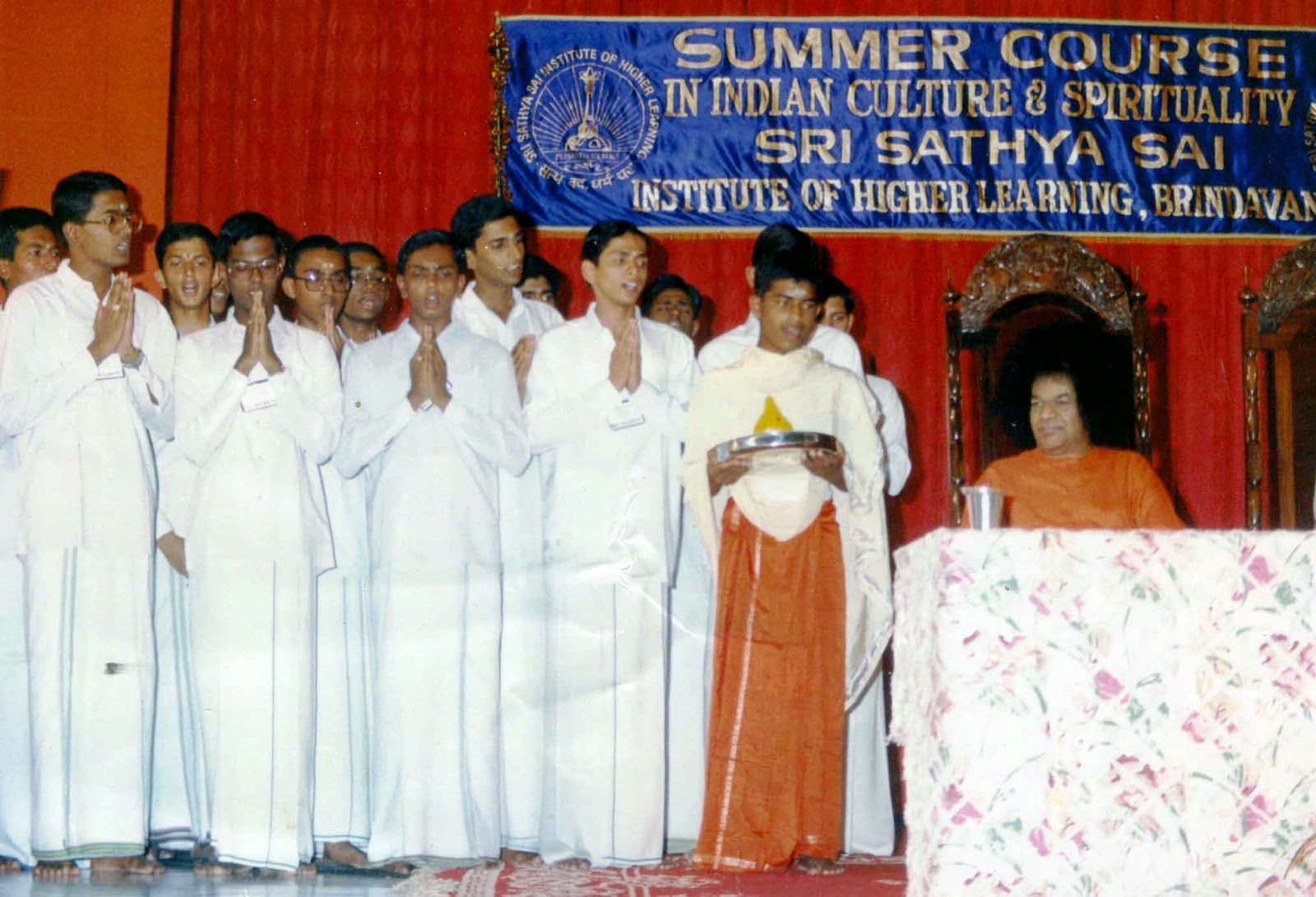
The commencement of the Course in the Brindavan Campus Auditorium

The Summer Course in Indian Culture and Spirituality was held in Brindavan for
15 days from the 20th of May to the 2nd of June 1990. Only the current and the
former students of the Sri Sathya Sai Institute of Higher Learning numbering
1,100 were chosen to attend the course. The guest-speakers were a galaxy of
leading personalities from different walks of life – Former Chief Justice of
India, a couple of retired Generals from the Indian Army, several former and
present Vice Chancellors of Indian Universities, a veteran representative of
Indian Foreign Service, several specialists from the academic community, the
retired Chief of Energy Department of the United Nations, a historian, and
staff and students of the Sri Sathya Sai Institute. In the inaugural discourse,
He mentioned:


“Dear students! Take note that you have to live for the sake of an ideal and
not for mere living. To lead an exemplary life, you need love of the nation and
love of the Atma (Spirit). Realise the greatness of your nation, its
sacredness, its purity, its vastness, its sublime ideals and how it is
overflowing with love. Belittling their own country, Indian students are going
abroad. No country in the world has all that Bharat has.


Born in this land of Karma, Yoga and Tyaga, students should understand and
cherish its cultural heritage. Their ignorance of this culture is due to the
absence of teachers and parents who could convey the elements of this culture
to the students. During the fifteen days of the summer course, you have to
learn how to harmonise this ancient culture with the needs of the modern world
and to lead lives governed by Truth and Righteousness. Position or power is not
important. They are transient. One should not be proud about wealth, progeny or
youthful vigour. All of them may go in a moment. Adolescence is a precious
period in one's life. It should be rightly used.


Remember that Bharatiya culture transcends the limitations of time, space and
circumstance. Endeavour to know its unique greatness. In the coming weeks I
shall be speaking on the functions of the body, the senses, the mind, the Will
and the Atma from the spiritual point of view, as desired by the
Vice-Chancellor in his welcome address. It is essential that students should
know about these matters. Of what avail is it for one to know all about the
external world without knowing who he is in reality? You have to know the
nature of the Brahman and the Self. Devotion is the most important requisite.
Without devotion to God, nothing can be accomplished.”


<http://3.bp.blogspot.com/-brxzEli4NYI/VVXTaIoAeSI/AAAAAAAAGt0/1Z2tW1N1aFo/s1600/THIS%2BDAY%2BTHAT%2BAGE%2B2.jpg>


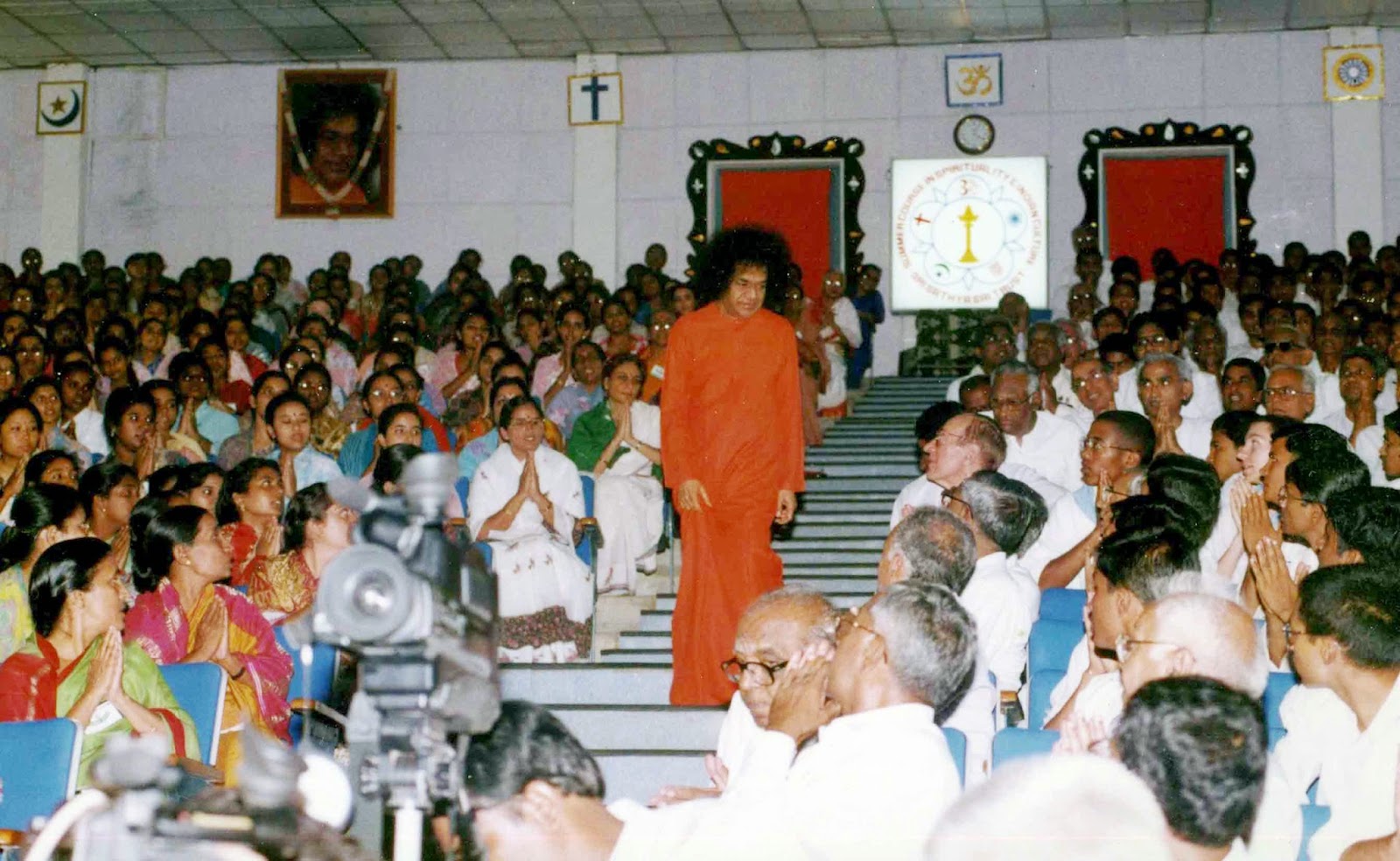
Sri Sathya Sai with the participants and guests at the Brindavan Campus
Auditorium

Bhagavan gave Discourses every evening on all the 14 days of the course. These
can be accessed at:
Summer Course 1990 Discourses <http://www.sssbpt.info/english/sum1990.htm> .


Bhagavan delivered the Valedictory Address on 2nd June, in which He summed up
the essential message of the Summer Course and exhorted the students not to be
content with merely listening to the speeches but to strive to practise at
least a few of the teachings. He said:


“Students! We began these classes on the holy Ekadashi day, eleventh day of the
lunar fortnight, and we are also concluding the classes on this Ekadashi day.
Hence, you should consider all these classes as Ekadashi Vratam (observance of
the vows of Ekadashi). During the fortnight, you have had the valuable
opportunity of listening to the lectures from highly distinguished speakers,
with rich experience behind them. What they taught you with wholehearted zeal
and enthusiasm you have listened carefully with much interest and faith. But
what is more important than listening is to put into practice at least some of
the things you have learnt and thereby to set an example for others to follow.
You must always remember the five life-breaths relating to the Vedas, which I
mentioned earlier. You should avoid these five things:


(1) indifference to what the guru, parents, and other elders teach you,

(2) disobedience to the aforesaid,

(3) Ahamkara (ego),

(4) jealousy or envy toward those who are better off, and

(5) violating the social etiquette or decorum.


Students! What has been taught to you during these fifteen days is the essence
of the sacred Vedanta. What has been given to you is the nectar obtained by the
churning of all the holy scriptures: Shastras, Puranas, and Itihasas. You are
the future leaders, pleaders, and patrons of Mother India. You should lead
exemplary lives, treading the path of Satya and Dharma (truth and
righteousness). Under no circumstances should you deviate from this ideal path.
Let your secular education go hand in hand with spiritual education…


Every student should undertake Satkarmas (good actions) which lead to Chitta
Shuddhi (purity of mind). Where there is purity, there will be Jnana Siddhi
(dawn of wisdom). These are all within yourself only. You need not search for
them anywhere outside. In this connection, let us consider the example of the
wall-clock over there. It has three hands to indicate seconds, minutes, and
hours respectively. There are sixty points, and twelve hours marked along the
circumference of the clock. When the second-hand moves across all the sixty
points, the minute-hand moves by only one point. When the minute hand moves
over sixty points or the full circumference, the hour-hand moves by only one
hour-mark or one-twelfth of the circumference. Now, the second-hand may be
compared to our actions. If a large number of good actions are done, the
minute-hand, which represents Chitta Shuddhi (the purity of mind), will move by
one point. Chitta Shuddhi is the stage of Upasana when one engages himself in
loving God and worshipping Him in various ways over a period of time, leading
to Atma Vishwasam (Self-confidence), which represents the hour-hand. The
perceptible movements of the second-hand and the minute hand should bring about
the imperceptibly slow movement of the hour-hand. Otherwise, no purpose is
served by the second-hand and minute-hand. So also, unless your good actions,
worship and love of God, lead to Atma Vishwas or Self-confidence, the former
two will be futile.


<http://1.bp.blogspot.com/-9YSK_XdWIR4/VVXTaYuT9uI/AAAAAAAAGto/4cYSs9zCMTA/s1600/THIS%2BDAY%2BTHAT%2BAGE%2B3.jpg>


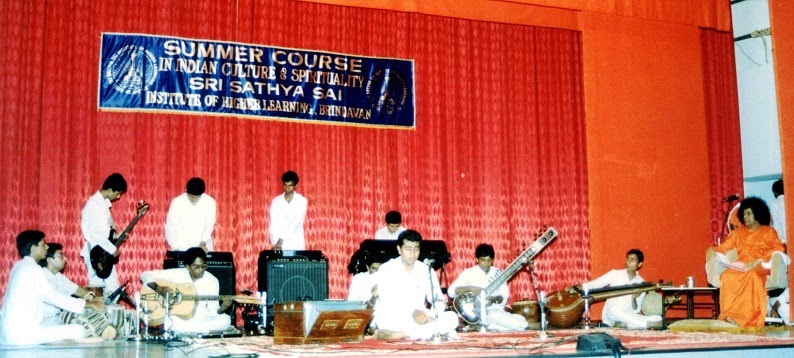
A Music Programme by the Students during the Summer Course

Whenever you have time, it will suffice if you take up at least one of the nine
modes of Bhakti (such as Shravanam, Keertanam, etc., already explained to you
in My earlier discourses). God does not consider how wealthy or how learned you
are; He is concerned only with the sincerity and purity of your mind and heart
and about how whole-hearted and genuine your love is. Valmiki was a hunter.
Nanda was an untouchable. Kuchela was a pauper. Dhruva and Prahalada were mere
lads of five years. Sabari was a tribal woman, illiterate and uncivilised. But
all of them had won God’s Grace in abundance, because of their wholehearted
devotion, love and surrender. Follow the example of Shabari, who always thought
of Sri Rama and His happiness, and dedicated all her thoughts, words, and deeds
to Him alone, so much so that every action of hers was transformed and
sublimated into the highest Tapas (penance.) From her example, you must learn
the lesson that meditation does not mean sitting idle in a particular posture
of the body, as if you are posing for a photograph. As in her case, your entire
life must become a continuous meditation wherever you may be staying and
whatever you may be doing. Whatever you eat or drink must be offered to God as
Naivedya or holy offering. In this manner, if you offer everything to the Lord,
you will naturally be prevented from engaging yourself in bad actions or evil
ways in your life. Therefore, students! I am bringing My long discourse to a
close, with the hope and blessing that you will practice with your hands what
you have heard here through your ears, and thereby sanctify your lives and also
contribute your share to make the future of Bharat (India) bright and
prosperous."


Source: Sri Sathya Sai Digvijayam (1986-2005)
<http://www.saipublications.com/b010_Sai_Digvijayam_2.html>

--

---
You received this message because you are subscribed to the Google Groups
"saimsg" group.
To unsubscribe from this group and stop receiving emails from it, send an email
to [email protected].
For more options, visit https://groups.google.com/d/optout.