Prof. Anil Kumar Satsangh at Mulund - 11th July 2015

Prof. Anil Kumar entertained the very creator of the universe with wit and
humour, whilst all the time he relaying to us His divine message. We are indeed
fortunate to have him amidst all of us and sharing his unique experiences, deep
understanding and love of our dear Bhagawan and His teachings................
For over one and half hours Prof. Anil Kumar narrated his personal experiences
with Swami to devotees who assembled at Jain Mandir Hall (Mulund) on 11th July,
2015. Being very popular with the Sai Devotees, Prof Anil Kumar kept them
smiling throughout with his light-hearted talk and good sense of humour. At the
end of his talk there was a few question and answer session. The programme
ended around 8.30 with the Aarti and Mahaprasadam.


 <https://www.youtube.com/watch?v=TqIaFB3bNMc>


 <https://www.youtube.com/watch?v=TqIaFB3bNMc> Prof. Anil Kumar Satsangh at
Mulund - 11th July 2015


 <https://www.youtube.com/watch?v=TqIaFB3bNMc>
https://www.youtube.com/watch?v=TqIaFB3bNMc


  _____


 <http://www.theprasanthireporter.org/2015/07/assam-parthi-yatra-concludes/>
Assam Parthi Yatra concludes…


Wednesday, July 15th, 2015


15 July, Prasanthi Nilayam: Parthi Yatra contingent from Assam offered a
variety of programmes, mainly dance and song sequences, depicting the rich
cultural heritage of the North East Indian State, yesterday on the second and
final evening of its Parthi Yatra 2015.

 Assam Parthi Yatra concludes…
<http://www.sssbpt.org/images/2015/AssamParthiYatraDay2_1.jpg>

The programme was based on contemporary dance tradition of the State,
essentially presented with the aid of legendary Dr Bhupen Hazarika’s
compositions.

 Assam Parthi Yatra concludes…
<http://www.sssbpt.org/images/2015/AssamParthiYatraDay2_2.jpg>

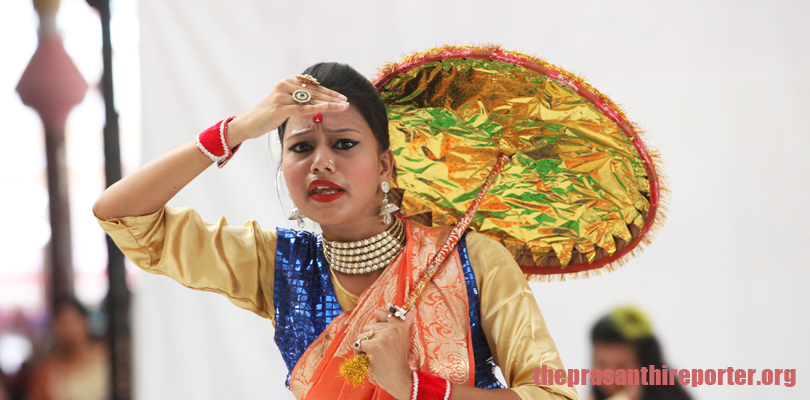
The theme chosen were Time, presented based on Bhagawan’s oft-repeated maxim
Time Waste Is Life Waste, followed by a presentation on Assam’s own
Brahmaputra, showcasing the plight of the people of Assam, facing the wrath of
Nature’s fury invariably year after year. The presentation served a timely
reminder to be compassionate towards the suffering masses, especially those who
dwells on the river bank.

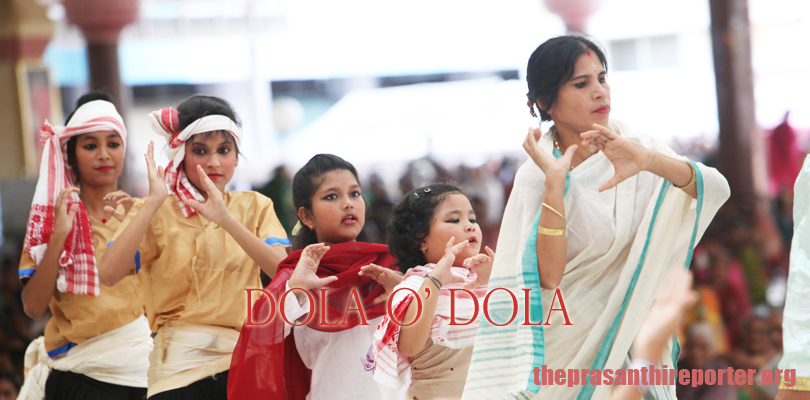
The final offering was “Dola O’ Dola…”, based out on the theme of the
aristocratic supremacy over the poor and downtrodden, who would be forced to
carry the rich aristocratic ones on palanquins, alias ‘dolas’. The song was
intended to inculcate empathy for the suffering masses.

 Assam Parthi Yatra concludes…
<http://www.sssbpt.org/images/2015/AssamParthiYatraDay2_3.jpg>

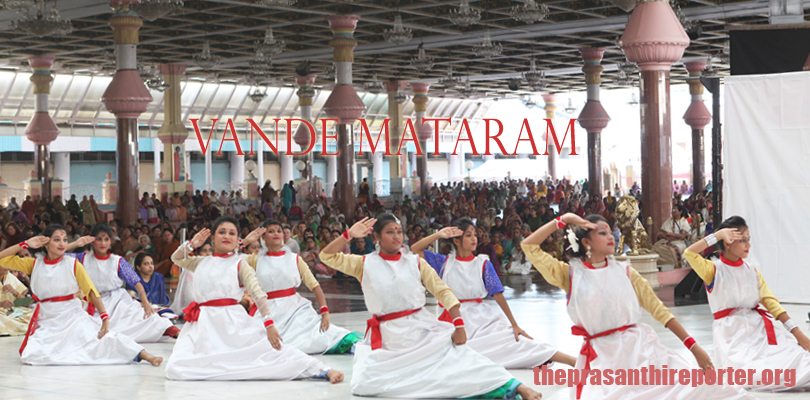
Earlier, the programme commenced with a Shiva Stuthi followed by a patriotic
piece, Vande Mataram.

Bhajans continued next and ended with Mangala Arathi at 1815 hrs.

II Samastha Lokah Sukhino Bhavantu II

sourced:

 <http://www.theprasanthireporter.org/2015/07/assam-parthi-yatra-concludes/>
http://www.theprasanthireporter.org/2015/07/assam-parthi-yatra-concludes/


  _____


Cultural programme by devotees from Assam Day - 2


Delightful Divine Greetings from Prasanthi Nilayam!


Radio Sai added 21 new photos to the album:
<https://www.facebook.com/media/set/?set=a.896096657146140.1073742308.181243118631501&type=3>
 Cultural programme by devotees from Assam Day - 2 at Prasanthi Nilayam


  <http://www.ssso.net/pnews-2015/prog-140715.jpg>


Radiosai exclusive Live HD shots of the Parthi Yatra (Day 2) Cultural Programme
and Dance Drama by the devotees from Sri Sathya Sai Seva Organization Assam
direct from Sai Kulwant Hall at Prasanthi Nilayam – July 13, 2015.


Radio sai is pleased to bring you some glimpses of the Cultural Programme and
Dance Drama by the devotees from Sri Sathya Sai Seva Organization Assam as part
of Parthi Yatra held in Sai Kulwant Hall at Prasanthi Nilayam on July 14, 2015.


For those who missed the evening programme could Log onto
<http://www.radiosai.org/> www.radiosai.org now or watch this special HD video
webcast here in this link:  <https://www.youtube.com/watch?v=rDXhwrKzAF8>
https://www.youtube.com/watch?v=rDXhwrKzAF8


 <https://www.youtube.com/watch?v=rDXhwrKzAF8>


 <https://www.youtube.com/watch?v=rDXhwrKzAF8> Cultural Programme by Devotees
from Assam (Day 02) at Prasanthi Nilayam - 14 Jul 2015


Radiosai Team.


  _____


Posted on: June 15, 2015


Loving Sairam and greetings from Prasanthi Nilayam.

We continue our study of Swami’s Dharma Vahini, and I hope you recall that in
the previous episode I ended with a quote that referred to converting work into
worship. I told you then that this is a topic I shall deal with later. However,
to set the stage for what follows, I think it is desirable to repeat that last
quote once more; here it is:

So, seeing the Atmadharma in every single act of yours, transforms it into an
act of worship and elevates it; moreover, the act ceases to be binding, as it
otherwise would. If the duties of worldly life are performed with NO regard to
genuine Sathya and Dharma, it is as unholy as treating God as stone.

The essential point of the quote just offered is that our actions, no matter
what they are, must always be totally in tune with Sathya and Dharma. This is a
very important point that needs some elaboration but before I do that, let me
quote Swami once more as this quote also deals with the same issue.

Practical Dharma or Achara Dharma as it is often called, when pursued apart
from Sathya and Dharma, and Sathya and Dharma divorced from Achara Dharma are
both equally barren of results. Practical Dharma on the one hand and Sathya and
Dharma on the other are both inextricably intertwined, and should be treated as
such. The senior officer needs the work of the junior official as much as the
junior official needs the help of the senior officer.

What Swami is saying is that we cannot dismiss Atma Dharma as a hairy-fairy
thing; in fact it is not, it is a Fundamental Principle. At the same time, when
it comes to ordinary daily life, we DO need practical rules. That is whatAchara
Dharma or Practical Dharma is all about it. Any connection between Atma Dharma
and what Swami calls Achara Dharma? You bet there is; Practical rules had
better be consistent with Atma Dharma; one cannot dismiss Atma Dharma as being
irrelevant, simply because we are dealing with so-called practical matters.
Here is a simple example.


These days, many say: “Listen, corruption is here to stay; we just cannot avoid
it; we have to be practical. If a bribe has to be paid, then it has got to be
paid; we want things done, don’t we?” In other words, ‘practical wisdom’ of
these days seems to condone corruption; but is this so-called practical rule in
conformity with Sathya and Dharma? Obviously not. So, what is convenient does
not necessarily becomeAchara Dharma; that is what we have to be careful about.

Now Atma Dharma is just another name for action in conformity with the Nature
of the Atma. Atma means God and we know, don’t we, that God is Sathya and
Dharma? Have we not heard Swami say Sathya is God, and Dharma is God?

So, it is not as if Atma Dharma is some abstract stuff that has no relevance to
daily life or the world we live in. On the contrary, it has everything to do
with it, since the world simply cannot exist without honesty and integrity.

I do hope you are getting the broad idea. I realise that for most of us who
have spent a large part of our lives without bothering about Spirituality,
concepts likeAtma Dharma might appear quite strange and in fact irrelevant.
Swami is constantly reminding us that is a wrong impression; rather, Atma
Dharma is very relevant in daily life, particularly so these days.

Most of us tend to think that topics like the Atma, etc. are meant to be
discussed and talked about only in Satsanghs, that they are abstract and have
no relevance to daily life. The brief comment I made about corruption shows
that this is a totally erroneous point of view. The question now arises: “Why
is it that the notion of the Atma is so far from our daily life? How come we
have started believing that the Atma is irrelevant to normal day-to-day life?”
The short answer to that is that we are not free but bound!

People may be shocked on hearing this and ask: “What? We are not free? Who can
say that? I am not in jail. I am a free citizen whose rights are protected by
our Constitution,” and so on. That may be true from a worldly point of view but
honestly, how many of us can truly say: “I am free from the clutches ofKama,
Krodha , etc.?” Hardly any; the truth of the matter is that almost all of us
have attachment and are bound by various degrees to friends, relatives, desires
and so on. Why is all this relevant? Because, when one is bound and not free in
the sense just mentioned, then sticking toAtma Dharma becomes very difficult.
In other words, the practice of Atma Dharma improves, even as we shed our
attachments and various other Spiritual imperfections. With this background,
let us listen to the next quote.


Who then is the bound, and who, the free? Both the so-called bound and the
self-proclaimed free are bound to their desire to be happy and comfortable.
Until the fundamental secret of the Atma is recognised, the outer state of
bondage will persist. When that is done, the burden of slavery to the senses
and to the objective world will be diminished. Then, the code of behaviour
towards the objective world will be merged with the code towards the inner
Divinity and so the urges will all be cooperating harmoniously.

Before I consider this quote, let me offer another one since that too is
relevant in the present context. Swami says:

The shackles of bondage cannot be avoided by a mere change of the type of
activity. They can be avoided only by changing the point of view from theDeha
(body) to the Deva (God), from the Created to the Creator. The moral qualities
also will thereby be rendered stronger. Some persons hold the opinion that
being employed is bondage, while sitting at home without any specific work is
freedom! This is a sign of want of intelligence. When employed in a job, one
has to obey the superior officer. But, can one escape the demands and
compulsions of relations even while at home? Well, even when one is amidst
friends only, can he avoid the necessity of acting according to their fancy?
Can one be free at least from the need to take care of one’s own body and cater
to one’s own comfort? How then can man feel free, while in the cage of bondage?
All life is a prison, whatever the difference between one type of sentence and
another. It is so, as long as the attitude of identifying the Self with the
body is there.

There is a lot that has to be digested here! The first point is that bondage in
the sense mentioned earlier arises when we suffer acutely from what Swami often
refers to as body-consciousness [the word He actually uses isDehabhimanam ].
The body, says Swami, is not to be dismissed as meaningless or inconsequential;
far from it. Without the body, how can one perform actions? Thus the body IS
important. That said, it is equally important to realise that the body must be
used in the proper way. That is to say, it must be made an instrument that
serves the Atma within. In turn, this means that the individual must focus more
on the Atma rather than the body, which is a casing given to us for operational
purposes. This is what Swami means when He says that attention must be shifted
fromDeha or the body to Dehi or the Indweller in the body. Unless this change
of perspective is achieved, it would not be easy to adhere to Atma Dharma. This
is a very important point and must be fully absorbed; in fact, it is the
essence of Karma Yoga, a key element of the Bhagavad Gita.


Now comes the question: “All this is fine but why on earth must one struggle so
hard to adhere to Atma Dharma? What is there in it for me? Is there anything in
it at all?” This is a worldly sort of question, one very likely to be asked
these days, when everyone is obsessed with cost-benefit analysis! Swami gives
the answer:

The True Dharma of the individual is to taste the bliss of merging with the
Absolute, and attain true Liberation. A person who has reached that stage can
never be bound, even if he is put in the grimmest of prisons; on the other
hand, for a person who is the slave of the body, even a blade of grass can
become an instrument of death. The trueDharma is to be immersed in the Atmic
Bliss, the Inner Vision, the steady faith in the identity of one’s real nature
with the Absolute, and the realisation that all isBrahmam; these four are the
authentic Dharma.

In this physical existence as particular individuals, these four are named for
the convenience of practice (but yet saturated with the Inner Dharma of Atmic
Reality) Sathya, Shantham, Prema and Ahimsa, so that particularised individuals
who are only personifications of that Absolute can follow them in daily life.
The mode of pursuit ofDharma, now as in the past, is to adhere to these high
principles in every act and thought. The Sathya, Shantham, Ahimsa and Prema of
today are but the Unintermittent immersion in the Atma, the Vision fixed on the
Inner Truth, the Contemplation of One’s Real Nature and the Knowledge that all
is Brahmam, the one and the only. These, the Fundamental and the Derived, must
be coordinated and harmonised. Then only can it be termed Atma Dharma.


That was a somewhat long quote and may be you got a bit lost. Don’t worry; I
shall make it simple for you. Basically, what Swami is saying is this: “Listen,
all of you are all the time seeking happiness. You chase money; why? Because
you think with money you can buy happiness. That is wrong! With money you buy
only worries!! If you want true Bliss and permanent happiness, then you had
better followAtma Dharma!” This is what Swami means by saying that all actions
must help and assist one in tasting True Bliss or Ananda.

May be I should add a few more remarks that would explain things a bit better.
The world we live in is basically a dual world with pairs of opposites tied
together – like success and failure, joy and sorrow, happiness and misery, and
so on. This tie up is intimate and the opposites are really like the two sides
of a coin. Can one ever have a coin with just only one side? Thus, in practical
terms, if we want happiness in this world, we can at best get only temporary
happiness. The person may be happy today but tomorrow, it would be misery for
sure. So, says Swami, seek Ananda or permanent Bliss. Now where is this Ananda
found? In India, Tibet, Canada or Africa? The answer is not in this world! Does
that mean one has to wait for death and go to some other world to find Ananda?
Not at all, and that is the beauty of Swami’s Magic Formula.

Remember what He said in the earlier quote? He told us to shift the perspective
from the Deha to Dehi. This is an important point that needs careful
explanation. In brief, Swami says: “Live in this world; you have to and there
is no escape from it. Do what you have to; Destiny has placed you in a certain
position, accept it as God’s choice. In that state, do the best you can.”

The question now becomes: “What does one mean by ‘do the best you can’?” It
simply means the following:

Firstly, perform your action with purity of thought, word and deed.

Next, work without any concern for success, reward, etc. that is to say in the
spirit of what is called in the Gita as Nishkama Karma – that is, perform your
duty in the spirit of selfless service.

Thirdly, regard whatever it is that you are doing as an offering to God.

OK, one does all this; then what? Ah, that is precisely where the secret is!
You see, once this becomes a habit, one’s attention would be focussed almost
entirely on God because the entire activity becomes God-centric. This is what
Swami means by saying shifting the attention from the Deha [or body] toDehi [or
the Indweller/God].


You may wonder: “OK, one does all that, then what?” The answer to that becomes
evident if one goes around Prasanthi Nilayam and observes closely. There are
people, whom one would normally miss; that is because these are all very
ordinary people engaged in ordinary tasks. There are, for example, old ladies
who day after day, no matter what their age, spend a lot of time cleaning the
Mandir, keeping it spotlessly clean. Then there are others who day after day,
go out to gather flowers and make garlands for use in many places in the
Mandir. There are yet others, who get ready the many items required for the
daily Puja, and so on it goes, all over the place, from the Canteen to various
units scattered all over the Ashram.

All this is a wonderful example of Nishkama Karma. By being so engaged fully,
these people live in a world of their own, experiencing Ananda throughout the
day. No, this is not delusion or self-deception or self-hypnosis. Those are
fancy words that can be used to dismiss all that I have described. By the way,
these people also face problems ranging from personal problems of various kinds
to health problems. Yet, they are able to rise above these problems and
maintain themselves in a state of Bliss, because they are united with God all
the time, via every little thing they do. For them, every single act is for
God, and an offering to God – that is the key point. In other words, if the
actions that we routinely perform, be it cooking or teaching or even piloting a
plane, if all these actions are made God-centric by changing the attention
fromDeha to Dehi as Swami puts it, then we experience Bliss even while leading
our normal lives; that is what the example of the ladies in Prasanthi shows.
However, this does not mean one has to be physically here to elevate oneself to
that state of Bliss. God is everywhere and thus one can serve Him everywhere,
which means that one can really experience Bliss wherever one wants, provided
one makes the change of perspective that Swami recommends.

Which automatically brings us to the next quote of Swami:

It does not matter what your activity is, or what name and form you have
chosen. Whether the work is of this type or that, so long as theAtma Dharma is
the base, and Atma Thathwa (Atmic principle) the root, it is Dharma beyond
doubt. Such work will bless one with the fruit of Shanthi (peace).

In daily practice, when acts are motivated by the basic Principle of the
reality of the Atma, every act becomes stamped with the seal of Dharma. But
when acts are motivated by convenience and selfish interest, the Dharma becomes
pseudo Dharma. It is a variety of bondage, however attractive it may be.

The quote you just heard is an important one, and can be summarised as follows.
Make sure always that every activity is properly spiritualised. I am sure this
remark would mystify most listeners, and so maybe I should narrate a little
anecdote here to make my point a bit clearer.


Many years ago, when I was the Vice Chancellor here, Swami used to go to
College on most Sunday mornings to talk to the students. As the Vice
Chancellor, I had to be there to receive Swami, and formally welcome Him and
all that; the usual protocol duties you know.

For Swami it was a moment when He could freely talk to students, take questions
from them, give advice and so on. And almost invariably, He also gave a
Discourse. During one such Discourse, He suddenly materialised a gold Schaeffer
pen, took it apart and explained how a product is priced! We were all stunned
of course. At the end of the proceedings, just before leaving, Swami turned to
me and gave me that pen! Boy, was I in the seventh heaven?

I kept the pen very carefully and used it only for taking notes during Swami’s
Discourses. One afternoon, sometime after all this, Swami called me into the
Interview room. This was quite common as He often had some instruction or the
other for me. That day, Swami looked at me, and found that I was carrying an
ordinary ball pen in my pocket. So He asked me: “Where is the pen I gave you?”
I said, “Swami, that pen I use only for Spiritual work.” Swami then gave me a
long hard look and then said slowly – I will never forget it – He said: “In
life, everything is Spiritual!” I was stunned and it took many years of
reflection to understand the meaning of that statement.

If you think about it, that is the essence of the Gita and all that I have been
saying about Atma Dharma! In what way? Well, maybe I should keep that for the
next time!

Meanwhile, thanks for being with me and I hope you benefited from hearing this
talk.

God bless, Jai Sai Ram.

- Radio Sai Team

sourced:

<http://media.radiosai.org/journals/vol_13/01JUL15/Musings-on-dharma-vahini-Part-05-Prof-G-Venkataraman.htm>

http://media.radiosai.org/journals/vol_13/01JUL15/Musings-on-dharma-vahini-Part-05-Prof-G-Venkataraman.htm


  _____


 <http://sathyasaiwithstudents.blogspot.com/> Sathya Sai with Students


  _____


*
<https://in-mg61.mail.yahoo.com/neo/launch?.rand=06nc3gegh7pju#14e967484ce8cd70_14e96033508948ae_14e9313442019723_1>
 The Path of Material Prosperity vs. The Path of Spiritual Bliss – Part 2
*
<https://in-mg61.mail.yahoo.com/neo/launch?.rand=06nc3gegh7pju#14e967484ce8cd70_14e96033508948ae_14e9313442019723_2>
 The Unseen Hand of Sri Sathya Sai – By Sathyanarayana Kumar
*
<https://in-mg61.mail.yahoo.com/neo/launch?.rand=06nc3gegh7pju#14e967484ce8cd70_14e96033508948ae_14e9313442019723_3>
 Discussion with Sri Sathya Sai on Secular Subjects in the Spiritual Context –
Part 1
*
<https://in-mg61.mail.yahoo.com/neo/launch?.rand=06nc3gegh7pju#14e967484ce8cd70_14e96033508948ae_14e9313442019723_4>
 Sri Sathya Sai visits Tirupati and guides the Tirumala Tirupati Devasthanams


<http://feedproxy.google.com/~r/SathyaSaiWithStudents/~3/ELBx8rvrGmk/the-path-of-material-prosperity-vs-path_15.html?utm_source=feedburner&utm_medium=email>
 The Path of Material Prosperity vs. The Path of Spiritual Bliss – Part 2

Posted: 15 Jul 2015 05:42 AM PDT

… Continued from Part 1 ‘I’ and ‘Mine’There are two words. 'I' and 'Mine'. 'I'
is associated with the concept of Ekatvam (oneness). 'Mine' is a social
concept. 'I' represents the individual. Who is...


<http://feedproxy.google.com/~r/SathyaSaiWithStudents/~3/17wT2O5edxw/the-unseen-hand-of-sri-sathya-sai-by.html?utm_source=feedburner&utm_medium=email>
 The Unseen Hand of Sri Sathya Sai – By Sathyanarayana Kumar

Posted: 15 Jul 2015 05:42 AM PDT

Twameva Mata Cha Pita TwamevaTwameva Bandhuscha Sakha TwamevaTwameva Vidya
Dravinam TwamevaTwameva Sarvam Mama Deva Deva…Sri Sai Deva. Swami says, “Nee
Inta Ne, Jante Ne, Venta Ne, Kante Ne...


<http://feedproxy.google.com/~r/SathyaSaiWithStudents/~3/tv6RGLHwakU/discussion-with-sri-sathya-sai-on.html?utm_source=feedburner&utm_medium=email>
 Discussion with Sri Sathya Sai on Secular Subjects in the Spiritual Context –
Part 1

Posted: 15 Jul 2015 05:42 AM PDT

July 1, 2002 (Monday) Sometime, Swami reveals His deep understanding of various
management, sciences and arts subjects, often integrating them with the highest
of spiritual truths. On this day,...


<http://feedproxy.google.com/~r/SathyaSaiWithStudents/~3/NeaGKqVq7N8/sri-sathya-sai-visits-tirupati-and.html?utm_source=feedburner&utm_medium=email>
 Sri Sathya Sai visits Tirupati and guides the Tirumala Tirupati Devasthanams

Posted: 15 Jul 2015 05:42 AM PDT

Friday, July 11, 1958 to Monday, July 21, 1958Swami inaugurated the Tyagabrahma
festival at Tirupati on the 11th of July 1958. In the Discourse that followed,
He condemned the fall of music from its...


SSSSO MAKES ELABORATE ARRANGEMENTS FOR GODAVARI PUSHKARAMS


  <http://www.ssso.net/pnews-2015/Godavari.jpg>

Radio Sai Special Report:


SRI SATHYA SAI SEVA ORGANISATION (Andhra Pradesh & Telangana) MAKES ELABORATE
ARRANGEMENTS FOR GODAVARI PUSHKARAMS

Sri Sathya Sai Seva Organisation (SSSSO) is a Service Organization that is
involved in carrying out several service activities in the areas of Education,
Medical, Rural Empowerment and Supply of Drinking Water. The organisation
derives its motivation from Bhagawan Sri Sathya Sai Baba, who had inspired
millions of people the world over, with his teachings on the importance of
rendering selfless service to humanity.

With this motivation, the Sri Sathya Sai Seva Organisations had been actively
involved in rendering several important service activities during the Pushkaram
time of the Holy River Godavari. Keeping with the tradition of extending
different types of services for the benefit of the visiting pilgrims, the
Organization is planning to deliver a range of service activities from 14th
July 2015 to 25th July 2015.

Sri Sathya Sai Seva Organisation thanks the Hon’ble Chief Ministers of Andhra
Pradesh& Telangana and all the concerned officials for according all necessary
permissions to undertake the proposed service activities. The organisation
looks forward to participate effectively in the auspicious and prestigious
Godavari Pushkarams and contribute towards the convenience of the visiting
pilgrims.

The Sri Sathya Sai Seva Organisation has made meticulous planning to deliver a
wide range of service activities in the following categories. All the proposed
service activities are directed towards ensuring the convenience of the
visiting pilgrims and help in enhancing their spiritual experience of
participating in the Godavari Pushkaram.

1. Cleanliness Services
2. Pilgrim Assistance and Convenience Services
3. Medical Services
4. Food and hot milk Distribution Services
5. Cultural Activities
6. Disaster Management

Overview of service activities about to be conducted at “Rajahmundry” on the
occassion of Godavari Pushkaralu July2015:

7000 sevadal (volunteers) will be working for 12 days of Pushkaraalu, Services
like crowd control, sanitary, cloak rooms, drinking water… at 6 Ghats, Food
distribution for 30000 each day
Free Cloak rooms at 6 spots (railway station and busstops). Water supply points
at 30 locations(4 road junctions), Water and milk supply by 150 sevadal using
mobile cans, Mobile medical vans
Prema Jyothi exhibition at Thyagaraja Kalakshetram, Rajamundry.
Speeches and Cultural programs at Gurukulam Satya sai literature and Audio
Video sales counters.

At Annavaram,300 Sevadals from Vizag, Vizianagaram & Krishna districts and
tribal youth from Paderu are going to perform Seva at Annavaram Temple in :

1. Puskarams Information counters
2. Food distribution counter
3. Temple PRASADAM distribution
4. Food packing at base kitchen
5. Queue - Regulations inside and around Temple
6. Assisting in maintaining Discipline in Vrata Mandapams
7. WaterDistribution
8. SapthaGosala
9. Kalyanamandapam
10. Sanitation

Sri Sathya Sai Seva organistaion deems it as a blessing and an opportunity to
serve the devotees at Godavari Maha Pushkaraalu with His Divine Grace.


Please view the photos from the following link: (Photos also attached to this
mail)


Photos link:
<https://www.facebook.com/media/set/?set=a.896445080444631.1073742309.181243118631501&type=3>

https://www.facebook.com/media/set/?set=a.896445080444631.1073742309.181243118631501&type=3


………………………………………………………………………

Report Courtesy: Er. SG CHALAM
State President, Sri Sathya Sai Seva Organisation,
Andhra Pradesh & TelanganaRadio Sai Team.

  _____


--

---
You received this message because you are subscribed to the Google Groups
"saimsg" group.
To unsubscribe from this group and stop receiving emails from it, send an email
to [email protected].
For more options, visit https://groups.google.com/d/optout.