Be Human
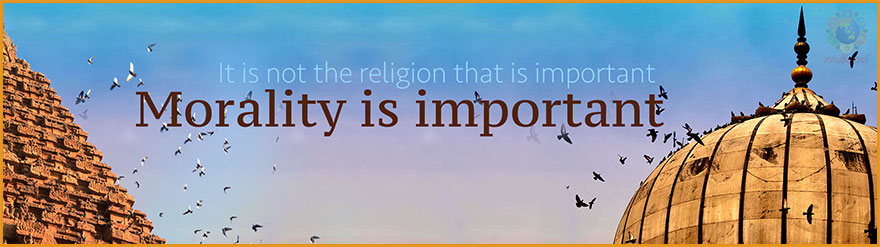
In an ancient Hindu temple, a number of pigeons were living for quite some time
on top of the gopuram (the monumental tower at the entrance of any temple).
This wasn't such an uncommon occurrence as pigeons generally prefer elevated or
high structures.

But the pigeons were forced to relocate when the management decided to renovate
the temple and perform the Kumbhabhishekam (consecration ceremony).

The pigeons found a church nearby and decided to settle down there. This church
already had some pigeons and so the newcomers managed to find places wherever
possible. As time rolled by, Christmas approached and the church management
decided to paint the church.

Now the new pigeons along with the earlier ones had to relocate again and look
for another place. To their joy, they discovered that the nearby mosque had
sufficient space for all of them. They settled there to live along with the
existing pigeons in the mosque.

As luck would have it, soon the mosque management also decided to carry out
some repair as the festival of Ramzan was nearing. By this time the temple
renovation and the consecration ceremony were over and so the pigeons returned
to the same temple which they had been forced to leave earlier.


<http://media.radiosai.org/journals/vol_14/01MAR16/images/09_get_inspired/religion.jpg>


One day, when the pigeons were sitting on top and relaxing, they were watching
some communal clashes going on below and not far away from the temple.

One baby pigeon asked its mother, “Who are these people?”

The mother replied, “They are human beings.”

The baby then asked, “But why are they fighting with each other?”

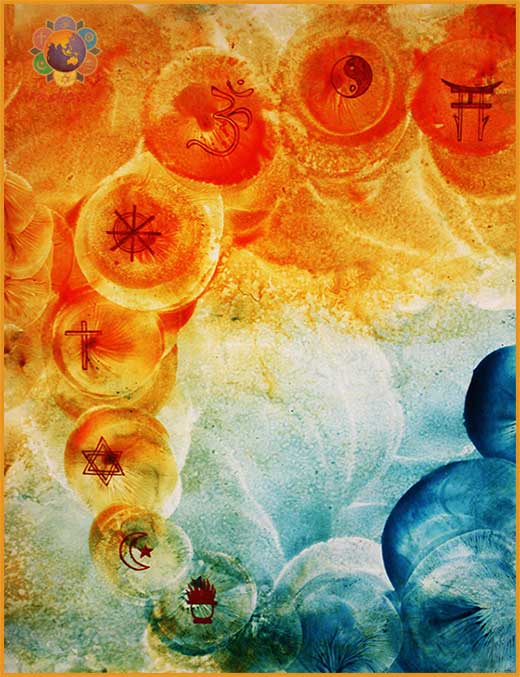
The mother said, “The human beings praying in the temple are called ‘Hindus’,
those praying in the church are called ‘Christians’ and those praying in the
mosque are called ‘Muslims’.”

The little pigeon was quite puzzled and further queried, “Why is it so, mother?
When we were in the temple we were called pigeons, when we were in the church
we were still called pigeons and even when we were in the mosque, we were
called pigeons only. Similarly, shouldn't they be just called ‘human beings’
regardless of where they go?”

The mother smiled and simply said, “You and I and our pigeon friends have
understood this simple truth. That's why we are living here in a highly
elevated place peacefully. But these humans are yet to understand this and
hence they live down below, fighting and killing each other.”

What a profound lesson taught by our feathered friends!


<http://media.radiosai.org/journals/vol_14/01MAR16/images/09_get_inspired/be-human.jpg>


The Lord in His incarnation as Shirdi Sai Baba beautifully fostered the unity
of religions. He stayed in a mosque but encouraged devotees to observe Rama
Navami (a festival celebrated by Hindus) as well as the sacred Urs festival
(observed by Muslims). He was regarded as a Muslim by Muslims and a Hindu by
Hindus, since He would sometimes say “Allah Malik! Allah Malik!” and
“Dattatreya Malik!” at other times.

Baba's appearance was very much like that of a Muslim and therefore many
Muslims came to Him. Hindus also would offer incense to Him. The Muslims did
not approve of what the Hindus were doing and vice versa. Consequently,
bitterness developed between these two communities.

On one occasion a controversy arose among the residents of Shirdi as to whether
Baba was a Muslim or a Hindu. Mhalsapathi, the priest of the Khandoba temple at
Shirdi and a great devotee of Baba, was sitting near Him.

The Muslims, who were opposed to the presence of a Hindu priest near Baba, came
with sticks and beat up Mhalsapathi. At every stroke, Mhalsapathi cried out
“Baba! Baba!” and soon fell to the ground.


At that instant Baba roared at the Muslim crowd, “Saithan! (demons!) On one
side you worship Me and on the other you beat Me. Is this your devotion?”

Baba was bleeding all over the body. When the Muslims saw this, they were
appalled and asked Baba who had beaten Him.


Baba said, “Did you not beat Me? Did you not beat Me?” pointing to several men
in the crowd.

They said, “We did not come near You at all, Baba. We only beat Mhalsapathi.”

Baba declared, “Who is in Mhalsapathi? I am in him.”

On hearing this, the Muslims fell at Baba's feet and sought His forgiveness.
Baba then summoned the Hindus and Muslims and told them, “Dear children, you
are all the progeny of one mother.”

Baba demonstrated the Fatherhood of God and the Brotherhood of Man. He
emphasised that people should give up all differences of caste, creed and
religion.

The Lord continued His task of promoting unity among all religions even in the
Sathya Sai Avatar. The mosque that Bhagawan Sri Sathya Sai Baba built for the
Muslims of Puttaparthi is ample proof that He transcends all religions and
stands for only one all-encompassing religion — the religion of love.

Why, even as a little child, during the school prayer sessions, little Sathya
sang a song glorifying the unity of faiths. In fact, on one occasion, recalling
His childhood, Bhagawan Baba said there were a sizeable number of Muslims in
Puttaparthi and they would celebrate the festivals of Muslim Fakirs, in which
the Hindus also participated.

In that context, little Sathya used to teach the children, “It is not the
religion that is important. Morality is important. Cast off all your
differences of religion and caste and be friendly with everyone. You must also
participate in the festivals of Fakirs.”

But one boy got up and said, “Raju! My parents will not agree to my
participation in a Muslim festival. We are Brahmins.”

Then, Sathya explained, “My dear, first and foremost, you are a human being.
Your religion is love and your caste is the caste of humanity. Therefore,
always keep that principle of unity as your goal.”

The parents of these children were, however, not happy with Sathya's teachings.
They thought he was spoiling young minds and quarrelled with Him saying, “Raju!
You are spoiling our children by teaching them that there should not be
differences on account of caste and religion.” But Sathya was very firm and
used to argue and say there is no religion greater than love in this world.

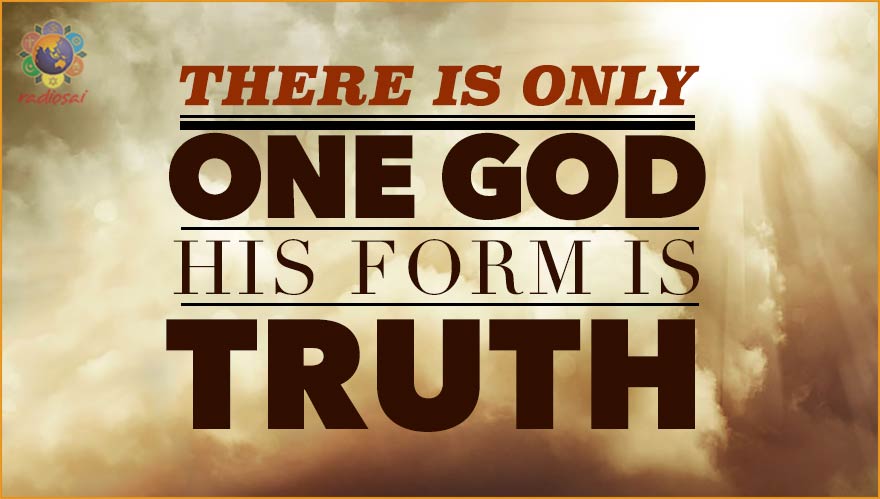
During the Christmas Day Discourse of 1985, Bhagawan Baba said, “All faiths
have emphasized one common factor — there is only One God and Truth is His
form. There are no differences between Hindus, Muslims and Christians on this
basic concept. All religions, all scriptures, all spiritual teachings point
only to one truth — the unity of Divinity. Instead of realising this, men are
lost in wrong paths.”


<http://media.radiosai.org/journals/vol_14/01MAR16/images/09_get_inspired/God-Exists.jpg>


A Muslim student who studied in the MBA program in the Sri Sathya Sai Institute
of Higher Learning visited the mosque in Puttaparthi every morning and evening
for prayers during the month of Ramzan. Somehow during those few days, he felt
Bhagawan speaking to him from within saying, “Be ready!”

One day, in the mosque, he met a group of Muslims who had come from Kashmir in
North India. They were not devotees of Bhagawan but just passers-by who had
come to the mosque.

When they came to know that this student was a Muslim, they started questioning
him about the Sathya Sai University and the system of education. One of their
questions was, “You are a Muslim and you are studying in a place which is not
Islamic. You are studying in a society that prophesizes the worship of many
Gods. How can you reconcile your religion with your way of life in this place?”

The student had been in Puttaparthi for nearly two years by then and so, based
on his learning and understanding and, of course, Bhagawan's inner prompting,
he replied, “Sirs, the polytheistic nature of this place is only symbolic.
‘Sanathana Dharma’ is just like the religion of Islam which believes in the
formless and omnipresent aspect of God. There is no difference at all except in
the functionalities of the religion. If I have seen the true practice of Islam
in its real essence in any place so far in my life, it is in this place. Here
God is truly considered to be Omnipresent, Omniscient, and Omnipotent.”

The group of people was very touched with the student's conviction.

If we observe religious rituals and go to places of worship but fail to live in
harmony with our brothers and sisters who belong to different religions, it is
hypocrisy. There is a big difference between a human being and being human, let
us strive to understand this and live up to being human.

Illustrations: Ms. Afsaneh Dehbozorgi

- Radio Sai Team

__._,_.___

--

---
You received this message because you are subscribed to the Google Groups
"saimsg" group.
To unsubscribe from this group and stop receiving emails from it, send an email
to [email protected].
For more options, visit https://groups.google.com/d/optout.