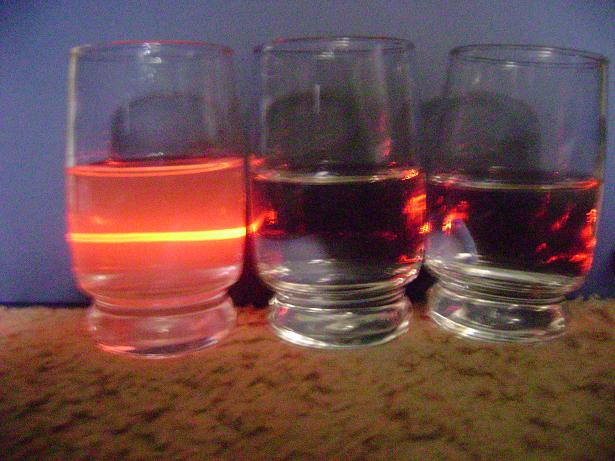
The color of the solution can be used to estimate particle size, not
ppm. The saturation of the color can be used to estimate ppm. A laser
can provide some information, but since the intensity of the Tyndall
varies linearly with the ppm, and to the 4th power with the particle
size, particle size has much more influence. For instance in this
picture the two glasses on the left side have exactly the same ppm of
silver, but the one on the left has larger particles, the one on the
right is distilled water. This was produced by adding a small amount of
ascorbic acid to the colloidal silver:
http://silver-lightning.com/ascorbic-cs.jpg
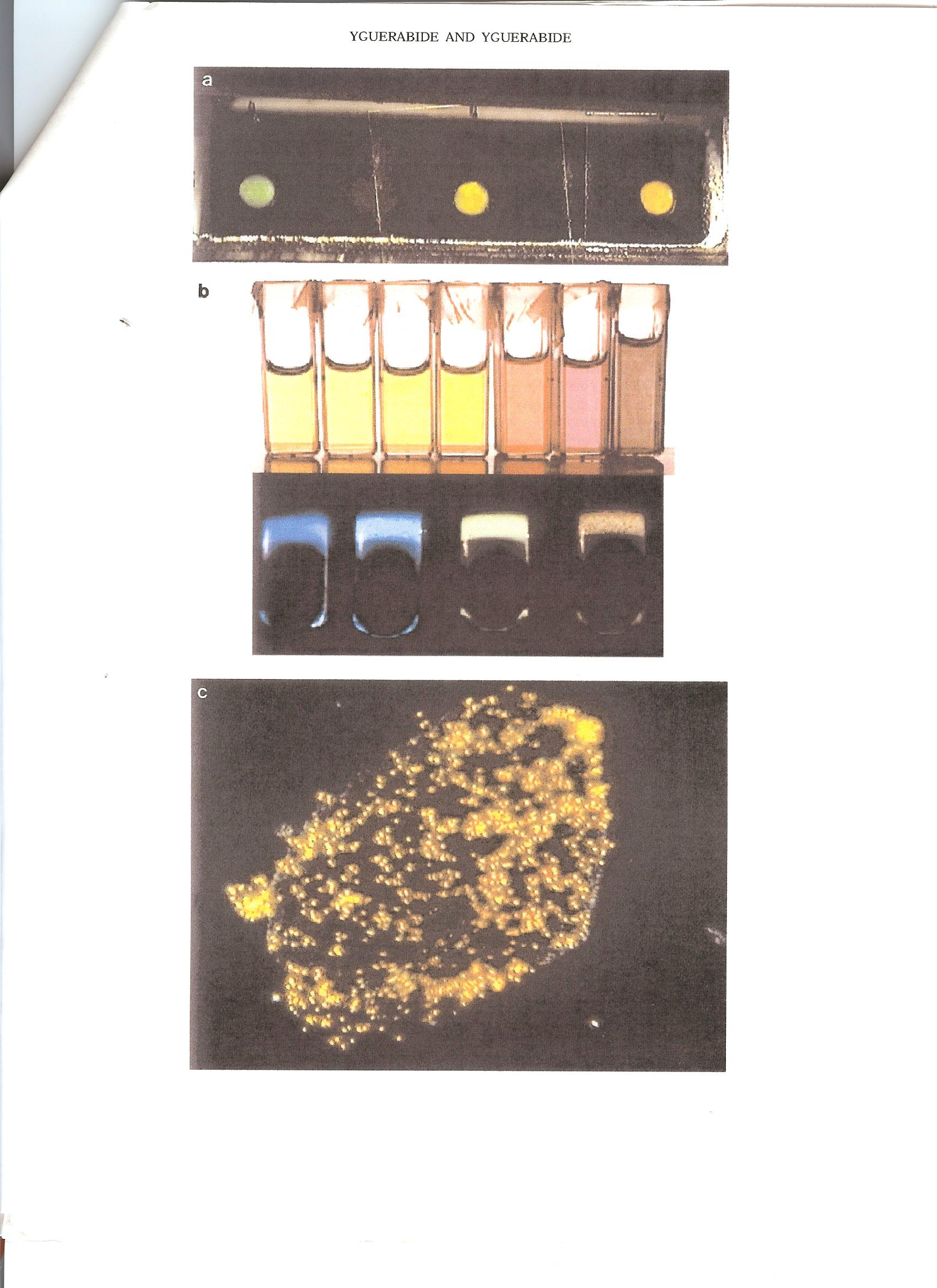
The variation in the color vs particle size is shown at
http://silver-lightning.com/cs-color.jpg where the test tubes are light
yellow for smaller particles, and go to brown for the largest ones:
http://silver-lightning.com/cs-color.jpg In a previous posting on here
I gave the absolute sizes for these samples, but don't have it handy
right now.
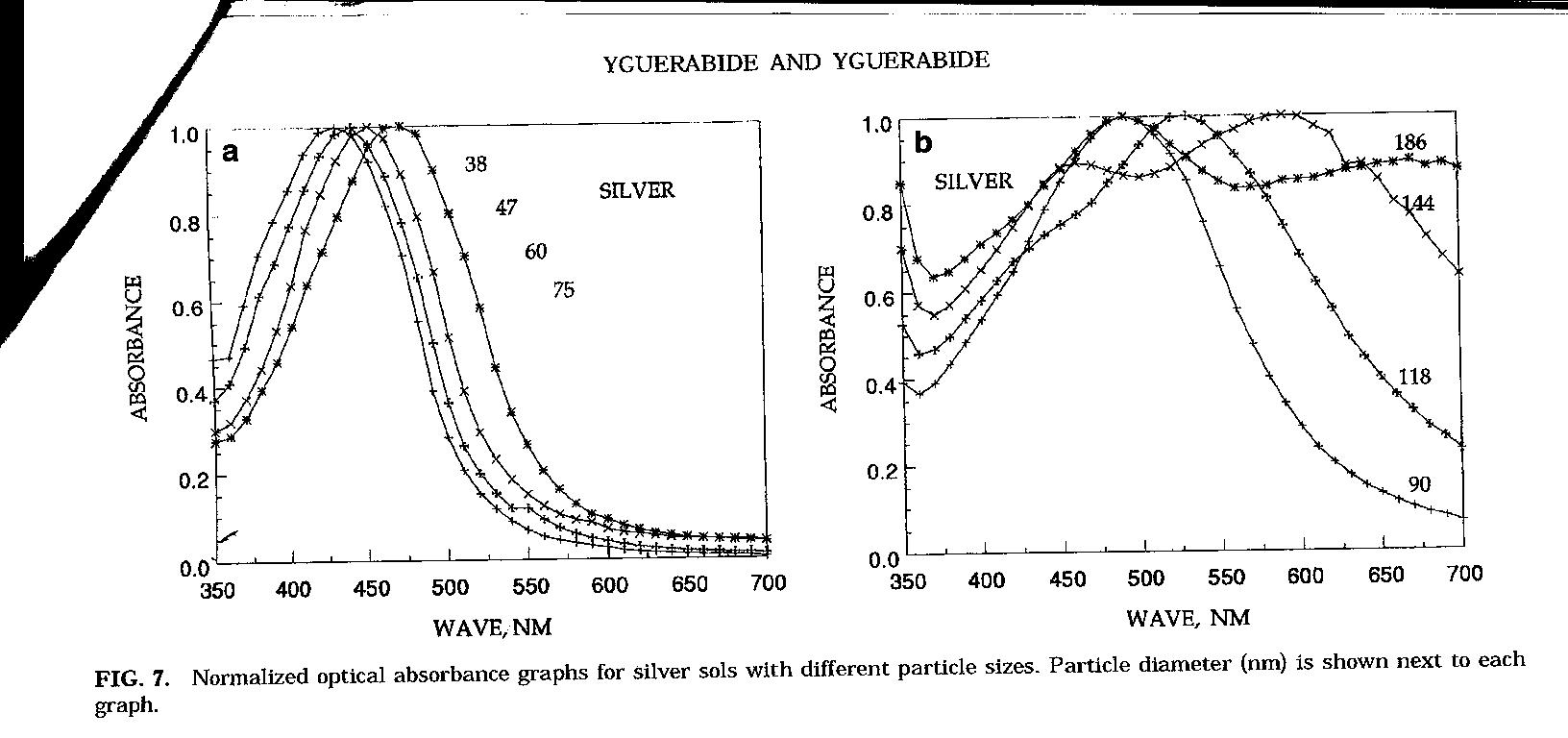
The absolute absorption spectrum for different sized silver particles
can be viewed at http://silver-lightning.com/cs-curves.jpg As can be
seen, each size gives a curve similar to a normal curve until the
particles get really big. Remember that the color you see is the
complement of the absorbed color, thus if it absorbs blue, you see
yellow, and for green you see orange.
Marshall

On 4/26/2012 9:39 AM, Thomas Soares wrote:
2012/4/26 Ode Coyote <[email protected]
<mailto:[email protected]>>
      It's not just amps.
    It's amps over a surface area over a period of time.
    3 interdependent factors with 2 constantly changing variables and
    an equation to handle them.
    Thank goodness for computers.


The color of the solution can be used to estimate ppm.
A laser also can offer some indication...

Anyway, could you point the site where one can see this equation ?

Thanks.