Save the miniskirt! Why Do Generations Divide Over The African Way? – By
Elsie Eyakuze
Posted on April 22,
2014<http://africanarguments.org/2014/04/22/save-the-miniskirt-why-do-generations-divide-over-the-african-way-by-elsie-eyakuze/>by
AfricanArgumentsEditor<http://africanarguments.org/author/africanargumentseditor/>
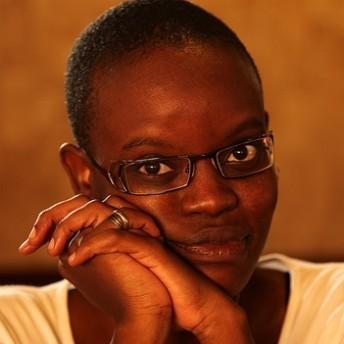
[image:
ElsieEyakuze]<http://africanarguments.org/wp-content/uploads/2014/04/ElsieEyakuze-e1398163968357.jpg>There
is a trend emerging in social media, mostly amongst people in their 30s and
40s and sometimes even 50s that consists of sharing family pictures from
their childhood days. It is a wonderful visual record of an era that was
charmingly optimistic. The fashions are compelling – as anyone who is
paying attention will have noticed there is a surge in post-independence
era styles amongst the fashionistas of the African diaspora and beyond.

The photos give away something of the character of what I like to call
Generation Independence, people who have graduated to elder status now. It
is there in the His and Hers individual photographs: lovely studio
portraits in black and white with the subject usually looking off to the
side of the camera, bristling with youthful vitality. He will be sporting a
fiercely sculpted Afro with a carefully straight side-parting. She will be
naturally gorgeous and glowing with health in a beautifully-tailored
minidress, lips curved in a gentle smile.

Yes, that’s right- in a minidress. Most of the family albums I have come
across, especially those containing pictures from the sixties, are teeming
with women in outfits whose hemlines are well north of their knees. So it
was a bit of a surprise to come across a poster by Ugandan activists for
the brilliant campaign to ‘save the miniskirt’ a few years ago. Who,
exactly, was trying to drive it to extinction? I wonder whether the sixties
mini-skirt and ‘fro and seventies maxidress and ‘fro phenomenon and that
incredibly awful eighties boxy suit trend that I have been quietly
observing was a uniquely Tanzanian phenomenon. Surely not?

I raise this in light of a creeping trend of neo-conservatism that is
threatening to smother conversations about direct political confrontation
on any number of issues – liquor laws, labour, land issues, freedom of
information and expression, leadership, education, sexual politics –
between the younger generation of Tanzanians and the older ones. In the
past decade I have become used to hearing the phrase “nyie vijana wa siku
hizi!’ meaning ‘youth these days!’ uttered in bewilderment and disgust.
Apparently we, I mean they, are a handful.

What I want to address is the hypocrisy behind this inter-generational
exasperation. For years now I have been running an informal biography
project, in the sense that I will take any chance to sit with an elder and,
if they are amenable to it, ask very nosy questions about their lives,
usually their youth. This is an attempt to fill the gaping void of
contemporary African history and culture that feels like a missing limb in
the identity debate. It is also a way to try to contain in the one word
‘African’ all the diversity of experiences I have had living in several
different countries without doing fatal damage to the term. Because anyone
who uses the term African with too much rigidity is of course guilty of
essentialising, and that is the key ingredient of racism isn’t it?

Ah, the stories. It seems that life was just as interesting half a decade
ago as it is now. Independence was sweeping across the continent and
Africans were suddenly thrust at a young age into all kinds of new
situations. Those who were able, went to school, wore the latest fashions,
were belligerently ‘modern’ and moved to the city. There was energetic
music in dance halls and, well, let’s call it ‘dating’ to go along with the
hard liquor and the palm and banana wines and the sorghum and millet beers.
Adventure, and a whole new world of possibility open to youth who were
willing to imagine, to risk, to go further than their fathers or mothers
had ever been. This was Africa.

But this was the Africa of the emerging elite political and social class.
Mission-schooled more often than not and in direct competition with what
was left of ‘traditional’ power after the colonials were done with it.
There must have been intergenerational contention on many of the same
issues that get raised today: liquor laws, labour, land issues, freedom of
information and expression, leadership, education and sexual politics. Yet
here we are, modern nation states, so guess who won? Ah, that’s right: The
people who would age to become our ‘NeoConservatives’ – working from a
platform of religion and tradition to maintain authority over the youthful
competition.

Africa, right now, is nothing if not young. According to the State of East
Africa Report for 2013 <http://soea.sidint.net/>,   the region’s estimated
population of 144 million has a median age that ranges between 15 and 19
across the five countries surveyed. According to their online profiles at
the writing of this article President Museveni of Uganda  is aged 69,
President Kikwete is 63, President Kagame is an energetic 56, whilst
Presidents Kenyatta and Nkurunzinza are relative spring chickens in their
early 50s.

To their credit they do try, with the Twitter and the Facebook pages and
the reaching out to youth especially around election time when they need a
bit of a helping hand. Unfortunately, this willingness to appear
contemporary doesn’t quite mask the tone of command in their missives, nor
their cranky-old-man irritation when “young people” don’t display the
desired levels of unquestioning obedience (something they probably never
showed to their own elders.)

When current youth are accused of moral decay, of acting ‘unAfrican’ by
these kinds of administrations one must engage in a bit of cherchez la
femme – sometimes quite literally so. Consider our rampant sugar-daddy
culture. Recently the Kenyan Parliament passed a bill that pretty much
legalizes polyandry without restrictions from existing spouses, blocking a
wife’s prerogative to mitigate the potential consequences of her husband’s
appetites.

Now who has the upper hand in the ageless intergenerational competition for
nubile female interest? Not the largely unemployed 15-30 year olds, that’s
for sure. And that is just one issue. The others can be studied through the
themes and lyrics in our local hip hop culture. Consumption culture and
good times show up a lot, but so do politics and the hypercritical behavior
of a leadership class that exhorts citizens, especially youth, to live
obediently above reproach when unfortunately their own behaviours stem from
the ‘do as I say, not as I do’ school of thought.

And so we campaign for mini-skirts to be saved from extinction, for deeper
democracy and better schools and growth in the formal labour market while
yes, going out to clubs and consuming all that tasty advertised and easily
available locally-distilled liquor and smoking the cigarettes just like the
guys and girls on the billboards and spending our pocket money from our
sugar daddies on touchscreen mobile phones and airtime.

What is the African way? Is there one? Or does the problem lie entirely
with the question to begin with?

*Elsie Eyakuze is a freelance consultant in print and online media working
mainly in the development sector. She blogs at mikochenireport.blogspot.com
<http://mikochenireport.blogspot.com/> @MikocheniReport*

*This article was commissioned via the African Journalism Fund.
<http://africanarguments.org/african-journalism-fund-2/>*
If you enjoyed this post, please consider leaving a
comment<http://africanarguments.org/2014/04/22/save-the-miniskirt-why-do-generations-divide-over-the-african-way-by-elsie-eyakuze/#comments>or
subscribing
to the RSS feed <http://africanarguments.org/feed/> to have future articles
delivered to your feed reader.
This entry was posted in African Politics
Now<http://africanarguments.org/category/politics-now/>.
Bookmark the
permalink<http://africanarguments.org/2014/04/22/save-the-miniskirt-why-do-generations-divide-over-the-african-way-by-elsie-eyakuze/>.

--
You received this message because you are subscribed to the Google Groups
"South Sudan Info - The Kob" group.
To unsubscribe from this group and stop receiving emails from it, send an email
to [email protected].
To post to this group, send email to [email protected].
Visit this group at http://groups.google.com/group/SouthSudanKob.
To view this discussion on the web visit
https://groups.google.com/d/msgid/SouthSudanKob/CAJb14op2gm5xf95hzMugaUJjEyD-e%3D_HPGH3i2iW5yoVMaVsDw%40mail.gmail.com.
For more options, visit https://groups.google.com/d/optout.