REVIEW: “We Will Win Peace” – on ‘conflict minerals’, humanitarian advocacy
and Congo – By Georgia Cole and Jean-Benoît Falisse
Posted on June 10, 2015
<http://africanarguments.org/2015/06/10/review-we-will-win-the-peace-on-conflict-minerals-humanitarian-advocacy-and-congo-georgia-cole-and-jean-benoit-falisse/>
by AfricanArgumentsEditor
<http://africanarguments.org/author/africanargumentseditor/>
*[image: WeWillWinPeace]
<http://africanarguments.org/wp-content/uploads/2015/06/WeWillWinPeace.jpg>*In
2010, the United States Congress passed the expansive sounding ‘Dodd-Frank
Wall Street Reform and Consumer Protection Act’. Its section 1502
<http://www.sec.gov/spotlight/dodd-frank/speccorpdisclosure.shtml>
contained a requirement which appeared revolutionary for how the West
understood its complicity in perpetuating war and sexual violence in the
Democratic Republic of the Congo (DRC). This section required that
companies reporting to the US Securities and Exchange Commission disclose
their use of so called ‘conflict minerals’ originating in the DRC or an
adjoining country.

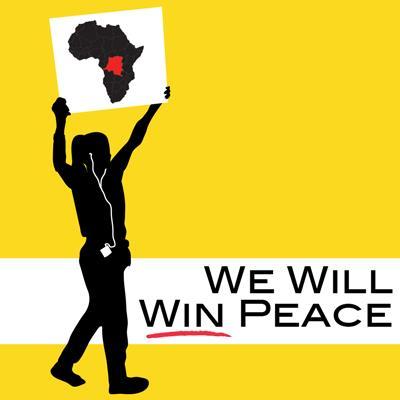
As expected for a documentary conceived of and directed by disillusioned
aid workers with long experience in the Great Lakes region, ‘We Will Win
Peace’ <http://www.wewillwinpeace.com/#%21> sets out to challenge this
orthodox wisdom.

It asks three fundamental questions. First, what role does artisanal mining
play for communities in the DRC? Second, what series of events resulted in
Section 1502? And third, what impacts did the passing of the act have on
the communities it ostensibly set out to help?

These questions are answered across two continents. Following a rousing
introduction which situates the later narrative in humanitarian campaign
stereotypes, the advocacy campaigns of world leaders such as Barack Obama
and George Clooney, and the wider ethnic and geo-politics of the Great
Lakes, we zoom in to a pre-Dodd-Frank DRC.

For an extended part of the documentary, the filmmakers illustrate this era
by following two Congolese Miners: Apocalypse and Chang. We hear their
stories of how they got involved in artisanal mining, about their families
and what drives them in life. Through these sensitive portraits, we get to
understand the ways in which the economy and society functioned before
section 1502 and the subsequent decision of the Congolese government to
suspend artisanal mining in 2010
<http://reliefweb.int/sites/reliefweb.int/files/resources/20131112_HU.pdf>.

The documentary, through interviews with experts and combatants, introduces
and explains the longstanding roles that ethnicity, local resources, and
regional politics have played in causing and perpetuating violence. It then
travels to the US to follow the ‘Enough Project
<http://www.enoughproject.org/>’ – an international advocacy organisation
campaigning on issues of genocide and ‘crimes against humanity’ – in its
endeavours to prove that the purchasing of certain consumer technologies
fuels the drive for conflict minerals from the DRC. This in turn is
presented as being directly responsible for decades of sexual violence and
conflict within the country.

What follows is a smartly filmed drama: Jason Stearns
<http://congosiasa.blogspot.co.uk/> and other leading experts on minerals
in the Congo argue ‘No it isn’t’ and John Prendergast
<http://enoughproject.org/staff/john-prendergast> and a host of American
campaigners argue ‘Yes it is’. The result was that the ‘good folk’ won, the
Dodd-Frank Act was passed, and tens of thousands of Congolese miners and
secondary industries ended up on the brink of economic destitution before
necessity pushed them towards other options. These include even more
precarious employment in the mines or joining a rebel movement.

UN statistics <http://www.unhcr.org/51f7ae846.html> report an increase in
crime and sexual violence in the region in the recent years. Establishing
direct causality with the ban is impossible, but the story certainly runs
contrary to what various celebrities and civil society activists had
anticipated.

The documentary sadly highlights how Congolese mining experts and civil
society activists had expected this peculiar ‘resource curse’, but were
never asked for their opinions during the drafting of the Act.

*We Will Win Peace* is a cautionary tale on many fronts. To channel the
words of Chimamanda Adichie
<http://www.ted.com/talks/chimamanda_adichie_the_danger_of_a_single_story>,
it convincingly illustrates “the danger of a single story”. It introduces
Congolese as musicians, miners, fathers and mothers, not just victims and
perpetrators of violence.

The documentary also traces the subjective and sensationalist pathways
through which laws in the United States come to pass, whereby celebrities
have credibility as expert witnesses and consultations stop at the
international border. It highlights the dangers of blind, altruistic
advocacy when the repercussions of these discussions are far from
immediately obvious. It stops, however, at promoting a ‘we know better’
approach. The documentary is not explicit on whether legislation on
‘conflict minerals’ is desirable. It rather underlines the shortcomings of
the conflict minerals legislation as it was passed in the United States:
cropped and appended to a larger bill, focused on one specific country, and
without any concrete provisions for improving the mining situation on the
ground.

Europe does not have a law on ‘conflict minerals’ and due diligence, yet.
This could change soon as the members of the European Parliament are
expected
<http://www.theregister.co.uk/2015/05/20/europarl_pushes_for_tough_laws_restricting_conflict_minerals/>
to vote on this. They should watch Seth Chase’s documentary beforehand. The
movie does not tell the story of the ‘conflict minerals’ campaign in
Europe. Lobby and advocacy groups, such as the London-based Global Witness
<https://www.globalwitness.org/campaigns/conflict-minerals/>, do not
feature celebrities, which begs the questions of whether the ‘global’ and
popular campaign against conflict minerals is an American artefact – and to
what extent the trimmed legislation is a ‘natural’ consequence of celebrity
advocacy.

One of the key questions the documentary raises is how to effectively
channel and transform public and celebrity enthusiasm into good policy
decisions. Congressional hearings on the consequences of Section 1502
suggest that improvement remains possible and does not necessarily imply
returning to an era of opaque supply chains.

The documentary does not, and probably cannot, answer all the questions. In
particular, the role of Rwanda is only timidly introduced and land
conflict, other resources, and M23
<http://www.riftvalley.net/project/usalama-project#.VXgK30agt0E> are left
unexplored. A trip to Kinshasa to explore the national-level politicking is
also absent. Why, for example, did the government in the Congo impose a de
facto ban on artisanal mining, despite this not being what the Dodd-Frank
Act actually called for? Who was pushing for this reform? The lack of
access to the capital means that President Kabila and his aides, who are
known to benefit more from Katanga
<http://www.publications.parliament.uk/pa/cm201012/cmselect/cmintdev/1133/1133we11.htm>
than Kivu mining, come out relatively unscathed.

The invisible hand of the market and the withdrawal of big buyers from
Eastern Congo come out as being largely responsible for the collapse of
livelihoods in the Kivu and Maniema. However, this risks implying that the
artisanal mines in Eastern Congo are a ubiquitous force for good by
simplifying the before and after vignettes.

In 90 minutes, the documentary manages to explain a problem, depict a
campaign to tackle this problem, and explain how this campaign failed,
which is a commendable achievement. As the producer Ben Radley says: “Why
can we not have simple advocacy and complex policy?”

This film is itself the work of advocates who wished to produce a
documentary which would also appeal to and resonate with the same
demographic whose support propelled the Enough Project to its dizzy and
damaging heights.

With the proliferation of celebrity and civil society activism and the
expansion in the number of causes they seek to champion, intelligent
documentaries such as this should be actively encouraged. It provides an
excellent entry point for discussions deconstructing the concepts of
‘conflict minerals’ and the ‘resource curse’ and exploring the issues
around lobbying, global celebrity campaigns, and reductive images of Congo.

*Georgia Cole is a researcher in the Department of International
Development, Oxford University.* *Jean-Benoît Falisse is a researcher on
Burundi and the DRC at Oxford University.*
If you enjoyed this post, please consider leaving a comment
<http://africanarguments.org/2015/06/10/review-we-will-win-the-peace-on-conflict-minerals-humanitarian-advocacy-and-congo-georgia-cole-and-jean-benoit-falisse/#comments>
or subscribing to the RSS feed <http://africanarguments.org/feed/> to have
future articles delivered to your feed reader.

--
To post to this group, send email to [email protected]
To unsubscribe from this group, send email to
[email protected]
Visit this group at https://groups.google.com/d/forum/southsudankob
View this message at
https://groups.google.com/d/msg/southsudankob/topic-id/message-id
For more options, visit https://groups.google.com/d/optout
---
You received this message because you are subscribed to the Google Groups
"South Sudan Info - The Kob" group.
To unsubscribe from this group and stop receiving emails from it, send an email
to [email protected].
To post to this group, send email to [email protected].
Visit this group at http://groups.google.com/group/SouthSudanKob.
To view this discussion on the web visit
https://groups.google.com/d/msgid/SouthSudanKob/CAJb14ooin4D9sK8Hiciy%2BG-u280cemcGg3b7EbEj%2BduYnzxzqw%40mail.gmail.com.
For more options, visit https://groups.google.com/d/optout.