In a World Obsessed with Passport Tiers, Citizenship Is Personal and
Political – By Robtel Neajai Pailey
Posted on June 11, 2015
<http://africanarguments.org/2015/06/11/in-a-world-obsessed-with-passport-tiers-citizenship-is-personal-and-political-by-robtel-neajai-pailey/>
by AfricanArgumentsEditor
<http://africanarguments.org/author/africanargumentseditor/>
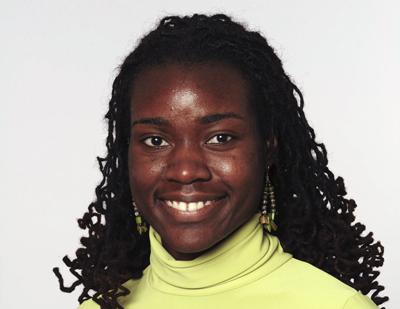
[image: Robtel_Pailey]
<http://africanarguments.org/wp-content/uploads/2013/08/Robtel_Pailey.jpg>Late
last week, I was informed that I would not be able to travel to Dubai for
an important meeting scheduled months ago.

Like other countries across the globe, the United Arab Emirates (UAE)
halted travel for those with Guinean, Liberian, and Sierra Leonean
passports during the height of the Ebola outbreak. It has not lifted these
restrictions.

The miniature red suitcase I had packed lay abandoned on my wooden floor. I
caressed my dark green Liberian passport as if to reassure this inanimate
marker of identity that my citizenship was not on trial here.

The spectre of Ebola had simply triumphed over reason.

Yet, the irony of this episode hasn’t escaped me. Dubai is a hub for cross
continental travel. In 2013
<http://www.migrationpolicy.org/article/labor-migration-united-arab-emirates-challenges-and-responses>
alone,
the UAE boasted the fifth largest international migrant pool in the
world—hosting 7.8 million foreign residents out of a total population of
9.2 million. Furthermore, foreign labour migrants account for 90 percent
<http://www.migrationpolicy.org/article/labor-migration-united-arab-emirates-challenges-and-responses>
of
the country’s private workforce, mostly from Pakistan, Bangladesh and India.

Unlike the US and UK, where anti-immigrant sentiments have reached fever
pitch, the UAE seems more pliant to international travellers. So,
naturally, I thought it was odd when I attempted to complete the online
visa form and Liberia was not listed as an option for ‘present
nationality’. Nor were Guinea and Sierra Leone.

This was punishment for simply being born in Africa with a particular
African passport. Even the organisers of the meeting were shocked,
disbelief sprinkled in their conciliatory e-mails and phone calls. All
diplomatic channels had proved futile. The verdict was irreversible. I
would not be getting on that plush Emirates flight.

Never mind that Liberia was declared Ebola-free
<http://www.who.int/mediacentre/news/statements/2015/liberia-ends-ebola/en/> on
May 9, exactly one month ago.

Never mind that I have not been to my homeland in over 10 months. Nor was I
asked about recent travel there.

Never mind that my country and its people are slowly trying to recover from
an invisible foe that killed nearly 5,000
<http://apps.who.int/ebola/en/current-situation/ebola-situation-report-3-june-2015>
and
infected about 11,000
<http://apps.who.int/ebola/en/current-situation/ebola-situation-report-3-june-2015>
.

In the past year, I’ve seen my passport scrutinised
<http://www.aljazeera.com/indepth/opinion/2014/10/liberian-while-travelling-201410257415839632.html>
more
intently than ever before, but the UAE blanket bias felt like adding salt
to a fresh wound.

At first, I experienced blinding rage with a touch of indignation. The kind
that gurgles in the pit of your gut, and then explodes.

Then I was amused by the absurdity of it all. If I were travelling directly
from Guinea, Liberia or Sierra Leone and had a passport from a country on
UAE’s list
<http://www.emirates.com/uk/english/plan_book/essential_information/visa_passport_information/uae_visas.aspx>
of
exemptions, I would have gotten a visa on arrival with ease. No questions
asked.

Mild acceptance slowly seeped in, reminding me that we maintain immigration
hierarchies as a form of erasure and silencing. In our obsession with
citizenship tiers, west is best. North trumps South. And white is
inevitably right.

Never mind black/brown solidarity. Or does that even exist?

I have shied away from returning home fearing the kind of immobility that
sees people not as complex beings but as nameless, faceless ‘threats’ to
national security. A sedentarist kind of metaphysic that
keeps certain people in their place.

People like me.

Truth be told, the natural human compulsion for mobility is currently under
threat because of irrational immigration bans such as the UAE’s.

For all the rhetoric about globalisation’s free flow of ideas, capital and
technology, the world remains obsessed with restricting the movement of
people who don’t fit into our neat boxes of what is tolerable or even
desirable. The UAE saga is a microcosm of a larger debate about the need
for immigration reforms worldwide.

The scapegoating of migrants across the globe deflects attention from the
fact that most countries have failed to improve the quality of life of
their domestic citizens. Afro-fobic attacks
<http://www.aljazeera.com/indepth/inpictures/2015/05/xenophobia-south-africa-150501090636029.html>
in
South Africa, Australia’s Pacific Solution
<http://www.aph.gov.au/About_Parliament/Parliamentary_Departments/Parliamentary_Library/pubs/BN/2012-2013/PacificSolution>,
and the plight of Rohingya Muslims
<http://www.aljazeera.com/news/2015/05/dalai-lama-aung-san-suu-kyi-rohingya-muslim-myanmar-migrant-150528110114964.html>
off
the coast of Indonesia are extreme examples. Immigration is framed as a
zero sum game, with finite rights and resources available to a select few.

I watch migrants who look like me risk their lives on sardine-packed,
rickety boats to cross
<http://www.aljazeera.com/news/2015/04/libya-grapples-migration-crisis-150426073308457.html>
the
Mediterranean, and know intuitively that they wouldn’t flee if they had a
choice. With each desperate attempt to cross over, what they are
effectively saying is that Europe must make amends for waging unjustifiable
wars and supporting authoritarian regimes in some of their countries of
origin.

Centuries ago, Africans were so eager to escape lives of bondage, some dove
to sudden death in the Atlantic. They were the first forced migrants I can
recall. Now, many of us travel across these same waters for short-, medium-
and long-term trips. Not because of some deep, abiding love for life
abroad, but because it gives us a measure of flexibility. It keeps us
physically connected to the rest of the world.

And for someone like me with chronic wanderlust, the ability to travel
unencumbered is almost as necessary as oxygen itself.

Although a self-professed transnational, I used to be suspicious of
Liberians who changed their nationality out of convenience. But after
interviewing more than 200 of us across five urban centres in West Africa,
North America and Europe for my doctoral thesis
<http://www.soas.ac.uk/staff/staff71766.php> on citizenship construction
and practice, I have become more empathetic. Many of us make the switch
because of the access so easily denied me by the UAE.

But we shouldn’t have to.

I can’t say I would ever consider exchanging my passport for another,
especially since Liberia prohibits dual citizenship. Yet, the UAE debacle
has shaken me to the core. It’s made me acutely aware that citizenship is
both personal and political.

*Robtel Neajai Pailey is a Liberian academic, activist and author based at
SOAS, University of London.*
If you enjoyed this post, please consider leaving a comment
<http://africanarguments.org/2015/06/11/in-a-world-obsessed-with-passport-tiers-citizenship-is-personal-and-political-by-robtel-neajai-pailey/#comments>
or subscribing to the RSS feed <http://africanarguments.org/feed/> to have
future articles delivered to your feed reade

--
To post to this group, send email to [email protected]
To unsubscribe from this group, send email to
[email protected]
Visit this group at https://groups.google.com/d/forum/southsudankob
View this message at
https://groups.google.com/d/msg/southsudankob/topic-id/message-id
For more options, visit https://groups.google.com/d/optout
---
You received this message because you are subscribed to the Google Groups
"South Sudan Info - The Kob" group.
To unsubscribe from this group and stop receiving emails from it, send an email
to [email protected].
To post to this group, send email to [email protected].
Visit this group at http://groups.google.com/group/SouthSudanKob.
To view this discussion on the web visit
https://groups.google.com/d/msgid/SouthSudanKob/CAJb14oqEOYY2DF7PscZE3-HjBiwk9ncM%3DMy%3DJ_Rgh%2B%2BrHCXNJw%40mail.gmail.com.
For more options, visit https://groups.google.com/d/optout.