Campaigners warn of Kenya’s ‘secretive’ plan to set up International
Financial Centre
Posted on December 1, 2015
<http://africanarguments.org/2015/12/01/campaigners-warn-of-kenyas-secretive-plan-to-set-up-international-financial-centre/>
by Daniel Cullen <http://africanarguments.org/author/daniel-cullen/>
*Kenya’s government hopes a new Nairobi International Financial Centre will
transform the economy, but observers warn it could contribute to illicit
financial flows, inequality and a lack of transparency.*
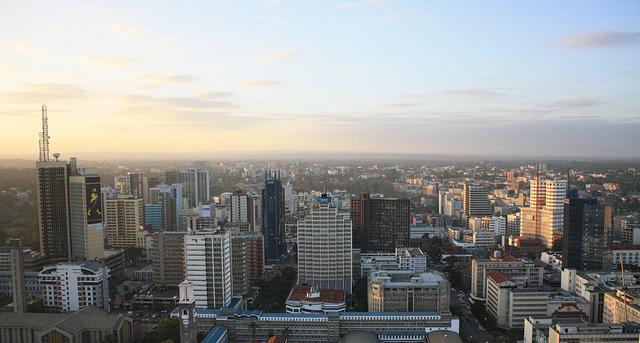
[image: The Nairobi skyline. Photograph by Clara Sanchiz.]
<http://africanarguments.org/wp-content/uploads/2015/11/nairobi-financial-centre.jpg>
The Nairobi skyline. Photograph by Clara Sanchiz.

For East Africa’s largest economy, these are turbulent times. Beleaguered
Treasury Secretary Henry Rotich was summoned before parliament in
October to explain reports his department was facing cash shortages. Delays
to government payments have accompanied strikes among disgruntled public
sector workers and complaints from private sector contractors. Fears over
security have contributed to a slump in tourism, a weak shilling and shaken
investor confidence. And shares are down on the Nairobi Securities
Exchange, while the World Bank has cut national growth forecasts.

Such troubles are unwelcome for any country, but provide a particular
challenge to one hoping to entice investment into an ostensibly modernising
economy. Kenya’s ambitious development plan, Vision 2030
<http://www.vision2030.go.ke/wp-content/uploads/2015/06/Popular_Version1.pdf>,
hopes to secure the country’s middle-income status based on a “vibrant and
globally competitive financial sector” at the heart of which is a plan to
turn Nairobi into a regional finance hub through the establishment of the
Nairobi International Financial Centre (NIFC).

Despite ongoing turmoil in the economy, the Treasury is expected to soon
table a new parliamentary bill regarding this proposed centre.

Taking inspiration from gilded financial destinations such as London,
Singapore and Hong Kong, Rotich hopes the NIFC will “attract international
investments and participants in the financial services arena”. However, the
plan does not sit well with all parties in Kenya, and critical voices are
growing louder over concerns about the threat of illicit financial flows,
rising inequality and a lack of transparency.

*Building the centre*

Discussions regarding the proposed NIFC date back to 2008, but the plan
first received international attention in 2013 when details emerged
<http://www.economist.com/news/finance-and-economics/21584019-gambia-looks-join-beleaguered-club-trawling-business>
of negotiations between Kenya and TheCityUK, the lobbying arm of the City
of London. It was revealed that UK trade delegations had undertaken several
visits to Nairobi, continuing until September 2014
<http://www.thecityuk.com/events/latest-events/detail/page-264>, headed by
then Lord Mayor of the City of London, Fiona Woolf.

Since then, and despite some setbacks, the foundations of the project have
been quietly put in place through a series of small legislative and policy
changes. The Kenyan Cabinet gave approval to the establishment of the NIFC
in June 2013, with a government steering committee set up to oversee the
process. In May 2014, the Nairobi Financial Centre Authority was formed to
oversee the development of a suitable policy framework. In April 2015, the
government announced <http://www.mygov.go.ke/?p=1821> a deal with the
Qatari government to advise on the model for the centre. Shortly after, in
his June 2015 budget speech, Rotich promised
<http://www.treasury.go.ke/index.php/en/downloads/category/31-budget-speeches?download=106:budget-statement-2015-2016>
that the centre was soon to be made “fully operational”.

Meanwhile, previous legislation limiting foreign ownership of listed
companies to 75% has been lifted
<http://www.theeastafrican.co.ke/business/Kenya-joins-Dar-lifting-cap-on-foreign-ownership-of-listed-firms/-/2560/2842076/-/3yitmez/-/index.html>to
ease outside investment, and the City of London is reported to be
contracted to provide training of staff for the centre.

In addition to these developments, authorities have entered a bid to become
the first country in Africa to host a Chinese *yuan* clearing house
<http://www.theeastafrican.co.ke/news/Kenya-hopes-of-yuan-clearing-house-rise-with-China-premier-visit/-/2558/2285488/-/5hfd52z/-/index.html>
and have signed double taxation agreements with Qatar
<http://kenyalaw.org/kl/fileadmin/pdfdownloads/LegalNotices/59-IncomeTaxAct_DoubleTaxationRelief_Qatar_Notice_2015.pdf>,
Seychelles
<http://kenyalaw.org/kl/fileadmin/pdfdownloads/LegalNotices/9-IncomeTaxAct_DoubleTaxationRelief_Seychelles_Notice2014.pdf>,
South Africa
<http://kenyalaw.org/kl/fileadmin/pdfdownloads/LegalNotices/LN141of2014.pdf>,
Kuwait
<http://www.nation.co.ke/business/Kuwait-and-Kenya-to-increase-trade-volumes/-/996/2075912/-/g0cc5xz/-/index.html>
,Mauritius
<http://kenyalaw.org/kl/fileadmin/pdfdownloads/LegalNotices/59-IncomeTaxDoubleTaxationRelief%28Mauritius%29Notice2013.pdf>,
Iran <http://www.irna.ir/en/News/81661590/> and their neighbours in the East
African Community
<http://kenyalaw.org/kl/fileadmin/pdfdownloads/LegalNotices/LN142of2014.pdf>
.

Some Kenyan financiers
<http://www.theeastafrican.co.ke/business/Coming--Body-to-oversee-Kenya-s-financial-hub-/-/2560/2405964/-/item/0/-/hwq943z/-/index.html>
are now calling for the speedy conclusion to the set up and the offering of
new incentives to bring in investors.

*Secrecy Savannah*

>From the perspective of the government, plans for the NIFC are moving in
the right direction. But not everyone is convinced the centre will really
contribute towards sustainable economic development in Kenya.

A recent analysis
<http://www.u4.no/publications/tax-haven-or-international-financial-centre-the-case-of-kenya/downloadasset/3595>
by Attiya Waris of the University of Nairobi, for example, notes the
difficulties of encouraging investment in International Financial Centres
without taxation incentives or greater financial secrecy provisions.
Similar centres elsewhere, writes Waris, have been found to attract illicit
financial flows, while giving disproportionate influence to financial
interests can undermine democratic institutions. Among the possible risks,
she says, is the presence of those “seeking to launder illicit funds, such
as those generated by tax evasion, drug trafficking, or corruption”.

Nicholas Shaxson, author of *Treasure Islands: Tax havens and the men who
stole the world <http://treasureislands.org/>,* meanwhile has
<http://treasureislands.org/city-of-london-corporation-wants-to-create-a-new-african-tax-haven/>
said
<http://treasureislands.org/city-of-london-corporation-wants-to-create-a-new-african-tax-haven/>
that in his view, the title ‘International Financial Centre’ is often “a
deliberate euphemism for tax haven”.

Many in Kenya are concerned that further incentives to attract investors
under the NIFC will also exacerbate inequality. Tax Justice Network-Africa
and ActionAid International estimate
<http://www.actionaid.org/sites/files/actionaid/brief_-_kenya_report_-_kenya_tax_competition.pdf>
that Kenya already loses over $1.5 billion per year – more than twice the
annual health budget – via tax incentives and exemptions, primarily to the
benefit of foreign multinationals and larger domestic companies. Even the
Kenya Revenue Authority has called on the government
<http://www.businesstoday.co.ke/news/news/1427283131/kra-goes-after-tax-incentives>
to withdraw certain exemptions and incentives in order to boost its tax
intake.

Furthermore, Kenya’s present financial architecture already has a
reputation for secrecy and corruption. A 2012 study
<http://www.gfintegrity.org/wp-content/uploads/2014/05/Global-Shell-Games-2012.pdf>
found it to be the easiest country in the world to set up an untraceable
shell company, one of the most commonly used tools in illicit financial
conduct. US research organisation Global Financial Integrity terms Kenya a
“major money laundering hub” and calculates
<http://www.gfintegrity.org/kenyas-removal-fatf-gray-list/> that illicit
financial flows cost the government at least $3.9 billion in lost tax
revenue between 2002 and 2010.

Anti-corruption campaigner John Githongo has warned
<http://www.trust.org/item/20131218224323-6outb?view=print> that in this
setting, the NIFC “would be like a financial crime aircraft carrier,
self-contained and able to cause considerable damage”.

Another major bone of contention for critics of Kenya’s planned NIFC is the
secretive process surrounding the proposals. The voices of civil society,
whose involvement is constitutionally mandated, have so far been worryingly
absent.

Ezra Mbogori, Director of social justice organisation Akiba Uhaki Foundation
<http://www.akibauhaki.org/>, is among those backing calls for
consultation, saying “the secrecy with which the thinking and action has
proceeded so far leaves us concerned”.

While Nairobi may not be transformed overnight with the arrival of the
NIFC, the presence of an International Financial Centre would play a
significant role in shaping the futures of both city and country. But for
now, with scant information being made public, observers say it is
challenging to even track the process of the establishment of the centre,
let alone assess its potential impacts.

Campaigners and researchers say the government has a responsibility to
ensure a transparent and democratic debate around this process,
particularly in advance of the tabling of the parliamentary bill. At a time
of serious economic uncertainty, they say that such a debate will be
crucial if there is to be any real sense of accountability for Kenya’s
financial future.

*Daniel Cullen is a graduate of School of Oriental and African Studies,
University of London, and a former graduate attaché of the British
Institute in Eastern Africa, Nairobi.*
If you enjoyed this post, please consider leaving a comment
<http://africanarguments.org/2015/12/01/campaigners-warn-of-kenyas-secretive-plan-to-set-up-international-financial-centre/#comments>
or subscribing to the RSS feed <http://africanarguments.org/feed/> to have
future articles delivered to your feed reader.
This entry was posted in African Politics Now
<http://africanarguments.org/category/politics-now/>. Bookmark the permalink
<http://africanarguments.org/2015/12/01/campaigners-warn-of-kenyas-secretive-plan-to-set-up-international-financial-centre/>.
7 thoughts on “Campaigners warn of Kenya’s ‘secretive’ plan to set up
International Financial Centre”

   1. edward says:
   December 1, 2015 at 1:35 pm

<http://africanarguments.org/2015/12/01/campaigners-warn-of-kenyas-secretive-plan-to-set-up-international-financial-centre/#comment-78169>

   Great article. Loved it.
   2. Abraham Misoi says:
   December 1, 2015 at 8:23 pm

<http://africanarguments.org/2015/12/01/campaigners-warn-of-kenyas-secretive-plan-to-set-up-international-financial-centre/#comment-78190>

   Africa needs an organized financial center and having it in Nairobi is
   wellcome. As long as the government is involved there should be no worries
   because it will be monitored by professional bodies including the UN. There
   are crooks all over the world but their presence should not make anyone shy
   away from establishing such a progressive venture.
   3. C says:
   December 1, 2015 at 10:11 pm

<http://africanarguments.org/2015/12/01/campaigners-warn-of-kenyas-secretive-plan-to-set-up-international-financial-centre/#comment-78199>

   Leave Kenya alone. How many secretive things do all countries have? If
   you are doing graduate studies, just do you paper “secretively” graduate
   and and go away to start life in the real world. Let Kenya develop its NIFC
   and move on to become a first world country.
   4. dennis b o njiji says:
   December 2, 2015 at 4:50 am

<http://africanarguments.org/2015/12/01/campaigners-warn-of-kenyas-secretive-plan-to-set-up-international-financial-centre/#comment-78212>

   “A 2012 study found Kenya to be the easiest country in the world to set
   up an untraceable shell company, one of the most commonly used tools in
   illicit financial conduct.” This is very telling indeed.
   5. Chris says:
   December 2, 2015 at 9:22 am

<http://africanarguments.org/2015/12/01/campaigners-warn-of-kenyas-secretive-plan-to-set-up-international-financial-centre/#comment-78232>

   Very informative & well researched article. Like many others, I highly
   doubt if NIFC plan is in the best interest of Kenyans. If it was, then why
   the secrecy? My take is that it’ll most likely serve the narrow interests
   of those in power and further impoverish ordinary Kenyans. The government
   should reveal more information on the plan to allow Kenyans to decide
   whether to support or reject it.
   6. Phathutshedzo says:
   December 2, 2015 at 9:34 am

<http://africanarguments.org/2015/12/01/campaigners-warn-of-kenyas-secretive-plan-to-set-up-international-financial-centre/#comment-78233>

   Well put together article…covers both sides…the establishment of a
   financial hub is a good idea however the downside is the threat illicit
   flows and potential to turn into a “tax haven”. I think the treasury needs
   to be more transparency and openness about the running of the center and
   the regulations.
   7. Francis says:
   December 2, 2015 at 6:03 pm

<http://africanarguments.org/2015/12/01/campaigners-warn-of-kenyas-secretive-plan-to-set-up-international-financial-centre/#comment-78258>

   Why can’t those having problems with this initiative simply ask the
   government for information instead of peddling unsubstantiated lies that
   there is “secrecy” on the part of the government. There are always those
   who will oppose or try to malign anything good. International reporters and
   so called researchers always try to undermine any great initiatives coming
   from Africa. Why not make suggestions on how Kenya can use NIFC to better
   serve its interests and those of the international community instead of
   trying to undermine it. If you can’t be positive then shut up.

Leave a Reply

--
To post to this group, send email to [email protected]
To unsubscribe from this group, send email to
[email protected]
Visit this group at https://groups.google.com/d/forum/southsudankob
View this message at
https://groups.google.com/d/msg/southsudankob/topic-id/message-id
For more options, visit https://groups.google.com/d/optout
---
You received this message because you are subscribed to the Google Groups
"South Sudan Info - The Kob" group.
To unsubscribe from this group and stop receiving emails from it, send an email
to [email protected].
To post to this group, send email to [email protected].
Visit this group at http://groups.google.com/group/SouthSudanKob.
To view this discussion on the web visit
https://groups.google.com/d/msgid/SouthSudanKob/CAJb14opW9NksZtax2Uka0vjpWYC2bdsxwOqdDJ74K5xrzwctWw%40mail.gmail.com.
For more options, visit https://groups.google.com/d/optout.