---------- Forwarded message ----------
From: Eric Reeves <[email protected]>
Date: Thu, Dec 10, 2015 at 11:56 PM
Subject: "Criminal Financial Support for the Khartoum Regime: A Last Chance
for U.S. Justice for the People of Sudan"
To: Eric Reeves <[email protected]>
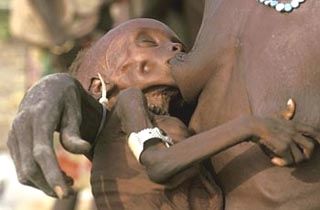
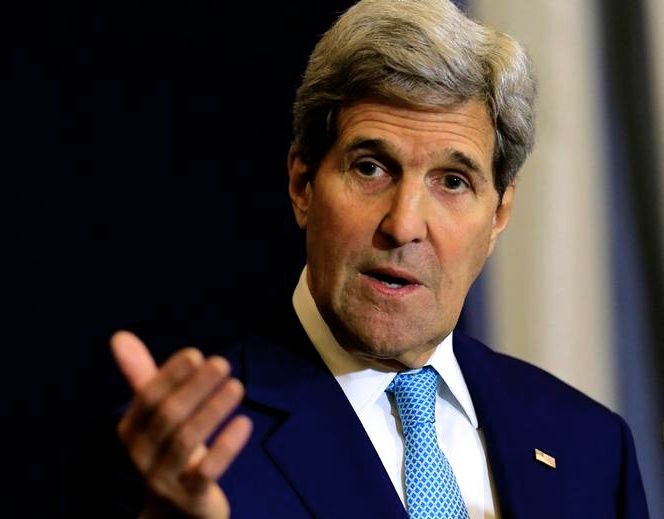
*Criminal Financial Support for the Khartoum Regime: A Last Chance for U.S. Justice for the People of Sudan **[forthcoming in The Huffington Post]* by Eric Reeves - Gayle Smith, who has long worked as a senior Africa specialist in the Obama administration’s National Security Council, was recently confirmed by the Senate to be the new head of the U.S. Agency for International Development (the agency had long been without a permanent Administrator). Smith has long worked on Sudan and knows both Sudan and South Sudan extremely well. She is also well aware of what is occurring in Darfur; indeed, in May 2004 she wrote a column for the *Washington Post* (with current National Security Advisor Susan Rice) declaring: The United States should begin urgent military planning and preparation for the contingency that no other country will act to stop the dying in Darfur. The administration has worked hard to end Sudan's long-running civil conflict. But this effort will have been wasted if we allow the Sudanese government to continue committing crimes against humanity. Not only will the international community have blood on its hands for failure to halt another genocide, but we will have demonstrated to Khartoum that it can continue to act with impunity against its own people. (May 30, 2004 <http://www.washingtonpost.com/wp-dyn/articles/A64717-2004May28.html>) [image: ZJpdeMqhITJnql0tQ0nwKoHkks-NFXDu195A4h4BFtRX3XhNFbcREB-JjLJwcCnOGvoaM7me543fTlK2AFUKA0txljEqbml9PnXT3DCfJtEV7_TyhKf4bP83SSIacPzKhgMwZywH] <http://sudanreeves.org/wp-content/uploads/2015/12/ZJpdeMqhITJnql0tQ0nwKoHkks-NFXDu195A4h4BFtRX3XhNFbcREB-JjLJwcCnOGvoaM7me543fTlK2AFUKA0txljEqbml9PnXT3DCfJtEV7_TyhKf4bP83SSIacPzKhgMwZywH.jpg> *Gayle Smith, Administrator for the U.S. Agency for International Development* These words went unheeded, and the catastrophe in Darfur—twelve years later—has recently seen genocidal destruction again rise to fever pitch. The Khartoum regime “continues to act with impunity against its own people.” Despite this, USAID Administrator Smith has a chance to help the people of Darfur and Sudan in a different way: responding to the urgent humanitarian crises facing millions of Sudanese, and seeing justice done in distributing massive restitution funds from the U.S. criminal conviction of French banking giant BNP Paribas. [image: 628x-1] <http://sudanreeves.org/wp-content/uploads/2015/07/628x-1.jpg> *The arrogant CEO of French banking giant BNP Paribas, which was compelled to admit to massive criminal violations of U.S. financial laws---violations that benefited the Khartoum regime; his bank was brazenly contemptuous of U.S.laws and ignored the consequences of a regime guilty of serial genocide* There has been a steady erosion of international relief capacity and funding in Darfur and elsewhere in Sudan, especially since the Obama administration came into office. This is especially true in Darfur, but in other part of Sudan as well; it is also true for many the hundreds of thousands of Sudanese refugees in neighboring countries. Some 370,000 Darfuris are refugees in eastern Chad alone. These displaced people, living invisibly in miserable conditions, face a cut-off in food aid by the UN’s World Food Program. Ostensibly a matter of lack of funding, the cut-off threatens the lives of Darfuris and may coerce repatriation—a death sentence for many in the twelve camps that stretch for over 250 miles along the Chad-Darfur border. [image: shelter in Oure Cassoni] <http://sudanreeves.org/wp-content/uploads/2015/12/shelter-in-Oure-Cassoni.jpg> *What has counted for "shelter" in Oure Cassoni, the northernmost of the Darfuri refugee camps in eastern Chad* This is but one example of the desperate humanitarian needs unmet by international funding. In Sudan as a whole more than 2,000,000 children in are acutely malnourished and may die <http://kristof.blogs.nytimes.com/2014/09/05/malnutrition-crisis-in-sudan/?module=BlogPost-Title&version=Blog%20Main&contentCollection=Opinion&action=Click&pgtype=Blogs®ion=Body&module=Search&mabReward=relbias%3As%2C%7B%221%22%3A%22RI%3A11%22%7D&_r=0>. More than 500,000 suffer from “Severe Acute Malnutrition” and will almost certainly die without emergency humanitarian action. This year’s poor harvest has brought the long-simmering malnutrition emergency to the crisis level. Disease is rampant in many locations and water shortages are now chronic throughout Sudan; malnutrition makes these much greater threats. [image: Malnourished mother and child at a supplementary feeding station run by the UN WFP (World Food Programme). The 1998 famine in Southern Sudan affected around 2.6 million people. In the worst-hit region of Bahr el Ghazal, most of the people at risk of starvation were from the Dinka tribe.] <http://sudanreeves.org/wp-content/uploads/2015/06/4a.jpg> *This is what child suffering from Severe Acute Malnutrition (SAM) looks like; according to UNICEF, there are more than 500,000 SAM cases in Sudan as a whole; most children who are not in a hospital setting or in a position to receive emergency supplementary feeding will die *(photograph from a famine in Bahr el-Ghazal, South Sudan, for which Khartoum bore primary responsibility) As Administrator of USAID, Smith now has the opportunity to fight not for military protection of civilians but for a different sort of assistance. The June 30, 2014 settlement agreement and May 2015 conviction of French banking giant BNP Paribas on criminal charges involving abuses of the American financial system resulted in a penalty of forfeitures and fines amounting to almost $9 billion. Of this, the U.S. Department of Justice (DOJ) has set aside $3.8 billion in restitution monies for those “harmed” <http://www.usvbnpp.com/frequently-asked-questions.aspx> by BNPP’s actions; and according to court records, of the $9 billion in illegal financial activities by BNPP, some 72 percent benefited the Khartoum regime—the very regime responsible for the genocide Smith so fiercely decried. Final disposition of the case was made in a sentencing hearing in May of this year—over six months ago. DOJ was undecided about how these monies should be used, and the result has been an inter-agency review process on the question, one that has involved not only DOJ but the State Department, the National Security Council, and USAID—the agency that Smith now oversees. [image: Justice-Seal] <http://sudanreeves.org/wp-content/uploads/2015/07/Justice-Seal.jpg> *Will U.S. Attorney General Loretta Lynch* "*prosecute on behalf of justice," as her department's motto claims?* Two competing “narratives” have emerged in the review process: one argues that a very substantial portion of the huge restitution monies go to those actually harmed by BNPP’s actions during the period of criminal activity (2002 – 2008 according to DOJ’s presentation of facts in the case). For Sudan this would take the form of a Community Compensation proposal <http://sudancommunitycompensation.org/>, for Darfur as much as possible, but also for refugees in eastern Chad, in South Sudan, and for those South Sudanese harmed when their country was still part of Sudan—especially in what is now Upper Nile State. The other “narrative” argues that the $3.8 billion should be apportioned very differently: *all* would go to American victims of terrorism and their families, no matter when the acts of terrorism occurred or who was responsible: the attack on the USS Cole (2000 <http://www.navytimes.com/story/military/2015/10/11/cole-peterschmidt-parlier-carlson-2000-terror-attack/73607718/>), the embassy bombings in Kenya and Tanzania (1998 <http://www.cnn.com/2013/10/06/world/africa/africa-embassy-bombings-fast-facts/>), and the attacks of September 11, 2001. Notably, all these events occurred before the 2002 framing date in the DOJ suit. There can be no denying that the victims and families of terrorist attacks deserve some sort of financial compensation for their suffering and losses, although there are a number of sources besides the BNPP restitution monies (those directly suing the Khartoum regime for the USS Cole bombing recently won an important legal victory <http://blogs.findlaw.com/decided/2015/09/court-orders-sudan-to-pay-315m-to-victims-of-terror-attack-on-uss-cole.html> unrelated to the BNPP case). But for the people of Sudan, both inside and outside the country, there is no other source of restitution for the grievous “harm” they suffered and continue to suffer because of the assistance rendered by BNPP to the genocidal Khartoum regime. This is where Gayle Smith can play an important part in the choice of “narratives.” For all evidence, from all sources, suggests that John Kerry’s State Department has weighed in perhaps decisively in favor of the second “narrative”; again, this would see all $3.8 billion go to Americans harmed by terrorist attacks, no matter whether there is any connection to BNPP’s financial crimes, or whether the attacks occurred before or after the dates that defined DOJ’s prosecution of BNPP. [image: John Kerry] <http://sudanreeves.org/wp-content/uploads/2015/03/Mideast-United-States-Israel.jpg> *Secretary of State,John Kerry has a long history of betraying the people of Sudan (see below)* DOJ seems to be in a “wait and see” posture: communication from those within the restitution department of Justice seems unsurpassably opaque. The National Security Council, insofar as it responds at all to queries about an “inter-agency process,” gives no sign of active involvement. That leaves only the US Agency for International Development to fashion some compromise that will not callously deny all aid to desperately needy Sudanese—those who were clearly “harmed” most by BNPP’s actions. Smith is a seasoned veteran of the Obama and Clinton administrations; she is tough-minded, forceful, and intelligent. She will need all these qualities if USAID is to see true justice done for the people of Sudan. Her success or failure in changing the heartless plan supported by the State Department will do much to define her legacy in government, particularly in the Obama administration. *Postscript:* *John Kerry and the March 2009 humanitarian expulsions from Darfur:* One week after the March 5, 2009 expulsion by Khartoum of thirteen critical humanitarian organizations working in Darfur, President Obama declared that such actions were "not acceptable" (March 10, 2009). But he and representatives of his administration subsequently took to a vague language of accommodation: "We have to figure out a mechanism to get those [expelled international humanitarian organizations] back in place [in Darfur], to reverse that decision, or *to find some mechanism whereby we avert an enormous humanitarian crisis*, [Obama said]." (italics added) (Reuters [Washington, DC], March 30, 2009) Such a "mechanism" was of course nowhere in sight six weeks after Obama's declaration—and never materialized. A month after the expulsions U.S. Special Envoy to Sudan Scott Gration declared, *"We have to come up with a solution [to the humanitarian crisis] on the ground in the next few weeks."* (italics added) (Agence France-Presse [Khartoum], April 4, 2009). But it was left to former Senator John Kerry, then chair of the Senate Foreign Relations Committee and now Secretary of State—and now also deciding on whether to use BNPP restitution monies to aid the people of Darfur and other locations in Sudan—to offer the supremely expedient claim, declaring, *"We have agreement [with Khartoum] that in the next weeks* *we will be back to 100 percent [humanitarian] capacity,”* said [Senator John] Kerry. (italics added) (Reuters [el-Fasher], April 17, 2009). Kerry's deeply deceptive misrepresentation of what was possible suggested , first , that an " agreement " with Khartoum meant something: a long history makes clear that it never had and it never has, either in the short term or long term <http://sudanreeves.org/2012/05/07/part-1-a-timeline-for-khartoums-abrogation-of-agreements-to-date-in-2012/>. And then to suggest that rapid restoration of 50 percent of humanitarian capacity in Darfur—what UN officials estimate was lost with the expulsions—was possible was cynical expediency, finally mendacity. As UN officials working on the humanitarian situation in Darfur at the time made clear to me, “100 percent” restoration of humanitarian capacity was completely impossible, given the massive capacity that had been lost during the expulsions. History has proved them to be all too accurate in their assessment. All Kerry succeeded in doing by protecting President Obama from the foolishness of his earlier talk about "finding a mechanism" to restore humanitarian capacity in Darf ur---an issue of which Obama had made much during his presidential campaign--- was to diminish international pressure on Khartoum to reverse a decision that has certainly cost many tens of thousands of lives in the nearly seven years intervening. [*Eric Reeves*, a professor at Smith College, has published extensively on Sudan, nationally and internationally, for the past seventeen years. He is author of *Compromising with Evil: An archival history of greater Sudan, 2007 – 2012* <http://www.compromisingwithevil.org/> (September 2012)] -- To post to this group, send email to [email protected] To unsubscribe from this group, send email to [email protected] Visit this group at https://groups.google.com/d/forum/southsudankob View this message at https://groups.google.com/d/msg/southsudankob/topic-id/message-id For more options, visit https://groups.google.com/d/optout --- You received this message because you are subscribed to the Google Groups "South Sudan Info - The Kob" group. To unsubscribe from this group and stop receiving emails from it, send an email to [email protected]. To post to this group, send email to [email protected]. Visit this group at http://groups.google.com/group/SouthSudanKob. To view this discussion on the web visit https://groups.google.com/d/msgid/SouthSudanKob/CAJb14orysOA5%3DMMzez3b7qNnobH6rkmV5jUaExuyOPpw5AuGjQ%40mail.gmail.com. For more options, visit https://groups.google.com/d/optout.