---------- Forwarded message ----------
From: "Eric Reeves" <[email protected]>
Date: 29 Dec 2015 22:49
Subject: "American Lives, Sudanese Lives: What’s the Calculus in Congress?"
[forthcoming in The Huffington Post]
To: "Eric Reeves" <[email protected]>
Cc:
*"American Lives, Sudanese Lives: What’s the Calculus in Congress?"*

[forthcoming in *The Huffington Post]*

http://sudanreeves.org/2015/12/29/american-lives-sudanese-lives-whats-the-calculus-in-congress-forthcoming-in-the-huffington-post/

By Eric Reeves | December 29, 2015

In her Pulitzer Prize-winning book *“A Problem from Hell”: America and the
Age of Genocide
<https://books.google.com/books/about/A_Problem_from_Hell.html?id=lJraAAAAMAAJ>*
(2002),
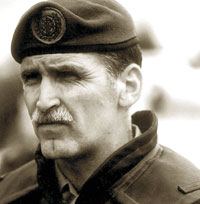
Samantha Power—now U.S. Ambassador to the United Nations—reports a
remarkable exchange between Roméo Dallaire, force commander of the
painfully reduced UN peacekeeping mission in Rwanda during the 1994
genocide, and a U.S. military officer. On July 29, 1994 President Bill
Clinton had ordered, with disgraceful belatedness, 200 U.S. troops to the
airport of the capital city, Kigali. Ahead of their arrival, Dallaire
reported that a U.S. military officer had called him, “wondering precisely
how many Rwandans had died” in the genocide:

Dallaire was puzzled and asked why he wanted to know: “We are doing our
calculations back here,” the U.S. officer said, “and one American casualty
is worth about 85,000 Rwandan dead.” [*footnote 94*, with further details]

[image: dallaire_200x204]
<http://sudanreeves.org/wp-content/uploads/2015/11/dallaire_200x204.jpg>

*Roméo Dallaire, commander of the UN mission in Rwanda, 1993 - 1994*

[image: 063906bbbf85208edab93050dae2c1df]
<http://sudanreeves.org/wp-content/uploads/2015/11/063906bbbf85208edab93050dae2c1df.jpg>

*As President, Bill Clinton was a significant part of the terrible
international failure to respond to the genocide that Dallaire had been
warning of for months before April 7, 1994*

“One American casualty is worth about 85,000 Rwandan dead.” This was the
calculus that prevailed in the wake of the Mogadishu (Somalia) disaster of
1993, when, during the notorious “Black Hawk Down” events of October 3 – 4,
eighteen American soldiers were killed.

But long after the painful failures of Rwanda, American political
leadership—this time in the Congress—seems to be working with the same
ghastly calculus. In the vast, 2,000-page omnibus spending bill of December
2015 <https://www.congress.gov/bill/114th-congress/house-bill/2029/text>,
much was buried in a bill largely compiled by House Speaker Paul Ryan.
There were many odious features of the bill, many shameful trade-offs and
trade-outs. But in the end, members of both the House and Senate faced an
up-or-down vote, with no possibility of amendment. There was enough in the
bill to satisfy enough members of both parties, and it passed quickly
passed and was promptly signed into law by President Obama before he headed
to Hawaii.

[image: images-1]
<http://sudanreeves.org/wp-content/uploads/2015/12/images-1.jpg>

*House Speaker Paul Ryan, chief architect of the omnibus spending bill that
pointedly excluded the possibility of restitution for Sudanese harmed by
BNP Paribas' criminal financial assistance to the Khartoum regime*

It took some time for journalists to isolate what they thought were the
most egregious provisions of the bill, although liberal and conservative
pundits were soon creating idiosyncratic “top ten lists.” But receiving
very little attention were the sections of the bill that dealt with various
restitution monies, present and future, that will be controlled by the
Department of Justice (DOJ) (Sections 404 and 405). These had particular
implications for the conviction of French banking giant BNP Paribas (BNPP)
for criminal financial abuses of the American financial system (indeed,
BNPP is explicitly referred to in Section 405). In May of this year, BNPP
was ordered to pay almost $9 billion in forfeitures and fines
<http://www.justice.gov/opa/pr/bnp-paribas-sentenced-conspiring-violate-international-emergency-economic-powers-act-and>—of
which DOJ set aside $3.8 billion as a restitution fund for those “harmed”
by BNPP’s financial crimes.

[image: 750x-1]
<http://sudanreeves.org/wp-content/uploads/2015/12/750x-1.jpg>

*CEO of BNP Paribas, Jean-Laurent Bonnafé*

Since the bank’s criminal actions had benefited primarily the National
Islamic Front/National Congress Party regime in Khartoum (Sudan)—at least
within the “window” defined by the facts as presented by DOJ in the BNPP
case (2002 – 2008)—I and others felt that some significant portion of these
monies should benefit Sudanese so clearly harmed, and still harmed, by the
financial and economic benefits that accrued to this brutal regime (some 72
percent of BNPP’s criminal financial activity benefited Khartoum, most of
the rest benefited Cuba—no longer on the U.S. list of “State Sponsors of
Terrorism,” as Sudan very much is). Notably, an arrest warrant has been
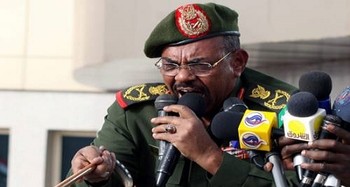
issued by the International Criminal Court charging President Omar
al-Bashir with genocide—the crime that the U.S. seemed so unwilling to
confront in 1994.

[image: 54f109848b172]
<http://sudanreeves.org/wp-content/uploads/2015/08/54f109848b172.jpeg>

*Khartoum's génocidaire-in-chief, Omar al-Bashir*

I argued the case for Sudanese restitution in the *New York Times* (July
14, 2015
<http://www.nytimes.com/2015/07/15/opinion/a-better-restitution-for-darfur.html?_r=0>),
shortly after the final disposition of the case by U.S. District Court
Judge Lorna Schofield in May of this year. Sudanese in many regions of the
country—including what is now South Sudan, as well as more than half a
million refugees in neighboring countries—have been on the terrible
receiving end of the military acquisitions enabled in significant part by
BNPP’s criminal actions on behalf of a regime distinguished by an utterly
ruthless survivalism.

In retrospect, however, I fear that my efforts and those of my colleague
Eric Cohen in putting forward a plan for Sudan Community Compensation
<http://sudancommunitycompensation.org/> only spurred American litigators
and their lobbyists to accelerate their own plans for the restitution
monies—from BNPP and other similar convictions. And clearly they were
successful, for the bill provides explicitly that *no* money be provided
under the terms set out by the DOJ (i.e., to those actually “harmed” by
BNPP’s criminal financial activity); *all *money will go to Americans and
their families harmed during past or future terrorist attacks. The bill
even goes so far as to stipulate that lawyers will get “no more” than 25
percent of fees for litigation on behalf of their clients (i.e., “no more”
than approximately $1 billion in the case of BNPP—hardly small change, even
for big-time litigators). Nothing will go to the actual victims of the vast
majority of BNPP’s criminal actions, the people of greater Sudan, despite
predictably very strong support for our proposal by Sudanese around the
world <http://sudancommunitycompensation.org/statements-of-support/>.

In other words, it doesn’t matter whether the terrorist acts for which
American individuals and their families are to receive restitution occurred
within the relevant window of criminal activity: again, for BNPP and its
support of the genocidal regime in Khartoum, that means 2002 – 2008. It
doesn’t matter that Americans weren’t the victims of BNPP’s crimes: again,
these victims where overwhelmingly Sudanese, who continue to suffer from
the profligate military and security spending by the Khartoum regime on its
genocidal counter-insurgency efforts. None of this matters under the terms
of the bill, which in its omnibus nature and wildly diverse provisions—with
no chance for amendment—is a conspicuous example of how undemocratic
legislation in this country has become, and how insidious the influence of
special interests and their lobbyists has become. Former Congressional
practices for securing “pork” and adding special interest provisions to
bills have now been raised to a high art.

And in the process, the ability of those who would make their case
democratically, appealing to large non-Congressional constituencies, has
been dramatically reduced. Arguing for the significance of the “harm” done
to Sudanese—millions of whom are in need of critical humanitarian
assistance—doesn’t have a chance. Indeed, many members of Congress had only
a vague idea of many provisions in the omnibus bill—or no knowledge at all
until presented with what was essentially a legislative *fait accompli*.

The omnibus bill gave Americans no chance to hear further our case on
behalf of the Sudanese—certainly no chance to suggest that a provision
benefiting exclusively a few hundred Americans might be unfair, given the
many hundreds of thousands who have died in ongoing genocidal conflict in
the Darfur, South Kordofan, and Blue Nile regions of Sudan. We were
effectively denied the possibility of arguing that those who had suffered
grievous harm, clearly as a result of BNPP’s criminal activity, deserved at
least a significant portion of the $3.8 in restitution monies, set aside *as
such *by the Justice Department, in the form of community-based
humanitarian relief and development aid to millions of desperate Sudanese.

[image: NEW idp zamzam]
<http://sudanreeves.org/wp-content/uploads/2015/06/NEW-idp-zamzam.jpeg>

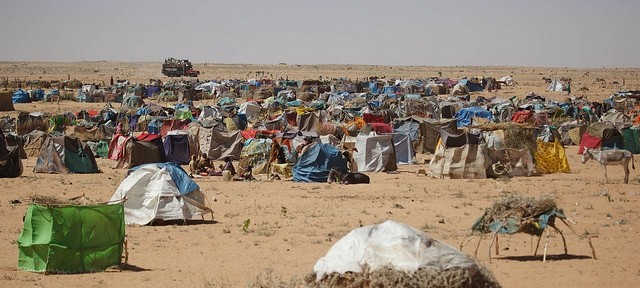
*Some of the more than three million people in Darfur who have been
internally displaced or forced into eastern Chad as refugees; more than
500,000 people have died in the genocidal violence that began in 2003
<http://sudanreeves.org/2010/08/07/quantifying-genocide-darfur-mortality-update-august-6-2010/>*

In effect, we found ourselves facing another version of the question that
was put to Dallaire in Rwanda in 1994: “How many Sudanese have died, or
face the threat of dying?” But in the calculus of the omnibus spending
bill, the answer wasn’t even that “one American casualty is worth about
85,000 Sudanese dead.” Although many hundreds of thousands have died or are
poised to die, the American response this time was “it doesn’t matter how
many have died or are at risk: *all *restitution monies will go to American
individuals and their families who are victims terrorist attacks.”

[image: rwanda_genocide_1994_-_15]
<http://sudanreeves.org/wp-content/uploads/2015/12/rwanda_genocide_1994_-_15.jpg>

*Rwandan refugees in what was the  Zaire, now Democratic Republic of Congo*

None would quarrel with the argument that restitution monies from the BNPP
and other cases should have some provisions for trying to make American
individuals and families at least financially whole again. But it also
seems to me unlikely that Americans would turn their backs entirely on the
hundreds of thousands of deaths and terrible suffering in Sudan, about
which the Obama administration for its part has been painfully silent. We
will never know how Americans might have decided: an incompetent and
undemocratic Congress has decided for us.

[*Eric Reeves*, a professor at Smith College, has published extensively on
Sudan, nationally and internationally, for the past seventeen years. He is
author of *Compromising with Evil: An archival history of greater Sudan,
2007 – 2012* (September 2012)]
--

Eric Reeves
Smith College

Northampton, MA  01063

[email protected]

www.sudanreeves.org

Twitter@SudanReeves


All woodturning purchases benefit the work of Oxfam in Sudan and South Sudan

https://www.etsy.com/shop/EricReevesWoodturner

--
To post to this group, send email to [email protected]
To unsubscribe from this group, send email to
[email protected]
Visit this group at https://groups.google.com/d/forum/southsudankob
View this message at
https://groups.google.com/d/msg/southsudankob/topic-id/message-id
For more options, visit https://groups.google.com/d/optout
---
You received this message because you are subscribed to the Google Groups
"South Sudan Info - The Kob" group.
To unsubscribe from this group and stop receiving emails from it, send an email
to [email protected].
To post to this group, send email to [email protected].
Visit this group at https://groups.google.com/group/SouthSudanKob.
To view this discussion on the web visit
https://groups.google.com/d/msgid/SouthSudanKob/CAJb14oq%3DEFaD6zHuXOfFjgYMOkKoR4u2X3xRpMZCBquoq_DGYQ%40mail.gmail.com.
For more options, visit https://groups.google.com/d/optout.