---------- Forwarded message ----------
From: Eric Reeves <[email protected]>
Date: Fri, Jul 22, 2016 at 5:24 AM
Subject: State Department Dishonesty and Incompetence on Sudan: Sometimes
Indistinguishable, Always Consequential
To: Eric Reeves <[email protected]>
*State Department Dishonesty and Incompetence on Sudan: Sometimes
Indistinguishable, Always Consequential*

Eric Reeves  |  July 21, 2016  |  http://wp.me/p45rOG-1UZ                 .

The legacy of incompetence and dishonesty on the part of President Obama’s
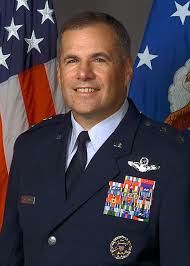
first choice as *Special Envoy for Sudan, Air Force Major-General (retired)
Scott Gration*, lives on. Moreover, that legacy has recently been extended
to reveal* U.S. State Department *contempt for those seeking to inquire
about the nature and motivations of the Obama administration’s review of
U.S. policy toward Sudan during Gration's first year. I offer here a
summary of the nature and consequences of policies unarticulated publicly,
but clearly implicit in the aftermath of the *Sudan Policy Review of 2009,
August 2009 – December 2011.*

[image: imgres]
<http://sudanreeves.org/wp-content/uploads/2015/01/imgres1.jpg>

*Air Force Major-General (retired) Scott Gration, President Obama's first
Special Envoy for Sudan*

But first a remarkable report. On July 7, 2016
<https://nsarchive.wordpress.com/2016/07/07/existence-of-secret-sudan-annex-archive-was-fishing-around-for-revealed-after-six-year-delay/>
, *Unredacted: The National Security Archive, Unedited and Uncensored* provided
us with several notable facts about an “*Annex*” to this *2009 Sudan Policy
Review*, the final document prepared by the Obama administration State
Department—with what must have been immense, if unreported, pressure from
the U.S. military and intelligence communities.

*[1]* Even though then-*Secretary of State Hillary Clinton declared in
October 2009* that there *was *“a classified annex to our strategy” (the *Sudan
Policy Review*), *Special Envoy* *Gration *declared in* Congressional
testimony of December 2009* that “*there is no Annex*.” The question of
whether there was or was not an Annex has been settled definitively this
month with the report from *Unredacted, *which has released the* Annex*. To
be sure, the document’s *contents* were completely redacted; but the
heading of the document includes the words:

*ATTACHMENTS*:

   1. Incentives and Disincentives
   2. Internal and External Stakeholders and points of leverage

*Annex 1*

[image: incentives]
<http://sudanreeves.org/wp-content/uploads/2016/07/incentives.png>

*Click on document to enlarge*

The document was released to *Unredacted *and the “Genocide Documentation
Center” only *six years* after a Freedom of Information Act (FOIA) request
from Rebecca Hamilton, a Harvard-trained lawyer now on the faculty at
American University, where she teaches teaching national security law and
international law.

So, why the delay in releasing a document completely redacted except for
its heading and the State Department case number?

The *Sudan Policy Review document* was produced at a critical time, with
the transition from the Bush administration to an Obama administration that
saw Sudan in rather different ways. And one thing was clear from the
appointment of *Gration*: President Obama was content to appoint an
untrained political supporter from the 2008 presidential campaign to
perhaps the most difficult special envoy’s job in the world; Obama did so
despite the fact that Gration had no diplomatic experience, had only the
crudest knowledge of Sudan and the Khartoum regime, and spoke no relevant
language (notably Arabic). It was widely known that Gration coveted the
ambassadorship in Nairobi, which he received after an immensely destructive
two-year stint as Sudan special envoy.

What to make of the fact that Gration lied to the Congress about the
existence of an “*Annex*” to the *Sudan Policy Review*? And why such a
stupid lie, given Secretary of State Clinton’s earlier admission that there
*was* a classified “Annex”? Did Gration simply believe the existence of the
document would never be released to contradict his claim? Was he ignorant
of possibility that it would eventually be released, at least in name,
through a FOIA request? Although there was never any doubt about Gration’s
incompetence, his ignorance, or his lack of familiarity with diplomatic
protocol—including the particular authority of statements by the U.S.
Secretary of State—this lie made no sense.

And yet dutifully that State Department sprang into action, making sure
that Professor Hamilton would not receive even a completely redacted text,
if that text revealed what Clinton had already admitted: there *was* a
classified *Annex*. Was this to protect Gration? Was it an effort to
conceal the fact that a great deal of the U.S. Sudan policy review was far
from publicly articulated? The headings to the *Annex* certainly suggests
as much. Did State Department behavior reflect lingering hostility toward
the American civil society movement to halt genocide in Darfur—an effort in
which Professor Hamilton was a prominent participant?

The clearest evidence we have comes in the form of a *June 25, 2012 “email
alert,”* the document with which the *Unredacted* article begins. The email
came from *Jonathan P. Lalley, special assistant to the State Department
spokesman*. It is blunt and unambiguous, with the header “Bec Hamilton
fishing on 2009 policy review.” Among the recipients, in addition of the
general Sudan policy audience (S-USSESSS-Internal) is Princeton Lyman, the
man who succeeded Gration as special envoy for the Sudans (by this point,
South Sudan was an independent country); a partially redacted name also
appears: [TBradsher…..]. Lalley’s intention is clearly to put obstacles in
the way of Hamilton’s research:

Team S/USSES – Bec Hamilton is fishing around on a piece we may expect she
may publish on/about July 9 *[2012—i.e., one year after Southern
independence—ER]. *If she comes to you direct asking about an alleged
classified annex to the Sudan strategy that resulted from the 2009 review
process, please know that both PA and NSS *[National Security Strategy*
<http://nssarchive.us/> *Archive[?]—ER*] have already responded *[to
Hamilton:] *“we have nothing for you.” Please flag for us if she reaches
out directly to S/USSES. Many thanks, JL

[image: nocomment]
<http://sudanreeves.org/wp-content/uploads/2016/07/nocomment.png>

*Click on document to enlarge*

[released January 13, 2016—three and a half years after its composition and
distribution, and six years after Hamilton’s original FOIA request for the
“Annex.”

Of course there is deliberate ambiguity in the response, for “we have
nothing for you” can mean:

*[1]* There is nothing in our archives that matches your request;

*[2]* There is nothing in our archives that matches your request except a
classified document.

The point of course was to suggest the first when in fact the second was
true. But by citing this ambiguous response as a guideline for others who
might be contacted by the “fishing” Hamilton, all receiving Lalley’s email
would understand that they were to replicate this ambiguous statement:
“There is nothing in our archives that matches your request,”—this despite
the fact that most if not all of those receiving the email knew that a
classified “Annex” did in fact exist.
*Obama Administration dishonesty on Sudan*

I wrote this earlier this month a piece that assessed the remarkable
patterns of dishonesty within the Obama administration when it comes to
Sudan:

*“Why Can’t the Obama Administration Speak Honestly About Sudan?”*

*Huffington Post*, July 5, 2016
<http://www.huffingtonpost.com/eric-reeves/why-cant-the-obama-admini_b_10773884.html>

*Sudan Tribune*, July 5, 2016
<http://www.sudantribune.com/spip.php?article59526>

http://wp.me/p45rOG-1Uq

Special Assistant Lalley makes his own pusillanimous contribution to this
pattern of dishonesty, but there were clearly reasons that the State
Department was so eager to keep even knowledge of the *Annex* from
Professor Hamilton. Perhaps one was to protect Gration from his lie to the
Congress in December 2009—his declaration that there “was no Annex.” But
Gration’s stupidity and incompetence were certainly well recognized by June
2012, and he was U.S. Ambassador in Nairobi by this time (a position from
which he would be removed for reasons of incompetence by the State
Department in less than a year). There would have been exceedingly little
incentive to protect him from his deception of Congress, particularly since
his lie stood in direct contradiction with Secretary of State Clinton’s
earlier admission that there *was* an *Annex*.

*The upshot?*

In the absence of anything but a key document whose contents have been full
redacted, we must infer the contents of the *Annex* from the statements and
actions of the Obama administration subsequent to the Sudan Policy Review,
during the tenures of both Gration and Lyman—and continuing to the present.
We know that in August and September 2009 there were heated debates within
the Obama administration about Sudan policy, pitting in particular Gration
against Susan Rice, former Assistant Secretary of State for African Affairs
and then U.S. Ambassador to the UN. Others in the administration also took
sides.  <http://content.time.com/time/world/article/0,8599,1931658,00.html>Rice
knew Sudan and Khartoum exceedingly well, and was, by all accounts reaching
me, aghast at the naiveté and foolishness of Gration’s vision of a new
Obama administration Sudan policy. She was joined in her opposition to
Gration’s policy vision by Samantha Power, who knew a good deal about
Darfur and the character of the Khartoum regime (she has of course replaced
Rice at the UN, even as Rice herself is now National Security Advisor to
Obama).

Much of what made up the substance of the debate surely concerned
Khartoum’s role in providing counter-terrorism intelligence as a means of
generating a reciprocal lifting of U.S. economic and financial sanctions,
as well as removal from the U.S. State Department list of “State Sponsors
of Terrorism” (a list on which the Khartoum regime remains, joined only by
Iran and Syria). It is almost certainly the discussion of terrorism and
counter-terrorism intelligence that dictated the “classified” designation
for the *Annex*.
*Khartoum, Terrorism, Counter-terrorism Intelligence: the Obama
Administration view*

Gration notoriously claimed in Senate testimony (July 2009) that there was
no evidence that Sudan should be kept on the list of State Sponsors of
Terrorism—and further, that the decision to do so was purely “political.”
This was a claim thoroughly belied by the contents of the State
Department’s own published reports, as well as a vast amount of information
available from other sources. In Senate testimony of July 30, 2009, Gration
declared:

"There's no evidence in our intelligence community that supports [Sudan]
being on the state sponsors of terrorism. It's a political decision,"
Gration said. He also said the [the U.S. economic] sanctions are getting in
the way of development work, particularly in southern Sudan, which is still
recovering from a long civil war." *[*(
http://www.npr.org/templates/story/story.php?storyId=111422940/; *Gration
was an early and enthusiastic supporter of Khartoum’s plan to compel
international relief organizations to convert their missions to focus on
development—this as a prelude to a forced emptying of the camps for
displaced persons. For a detailed overview of what was called at the time
Khartoum’s “New Strategy for Darfur,” see here
<https://www.dissentmagazine.org/online_articles/accommodating-genocide-the-international-response-to-khartoums-new-strategy-for-darfur>—ER;
my commentary is always in blue italics, followed by my initials]*

And yet the 2010 U.S. State Department characterization of Khartoum on the
issue of state support for terrorism
<http://www.state.gov/j/ct/rls/crt/2010/170260.htm> includes the following
excerpts (from the year 2009, when Gration testified to the Senate).
Although the report begins with expedient words of praise, much is
disturbing—and remains so to this day. (See also my extended survey of
evidence and reports that were ignored by the State Department: "The Obama
Administration, Terrorism, and Hypocrisy," *Sudan Tribune*, 6 May 2014 |
http://wp.me/p45rOG-1i8/.)

*[E]lements of designated Foreign Terrorist Organizations, including
al-Qa’ida-inspired terrorists, remained in Sudan*, as gaps remained in the
Sudanese government’s knowledge of and ability to identify and capture
these individuals as well as prevent them from exploiting the territory for
smuggling activities. *[These putative “gaps” in intelligence are highly
dubious—see minutes of August 31, 2014 meeting of senior security and
military officials in Khartoum—Appendix A—ER] *Some evidence suggested that
individuals who actively participated in the Iraqi insurgency have returned
to Sudan, and may be in a position to use their expertise to conduct
attacks within Sudan or to pass on their knowledge.* Sudanese officials
continued to view Hamas members as representatives of the Palestinian
Authority. Hamas members conducted fundraising in Sudan, and Palestine
Islamic Jihad (PIJ) maintained a presence in Sudan. **[All emphases in *
*bold** in all quotes have been added—ER]*

*The Lord's Resistance Army (LRA) continued to operate in the region,* though
there was no reliable information that corroborated allegations that the
Government of Sudan provided support to the LRA. Operating in small cells,
the LRA carried out attacks in areas where the borders of the Democratic
Republic of the Congo, Central African Republic, and Southern Sudan
intersect. The UN estimated that in 2010, LRA attacks displaced 25,000
southern Sudanese. In October, the African Union (AU) announced that
Uganda, Sudan, the Democratic Republic of the Congo and the Central African
Republic will form an AU-backed joint brigade to pursue the LRA. *[Over the
years there has in fact been a tremendous amount of information about
Khartoum’s support for the LRA as a proxy force threatening Ugandan
President Museveni; current reports place some of the remnants of the LRA
in the Kafia Kingi enclave—part of South Sudan, but claimed by Khartoum
despite the clear evidence of the 1956 map meant to serve authoritatively
for border delineation—ER]*

*Countering Terrorist Finance: *The Central Bank of Sudan and its financial
intelligence unit circulated to financial institutions a list of
individuals and entities that have been included on the UN 1267 al-Qa’ida
and Taliban sanctions committee's Consolidated List. Through increasing
cooperation with the Financial Action Task Force (FATF), Sudan took steps
in 2010 to meet international standards in combating money laundering and
terrorist financing. The most significant achievement was passage of the
Money Laundering and Terrorism Financing Act of 2010, approved by the
Council of Ministers in January 2010 and ratified by Parliament in June
2010. *Sudan continued its cooperation with the U.S. government in
investigating financial crimes related to terrorism.* *[The U.S. conviction
of French banking giant BNP Paribas on massive violations of U.S. financial
law in assisting Sudan and Iran make nonsense of this claim—ER]*

*Regional and International Cooperation: *Sudanese officials regularly
discussed counterterrorism issues with U.S. counterparts. Sudan was
generally responsive to the international community’s concerns on terrorism
and was generally supportive of international counterterrorism efforts. *[This
was a wholly tendentious claim, and thoroughly belied by the contents of
the August 31, 2014 minutes referenced below—ER]*

Gration’s Senate testimony was either supremely ill-informed or, much more
likely in this case, simply mendacity put in service of his vision of how
Khartoum should be regarded by U.S. policy-makers.

What is notable even in more recent reports from the State Department on
its list of State Sponsors of Terrorism, is that they make no mention of
the leaked minutes of a meeting held on August 31, 2014
<http://sudanreeves.org/2014/10/22/new-and-exceedingly-accurate-translation-into-e/>,
with the regime’s most senior military and security officials engaged in
wide-ranging discussions of support for Radical Islam. The State Department
knows the document containing the minutes is authentic; indeed, a highly
informed official in the State Department confirmed this to me directly.
Some of the excerpts from these minutes would have served as substantial
supplements to what the State Sponsors of Terrorism report so tersely notes
(they appear here as *Appendix A*).

Why was U.S. intelligence unaware of these views, articulated so clearly in
the minutes? Was it indeed unaware? The U.S. has had no ambassador to
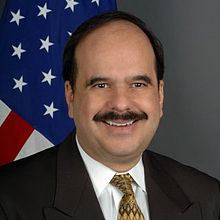
Khartoum for many years, but the *Charge d’Affaires until May 2009 was
Alberto Gonzalez*, a man whose later career included a three-year
stint as “*Coordinator
for Strategic Counterterrorism Communications in the State Departmen*t”
(March 2012 – February 2015). Did he brief Gration? Are his views reflected
in Gration’s conclusion that “There's no evidence in our intelligence
community that supports [Sudan] being on the state sponsors of terrorism”?
Gonzalez’s views on the value of Khartoum’s contributions to
counter-terrorism would certainly have had considerable weight, give his
position as charge d’affaires until May 2009; he may have been instrumental
in skewing the Obama administration’s Sudan policy in ways that ignored
ongoing genocide in Darfur (see http://wp.me/p45rOG-GT/).

[image: 220px-Alberto_M_Fernandez_ambassador]
<http://sudanreeves.org/wp-content/uploads/2016/07/220px-Alberto_M_Fernandez_ambassador.jpg>

*Former U.S. Charge d'Affaires in Khartoum, Alberto Fernandez *

Notably, the same month that Fernandez left his post in Khartoum, Russ
Feingold—the widely respected Senator from Wisconsin who served then as a
member of the Senate Intelligence Committee as well as chair of the Africa
subcommittee of the Senate Foreign Relations Committee—issued a blunt
critique of the Obama administration’s first State Department report on
terrorism in Sudan:

"I take serious issue with the way the report [on international terrorism
by the U.S. State Department] overstates the level of cooperation in our
counterterrorism relationship with Sudan, a nation which the U.S.
classifies as a state sponsor of terrorism. *A more accurate assessment is
important not only for effectively countering terrorism in the region, but
as part of a review of our overall policy toward Sudan*, including U.S.
pressure to address the ongoing crisis in Darfur and maintain the fragile
peace between the North and the South." (*emphasis added*)  (Statement by
Senator Russell Feingold
<http://abcnews.go.com/Politics/Sudan/story?id=7649377&page=1>, Chair of
the Africa Subcommittee of the Senate Foreign Relations Committee and
member of the Senate Intelligence Committee, May 1, 2009)

[image: MIDDLETON, WI - NOVEMBER 2: Senator Russ
Feingold...........Republican candidate Ron Johnson at Feingolds election
night headquarters in Middleton Wis. Tuesday, Nov. 2, 2010. (Photo by
Darren Hauck/Getty Images)]
<http://sudanreeves.org/wp-content/uploads/2016/05/GettyImages-1064637321.jpg>

*Former Senator Russ Feingold*

I recently (May 24, 2016 <http://wp.me/p45rOG-1To>) offered a detailed
retrospective on the impact of assessments and decisions made in 2009 by
the Obama administration and what seems clearly to have been the triumph of
those who would value counter-terrorism intelligence over the lives of
millions of Sudanese at acute risk of violence and extreme privation
engineered by the Khartoum regime that notionally provides this
intelligence.

The consequences of this critical policy decision were soon evident—and
they often revealed breathtaking expediency.  In *November 2010*, for
example, the administration declared it was *"de-coupling" Darfur* from
discussions with the Khartoum regime on the issue that matters most to
these *génocidaires*, namely their presence on the U.S. State Department
list of terrorism-sponsoring nations. A “senior administration official”
(according to a State Department transcript of a background briefing)
declared that
<http://geneva.usmission.gov/2010/11/09/senior-administration-officials-on-developments-in-sudan/>
:

" ... the U.S. was prepared to accelerate the removal of Sudan from the
state sponsor of terrorism list if the Government of Sudan did two things.
One is to fully implement the Comprehensive Peace Agreement, and two, to
live up to all of the legal conditions required under law for Sudan to be
taken off the state sponsors list. *By doing this, we would also be
de-coupling the state sponsor of terrorism from Darfur and from the Darfur
issue*."

This “de-coupling” of Darfur, even on the terms stipulated by the “senior
administration official, represented a cynical, expedient betrayal of Obama’s
unctuous campaign rhetoric about Darfur in 2007, 2008
<http://www.bing.com/videos/search?q=youtube+obama+darfur+2007+save+darfur&view=detail&mid=A6443B49E5C952E45911A6443B49E5C952E45911&FORM=VIRE>
.

[image: Screen Shot 2015-11-16 at 2.01.53 PM]
<http://sudanreeves.org/wp-content/uploads/2015/11/Screen-Shot-2015-11-16-at-2.01.53-PM.jpg>

*Candidate and soon to be President Obama*

But this was far from the only such moment: excessive and misconceived
pressure on the Government of South Sudan to “compromise” further over
Abyei would follow (October 2010 – January 2012. This culminated in the
almost total failure to warn off or condemn the Khartoum regime for its
military seizure of Abyei on May 20 – 21, 2011, a gross contravention of
the Abyei Protocol of the 2005 Comprehensive Peace Agreement.

Similar failures of anticipation and condemnation characterized the Obama
administration during the military assault on the African people of *South
Kordofan (June 5, 2011)* and *Blue Nile State (August 31, 2011).* The Obama
administration also welcomed the diplomatic disaster known as the *“Doha
Document for Peace in Darfur” *(DDPD) (signed by the Khartoum regime a few
small splinter groups in* July 2011)*.

The DDPD enjoyed no support from Darfuri civil society (which was
effectively excluded from the negotiations in Qatar) or the major rebel
military organizations. Obama administration support for the DDPD prevented
any real diplomatic alternative from emerging. Khartoum continues to cleave
to the DDPD as the only basis for “negotiations,” in effect say no
significant issue is to be re-opened for discussion. The U.S. State
Department now admits the pushing the DDPD is flogging a dead diplomatic
horse. But no real commitment has been made to start an alternative set of
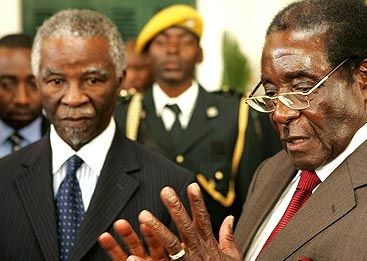
negotiations, with real U.S. buy-in. Instead, Thabo Mbeki and his
pathetically entitled African Union High-Level Implementation Panel
(“implementation” of a merely notional “roadmap for peace in Darfur”),
cobbled together by Mbeki in 2009—seven years ago). Mbeki’s failures on the
various Sudan files he has been handed have been serial.

[image: mbekimugabe10a]
<http://sudanreeves.org/wp-content/uploads/2015/05/mbekimugabe10a.jpg>

*Thabo Mbeki with his thuggish pal, Zimbabwe's Robert Mugabe*

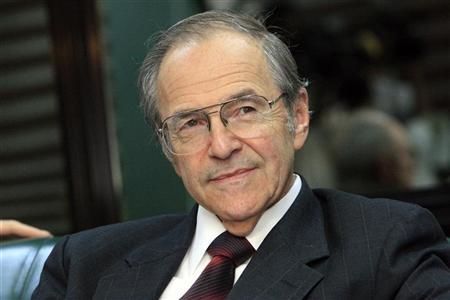
The most conspicuous moment of Obama administration accommodation of
Khartoum came in December 2011 when then Special Envoy Princeton Lyman made
clear the framework for the administration’s attitude toward the Khartoum
regime, a policy statement that remains in effect to this day. I have cited
it many times in previous analyses, but it is so shocking in its
disingenuous that it must be repeated yet again:

"Frankly, we do not want to see the ouster of the [Sudanese] regime, nor
regime change. We want to see the regime carrying out reform via
constitutional democratic measures." (Princeton Lyman’s response to a
question by the respected Arabic news outlet *Asharq Al-Awsat* concerning
Sudan and the "Arab Spring," December 3, 2011)

[image: Lyman_sudan]
<http://sudanreeves.org/wp-content/uploads/2015/03/Lyman_sudan1.jpg>

*Princeton Lyman, President Obama's second Special Envoy for the Sudans*

So long as U.S. Sudan policy is guided by the almost inconceivably
preposterous assumption that the present Khartoum regime can “carry out
reform via constitutional democratic measures,” it is caught in a hopeless
bind. While unable to lift economic sanctions for political reasons—after
all, genocidal counter-insurgencies by Khartoum continue in Darfur, Blue
Nile, and South Kordofan, while the Abyei region is being completely
absorbed into Sudan, in direct contravention of the Comprehensive Peace
Agreement (2005)—Obama administration diplomatic policy continues to run
its course of appeasement. The net effect is to weaken the Sudanese economy
(the Sudanese Pound reached an all-time low on July 21, 2016—
<https://www.dabangasudan.org/en/all-news/article/sudanese-pound-hits-record-low-against-us-dollar>a
clear sign that a disastrous lack of Forex with which to buy imports,
including food and cooking oil, is crushing the Sudanese economy), even as
the Khartoum regime believes that with its various and absurd posturings
about a “National Dialogue” it is satisfying Obama administration—and
European—diplomatic demands.

So the suffering of millions of people is perpetuated by the incoherence of
Obama administration Sudan policy. The  debate won by Gration and company
in 2009 continues to be unfathomably costly.
*Appendix A*:

Herewith are excerpts from the leaked minutes of the August 31, 2014 meeting
<http://sudanreeves.org/2014/10/22/new-and-exceedingly-accurate-translation-into-e/>
of
senior military and security officials of the Khartoum regime, bearing in
one way or another on the provision of *counter-terrorism intelligence*, as
well as Khartoum’s commitment to support the *Sudan People’s Liberation
Army/In Opposition.* Notably, the comments recorded in the minutes precede
the economically-dictated break with Iran as Khartoum’s “strategic
partner,” a phrase that appears with “Iran” as a virtual refrain in the
minutes. Rapprochement with Saudi Arabia and the Gulf States in desperate
hopes of loans and investment is now the dominant element of Khartoum’s
regional policy.

This said, here are the comments of *General Siddiq Amer, Director General
of Intelligence and Security are typical of what appears in these minutes
on this score:*

My comment concerns our relationship with Saudi Arabia and Emirates on one
side and Iran on the other side. *We are capable of misleading the Gulf
States by taking open, declared steps and procedures towards improving
diplomatic relations with them*. They are backed by the Americans and
Israel and have concerns regarding our relationship with Iran; that
relationship is beneficial to us because Iran is our biggest *ally in the
region, in terms of the cooperation in the areas of intelligence* and
military industrial production. *We have relations with all the Islamic
Movements world-wide and we represent a door for Iran to all these Islamic
groups.*

*General Amer *went on to say,

I think we should improve the relation with the Saudis and benefit from
them, but it must be clear that, they are not trustworthy. *At the same
time we maintain our strategic relationship with Iran.*

And in one of the most remarkable moments in the minutes, the General goes
on to speak about the nature of counter-insurgency in the Nuba Mountains, a
kind of “domestic terrorism”:

This year the Sudan People’s Army (SPLA) managed to cultivate large areas
in South Kordofan State*. We must not allow them to harvest these crops.
Good harvest means supplies for the war effort*. *We must starve them*, so
that, commanders and civilians desert them and then we can recruit the
deserters to use them in the war to defeat the rebels. *[Of course the
crops are grown by civilians, and are used to feed the civilian population
in South Kordofan; the destruction of a bumper crop of sorghum would
greatly exacerbate in the extreme an already severe problems in
malnutrition—ER]*
*[1] The issue of terrorism and counter-terrorism intelligence*

*General Abd al-Rahim Mohammed Hussein, Minister of Defense:*

*America is facing the crisis of the ISIS and the other Jihadist
movements* that
are newly formed and *can move freely outside the traditional surveillance
networks*. Currently, there are twenty thousand (20,000) Jihadists and
fifteen (15) newly formed Jihadist Movements who are scattered all over,
from Morocco to Egypt, Sinai, Palestine, Lebanon, Iraq, all the Gulf
States, a wide presence in Africa and Europe and *nobody owns a data-base
on that as the one we have.* *We release only limited information to the
Americans* according to request, and the price is the armed movements file.
The coming days carry a lot of surprises. *[These hardly sound like the
words of a willing participant in the sharing of counter-terrorism
intelligence—ER]*

[image: page 27 8.13.15 PM]
<http://sudanreeves.org/wp-content/uploads/2014/10/page-27-8.13.15-PM.jpg>

*General Abd al-Rahim Mohammed Hussein, formerMinister of Defense*

*General Mohammed Atta, Director General of NISS:*

*With the appearance of ISIS, Europe and America must cooperate with us for
combating terrorism.* This is where we can bargain the Sudan Revolutionary
Front case. *[There could hardly be a clearer case of what amounts to
diplomatic blackmail—ER]*

*General Yehya Mohammed Kheir, Minister of State for Defense:*

The Gulf States have only very weak information about the terrorist groups
that are based in Libya, Somalia, Nigeria, Mali, North Africa Arab
Countries and Afghanistan, because there is a lot of tension in their
relations with these radical groups. *They want us to cooperate with them
in the war against terrorism, because the radical groups constitute a
direct threat to them. Their relation with ISIS, Nusra Front, Muslim
Brothers and Palestine Islamic Movement is even weaker.* *We will not
sacrifice our relations with the Islamists* and Iran for a relationship
with the Saudis and the Gulf States. What is possible is a relationship
that serves our mutual economic interests in terms of investment and
employment. *[Many of these “Islamists” are of course terrorists, as
Khartoum well knows. And again, there is a willingness to entice
cooperation and support by using the “withholding of counter-terrorism
intelligence” as a bargaining chip—ER]*

*General Abd al-Qadir Mohammed Zeen, National Service Coordinator:*

On the other hand, *our relationship with Iran is linked to our
relationship with the Muslim Brotherhood International Organization*.
Accordingly, we must consult with Iran and the rest of our Islamist group,
before taking any step in this regard, specially that the relationship with
the Saudi Arabian Kingdom is not guaranteed*, despite their knowledge that
we are in a position to threaten their rule.*

*The Egyptians have no choice but to establish special relations with us,
given the victory of the Islamists in the battle for Tripoli despite
Egyptian support to Gen. Haftar and the air strikes which failed to achieve
their goals.* These are useful cards in hand and we should use them
properly. *[In Libya Khartoum has supported the radical Islamist group
Libya Dawn, which has committed many atrocities and may well be involved in
terrorist acts in Libya—ER]*

*General Al-Rashiid Faqiri, Director of National Security:*

*All the embassies and chanceries in Khartoum are infiltrated* and our
elements report to us who goes in or out. *[A remarkable declaration—ER]*

*General Siddiq Amer, Director General of Intelligence and Security:*

Currently, the Arab World got divided into two axis or alliances, the
Resistance axis and the Moderate axis. We must have a foot hold in both
camps. This situation became apparent when *we nominated General Mahjoub
Sharafi as ambassador to* *Cairo so he could supervise the activities of
the Islamic Movements in the Arab countries in North Africa and monitor the
Sudanese Opposition activities in Egypt.*

We have intensified the work to train and graduate [radical Islamist]
Libyan Military Intelligence cadres. Currently, they are doing an advanced
course on Internet operation, deciphering of codes, interception of
telephones and wireless radios. Their leadership requested us to train and
establish for them a strong Military Intelligence system. *[Khartoum’s
support for radical Islamists in Libya contributes significantly to the
instability of this chaotic country—ER]*

*General Imad al-Din Adawy, Chief of Joint Operations:*

*The Libyan border is totally secured, especially after the victory of our
allies (Libya Dawn Forces) in Tripoli.* *We managed to deliver to them the
weapons and military equipment donated by Qatar and Turkey and we formed a
joint operations room with them under one of the colonels in order to
coordinate and administer the military operations. Turkey and Qatar
provided us with information in favor of the revolutionaries; *this was on
top of the *information collected by our own agents so they can control the
whole countr**y.*

*Major General Hashim Abdalla Mohammed, Chief of Joint General Staff:*

We have a problem with Saudi Arabia because *they found out about the
weapons we sent by way of the Red Sea to Abd al-Malik Al-Huthi’s Shiia
group in Yemen*. *[The Huthis are Iranian-backed rebels in Yemen—ER]*
*[2] Comments made on Khartoum’s assistance to the Sudan People’s
Liberation Army/In Opposition (SPLA/IO). Insufficient credit has given by
some journalists to the import of these remarks:*

*Major General Hashim Abdalla Mohammed, Chief of Joint General Staff:*

*We must create a balance of forces in South Sudan*. *[Nothing could have
been more destructive than the creation of such a “balance of military
forces”—ER] *Riek [Machar], Taaban [Deng] and Dhieu Mathok [of the SPLA/IO]
came and *requested support in the areas of Military Intelligence and
training especially in operating tanks and artillery*. They also *requested
armaments. *They *want to be given advanced weapons.*

*Our reply was that we have no objection, provided that we agree on a
common objective. For sure we will benefit from their discourse…*

*I think any autonomy for the Greater Upper Nile is good for us in terms of
border security, oil resources and trade*. *[There could be no clearer
exposition of why Khartoum has wished to support the SPLA/IO—ER] *Now
[SPLA/IO] people are studying how to *have well-trained and equipped forces
with advanced Military Intelligence and logistic support.*

*Major General Mohammed Atta, Director General of NISS:*

*We agreed with Taaban [Deng] to establish an efficient Intelligence and
Security system to cover all their offices and the requirements of the
field.* This system will work under our supervision and *we shall analyze
and process the information for them*. The *running cost of their offices
is my personal responsibility beside the National Intelligence and Security
Services*. We pledged to provide them with full protection and security; we
were instructed to do so by the President, given Dr. Riek Machar’s visit to
Khartoum.

*General Abd al-Rahim Mohammed Hussein, Minister of Defense:*

*I met Riek, Dhieu and Taaban and they are regretting the decision to
separate the South. We decided to return his house to him. He requested our
assistance for he has shortage in the Military Intelligence, personnel,
operations command, and tank technicians. We must use the many cards we
have against the South in order to teach them a lesson they will never
forget.*

*Major General Bakri Hassan Salih, First Vice President:*

*Recognize Dr. Riek’s liaison office and all agencies are required to
provide protection and security for them.*

--

*Eric Reeves*, Senior Fellow at Harvard University’s François-Xavier
Bagnoud Center for Health and Human Rights


[email protected]

www.sudanreeves.org

Twitter@SudanReeves

About Eric Reeves: http://sudanreeves.org/about-eric-reeves

Philanthropy: goo.gl/Ii4buw

--
To post to this group, send email to [email protected]
To unsubscribe from this group, send email to
[email protected]
Visit this group at https://groups.google.com/d/forum/southsudankob
View this message at
https://groups.google.com/d/msg/southsudankob/topic-id/message-id
For more options, visit https://groups.google.com/d/optout
---
You received this message because you are subscribed to the Google Groups
"South Sudan Info - The Kob" group.
To unsubscribe from this group and stop receiving emails from it, send an email
to [email protected].
To post to this group, send email to [email protected].
Visit this group at https://groups.google.com/group/SouthSudanKob.
To view this discussion on the web visit
https://groups.google.com/d/msgid/SouthSudanKob/CAJb14opuSHv8T%2BuhafzN8MeLkNiqs8RJ%2B%3DV2QmPNR-w6%2Bgritg%40mail.gmail.com.
For more options, visit https://groups.google.com/d/optout.