---------- Forwarded message ----------
From: "Eric Reeves" <[email protected]>
Date: 8 Mar 2017 18:23
Subject: International Women's Day in Sudan: Continuing Mass Rape of Girls
in Darfur: The most heinous crime generates no international outrage
To: "Eric Reeves" <[email protected]>
Cc:
*International Women's Day in Sudan: Continuing Mass Rape of Girls in
Darfur: The most heinous crime generates no international outrage *

*Eric Reeves, author *| Maya Baca, research and editing |
http://wp.me/p45rOG-1QG *(January 2016)*

[*Arabic* *translation* of this report | http://wp.me/p45rOG-1Rr
<http://wp.me/p45rOG-1Rr> ]

[*Arabic names* for key locations on maps | http://wp.me/p45rOG-1Si
<http://wp.me/p45rOG-1Si>]

[See also *“Rape in Darfur: A History of Predation,” November 2015 | Waging
Peace* | http://sudanhr.org/blog/2015/11/19/rape-in-
darfur-a-history-of-predation-by-wagingpeace-2/ ]

Amidst the ongoing genocidal destruction of Darfur, atrocity crimes of all
sorts continue to be committed by the regular forces of the Khartoum regime
(the Sudan Armed Forces) as well as its militia allies (now primarily the
Rapid Support Forces
<https://www.hrw.org/report/2015/09/09/men-no-mercy/rapid-support-forces-attacks-against-civilians-darfur-sudan>).
These crimes are committed with complete impunity. The genocidal character
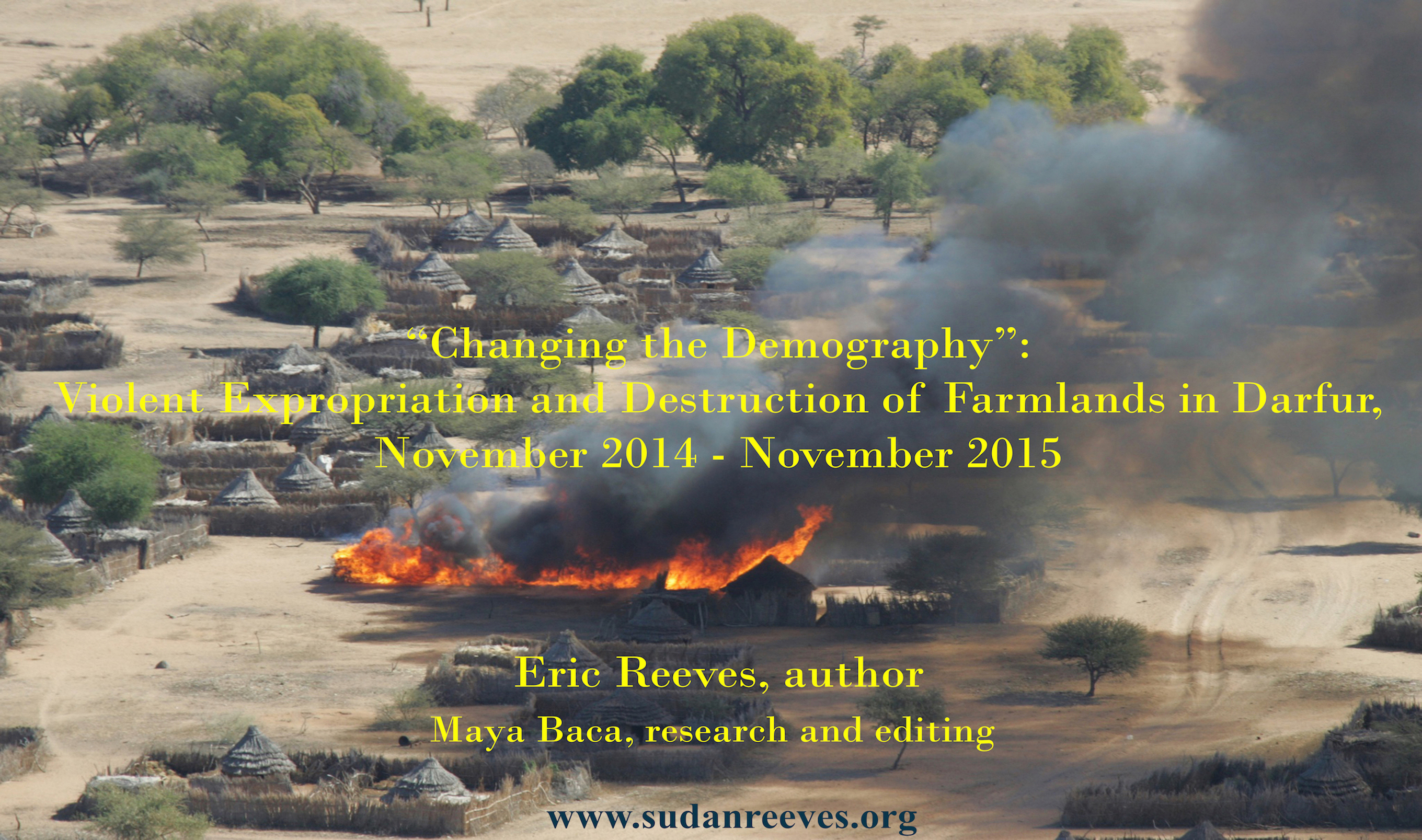
of violence in recent years is beyond reasonable dispute (see “*Changing
the Demography”: Violent Expropriation and Destruction of Farmlands in
Darfur, November 2014 – November 2015”* |* http://wp.me/p45rOG-1P4
<http://wp.me/p45rOG-1P4>*). The non-Arab or African tribal populations of
Darfur—the majority of people in the region—continue to be the intentional
targets of army and militia killings, village destruction, land
expropriation, and violent displacement.

[image: The annihilation of Darfur High Resolution]
<http://sudanreeves.org/wp-content/uploads/2015/12/The-annihilation-of-Darfur-High-Resolution1.jpg>

*They are also the targets of a campaign of rape that has marked the
genocide since the beginning of conflict in 2003.* This report provides a
statistical and analytic overview of the years *2014* and *2015*.  A *mapping
of all data for this period appears at | http://wp.me/p45rOG-1Qy
<http://wp.me/p45rOG-1Qy>*

The campaign of rape has been all too well documented (see *Appendix B* for
a bibliography of reporting going back more than a decade |
*http://sudanreeves.org/2016/01/14/7098
<http://sudanreeves.org/2016/01/14/7098>/*). Racial epithets hurled at
victims by their Arab attackers have been remarked in all of these reports,
and continue to be documented by *Radio Dabanga*, along with 2015 reports
from *Sudan Development Organization (UK),* our only meaningful sources for
information about the continuing use of rape as a weapon of war.

In contrast, the UN has repeatedly demonstrated a despicable acquiescence
in reporting on a subject that Khartoum regards with particular concern,
given the opprobrium that attaches to rape as a crime in the Arab Muslim
world.   Both dysfunctional *UNAMID* reporting from the ground and
reporting by the UN Secretariat in New York suggest how great this
acquiescence is. For example, in the first two quarterly reports by
*Secretary-General
Ban Ki-moon in 2012*, on Darfur and UNAMID, *not a single incident of rape
or sexual violence is noted*, even as rapes continued on a scale that
dwarfs all but one or two conflicts in the world today.

[image: 5639463dbb9bf]
<http://sudanreeves.org/wp-content/uploads/2015/11/5639463dbb9bf1.jpeg>

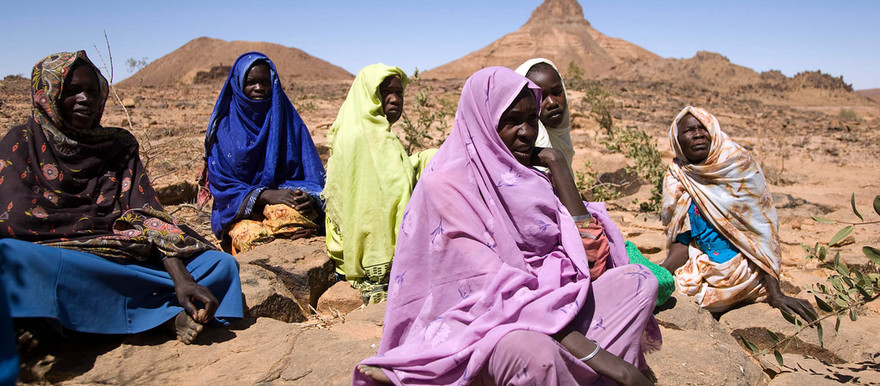
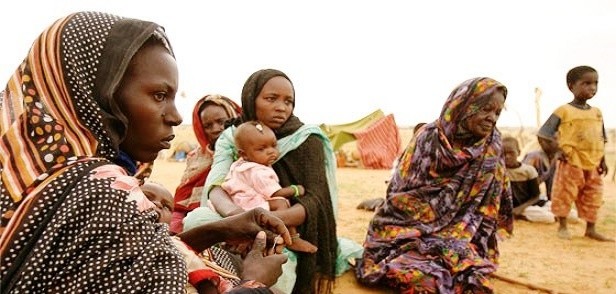
*Women who are targets of rape in a violent and deeply insecure Darfur*

*Many tens of thousands of girls and women have been raped or sexually
assaulted since early 2003, *although we of course have nothing approaching
a precise census (as is true for mortality related directly or indirectly
to violence). For the UN Secretary-General to omit mention of even one
example in reports that represented six months of 2012—the year in which
current violence began to accelerate and plans for the Rapid Support Forces
(RSF) rapidly advanced—is reprehensible. Certainly we know from many scores
of reports from Radio Dabanga that UNAMID typically fails to report rapes
brought to their attention, and certainly does no significant investigative
work and offers pitifully little protection.

A sense of the scale of the sexual violence in Darfur is most readily
apparent in an April 2012 study released in *PLoS Medicine* and based on
the work of a number of authors, most prominently Dr. Mohamed Ahmed Eisa,
whose archives from the Nyala-based *Amel Center* *for Treatment &
Rehabilitation for Torture Victims* were essential in generating that data
the permitted publication in this peer-reviewed medical journal:

*Approximately one-half (49%) of all women disclosed that they had been
sexually assaulted,* and one-half of sexual assaults were described as
having occurred in close proximity to a camp for internally displaced
persons (“*Medical Evidence of Human Rights Violations against
Non-Arabic-Speaking Civilians in Darfur: A Cross-Sectional Study,” **PLOS
Medicine,* April 3, 2012 | DOI:10.1371/journal.pmed.1001198)

Any extrapolation, of even the most conservative nature, yields figures of
many tens of thousands of women raped in Darfur, perhaps reaching to the
hundreds of thousands.

This pervasive climate of impunity culminated in the mass rape of girls and
women in *Tabit, North Darfur* (October 30, 2014 – November 1, 2014). Some
220 girls and women were raped over the course of 36 hours by regular Sudan
Armed Forces (SAF) soldiers, on orders from the commander of the SAF
garrison near Tabit. Nine days later (November 10, 2014), UNAMID was
finally allowed to “investigate,” but found a village terrified by the
massive security presence as UNAMID investigators arrived. The whole scene
was filmed by security officials, and two *Military Intelligence* officers
escorted every investigator. There was no opportunity for any individual to
speak openly, something readily apparent to the investigators.
Nonetheless, UNAMID
headquarters immediately released a statement declaring
<https://unamid.unmissions.org/Default.aspx?ctl=Details&tabid=11027&mid=14214&ItemID=24158>
:

None of those interviewed confirmed [in Tabit] that any incident of rape
took place in Tabit on the day of that media report. The team neither found
any evidence nor received any information regarding the media allegations
during the period in question.

An internal UNAMID document, however, leaked to me from within UNAMID on
November 20, 201
<http://sudanreeves.org/2014/11/20/internal-unamid-document-reporting-on-tabit-investigation/>
4, made clear how fully aware the investigators were of the impossible
circumstances in which they had conducted their “interviews.” In February
2015 Human Rights Watch released a definitive report on the Tabit rapes
<https://www.hrw.org/report/2015/02/11/mass-rape-north-darfur/sudanese-army-attacks-against-civilians-tabit>
: *“**Mass Rape in North Darfur: Sudanese Army Attacks against Civilians in
Tabit.**”* Lead author Jonathan Loeb interviewed 130 people, including more
than 50 current or previous residents of Tabit, victims as well as
eyewitnesses.

[image: Picture-2-UNAMID-watching-militia-attack1]
<http://sudanreeves.org/wp-content/uploads/2015/06/Picture-2-UNAMID-watching-militia-attack1.jpg>

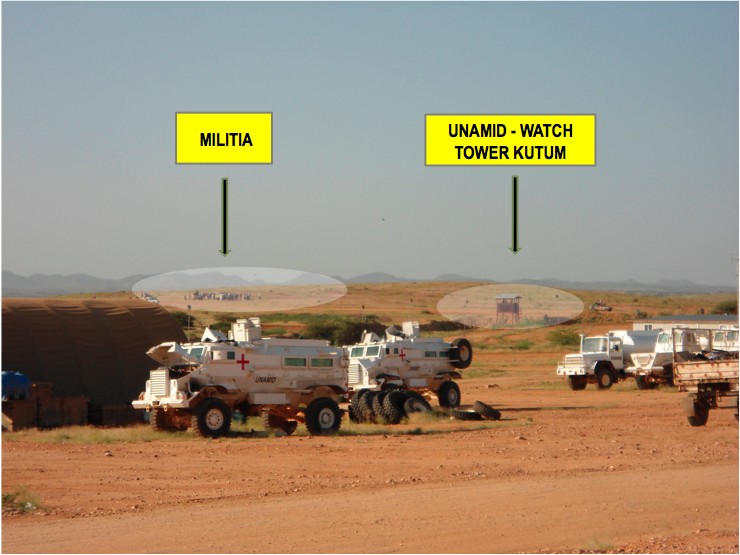
*UNAMID inaction in the presence of an assault on civilians---a commonplace*

Rather than accept the Human Rights Watch report as authoritative, the UN
and the international community continue to make self-serving demands for
what they know to be an impossible “independent investigation,” now well
over a year after events. Khartoum has made emphatically clear that it will
permit no such investigation, making international demands for access
pointedly irrelevant, if politically obligatory. Instead of responding to
realities as reported by those on the ground, the world continues to
dither, with no talk of consequences for massive atrocity crimes,
established as fact beyond all reasonable doubt.

*The Rape of Girls in Darfur*

We should not be surprised that given this international acquiescence, rape
continues unabated, even in the Tabit area. Radio Dabanga reported on
October 31, 2014 that 49 rapes had occurred in and around Tabit since the
events of October 31 – November 1, 2014
<https://www.dabangasudan.org/en/all-news/article/49-women-raped-in-tabit-darfur-over-the-past-year>.
What has not received sufficiently specific attention is the frequency with
which the victims of rape are girls, female civilians under the age of
eighteen <http://www.ohchr.org/en/professionalinterest/pages/crc.aspx>. And
yet this is a huge population: a shocking 2005 UNICEF “Child Alert” for
Darfur <http://www.unicef.org/childalert/darfur/Child%20Alert%20Darfur.pdf>
reported
that *one of every three rape victims was a girl:*

A recent report from the UN High Commissioner for Human Rights said
that in *almost
one in three reported rapes, the victims were children*, and a *recent
UNICEF/UN Population Fund study suggests that the number might be even
higher*. The immediate impact of these rapes is life-threatening and
horrific for the victims. They are also attacks on the very fabric of
families and communities, extremely painful events that add to the endemic
feelings of humiliation and powerlessness.

If these rates do in fact define the use of rape as a weapon of war in
Darfur, and given the findings of the *PLOS Medicin*e study (see above)
then we must speak of *tens of thousands of girls having been raped during
the conflict.*

The immediate occasion for this survey of rapes targeting girls, however,
was a single incident reported by Radio Dabanga (December 10, 2015)
<https://www.dabangasudan.org/en/all-news/article/girl-raped-by-four-near-tabit-north-darfur>
in
the following terms:

*Girl raped by four near Tabit, North Darfur | December 10, 2015, Tabit,
North Darfur*

*A 14-year-old girl was gang-raped in Tawila locality, North Darfur,
today.* Speaking
to Radio Dabanga, a relative of the victim reported that *four militiamen
riding camels ambushed the girl as she collected straw in the area of
Kedareik*, five kilometres east of Tabit. *“They raped her alternately for
three hours*, from 10 am until 1 pm,” she said. The victim was taken to a
clinic in the Zamzam camp for the displaced near El Fasher, capital of
North Darfur. *“She is still bleeding. As a result of the shock he is not
able to eat nor talk,” the relative added. *

[image: NewSerifNyalaDarfurSchoolchildren]
<http://sudanreeves.org/wp-content/uploads/2015/03/NewSerifNyalaDarfurSchoolchildren.jpg>

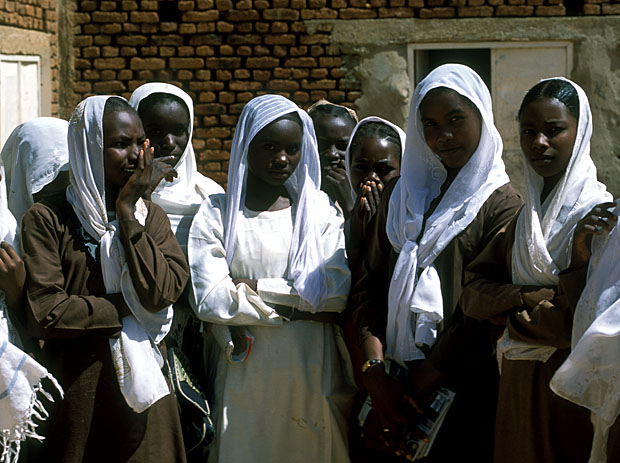
*Tens of thousands of such girls have been raped; they are a prime target
of Arab militias*

[image: 54ab92fcd0295]
<http://sudanreeves.org/wp-content/uploads/2015/04/54ab92fcd0295.jpeg>

*Women with good reason to be fearful*

It is an open question as to whether the girl will survive. Radio Dabanga
almost never follows up in cases such as this with reporting on the medical
outcomes of treatment. This is a function of the difficulty of securing
information from within hospitals, and the fact that other events continue
to demand intensive reporting resources. Radio Dabanga did offer the world
the first, and remarkably accurate, account of the rapes at Tabit only one
day after these terrible event
<https://www.dabangasudan.org/en/all-news/article/mass-rape-of-200-in-north-darfur>
*s*.

Notably, however, reporting by Sudan Development Organization/UK (SUDO/UK)
<http://www.sudouk.org/> has this year become much stronger with its own
very large contingent of Darfuri monitors on the ground and reporting to
London (SUDO was one of three Sudanese national humanitarian organizations
shut down by Khartoum at the same time (March 5, 2009) the regime was
expelling thirteen major international humanitarian organizations).
Beginning with the monthly surveys of Human Rights Abuses in Sudan
<http://www.sudouk.org/updates/> in *June of this year*, previously
scattered and somewhat irregular reports were consolidated and provide
clear overviews, month by grim month. All data from these monthly reports,
as well as the less organized previous reports of 2015, are reflected on
the data spreadsheet.

But the rape of girls has long seemed to me to demand particular attention,
and requires an especially harsh judgment, given its cruelty, its
destructiveness, and the unfathomable agony that typically extends to the
victim’s family and village (or displaced persons camp). Often girls have
only recently experienced genital circumcision, and are as a consequence
much more vulnerable to medical complications following gang-rape. The fact
of gang-rape in itself greatly increases the medical risks, and many girls
have clearly succumbed to injury and trauma. (See various relevant entries
in the *Bibliography | Appendix B* <http://sudanreeves.org/2016/01/14/7098/>
.)

[image: page 3 8.13.14 PM 8.13.14 PM 8.13.14 PM]
<http://sudanreeves.org/wp-content/uploads/2014/07/page-3-8.13.14-PM-8.13.14-PM-8.13.14-PM1.jpg>

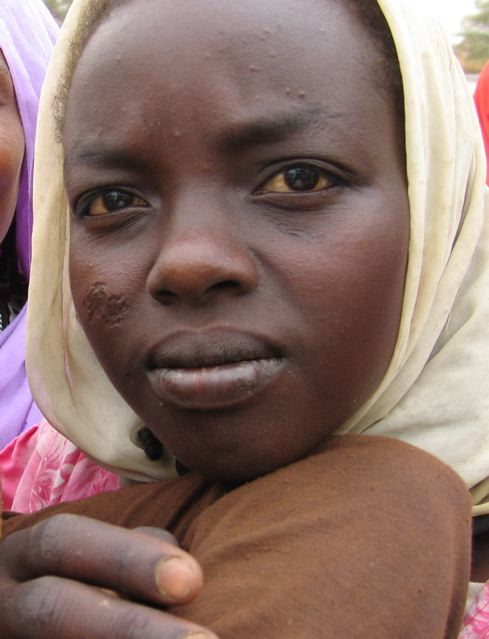
*A girl deliberately scarred so as to make the fact of her rape permanently
visible (photograph by Mia Farrow)*

This brutally heinous crime has been reported authoritatively for more than
a decade:

A recent United Nations investigation into war crimes in Darfur laid out,
in page after graphic page, evidence of widespread and systematic rape in
the two-year conflict. *In one incident, a woman in Wadi Tina was raped 14
times by different men* in January 2003. *In March 2004, 150 soldiers and
janjaweed abducted and raped 16 girls in Kutum, the report said. In Kailek,
it said girls as young as 10 were raped by militants.* (*New York
Times* [el-Geneina,
West Darfur], February 11, 2005)

*Doctors Without Borders/Médecins Sans Frontières (MSF)/Holland* reported
in *March 2005*:

"One of the three men [Janjaweed] took me away from the other women. He
threatened me with his knife by pinching my chest with it. He pushed me on
the ground and took off my underwear. He raped me and was repeating, ‘I
will kill you’ all the times to intimidate me." (From a young girl, 14,
February 2005, South Darfur) ("The Crushing Burden of Rape: Sexual Violence
in Darfur," March 2005
<http://www.doctorswithoutborders.org/sites/usa/files/sudan03.pdf>)

And yet nothing meaningful has been done to halt this terrible crime;
indeed, Khartoum promptly arrested two of the most senior MSF officials in
Sudan following publication of "The Crushing Burden of Rape: Sexual
Violence in Darfur,” a signal that was lost on no organization working in
Darfur. More has been published, including a crucial report by Physicians
for Human Rights (again, see *Appendix B*
<http://sudanreeves.org/2016/01/14/7098/> for a bibliography of studies
that have attempted to address the subject of rape in Darfur), but the
reality of girls as young as five and six being raped has not prompted
particular outrage.

Moreover, it is not simply paramilitary or militia forces that are
responsible for the rapes of girls and women: regular soldiers continue to
participate in the orgy of sexual violence, as demonstrated by the *mass
rapes at Tabit, committed by SAF troops on orders from their garrison
commander.*

The utterly despicable crime of raping girls has to date occasioned no
specific analysis—no aggregation of data or reports, no assessment of
implications for the longer term welfare of these girls in Darfuri society.
Such analysis will be limited in completeness and usefulness so long as
Khartoum denies human rights reporters all meaningful access to Darfur, and
allows no independent international news coverage or interview
opportunities. The scale of rape, and specifically the rape of girls,
remains with too many other horrors contained within the “black box” that
the regime has succeeded in making of Darfur.

[image: p. 5] <http://sudanreeves.org/wp-content/uploads/2014/05/p.-5.jpg>

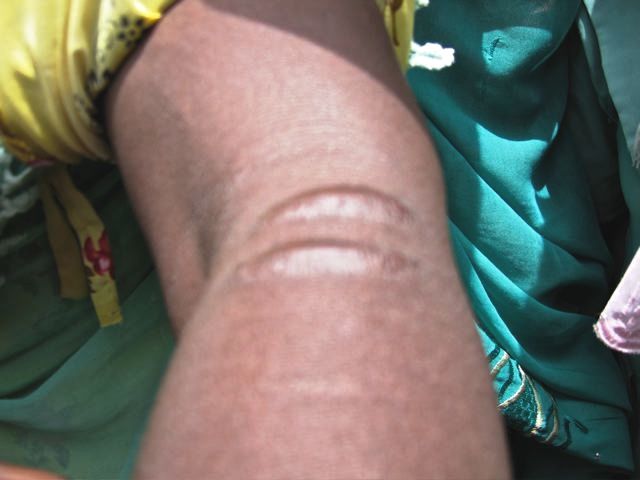
*A girl branded to mark the fact of her rape (photograph by Mia Farrow)*

But we cannot watch in silence as massive evidence continues to accumulate
that many tens of thousands of girls have been raped or sexually assaulted
over the past twelve years. We may at least survey what data are available
and draw whatever conclusions these data permit. And certainly we should be
fully aware of how international law bears on what is represented by the
massive, ongoing campaign in which rape is deliberately used as a weapon of
war in Khartoum’s genocidal counter-insurgency.

[It must be said that the *particular plight of children*, not just those
sexually assaulted, has received much too little attention over the
years; *Appendix
A*
<http://sudanreeves.org/2016/01/14/appendix-a-the-neglect-of-children-as-a-population-in-darfur-a-ten-year-retrospective-from-2005/>
offers
a lengthy general assessment I *published in the Sudan Tribune in December
2005*—ten years ago almost to the day. Far too little research has come in
its wake—certainly nothing that obliges a qualification of the broader
conclusions. Among the few subsequent studies, excerpted for this *Appendix*,
there is clear evidence of terrifying psychosocial profiles for children in
camps for the displaced, characterized by *extremely high rates of clinical
depression and Post-Traumatic Stress Disorder (PTSD).* In August 2011 the
distinguished British medical journal *The Lancet* published
<http://www.thelancet.com/journals/lancet/article/PIIS0140-6736%2811%2960050-0/fulltext>
findings
of a shocking magnitude:

…forcibly displaced children in low-income and middle-income settings have
high rates of psychiatric disorders. *Thus* *75% of 331 displaced children
in camps for internally displaced people in southern Darfur met diagnostic
criteria for post-traumatic stress disorder, and* *38% had depression.*]

These figures are much likely worse four years later as Khartoum has
dramatically accelerated attacks not only on villages but on camps for the
displaced as well.]

*Continuing Genocide in Darfur*

The genocidal nature of the present, extremely intense counter-insurgency
campaign—now in its third year and focusing ferociously on Eastern Jebel
Marra and the Jebel Marra massif more generally—remains conspicuous if we
look at those attacked and their attackers. In the Jebel Marra region
broadly, the predominant African tribal group is the Fur, the largest
ethnic group in Darfur. The farms violently expropriated—destroyed by
military bombings and by the loosing of livestock onto lands rich in crops,
and which in turn have been claimed by various Arab militia groups—are
*African *farmlands. (Again, see *“‘**Changing the Demography’: Violent
Expropriation and Destruction of Farmlands in Darfur, November 2014 –
November 2015”* | http://wp.me/p45rOG-1P4/; in this connection see* "clause
c"* from the 1948 UN Genocide convention, discussed immediately below).

[image: page 2 #3]
<http://sudanreeves.org/wp-content/uploads/2014/04/page-2-32.jpg>

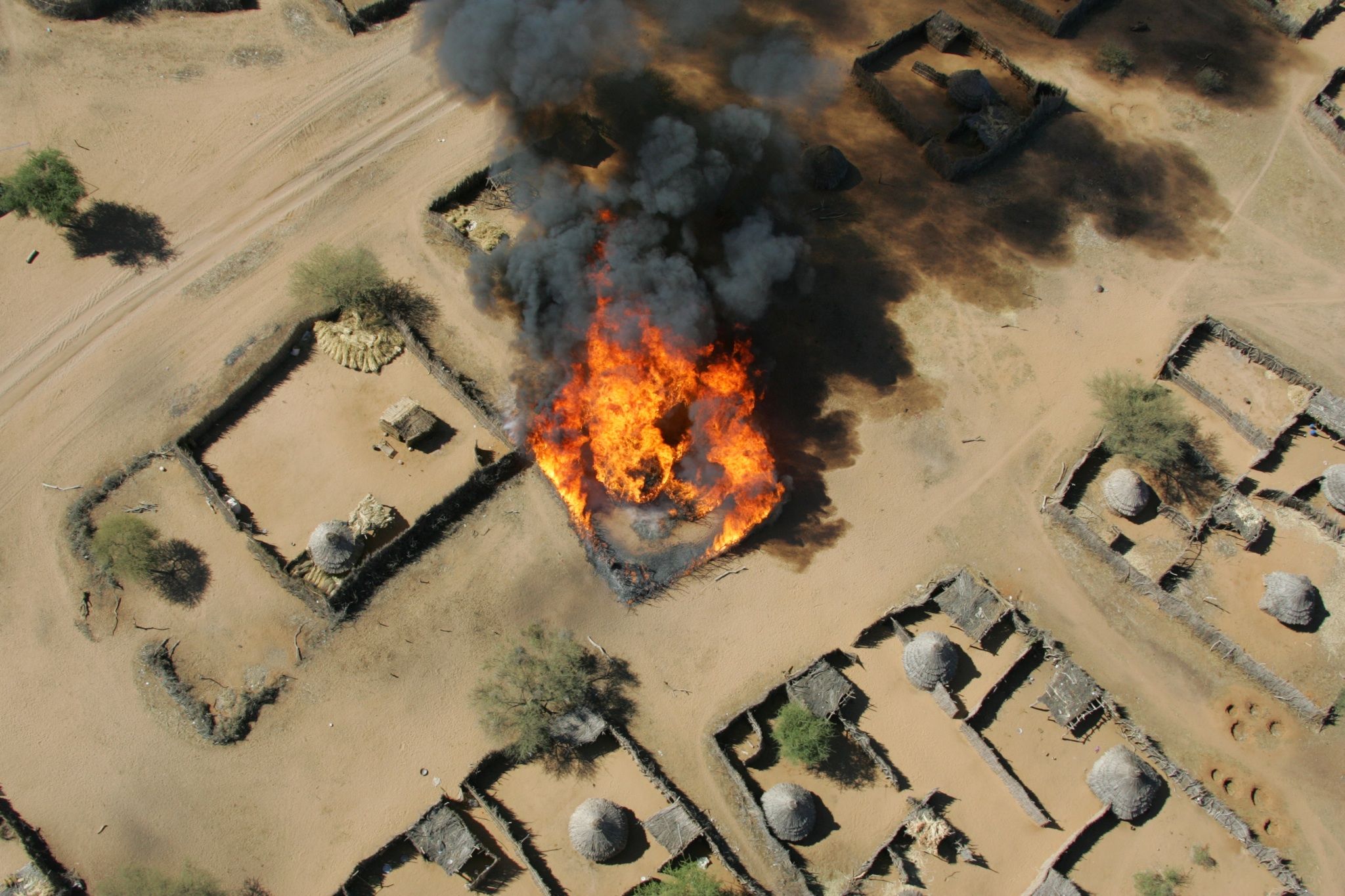
*African villages are again being attacked on a wide-scale, with clearly
ethnic targeting (photograph by Brian Steidle, 2005)*

So, too, the victims of rape in Darfur are overwhelmingly African—with Arab
militiamen, regular SAF troops, or opportunistic bands of thugs almost
always the perpetrators. And at least one clause from the 1948 UN
Convention on the Prevention and Punishment of the Crime of Genocide
<https://treaties.un.org/doc/Publication/UNTS/Volume%2078/volume-78-I-1021-English.pdf>
has
clear relevance for an understanding of the systematic rape of African
girls and women in Darfur. *Article 2 of the Convention* reads in its
entirety as follows:

In the present Convention, genocide means any of the following acts
committed with intent to destroy, in whole or in part, a national,
*ethnical*, racial or religious group, as such:

(a) Killing members of the group;

*(b) Causing serious bodily or mental harm to members of the group;*

(c) Deliberately inflicting on the group conditions of life calculated to
bring about its physical destruction in whole or in part;

*(d) Imposing measures intended to prevent births within the group;*

(e) Forcibly transferring children of the group to another group.

There can be little doubt that clause *(b)* bears directly on our
understanding of the systematic, ethnically-targeted rape of girls and
women as a weapon of war (a war with consequences that fall within the
ambit of clause *(d)*). Indeed, it is difficult to determine in the case of
girls which is likely to be more consequential: “bodily” or “mental” harm.
Both are so extreme as to make comparison invidious. The seriousness of the
“bodily” harm is captured all too well in the recent example above from the
Tabit area. We will never know how many girls suffered fatal bodily trauma
during gang-rapes; we will never know how many cases of fistula were caused
by rapes, or other physical injuries that would compromise physical life or
preclude conceiving or giving birth to a child. There is significant
medical literature addressing the issues here, including one using data
from Darfur; they are included in the bibliography (*Appendix B*
<http://sudanreeves.org/2016/01/14/7098/>).

But we also know that suicide is the despairing response to rape in too
many cases, both among girls and women. *Physicians for Human Rights*, in
an unprecedented study ("Nowhere to Turn: Failure to Protect, Support and
Assure Justice for Darfuri Women," May 2009 (http://
physiciansforhumanrights.org/library/reports/nowhere-to-turn.html), found
that Darfuri women living as *refugees in eastern Chad* had extremely poor
mental health indicators, and these were much worse among women who had
been raped:

Women who experienced rape (confirmed or highly probable) were *three times
more likely to report suicidal thoughts* than were women who did not report
sexual violence.

And we know from many reports just how deeply stigmatizing rape is—the
primary reason Arab rapists often burn or scar their victims, thereby
ensuring that the fact of rape can never be fully hidden (see photographs
above). For girls and women of marriageable age, the consequences of this
stigmatizing can be immensely destructive. Opportunities for marriage often
disappear entirely; some men divorce their wives after they have been
raped, a sign of how deeply consequential the fact of rape is in the
conservative Muslim ethos of Darfur.

Families are often traumatized by the rapes of girls, which they are often
forced to witness. In late February 2004, at the height of genocidal
destruction, notorious *Janjaweed *leader Musa Hilal was reported by
several witnesses to have been in command during an episode of almost
unfathomable destruction:

In an attack on 27 February [2004] in the Tawilah *[more commonly
Tawila—ER] *area of northern Darfur, 30 villages were burned to the ground,
over 200 people killed and *over 200 girls and women raped—some by up to 14
assailants and in front of their fathers who were later killed. *A further
150 women and 200 children were abducted. (UN Integrated Regional
Information Networks, March 22, 2004)

[image: page-32]
<http://sudanreeves.org/wp-content/uploads/2015/12/page-32.jpg>

*Musa Hilal, the most notorious of the Janjaweed leaders, was present and
directing the attack reported immediately above*

[image: 54a7012d3e3b5]
<http://sudanreeves.org/wp-content/uploads/2015/11/54a7012d3e3b5.jpg>

*The Janjweed have been replaced by the much more heavily armed and
directly supported (from Khartoum) Rapid Support Forces (RSF); they are
engaged in the same kind of genocidal destruction.  Addressing the RSF in
December 2014, the Second Vice President of the Khartoum regime likened the
African peoples of East Jebel Marra in North Darfur to "insects"...echoes
of Rwanda*

The rape of girls and women is very frequently accompanied by the use of
racial epithets, confirming the ethnic targeting of the victims as defined
in the genocide convention. Notably, in the *Akayesu judgment*, a *Trial
Chamber of the Rwanda Tribunal* explained that, “rape and sexual violence
may constitute genocide on both a physical and mental level” (William
Schabas, *Genocide in International Law*, 183). In Darfur, reports of rape
clearly document the physical level (*actus reus*) of the crime while the
frequently accompanied use of racial epithets confirm both the
ethnic-targeting of victims and mental intent *(mens rea)* of the
perpetrators.

*Racist animus in sexual assaults*

It is imperative to bear in mind that rape and sexual violence have a
strong racial/ethnic animus in Darfur.  Virtually all the reported attacks
are of Arab men upon non-Arab or African girls and women (in its 2004
study, Amnesty International found only one instance in which rebel forces
from the *Fur*, *Massalit*, *Berti*, Tunjur, or *Zaghawa* non-Arab or
African ethnic groups were responsible for rape).  Here the reports from
*SUDO/UK *are of particular value, since they frequently identify in
particular incidents the ethnicity of those killed or raped or maimed.

This must not be lost sight of, as some have already done (see *Dissent
Magazine*, January 26, 2012
<http://www.dissentmagazine.org/online.php?id=577>).  The examples here
from Amnesty International (“*Sudan, Darfur: Rape as a Weapon of War,*” *July
19, 2004*) could be replicated from countless other reports and news
accounts:

*[1]  **“Omar al Bashir told us that we should kill all the Nubas. There is
no place here for the Negroes any more.”  *(Words of a Janjawid fighter,
according to a refugee from Kenyu, interviewed by Amnesty International in
Chad, May 2004)

*[2]  *“The Tama, a small ethnic group mainly composed of farmers, have
been both victims of attacks and accused several times of siding with the
Janjawid in the 2003-2004 conflict: *‘Slaves! Nubas!** Do you have a
god? You, ugly black pretend… We are your god! Your god is Omer
al-Bashir.’”*

*[3]  *“M., a 50-year-old woman from Fur Baranga reported: *‘The village
was attacked during the night in October 2003, when the Arabs came by cars
and on horses. They said’ “every black woman must be killed, even the
children.”’”*

*[4]  *“Sudanese refugees interviewed by Amnesty International in Chad, who
alleged that Salamat nomads from Chad and fighters from Mauritania were
recruited to fight in Darfur:

*‘What we heard from the Janjawid is that Omer al-Bashir tells the
foreigners that they are Arabs and that they should come and live in a
country that is ruled by Arabs. That they should not stay where they are
ruled by Africans. They say that ‘Sudan is a country for Arabs.‘”  *(M.,
Sudanese refugee in Chad, interviewed by Amnesty International in May 2004)

*[5] **“‘The government gave the Arabs confidence, arms, cars and
horses.  We cannot go back; there will be no security for African people in
Darfur.’” *(Sudanese woman interviewed by Amnesty International in Mile
refugee camp, Chad, May 2004)

*[6]  *“M., a Masalit chief of the village of Disa, reported that during
attacks in June 2003 by the Janjawid and in July and August by the
military, 63 persons were killed, including his daughter. In June the
Janjawid reportedly accused the villagers of being ‘*traitors to Omer
Hassan Al-Bashir*.*’* [ ] *In July the military arrested several persons
including Brahim Siddiq, a seven-year-old boy. In June the Janjawid said
during the attack: ‘You are complicit with the opponents, you are Blacks,
no Black can stay here, and no Black can stay in Sudan.’ Arab women
were accompanying the attackers singing songs in praise of the government
and encouraging the attackers. The women said:*

*‘The blood of the Blacks runs like water**, we take their goods and we
chase them from our area and our cattle will be in their land. The power of
al-Bashir belongs to the Arabs and we will kill you until the end, you
Blacks, we have killed your God.’  They also insulted the women from the
village saying ‘You are gorillas, you are Black, and you are badly
dressed.’”*

The MSF report from 2005  (“*The Crushing Burden of Rape: Sexual Violence
in Darfur*” | Amsterdam, March 8, 2005
<http://www.vawnet.org/research/summary.php?doc_id=565&find_type=web_desc_GC>)
provides other terrible examples, including:

“We saw five Arab men who came to us and asked where our husbands were.
Then they told us that we should have sex with them. We said no. So they
beat and raped us. *After they abused us, they told us that now we would
have Arab babies; and if they would find any Fur [one of the non-Arab or
African tribal groups of Darfur], they would rape them again to change the
colour of their children.’* (Three women, 25, 30 and 40, October 2004,
*West* *Darfur*)” (page 1)

Sexual assaults against boys, including rapes, have been reported during
the long course of Darfur’s genocide. But the most common form of violence
is for boys of any age simply to be murdered, and not only by means of
indiscriminate firing by militia forces or bombing by SAF aircraft. This
determination to kill boys was captured graphically in a report by Julie
Flint in February 2005:

Maryam Ahmad had travelled with her 21-day-old son, Ahmad, on another road
controlled by Janjawid, between Tawila and Kabkabiya. *The Janjawid had
stopped her, taken Ahmad from her and cut off his penis. He died in her
arms. “It’s what they do to boys,”* said Afaf, two months pregnant and
preparing to return to al-Fasher to deliver. (*Middle East
International* [Darfur],
February 17, 2005)

And rape is *“what they do”* to girls. The world well knows this, and yet
refuses to respond to this terrible reality in any meaningful way.

*Impunity*

The response of authorities in Darfur has been consistently unhelpful in
halting the epidemic of sexual violence, clearly following guidelines that
have their ultimate origins in Khartoum. However these may be interpreted
locally, the effect is to maintain the present climate of complete impunity
in the rapes of girls and women. Two reports from SUDO/UK are all too
characteristic.

On November 26, 2015 SUDO/UK reported:

*Janjaweed** militiamen lashed four women in their farms near Gereida
(South Darfur). *The militiamen were dressed in military uniform with their
faces masked by Al-Kamadol. The camps Sheikhs *reported the incident to the
police and to the Commissioner*; however, the case was rejected by both
stating that the *victims simply should not have gone to their farms in the
first place.*

In short, regime-controlled authorities in South Darfur are sanctioning the
type of violence cataloged extensively in the *data spreadsheet*. This has
become the prevailing view not only of authorities, but of the Arab
militiamen, whether from Darfur or other countries, who regard the land of
African farmers as theirs, and that any violence used to keep these farmers
and their families from cultivating or using the lands is justified.

A second SUDO/UK report concerning the rape of a girl (October 20, 2015) is
even more disturbing in its deep injustice:

*Six Janjaweed militia members attacked four women in Sori, west of Khazan
Gadeed in the Tabit area, killing one and raping another.* A survivor told
monitors that at 14:00 six men wearing military uniform with their faces
masked with Al-Kamadol and riding on the back of camels attacked their
farms. At this point the women were told that they were going to be raped
for the remainder of the day and the men began firing into the air, causing
the women to disperse and run in different directions. *The perpetrators
managed to capture two of them, one of whom was a 25 year-old Fur who was
shot in the chest as a result of her resistance, whilst a 17 year-old Fur
was caught and brutally raped.*

The two other women then fled back to their village to call for help and
returned to the scene with support, by the time which the perpetrators had
fled. The 17 year-old girl was taken to the hospital and the Sudanese army
was informed of the incident in Tawila. *However, not only did they fail to
act, but they also filed a case against the three surviving women under
laws pertaining to Zina (illicit sex).*

Holding those responsible for reporting a brutal crime to be guilty
themselves of “illicit sex” is incomprehensively unjust, and yet quite
unsurprising.

Although occasionally rapists are reported to have been arrested, I know of
no report of those guilty of sexual assault in Darfur remaining
incarcerated for their crime(s) (some are briefly held and then released).
This climate of impunity ensures that girls and women will continue to be
raped in great numbers, and that the patterns of the past thirteen years
continue. Moreover, nothing does more to explain the grim repetition of
patterns of rape in *South Kordofan* and *Blue Nile* than the silence and
acquiescence on the issue by the international community, which has failed
repeatedly to make of sexual violence a major issue in dealings with the
Khartoum regime.

*DATA ON THE RAPE OF GIRLS*

Despite international indifference, it is possible to quantify and map data
on rape in Darfur, at least in part, using *Radio Dabanga (RD)* and
*SUDO/UK* *(SUDO)* and their extraordinary range of sources on the ground
as the basis for such an effort. A *data spreadsheet,* highlighting all
reported rapes of girls over the past two years, may be found *here
<http://sudanreeves.org/2016/01/15/data-spreadsheet-for-continuing-mass-rape-of-girls-in-darfur-the-most-heinous-crime-generates-no-international-outrage-january-2016/>.
*Also
included in the spreadsheet, though not highlighted, are rapes of women
ages 18 – 25—women of prime marriageable age, and for whom rape is of
greatest significance in defining chances for marriage, or preserving a
marriage and family. The spreadsheet also includes reports of the
abductions of girls and women, unlikely to be for ransom (as would be the
case with the abduction of boys and men). Thus, for example, many
dispatches report sexual assaults and abductions that may or may not
receive further clarification. For example, on *December 27, 2015 Radio
Dabanga* reported:

On Friday [December 25, 2015], a *group of militiamen abducted seven women
from the Hamidiya camp* for the displaced in *Zalingei*, capital of
Central *[formerly
West] Darfur*. The women were collecting firewood north of the camp early
in the morning, when they were attacked, the coordinator of the Central
Darfur camps told Radio Dabanga. He said that the incident was reported to
the police and UNAMID, “but so far they did not move to rescue the women.”

These women—perhaps including girls—may be raped or kept as sexual slaves,
possibly held for ransom (though unlikely), or may conceivably escape. It
is extremely unlikely that UNAMID will move to rescue them.

We have no figures for the number of girls and women who have died from
rape or their resistance to sexual assault. We do know that the condition
of many reported rape victims, and the lack of access to medical care,
ensures that there have been a very large number of fatalities resulting
from sexual assault. Many more have been severely, often permenently
injured. Often women are beaten by Arab militiamen simply because they are
non-Arab women. For example, Radio Dabanga reports (October 21, 2014):
“Militiamen attacked more than 22 women who were working their farmlands.
They beat the women with their whips and rifles butts. At least 22 women
were injured, some of them seriously." There was, however, no accompanying
account of rape.

The quantification of the spreadsheet data on the three regional maps of
Darfur makes conservative assumptions about how to interpret individual
events with respect to the issue of rape; nonetheless, there is still a
considerable degree of ambiguity, even as the two primary sources—Radio
Dabanga and SUDO/UK—sometimes report different figures for the same
incident. More problematic yet is SUDO/UK’s aggregation of data on rape for
Darfur, South Kordofan, and Darfur, making those data unusable for present
purposes.

The vast majority of rapes involve *girls *or *women ages 18 – 26* (only *26
incidents of rape* over the past *two years* do not fall in one of these
two age categories, and they appear at the end of the data spreadsheet).
Only incidents that include the rape of girl(s) are highlighted in yellow
on the spreadsheet; if not highlighted, the reported incident(s)
exclusively concerns sexual assault(s) on women 18 – 25—prime years of
marriageability and child-bearing.

*Large or unquantifiable accounts of data are highlighted in blue,* and
while most are highly significant in their own right, only a couple of
these figure in the mapping of incidents on the *three regional maps of
Darfur*, since the risk of redundancy in reporting and tabulating is too
high. For example, Radio Dabanga reports that from mid-July to mid-August
2014:

45 women, including 12 minors, have been raped in the period between July
1st and mid-August… the government-backed militiamen are often not
satisfied with raping alone. “They humiliate the victims even more, by
shaving their heads, and mutilate their bodies.” “The 12 minors, who were
raped, suffer from genital problems. Only four of them have been treated,
for fistula, at El Fasher Teaching Hospital.”

But this represents an aggregation of data from earlier reports by Radio
Dabanga; there is no indication that these incidents have previously gone
unreported.

The *spreadsheet has six columns*: date of report or dispatch; date of
event(s); location; age(s) of those assaulted; ethnicity of those attacked,
if reported; number rape victims, as well as those abducted or physically
assaulted; source. There are *approximately 350 individual entries* for the
two-year survey (*2014* and *2015*), some representing a great many
victims, such as the *220 girls and women raped at Tabit, North Darfur
(October 31 – November 1, 2014). *

Where the ethnicity of the victims is reported (by SUDO/UK) it is included
with this other information. Most commonly reported as victims are girls
and women who are *Fur, Berti, Zaghawa, *or *Tunjur*. For example:

*October 28, 2015 | SUDO/UK (**November Report*
<http://www.sudouk.org/updates/posts/human-rights-abuses-in-sudan-over-the-month-of-november-2015/>
*)*

A* Janjaweed militia attacked Abu Zaid and Hawar Tator areas, which lies
20km to the west of Tabit.* During the incident six women were raped,
including one *13 year-old girl.* The militia arrived to the areas at 11:00
on the back of 47 camels and 24 horses from Jebel Tarni wearing military
uniform though hiding their faces with Al-Kamadol.

Upon finding the women present at their farms members of the militia
informed the women that they had been told previously to not return to
their farms otherwise face the consequences. *They then began to open fire
over the heads of the women and chased after them managing to catch six,
who were then brutally raped multiple times by different aggressors.
Following the mass rape the victims were beaten and left injured on the
ground as the militia left.*

*The six women were aged 14, 29, 31, 46, 49, and 53 and include three Fur,
one Zaghawa, and two Tunjur.*

*Again, all data from the spreadsheet
<http://sudanreeves.org/2016/01/15/data-spreadsheet-for-continuing-mass-rape-of-girls-in-darfur-the-most-heinous-crime-generates-no-international-outrage-january-2016/>
are
mapped onto three regional maps covering all of Darfur*; all may be found
*here*
<http://sudanreeves.org/2016/01/15/mapping-the-data-continuing-mass-rape-of-girls-in-darfur-the-most-heinous-crime-generates-no-international-outrage-january-2016/>
*.* (These data do not include the *seven girls and women reported as raped
in 2016*).

There are clear similarities in geographic patterns mapped in *“‘**Changing
the Demography’: Violent Expropriation and Destruction of Farmlands in
Darfur, November 2014 – November 2015”* |* http://wp.me/p45rOG-1P4
<http://wp.me/p45rOG-1P4>.*

[image: NewSerifCampNyalaSchoolchild]
<http://sudanreeves.org/wp-content/uploads/2015/03/NewSerifCampNyalaSchoolchild.jpg>

*Waiting for protection...*

********************************

*NB: Most significantly, these data do not include the extremely numerous
reports of rape from the Nuba Mountains and South Kordofan generally, as
well as from Blue Nile. It is clear that Khartoum is again sanctioning rape
as a weapon of war. Certainly the characteristics of rape in Darfur,
including an extreme ethnic animus, may be found in reports on the terribly
endangered civilian populations of these regions.*

--

Eric Reeves, Senior Fellow at Harvard University’s François-Xavier Bagnoud
Center for Health and Human Rights


[email protected]

www.sudanreeves.org

Twitter@SudanReeves

About Eric Reeves: http://sudanreeves.org/about-eric-reeves

Philanthropy:
*http://ericreeves-woodturner.com/woodturnings-available-for-purchase-dire
<http://ericreeves-woodturner.com/woodturnings-available-for-purchase-dire>*

--
To post to this group, send email to [email protected]
To unsubscribe from this group, send email to
[email protected]
Visit this group at https://groups.google.com/d/forum/southsudankob
View this message at
https://groups.google.com/d/msg/southsudankob/topic-id/message-id
For more options, visit https://groups.google.com/d/optout
---
You received this message because you are subscribed to the Google Groups
"South Sudan Info - The Kob" group.
To unsubscribe from this group and stop receiving emails from it, send an email
to [email protected].
To post to this group, send email to [email protected].
Visit this group at https://groups.google.com/group/SouthSudanKob.
To view this discussion on the web visit
https://groups.google.com/d/msgid/SouthSudanKob/CAJb14oror9bQDF6aJUqLSto5cqi6QJjXBvwQ3EEigNTeFMKThA%40mail.gmail.com.
For more options, visit https://groups.google.com/d/optout.