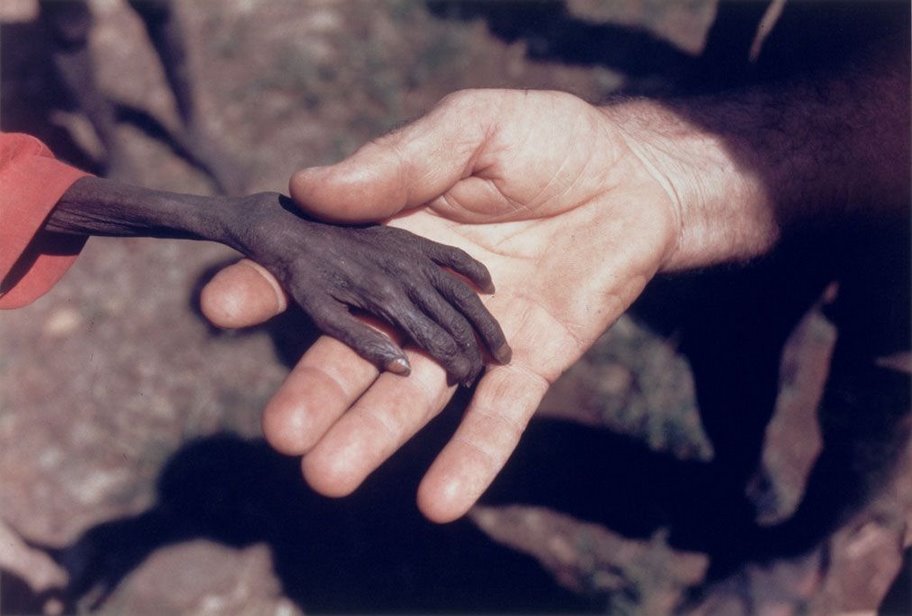
---------- Forwarded message ----------
From: "Eric Reeves" <[email protected]>
Date: 4 Apr 2017 19:14
Subject: Famine in South Sudan Should not Obscure Urgent Food Crisis in
Sudan
To: "Eric Reeves" <[email protected]>
Cc:
*Famine in South Sudan Should not Obscure Urgent Food Crisis in Sudan*

Eric Reeves  |  April 4, 2017  |  http://wp.me/p45rOG-22
<http://wp.me/p45rOG-229>9

Impending famine in *South Sudan* is major news, and has been reported in
appropriately urgent fashion, including several recent stories in the *New
York Times
<https://www.nytimes.com/2017/02/20/world/africa/south-sudan-famine.html>*,
as well as by a number of other important news organizations. South Sudan
has a *population of approximately 12 million*.

Almost entirely unreported are the many locations in *Sudan*, with a
*population
of almost 40 million*, where there are severe food shortages, where
malnutrition indicators are skyrocketing, and where famine also threatens
in some locations. These food shortages have been deliberately engineered
by the governing *National Islamic Front/National Congress Party regime in
Khartoum*. This is the same regime that was responsible for major famines
in South Sudan during the* long civil war (1983 – 2005)*, including
the *infamous
famine of 1998* (see Human Rights Watch, 1998
<https://www.hrw.org/reports/1999/sudan/>).

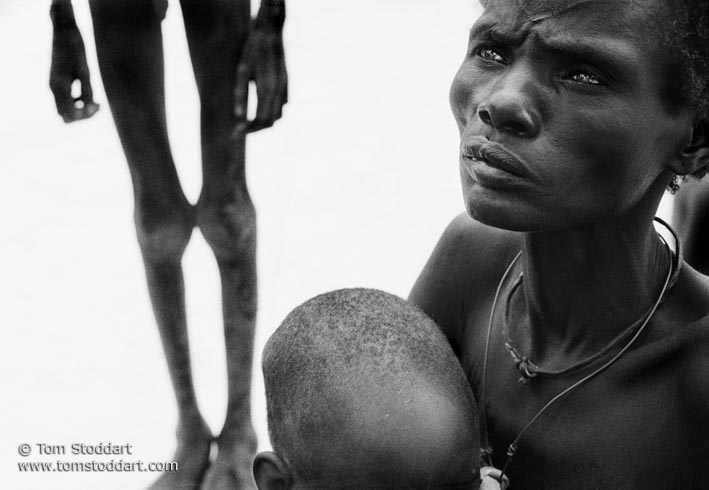
<http://sudanreeves.org/wp-content/uploads/2017/04/Sudan-famine_02.jpg>

*Famine in South Sudan, 1998*

For over a decade, a grim “genocide by attrition” has been a critical
weapon in the broader genocidal counter-insurgency conducted by Khartoum
against rebel forces in the *Darfur* region—once itself a major news story,
but now completely unreported by Western news sources, despite
extraordinary levels of violence and severe deprivation.

In Darfur the regime has consistently obstructed, harassed, and denied
access to humanitarian organizations seeking reach to areas of critical
need, even for assessment purposes—and continues to do so for much of the
region. The regime regards this assault on relief efforts as a way of
weakening remaining Darfuri rebel groups, even if it comes at enormous cost
in the form of civilian suffering and destruction.

Some *three million Darfuris* remain displaced from their homes—in camps
for displaced persons, in host communities, in *eastern Chad*, or in what
the UN calls “Internally Displaced Persons (IDP) Gathering Points,”
locations of displaced persons without shelter or organized relief (see
“Internally Displaced Persons in Darfur: The invisible catastrophe,
international complicity,” March 19, 2017 | http://wp.me/p45rOG-21N/).
These people are unable to return because of ongoing violence and
insecurity orchestrated by Khartoum’s army and its various regular militia
forces, most brutally and efficiently by the* Rapid Support Forces (RSF)*.
The number of irregular Arab militias forces—little more than provisionally
organized predators—appears to be increasing.

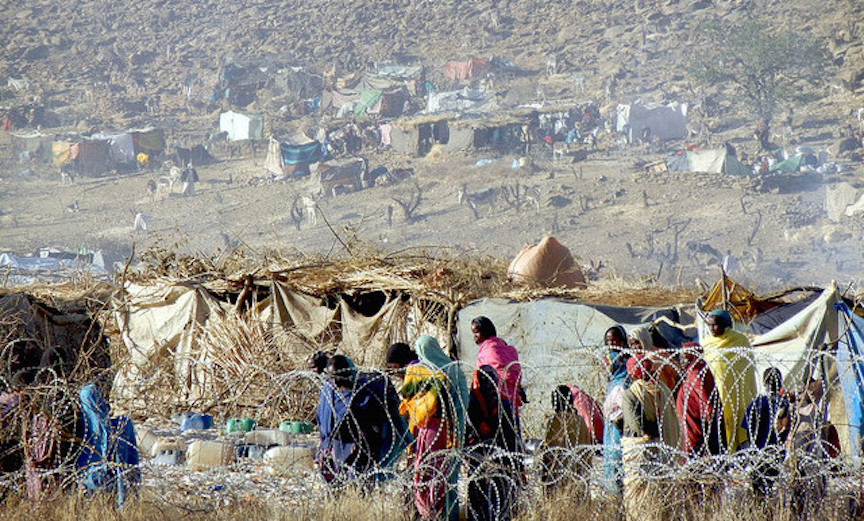
<http://sudanreeves.org/wp-content/uploads/2017/02/56c1cd81b5229.jpeg>

*Life for some of the 3 million displaced persons in Darfur and eastern
Chad*

The UN uses the same number—three million
<http://reliefweb.int/sites/reliefweb.int/files/resources/OCHA_Sudan_Humanitarian_Bulletin_Issue_08_%2813_-_26_March_2017%29.pdf>—in
its estimates of the people in need in Darfur, including children suffering
from *Acute Malnutritio*n and *Severe Acute Malnutrition *(Sudan as a whole
has a population of *5.8 million in need of humanitarian assistance* according
to a very recent assessment by the U.S. Agency for International Development
<https://www.usaid.gov/sudan/food-assistance>) . These people depend on
international relief efforts that are gradually collapsing. And the
collapse may become precipitous if Khartoum proceeds with its announced
plans to dismantle IDP camps and its determination to force the removal of
the weak, poorly equipped, and badly demoralized *UN/African Union
peacekeeping force (UNAMID)*, which provides the minimal security allowing
some humanitarian organizations to remain in Darfur. If UNAMID withdraws,
so will the remaining international relief organizations. A decision about
the future of UNAMID will be made in *June* by the *UN Security Council*.

The international response to developments in Darfur has been weak,
irresolute, and the *U.S.* role has been one of increasing abandonment.
Indeed, in *2011*—as violence was again beginning to escalate in the
region, the *Obama administration* explicitly “de-coupled” Darfur
<http://sudanreeves.org/2011/11/15/%E2%80%9Cthe-obama-administration-%E2%80%98de-couples%E2%80%99-darfur-from-key-negotiating-issue%E2%80%9D/>
from
the major bilateral issue between Khartoum and Washington, trading
counter-terrorism intelligence from the men who formerly hosted *Osama bin
Laden *for a lifting of U.S. economic sanctions. In the last week of the
Obama administration, the deal was consummated
<http://sudanreeves.org/2017/01/14/the-final-betrayal-of-sudan-obama-administrations-lifting-of-economic-sanctions-un-ambassador-samantha-power-justifying-the-move-claiming-a-sea-change-of-improve/>
and
sanctions were lifted. This is provisional, to be sure, but the Obama
administration had already given credit to Khartoum for halting major
military activities and for effecting what *Obama’s UN ambassador Samantha
Power* called a “sea change” of improvement
<http://webtv.un.org/watch/samantha-power-united-states-final-press-conference-to-un-correspondents-13-january-2017/5281173841001>
in
humanitarian access in Sudan. Such a characterization was a patent
falsehood, and acknowledged as such by the *U.S. State Department*, which
nonetheless has offered no public correction.

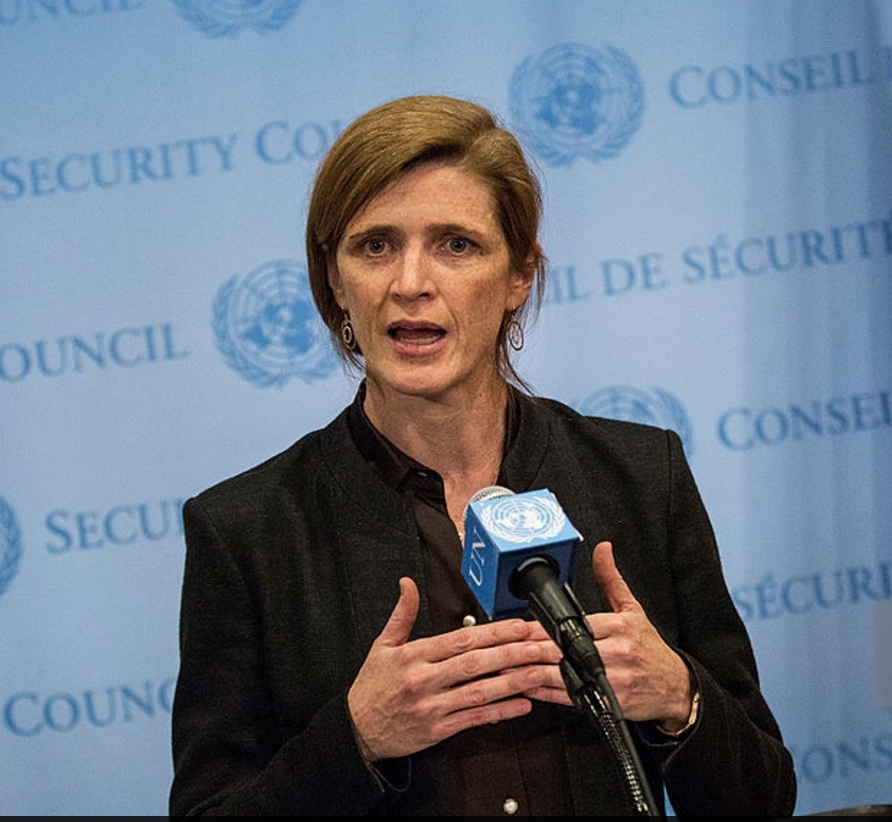
<http://sudanreeves.org/wp-content/uploads/2017/01/Screen-Shot-2017-01-14-at-12.35.29-PM.png>

*The Obama administration's ambassador to the United Nations, Samantha
Power*

This falsehood was particularly pernicious, given the massive evidence of
Acute and Severe Acute Malnutrition to be found not only in Darfur, but in
two large rebel-controlled areas in southern Sudan, *South Kordofan* and *Blue
Nile States*. In these areas Khartoum continues to impose a total blockade
on humanitarian relief to desperately needy civilians. The *“Two Areas,”* as
they are known, have suffered from this blockade since *summer 2011*; and
while we no systematic malnutrition surveys are permitted by the Khartoum
regime, numerous reports from the ground and occasional hit-and-run
assessments make clear that both Acute and Severe Acute Malnutrition are
growing and in some areas approach the levels that are typically designated
as “famine.” In two locations in South Kordofan, Warni and Kau-Nyaro, 64
percent of households were reported last year as “acutely malnourished.”
<http://sudanreeves.org/2016/03/07/emergency-in-kau-nyaro-warni-area-southeastern-jebel-south-kordofan-state-an-estimated-65000-people-are-in-urgent-need-of-assistance/>
Ominously,
this year’s harvest has been particularly poor. Food prices are
skyrocketing, where it is available—and the traditional “lean season,” or
“hunger gap,” has not even begun.

What makes Khartoum’s “success” so appalling is that the world has watched
and done nothing to compel the regime to relent. In *February 2012*, half a
year after conflict had begun in South Kordofan and Blue Nile, the
*UN*, *African
Union*, and *Arab League* put forward a proposal for humanitarian access to
provide relief to civilians in the Two Areas, including the many hundreds
of thousands who had already been displaced by Khartoum’s relentless
campaign of aerial bombardment of farms and villages.

The rebel group, known as the *Sudan People’s Liberation
Movement/Army-North (SPLM/A-North)*, readily agreed to the proposal; Khartoum
balked <http://www.sudantribune.com/spip.php?article44516>. And has
continued to balk, renege, obfuscate, and lie through some fifteen
subsequent negotiating sessions. Last fall an agreement seemed close, but
again Khartoum followed its pattern of either reneging on what had
previously been agreed or imposing new conditions it knows will be
unacceptable to the SPLM/A-North.

Despite this, and despite the regime’s five-year history of finding a way
to say no to humanitarian access, *U.S. Charge d’Affaires in Khartoum, **Steven
Koutsis*, recently wrote a piece in the influential *Sudan Tribune* blaming
the SPLM/A-N as the holdou
<http://www.sudantribune.com/spip.php?article61783>t. His historical memory
is both flawed and remarkably short-term, extending back only to the failed
negotiations of fall 2016. He says nothing about the past five years,
during which the regime has avowedly done everything possible to prevent
the international community from “cloning” Darfur in the Two Areas.

<http://sudanreeves.org/wp-content/uploads/2017/04/DSC01714.jpg>

*U.S. Charge d’Affaires in Khartoum, Steven Koutsis, should keep images
like this in mind when indulging in disingenuous characterizations of why
humanitarian access for South Kordofan and Blue Nile has not been
negotiated since Khartoum first denied a African Union, United Nations,
Arab League access proposal in February 2012--over five years ago.*

Nor does Koutsis answer the most basic question: *cui bono? *Who benefits
from the failure of negotiated humanitarian access? Certainly not the rebel
forces or the civilians for whom they legitimately speak. It is Khartoum,
having mounted a new “dry season” military offensive every year since
fighting began in *2011*, that sees a weakened and starving population as
beneficial. A telling revelation appears in leaked but fully authenticated
minutes
<http://sudanreeves.org/2016/07/16/on-the-authenticity-of-minutes-of-the-military-and-security-meeting-held-in-the-national-defense-college-khartoum-31-august-2014-minutes-of-the-meeting-are-dated-1-september-2014/>
from
a meeting in August 2014 during which senior military and security
officials in Khartoum speak of a plan to destroy the abundant sorghum crop
in prospect
<http://sudanreeves.org/2014/10/22/new-and-exceedingly-accurate-translation-into-e/>—the
staple food for people of the region.

Recent serious divisions within the SPLM-North make resumed negotiations on
humanitarian access very unlikely in the near term, even as Khartoum’s
humanitarian embargo affects more and more civilian lives. It is critical
that the international community shake off its lethargy, its indifference,
and its absurd trust in Khartoum as a reliable negotiating partner on the
issue of humanitarian access. The UN, the African Union, as well as other
international actors of consequence—preeminently the *U.S.* and the *European
Union*—need to demand full and adequate access for food and medicine to all
regions of South Kordofan and Blue Nile, and an end to the abusive
obstruction and intimidation of relief operations in Darfur. And there must
be serious consequences threatened if Khartoum refuses to yield in allowing
humanitarian efforts to save the lives of Sudanese civilians.

Famine in South Sudan is an immensely important news subject. But in the
absence of a concerted effort to secure from the Khartoum regime full
humanitarian access for Darfur, South Kordofan, and Blue Nile, unreported
and deadly malnutrition in places like *Warni and Kau-Nyaro* will proceed
apace. Starvation is no less real because unreported.

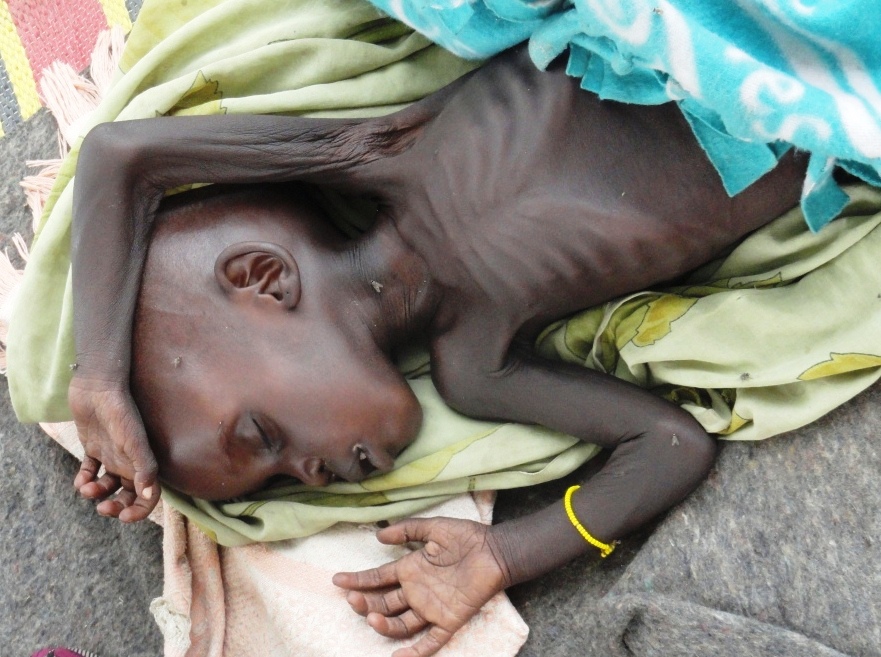
<http://sudanreeves.org/wp-content/uploads/2017/04/staving-boy.jpg>

*The fate of hundreds of thousands of children in Darfur, South Kordofan,
and Blue Nile is in our hands.*
--

Eric Reeves, Senior Fellow at Harvard University’s François-Xavier Bagnoud
Center for Health and Human Rights


[email protected]

www.sudanreeves.org

Twitter@SudanReeves

About Eric Reeves: http://sudanreeves.org/about-eric-reeves

Philanthropy:
*http://ericreeves-woodturner.com/woodturnings-available-for-purchase-dire
<http://ericreeves-woodturner.com/woodturnings-available-for-purchase-dire>*

--
To post to this group, send email to [email protected]
To unsubscribe from this group, send email to
[email protected]
Visit this group at https://groups.google.com/d/forum/southsudankob
View this message at
https://groups.google.com/d/msg/southsudankob/topic-id/message-id
For more options, visit https://groups.google.com/d/optout
---
You received this message because you are subscribed to the Google Groups
"South Sudan Info - The Kob" group.
To unsubscribe from this group and stop receiving emails from it, send an email
to [email protected].
To post to this group, send email to [email protected].
Visit this group at https://groups.google.com/group/SouthSudanKob.
To view this discussion on the web visit
https://groups.google.com/d/msgid/SouthSudanKob/CAJb14opsP2wTeD%3DSpiuQ3FmQ3wjgeh5jJRBRhAhvumw%3DuXWi8g%40mail.gmail.com.
For more options, visit https://groups.google.com/d/optout.