---------- Forwarded message ---------
From: Eric Reeves <[email protected]>
Date: Mon, 5 Jun 2017 at 19:46
Subject: Peace in Darfur Was Long Entrusted to Qataris: What we see of
Qatar now
To: Eric Reeves <[email protected]>
*Peace in Darfur Was Long Entrusted to Qataris: What we see of Qatar now*

Eric Reeves | June 5, 2017  |  http://wp.me/p45rOG-23K

After the disastrous failure of the Darfur Peace Agreement (DPA) of May
2006 (Abuja, Nigeria), neither the Bush administration nor the Obama
administration (beginning in January 2009) committed the diplomatic
resources necessary to find a true peace agreement. The DPA had no support
from Darfur civil society or hold-out rebel groups (only one of which
signed the DPA, ensuring a catastrophic splintering of the groups). The
failure to include meaningful provisions for security in the region
convinced Khartoum that it could continue its genocidal counter-insurgency
without consequences. The events of the past eleven years have proven the
regime right.

Only in July 2011 would another “peace agreement” emerge, the so-called
“Doha (Qatar) Document for Peace in Darfur” (DDPD) a travesty described by
one participant in the Abuja negotiations, Julie Flint, as “Abuja replayed
as farce.” And farcical it was, having been cobbled together by the
spectacularly incompetent and ignorant Obama administration Special Envoy
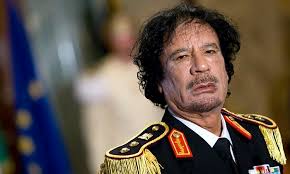
for Sudan, Scott Gration, and Libyan strongman Muamar Gadhafi (who once
described the Darfur genocide as a *“quarrel over a donkey”). *The “rebel”
representation confected by Gration and Gadhafi consisted on no major rebel
groups, only the entirely factitious Liberation and Justice Movement of
Tigani Sese
<http://www.smallarmssurveysudan.org/fileadmin/docs/facts-figures/sudan/darfur/armed-groups/opposition/HSBA-Armed-Groups-LJM.pdf>.
Again, there was no inclusion of Darfuri civil society, no participation by
*any* of the remaining rebel groups, no meaningful security
arrangements—and no effect whatsoever on the ground in Darfur. Again, the
events of the past six years make this painfully clear.

<http://sudanreeves.org/wp-content/uploads/2017/06/images.jpg>

*Muamar Gadhafi---diplomat?*

Despite this conspicuous fact, it was only very recently that the U.S. and
other Western international actors acknowledged the failure of the Qatari
effort; but even this has led only to encouraging that the DDPD be “built
upon,” “strengthened,” “augmented”…or other disingenuous pretenses that the
“Document” could possibly be the basis for peace. And the grossly
incompetent man leading current diplomatic efforts, former South African
President Thabo Mbeki, has a dismal record of failure after failure on the
Darfur file. His first effort—his self-proclaimed “Roadmap for Peace in
Darfur” (2009)—could not have been a more obvious disaster. He is despised
by Darfuris, by the rebel groups, and by all major Sudanese constituencies
other than the National Islamic Front/National Congress Party.

<http://sudanreeves.org/wp-content/uploads/2016/08/Screen-Shot-2016-08-28-at-2.36.24-PM.jpg>

*Serial diplomatic failure on all Sudan files seems not a disqualification
for Thabo Mbeki in the eyes of the African Union*

So catastrophic were Mbeki’s efforts that they left a diplomatic opening
for the ruthlessly ambitious Qataris, and a desperate Special Envoy Gration
was only too eager to seize on what appeared the only opportunity for
something that could be called a peace agreement, even if “peace” appeared
only in the name of a document.

Entrusting peace in Darfur to the Qataris, allowing them to serve as
mediators between the victims and perpetrators of genocide, was such a
gross error in judgment that there can be no forgiveness for the expediency
it represented. Given Qatar’s long support for the Muslim Brotherhood—of
which the National Islamic Front in Sudan (now the expediently renamed
“National Congress Party”) was an offshoot—the impossibility of a true
mediating role should have been obvious. But like Qatar, the Obama
administration had already sided with Khartoum, a fact made conspicuous in
an interview later in 2011 by Gration’s successor as Special Envoy for the
Sudans, Princeton Lyman:

“We [the Obama administration] do not want to see the ouster of the
[Khartoum] regime, nor regime change. We want to see the regime carrying
out reform via constitutional democratic measures.” (Interview with *Asharq
al-Awsat*, December 3, 2011 |
http://english.aawsat.com/2011/12/article55244147/asharq-al-awsat-talks-to-us-special-envoy-to-sudan-princeton-lyman
 )

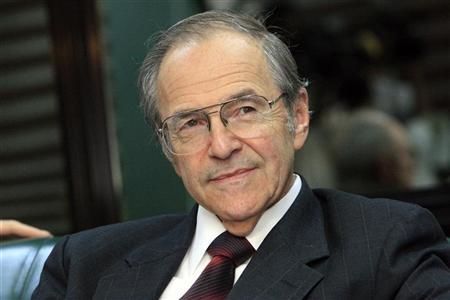
<http://sudanreeves.org/wp-content/uploads/2015/03/Lyman_sudan1.jpg>

*Princeton Lyman, the embodiment of diplomatic cynicism, expediency, and
ultimately mendacity*

The absurdity of this belief that an offshoot of the Muslim Brotherhood
could “carry out reform [in Sudan] via constitutional democratic measures”
was entirely comparable to granting the Qataris a central role in the
negotiations the produced the DDPD.

All this makes for useful background in understanding an important dispatch
from today’s *Washington Post*:

*Four Arab nations sever diplomatic ties with Qatar, exposing rift in
region | **Washington Post, June 5, 2017 | DUBAI
<https://www.washingtonpost.com/world/four-arab-nations-sever-diplomatic-ties-with-qatar-exposing-rift-in-region/2017/06/05/15ad2284-49b4-11e7-9669-250d0b15f83b_story.html?hpid=hp_hp-banner-low_qatar230am%3Ahomepage%2Fstory&utm_term=.db3460fc75d5>*

Four Arab nations severed diplomatic relations with Qatar on Monday, moving
swiftly to isolate the small but influential country after accusing Qatar’s
rulers of supporting terrorist factions and stoking regional conflicts. The
four countries—*Saudi Arabia*, the *United Arab Emirates*, *Egypt* and
*Bahrain*—released separate and apparently coordinated statements saying
they would cut air, sea and land links with Qatar, which hosts a forward
base for the U.S. military’s Central Command and is home to the widely
watched Al Jazeera network.

The feud—the most serious in decades among some the region’s most key
Western allies—has been simmering for years as *Qatar increasingly flexed
its political muscle across the region, including backing for the Muslim
Brotherhood. *The diplomatic break came just weeks after President Trump
met with Arab and Muslim leaders in Saudi Arabia and called for a unified
front against extremism and regional influence by rival Iran.

The diplomatic break came just weeks after President Trump met with Arab
and Muslim leaders in Saudi Arabia and called for a unified front against
extremism and regional influence by rival Iran. *The visit was hailed by
the Trump administration as a success, but analysts in the region said at
the time that it seemed likely to aggravate local disputes. Trump’s trip,
they said, amounted to a U.S. endorsement of the Saudi-led bloc that has
increasingly demanded that other Arab states—including Qatar—fall in line
with its positions, including a hard line against Iran and opposition to
transnational Islamist groups.*

The Brotherhood and affiliated groups, which favor Islamist-inspired
policies, are seen by many Arab leaders as threat and have faced sharp
crackdowns around the region since being ousted from power in Egypt in
2013. The result was unusually bitter feud between gulf monarchies that
have long boasted in public of their “brotherly” relations, while competing
behind the scenes for influence in a region riven by uprisings and wars,
and haunted by resurgent militant groups. *(emphases in bold added—ER*)

This split will test Khartoum’s ability to navigate its way in the region.
Having been unable to afford (economically) its longtime strategic
relationship with Iran, and having received very substantial financial
assistance from both Qatar and Saudi Arabia (with which it is fighting in
Yemen against the Iran-backed Houthis, whom Khartoum once supported), the
NIF/NCP regime will clearly have to choose.

By instinct and ideological commitment, the men who control the regime in
Khartoum are eager to support radical Islam, and likely continue their
support for international terrorism (it is one of only three countries
remaining on the U.S. State Department list of “state sponsors of
terrorism”). Leaked minutes from a meeting of senior military and security
officials on August 31, 2014 (and widely confirmed as authentic
<http://sudanreeves.org/2016/07/16/on-the-authenticity-of-minutes-of-the-military-and-security-meeting-held-in-the-national-defense-college-khartoum-31-august-2014-minutes-of-the-meeting-are-dated-1-september-2014/>,
including by the U.S. State Department) remain revealing of attitudes that
prevail within the regime:

"We have a problem with Saudi Arabia because *they found out about the
weapons we sent by way of the Red Sea to Abd al-Malik Al-Huthi’s Shiia
group in Yemen." *

(*Major General Hashim Abdalla Mohammed, Chief of Joint General
Staff*) *[The al-Huthi
terrorist organization at the time controlled much of northern and
western Yemen, immediately across the Red Sea from Sudan, as is Saudi
Arabia—ER]*

But it was in various comments about *Libya* in the 2014 meeting that
attitudes of the regime were most widely displayed:

*"We have intensified the work to train and graduate Libyan [Islamist
rebels] Military Intelligence cadres.* Currently, they are doing an
advanced course on Internet operation, deciphering of codes, interception
of telephones and wireless radios. Their leadership requested us to train
and establish for them a strong Military Intelligence system." (*General
Siddiq Amer, Director General of Intelligence and Security)*

"Our intelligence and security files can play a role in the *improvement of
our* *economy* *[this ominous claim is never explained—ER]* and diplomatic
relations. They can also be used to abort the conspiracies of the rebellion
against us. *The victory of* *our people* *[Islamists of the Libya Dawn
rebel movement—ER**]* *in Libya* is an indication that we will also achieve
victory over the New Sudan Project *["New Sudan Project" is Khartoum's
catch-all phrase for any movement toward democratization, press freedoms,
equality in citizenship, and secular governance—ER]*

In the same meeting, a highly revealing assertion was made by *General Imad
al-Din Adawy, Chief of Joint Operations*:

"The Libyan border is totally secured, especially after the victory of *our
allies* [*Libya Dawn forces*] in *Tripoli*. We managed to deliver to them
the weapons and military equipment donated by *Qatar* and Turkey and we
formed a joint operations room with them under one of the colonels in order
to coordinate and administer the military operations. Turkey and
*Qatar* provided
us with information in favor of the revolutionaries on top of the
information collected by our own agents *so they can control the whole
country."*

*Radio Dabanga* reported shortly after (28 October 2014
<https://www.dabangasudan.org/en/all-news/article/libyan-pm-arrives-in-khartoum-sudan>)
on further details of the Libyan accusations:

*[In] late September, Libyan army officers intercepted a Sudanese convoy
with Yemeni fighters at El Kufra on the Sudanese-Libyan border.* On 6
September, *a Sudanese military aircraft was grounded at El Kufra airport,
“laden with weapons bound for [Libya Dawn] rebels.”* The week before, the
Sudanese military attaché in Tripoli was declared persona non grata, after
being *accused of supporting Libyan militia groups.*

Perhaps our best news account of what is really at stake here, and the
character of *Libya Dawn militias* is *The Guardian* [Tunis], 7 September
2014
<http://www.theguardian.com/world/2014/sep/07/libya-khartoum-weapons-islamist-rebels>
:

*Libya has expelled the Sudanese military attaché after accusing Khartoum
of flying weapons to Islamist rebels in Tripoli, raising fears of a
widening regional conflict.* The government, which has fled Tripoli for
eastern Libya
<http://www.theguardian.com/world/2014/aug/24/libya-capital-under-islamist-control-tripoli-airport-seized-operation-dawn>,
accused Khartoum of sending a transport plane loaded with munitions for the
Islamist-led Libya Dawn militias who control the capital
<http://www.theguardian.com/world/2014/aug/31/tripoli-residents-libya-dawn-islamist-militias>
.

"Sudan is interposing itself by providing arms to a terrorist group that is
attacking the headquarters of the state," said a government statement.

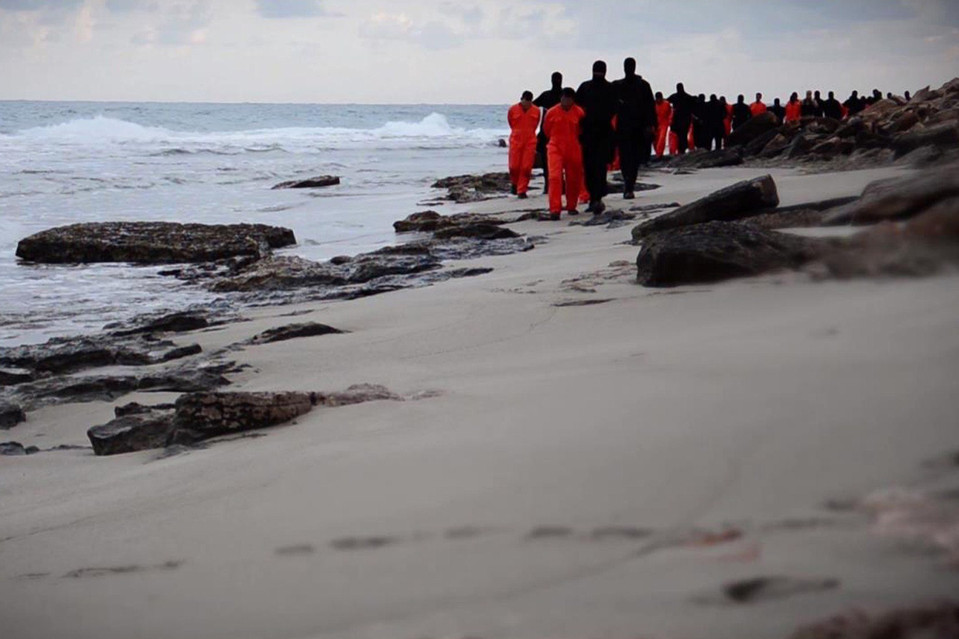
<http://sudanreeves.org/wp-content/uploads/2015/02/BN-GY886_0215is_J_20150215163138.jpg>

*Coptic Christians in Libya being led to their beheadings by one of the
radical Islamic movements that emerged after the fall of Gadhafi---and were
supported by Qatar and the Khartoum regime*

*Implications of the Saudi/Qatari Split*

The split between Qatar (where the U.S. military’s Central Command has an
important base) and Saudi Arabia (revealingly, the most important U.S. Gulf
ally) puts the State Department in a difficult quandary and may very well
have to choose sides. But it is the choice that will be forced upon
Khartoum that is the more difficult and revealing as the regime approaches
the July 13, 2017 deadline for a U.S. decision on whether to lift economic
sanctions on Sudan permanently.

The regime is desperate for an economic boost, and has survived an almost
complete lack of Foreign Exchange Currency (Forex) only because of cash
infusions from *both* *Qatar* and *Saudi Arabia*. Even so, inflation is
running at over 50 percent year-over-year, the Sudanese Pound has dropped
hugely in value, many basic commodities cannot be imported for lack of
Forex (including wheat for bread, various refined petroleum products, and
critical medicines), the agricultural sector is in terminal decline, and
the infrastructure is decaying rapidly for lack of investment during the 28
years the NIF/NCP has been in power.

But despite Khartoum’s desperate need for a permanent lifting of U.S.
sanctions—which would bite much more deeply now that the regime has lost
French banking giant BNP Paribas as its off-shore “central bank” (in the
words of the U.S. Justice Department on the criminalconviction of the bank
for massive violations of U.S. financial laws on behalf of Khartoum [2014
<http://www.nytimes.com/2015/07/15/opinion/a-better-restitution-for-darfur.html?ref=opinion>])—Khartoum
has simply not done what is required.

*
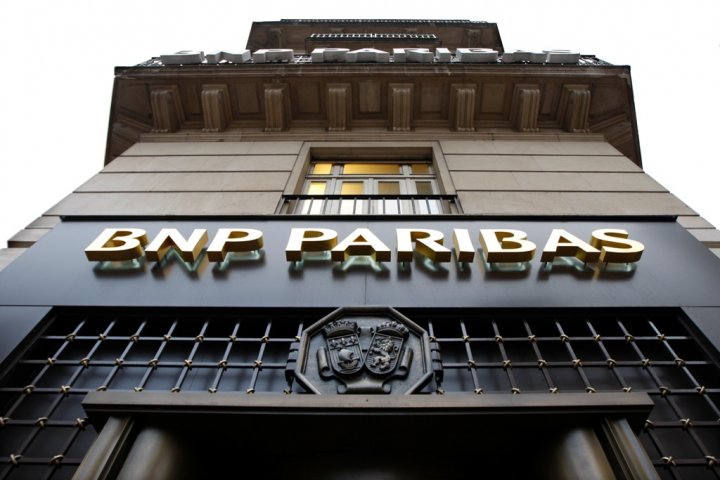
<http://sudanreeves.org/wp-content/uploads/2015/07/bnp-paribas-branch.jpg>After
its criminal conviction by the U.S. Department of Justice in 2014, French
banking giant BNP Paribas was no longer able to serve as Khartoum's
offshore "central banker," a role that worked to vitiate the financial
sanctions that were a key element of overall U.S. economic sanctions.*

Over the past year the regime has given no sign of improving humanitarian
access to any areas it does not control militarily, whether in Darfur,
South Kordofan, or Blue Nile—despite the fact that denial of relief aid
imperils many hundreds of thousands of innocent Sudanese civilians. A story
from today’s Radio Dabanga reflects the continuing obstacles Khartoum puts
before international relief organizations in Darfur:

*Hungry displaced in Central Darfur seek food outside camp* | June 5,
2017 | MUKJAR, Central Darfur |
https://www.dabangasudan.org/en/all-news/article/hungry-displaced-in-central-darfur-seek-food-outside-camp

*Shortage of food at the Mukjar camp in Central Darfur has forced hundreds
of displaced people to leave the camp and search for food elsewhere.* Speaking
to Radio Dabanga on Sunday, a camp elder explained that the food shortage
is caused by a reduction in the monthly rations provided by international
organisations to the displaced. *[These reductions result directly from
actions by Khartoum, which has repeatedly expressed its determination to
dismantle the camps and end their role in providing focus points for
international humanitarian relief—ER**]* *“About 820 camp residents have
left in the past weeks in search for food elsewhere,” he said, and called
on relief organisations “to urgently intervene to address the problem and
save the remaining families.” *He added that the people are also in urgent
need of tents and tarpaulins, “especially with the approach of the rainy
season,” in addition to health care and medicines.

More broadly, the *Norwegian Refugee Council (NRC)* recently reported:

“Almost 4,000,000 Sudanese have been forced from their homes in 14 years
[of violence in Darfur]”

And that:

*"Hundreds of thousands of people do not receive the lifesaving help they
need because of challenges in accessing communities."** (*June 1, 2017 |
http://www.aljazeera.com/news/2017/06/4000000-sudanese-displaced-fighting-170601165141799.html
/)

<http://sudanreeves.org/wp-content/uploads/2016/08/5612b94cee0f0.jpg>

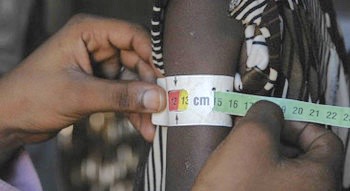
*Extremely serious malnutrition threatens many hundreds of thousands in
Sudan; the UN estimates that 2 million children face Acute Malnutrition,
and many of these face Severe Acute Malnutrition--often a death sentence.*

If international humanitarian organizations were really given free access
to the people of Darfur, we would not be reading such stories. The
“challenges” that NRC refers to are overwhelmingly the deliberate creation
of the Khartoum regime. But the Obama administration, in lifting sanctions
on Khartoum, promulgated a preposterous falsehood by way of an interview
given by *U.S. Ambassador to the UN, Samantha Power*: “we have seen a sea
change” of improvement of humanitarian access, Power declared in her final
UN interview (January 13, 2017
<http://webtv.un.org/watch/samantha-power-united-states-final-press-conference-to-un-correspondents-13-january-2017/5281173841001>).
This profoundly false statement stands as the last official U.S. government
pronouncement on the issue of humanitarian access, one of two issues that
will determine on July 13, 2017 whether sanctions are permanently lifted.

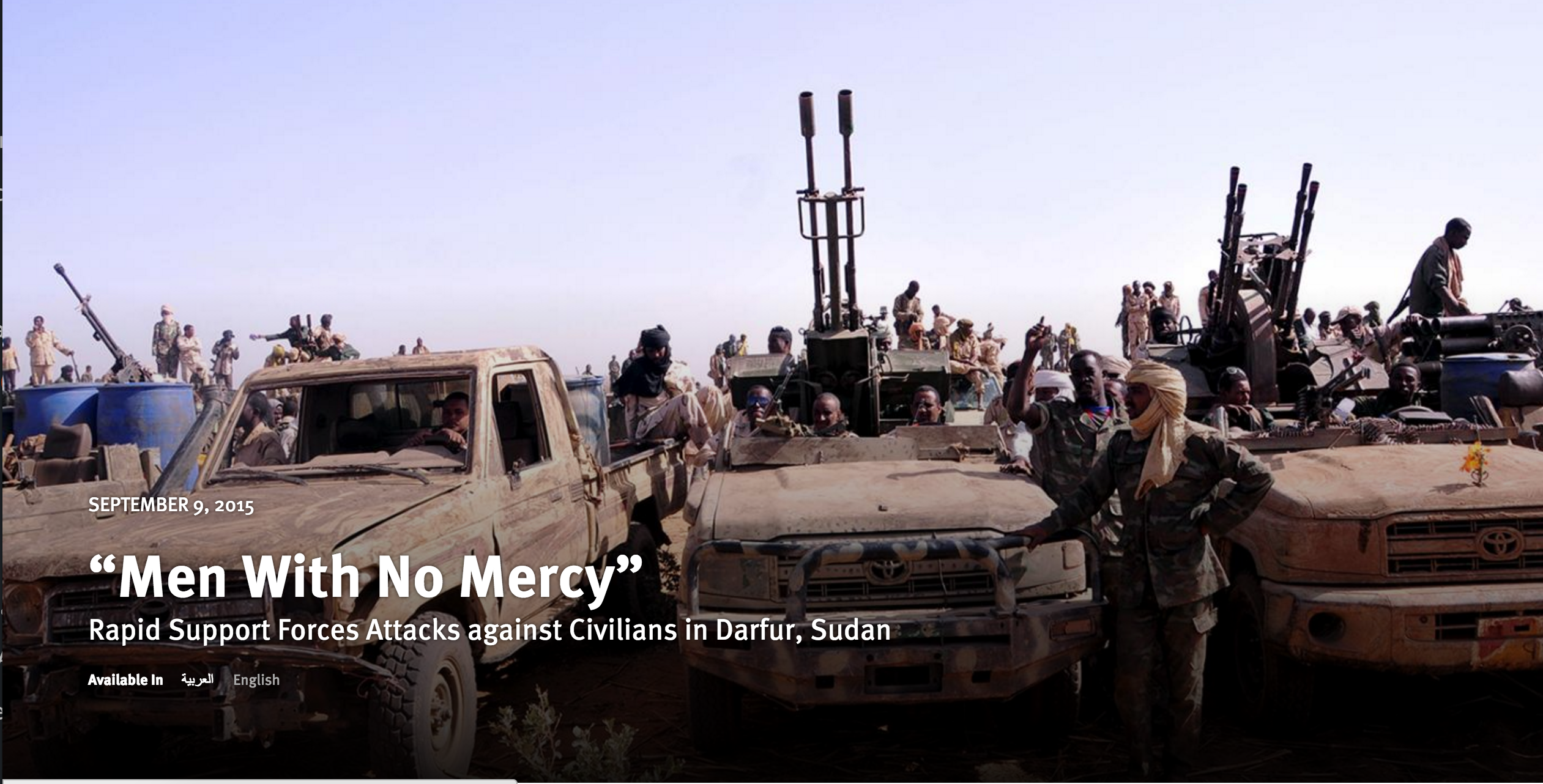
The other key issue in the sanctions decision is organized violence by the
regime—in the three contested areas, and presumably by both the *regular
Sudan Armed Forces (SAF)* and militia proxies, most notably the still very
active* Rapid Response Forces (RSF).*

<http://sudanreeves.org/wp-content/uploads/2016/06/Screen-Shot-2016-06-29-at-10.20.17-PM.png>

*The Rapid Support Forces (RSF)---now Khartoum's militia proxy of
choice---remains extremely active in Darfur; they have been officially
incorporated into the Sudan Armed Forces: why are their actions not part of
the U.S. assessment of offensive military action by the U.S. government in
deciding about the permanent lifting of economic sanctions?*

I’ve evaluated compliance by Khartoum twice since the stipulation of terms
was announced by way of President Obama’s Executive Order (January 13, 207
<https://obamawhitehouse.archives.gov/the-press-office/2017/01/13/executive-order-recognizing-positive-actions-government-sudan-and>);
on both occasions, Khartoum earned a richly deserved “F,” or failing grade:

*•  May 11, 201
<http://sudanreeves.org/2017/05/11/a-permanent-lifting-of-u-s-sanctions-on-khartoum-report-card-number-two/>7
| *http://wp.me/p45rOG-238

*•  April 16, 2017
<http://sudanreeves.org/2017/04/16/a-permanent-lifting-of-u-s-sanctions-on-khartoum-an-interim-report-card/>
| *
http://wp.me/p45rOG-22o

On the issue of organized violence against Sudanese civilians, it is
particularly important to see the significance of Khartoum’s creation—in
Darfur and elsewhere—of what has been described authoritatively as a
“militia state”:

*•  “Border Control from Hell: How the EU's migration partnership
legitimizes Sudan's ‘militia state’” | *The Enough Project | April 5, 2017
[by Suliman Baldo]
http://www.enoughproject.org/files/BorderControl_April2017_Enough_Finals.pdf

*•  “Remote-control breakdown: Sudanese paramilitary forces and
pro-government militias”* | (Small Arms Survey | April 2017) |
http://www.smallarmssurveysudan.org/fileadmin/docs/issue-briefs/HSBA-IB-27-Sudanese-paramilitary-forces.pdf

*Looking Forward to July 13, 2017*

There is no reason to believe that the profoundly incompetent Trump
administration—which still has no Assistant Secretary of State for African
Affairs—will consider the issue of sanctions against Khartoum in any but
the most cynically and simplistically expedient terms—good news for a
regime with a Muslim Brotherhood pedigree. But the rift between Qatar and
Saudi Arabia raises an immediate economic/financial threat to the NIF/NCP
regime; there may well be a bidding war between the two for Khartoum’s
support. And nobody should underestimate the financial ability of the
Qataris, avid supporters of radical Islam and the Muslim Brotherhood, to
make the winning bid.
--

Eric Reeves, Senior Fellow at Harvard University’s François-Xavier Bagnoud
Center for Health and Human Rights


[email protected]

www.sudanreeves.org

Twitter@SudanReeves

About Eric Reeves: http://sudanreeves.org/about-eric-reeves

Philanthropy:
*http://ericreeves-woodturner.com/woodturnings-available-for-purchase-dire
<http://ericreeves-woodturner.com/woodturnings-available-for-purchase-dire>*

--
To post to this group, send email to [email protected]
To unsubscribe from this group, send email to
[email protected]
Visit this group at https://groups.google.com/d/forum/southsudankob
View this message at
https://groups.google.com/d/msg/southsudankob/topic-id/message-id
For more options, visit https://groups.google.com/d/optout
---
You received this message because you are subscribed to the Google Groups
"South Sudan Info - The Kob" group.
To unsubscribe from this group and stop receiving emails from it, send an email
to [email protected].
To post to this group, send email to [email protected].
Visit this group at https://groups.google.com/group/SouthSudanKob.
To view this discussion on the web visit
https://groups.google.com/d/msgid/SouthSudanKob/CAJb14opzRp5LuPBY%3DzfXB-%3Do3BsXB3pUaZF-%3DK_qZYTdzYdOOg%40mail.gmail.com.
For more options, visit https://groups.google.com/d/optout.