---------- Forwarded message ----------
From: Eric Reeves <[email protected]>
Date: Tue, 22 Aug 2017 09:42:48 -0400
Subject: #Cholera_In_Sudan: An important dispatch from Radio Dabanga
gives some sense of what is now exploding in Darfur
To: Eric Reeves <[email protected]>
*#Cholera_In_Sudan: An important dispatch from Radio Dabanga gives some
sense of what is now exploding in Darfur*

Eric Reeves | August 22, 2017 |  http://wp.me/p45rOG-25S

The National Islamic Front/National Congress Party in Khartoum is on the
verge of securing a permanent lifting of U.S. economic and financial
sanctions. This is so despite the failure of the regime to meet one of two
key conditions laid down by the Obama administration in its perverse,
last-minute decision to lift sanctions provisionally in January 2013:
substantial improvement in humanitarian access. At the time, Obama
administration UN Ambassador Samantha Power declared that there had been a
“sea change of improvement” in humanitarian access <http://wp.me/p45rOG-20F>:
a preposterous and deeply destructively statement that was never corrected
by Power herself or anyone else in the Obama administration in a position
to do so. The State Department has confirmed to me directly that it has no
idea what served as the basis for this claim, and that it did not represent
realities in Sudan—either in Darfur or South Kordofan/Blue Nile.

There has been none of the claimed “improvement” over the past seven
months, nor signs that it will occur before the October 13, 2017 deadline
for a final U.S. decision by the woefully under-staffed and ill-informed
Trump administration. This is extraordinarily consequential in light of the
cholera epidemic that began in Blue Nile State in August 2016 and has
relatively recently reached the Darfur region.

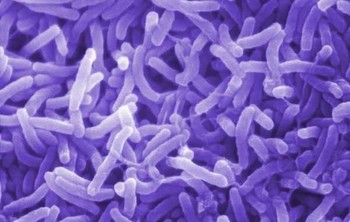
* <http://sudanreeves.org/wp-content/uploads/2017/06/5883a9e508b4f.jpg>*

*Vibrio cholerae** is a bacterium that could be easily identified from
fecal samples sent to UN WHO headquarters in Geneva*

A Radio Dabanga dispatch below, which makes clear that Khartoum still does
not permit Sudanese journalists or medical officials to use the word
“cholera,” is ominous in the extreme, especially since the UN World Health
Organization, the UN Office for the Coordination of Humanitarian Affairs,
and the U.S. Agency for International Development have all been intimidated
by Khartoum into using the euphemistic phrase “acute watery diarrhea”
instead of “cholera.” This is only one of the reasons there has not been a
more urgent response, but it is central:

*“Nierteti's hospital faces gaps in medicines, including oral and
intravenous re-hydration solutions [..],"* OCHA stated. “In Zalingei
hospital, there are *several sanitation issues, including lack of latrines
and evidence of improper solid waste management [..].”*

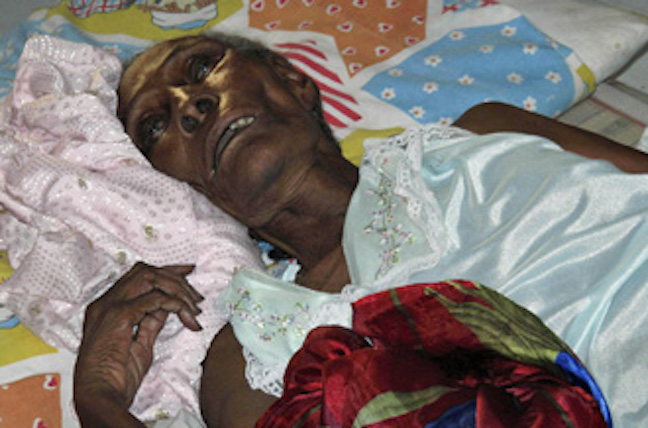
<http://sudanreeves.org/wp-content/uploads/2017/06/20101023101124672797_3.jpg>

*Suffering cholera patient; the disease can kill in under 24 hours if
untreated; with treatment (primarily simple re-hydration) recovery is
almost certain*

This is horrific news in the midst of a cholera epidemic, one that has now
spread to a region with some 2.7 million Internally Displaced Persons
<http://wp.me/p45rOG-23o>, the majority living in camps that have no
adequate sanitation or provision of clean water. That it comes at the very
height of the rainy season means that the cholera epidemic in Darfur—and
elsewhere in Sudan—will remain explosive for the foreseeable future.

The most urgent need is for massive quantities of re-hydration
equipment—followed closely by rapid improvements in sanitation and the
supplies of clean water. And yet Radio Dabanga reports:

As coordinator of the camp in Nyala state, Yagoub Abdallah Furi, informed
Radio Dabanga yesterday, “There are three medical isolation centres
belonging to two organisations from the United States that have been
established in the camp since the cholera broke out here in June.”
Currently there are 37 hospitalised cases at the camp's isolation
wards. *“There
is a large shortage of intravenous solutions.”*

And yet speaking of Central Darfur—and the same is true in all the Darfur
states—OCHA declares in its most recent humanitarian bulletin on Sudan
<http://reliefweb.int/sites/reliefweb.int/files/resources/OCHA_Sudan_Humanitarian_Bulletin_Issue_18_(31_July_-_13_August_2017).pdf>:
“humanitarian *access *and *insecurity* remain major challenges for the
implementation of key health and protection interventions” in Central
Darfur.” Again, the same is true of all five Darfur states: access is
denied to many locations and security issues that Khartoum refuses to
address seriously prevent critical deliveries of humanitarian assistance.

*It is a despicable act of cowardice for the UN World Health Organization
to continue its refusal to use the world “cholera” for the exploding
epidemic in Sudan, and Darfur in particular. Dr. Tedros Adhanom
Ghebreyesus, Director General of WHO, deserves particular condemnation for
his failure of leadership at the critical time* (see my “open letter” to
Dr. Ghebreyesus | July 24, 2017 | http://wp.me/p45rOG-25t/).

*******************************
*42 cholera dead in South Darfur camp*

Radio Dabanga | 22, 2017 NYALA |
https://www.dabangasudan.org/en/all-news/article/42-cholera-dead-in-south-darfur-campugust

In two months, 42 people have died of cholera in Kalma camp for displaced
people in South Darfur; 539 others have been infected.

*[This is one camp in Darfur, if the largest; the late arrival of the
cholera epidemic in Darfur makes these figures terrifying, especially at
the height of the rainy season, when sanitation maintenance and provision
of clean water is most difficult—ER]*

The deaths occurred between 26 June and 20 August, the coordinator of the
camp in Nyala state, Yagoub Abdallah Furi, informed Radio Dabanga
yesterday. “There are three medical isolation centres belonging to two
organisations from the United States that have been established in the camp
since the cholera broke out here in June.” Currently there are 37
hospitalised cases at the camp's isolation wards. *“There is a large
shortage of intravenous solutions.* We hope organisations working in the
medical field and the Ministry of Health to provide us with medicines.” The
epidemic reached Manawashi, north of Nyala city, in the beginning of August.

*Central Darfur*

*At least 36 people have been infected with cholera in Central Darfur’s
Nierteti in the past 11 days.* Four of them died, sources reported to Radio
Dabanga. The UN Office for the Coordination of Humanitarian Affairs (OCHA)
reported in its latest biweekly bulletin that *“humanitarian access and
insecurity remain major challenges for the implementation of key health and
protection interventions” in Central Darfur.*

*[Substantial improvement in humanitarian access to Darfur is one of two
primary conditions to be met by the Khartoum regime to secure a permanent
lifting of U.S. economic sanctions. Access continues to be denied to as
many as 1 million people in Darfur, and total humanitarian embargoes remain
in place in virtually all areas in South Kordofan and Blue Nile controlled
by the Sudan People’s Liberation Movement/Army-North—ER]*

“Nierteti's hospital faces gaps in medicines, including oral and
intravenous re-hydration solutions [..]," OCHA stated. “In Zalingei
hospital, there are *several sanitation issues, including lack of latrines
and evidence of improper solid waste management [..].”*

*National epidemic*

The National Epidemiological Corporation reported in early July that
nearly *24,000
Sudanese have been infected and 940 cholera patients have died since the
outbreak of the infectious disease in Blue Nile state in August last year*.
The Sudanese *authorities however, refuse to call the disease by its name,
and instead refer to it as “Acute Watery Diarrhoea.”*

*[Based on reporting by Radio Dabanga and other news sources in Sudan over
the past year, these figures wildly understate the extent of the infections
and total mortality—precisely what we would expect in any promulgation of
data by regime-controlled organizations/“corporations”—ER]*

*The National Intelligence and Security Service has repeatedly warned
medics and the press in the country not to make mention of cholera.*
--

Eric Reeves, Senior Fellow at Harvard University’s François-Xavier Bagnoud
Center for Health and Human Rights


[email protected]

www.sudanreeves.org

Twitter@SudanReeves

About Eric Reeves: http://sudanreeves.org/about-eric-reeves

Philanthropy:
*http://ericreeves-woodturner.com/woodturnings-available-for-purchase-dire
<http://ericreeves-woodturner.com/woodturnings-available-for-purchase-dire>*

--
To post to this group, send email to [email protected]
To unsubscribe from this group, send email to
[email protected]
Visit this group at https://groups.google.com/d/forum/southsudankob
View this message at
https://groups.google.com/d/msg/southsudankob/topic-id/message-id
For more options, visit https://groups.google.com/d/optout
---
You received this message because you are subscribed to the Google Groups
"South Sudan Info - The Kob" group.
To unsubscribe from this group and stop receiving emails from it, send an email
to [email protected].
To post to this group, send email to [email protected].
Visit this group at https://groups.google.com/group/SouthSudanKob.
To view this discussion on the web visit
https://groups.google.com/d/msgid/SouthSudanKob/CAJb14or6SYiT4-dnD9FHvSzJ3_eqvKdwB-%3DEUYOxVNrRZyL_Mw%40mail.gmail.com.
For more options, visit https://groups.google.com/d/optout.