Thanks for this feedback. In these examples, I would say that there is
still a clear delimitation of what outside and what is inside, so can be
addressed with Simple 3D buildings modelling. My question is oriented in
a particular case where you don't have a very precise delimitation of
inside/outside, like this parking lot :
https://commons.wikimedia.org/wiki/File:Parking_Building_(41640900211).jpg
As level 0 doesn't have wall, if you are near the building "limit" you
can consider being outside, but at the center of this level you are
clearly inside (covered, maybe warmer). So how can we represent this
lack of walls, but looking more like something inside ?
Best regards,

Adrien P.

Le 26/07/2019 à 13:39, Martin Koppenhoefer a écrit :
Am Fr., 26. Juli 2019 um 13:18 Uhr schrieb Martin Koppenhoefer
<[email protected] <mailto:[email protected]>>:
    no, I would put it like this: the ground floor is still part of
    the building, but it is outside. Like a balcony for example. Would
    you say a balcony is "inside"?
I guess this was too short, here's a more exhaustive take on the
typical situations:
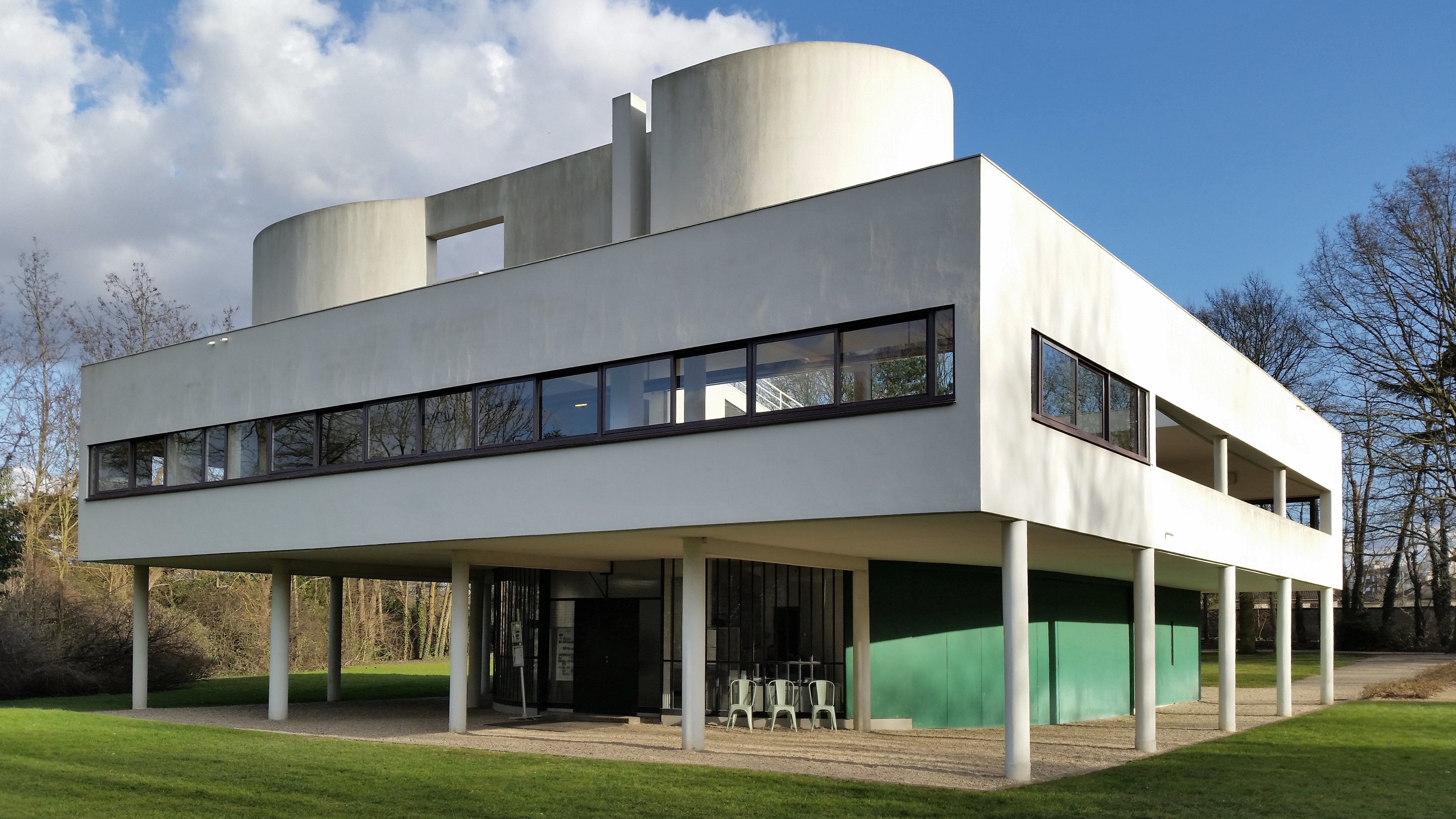
1. iconic building by le Corbu:
https://upload.wikimedia.org/wikipedia/de/a/af/Villa_Savoye_2015.jpg
This is a typical example for a raised modernist building.
the space where you can see chairs is IMHO clearly not "indoor", I
would tend to accept it is part of the building (because it is
"created"/delimited by the building and intended as usuable space),
but you could also argue it is part of the garden, the architect even
emphasizes this by using the same pavement as for the driveway (at
least it looks like this on the picture).
These are typically cases where the building is raised above the
ground in order to make use of a covered outdoor space, e.g. to use it
as part of the garden, or to park a car, or as common space for the
residents.
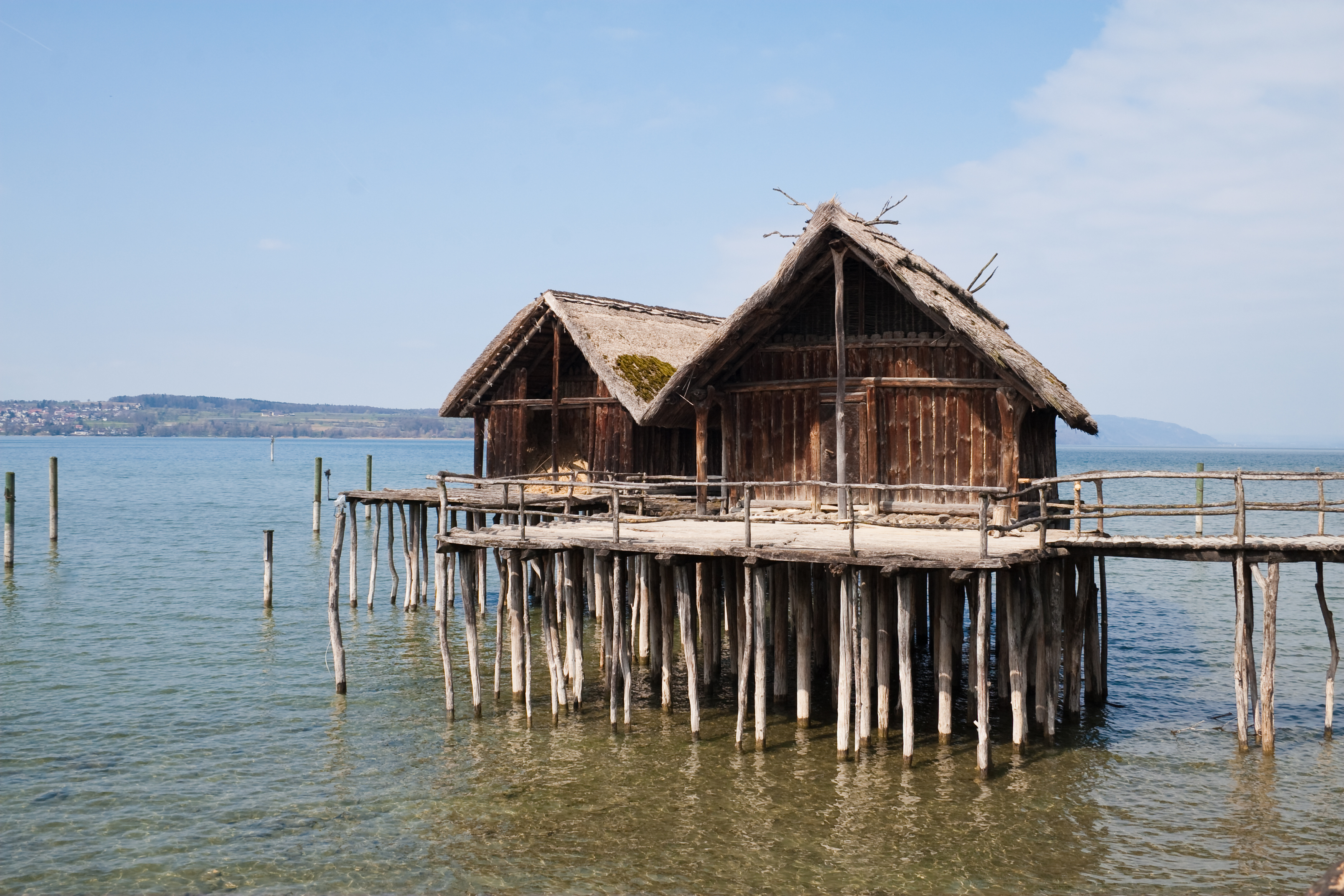
2. reconstruction of prehistoric raised buildings inside the Lake of
Constance:
https://upload.wikimedia.org/wikipedia/commons/2/2e/Pfahlbaumuseum_Unteruhldingen_Steinzeith%C3%A4user_Riedschachen_2010_04_10.jpg
I would tend to count the outdoor space below the "house" as not being
part of the building (conceptually, the building is standing on legs,
and while the legs are part of it, the area where they stand could be
considered as not part of it). The area not being usable/accessible
contributes to this judgement.
There are similar examples all over the world, e.g. here:
http://bilder.net/bild-h%c3%bctte-urwald-orinoco-2335.jpg or here
http://www.amliebstenreisen.at/bilder/2015/02/junglebay-2-660x330.jpg
These are generally cases where the building is raised above a
"hostile" environment, e.g. to protect it from water, wild animals,
enemies, or to create a level surface in an inclined surrounding.
Typically the space below is not used in these cases. I would not
consider the (unmodified / unaltered) ground below the building to be
part of the building.
In all cases, I would not consider these indoor spaces, because they
can not be heated or cooled, while you may be protected from the sun
and precipitation you will still feel more outside than inside, typically.
I acknowledge there are many different situations and you will have to
assess these individually, there will surely be a lot of edge cases.
How you see them may also depend on the climate in the area in
general, e.g. there are also lots of houses that are neither cooled
nor heated, and some may have openings that cannot be closed rather
than windows.
Cheers,
Martin


_______________________________________________
Tagging mailing list
[email protected]
https://lists.openstreetmap.org/listinfo/tagging
_______________________________________________
Tagging mailing list
[email protected]
https://lists.openstreetmap.org/listinfo/tagging