>     * Another hypothesis is that more complete areas of OSM will have a
> higher level of edit activity. If no-one has ever edited an area then it
> may be unlikely that the map is complete there, obviously however there may
> just be nothing there, so this test could be used in conjunction with the
> Yahoo! Imagery test stated before. If we could produce some sort of heat
> map showing which areas are edited most frequently and monitor it over time
> this could certainly show us some interesting trends.
I have done approximately this some time ago. See my post in an earlier thread
on completeness measures:
http://lists.openstreetmap.org/pipermail/talk/2008-May/026284.html

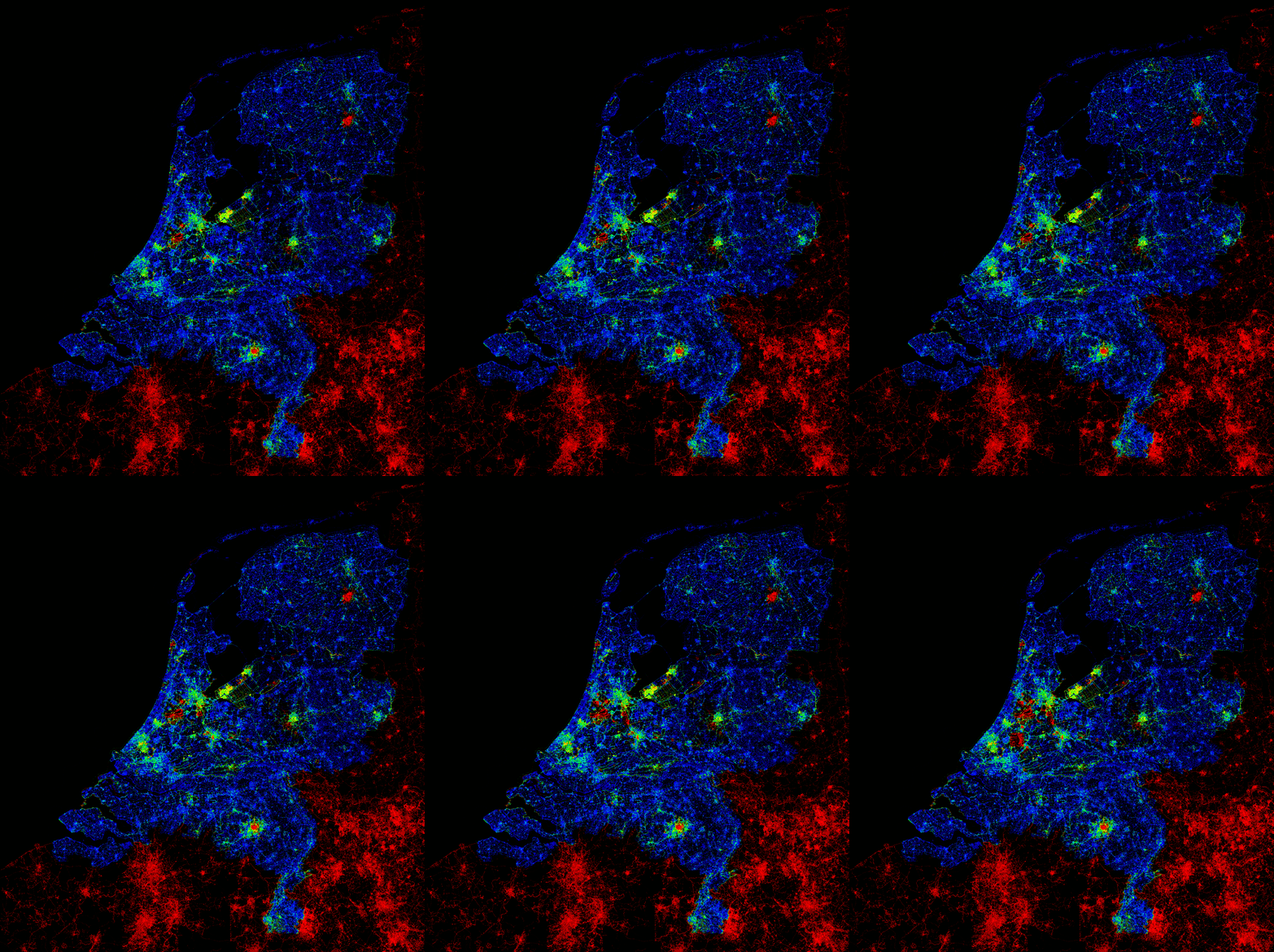
In the meantime I created the images for the Netherlands weekly and put them
in an animated GIF file:
http://www.vanwal.nl/osm/density/nl_500_080425-080619.gif

On the Dutch tile server we also added a layer showing recent changes,
overlayed over aerial imagery, see
http://tile.openstreetmap.nl/~rubke/fietskaart/?zoom=9&lat=52.00&lon=5.07&layers=0B000FFFFFFFFFFTT
(Only zoom level 7-10; the placenames can be turned off in the layer menu.)

Although the amount of recent changes is not a measure for completeness, I
think it shows nicely what we can do using automated image generation, and
the method can easily be adapted to show different kinds of statistics.

--
Freek


I'm very intrigued by your work Freek. I'll get working on trying to reproduce
something like this for the UK and then try to use the map generated to compare
with OSM. See if the hypothesis does hold that more complete areas are edited
more. Because of course as you say a fully complete area should not be edited
at all.

Ed
http://edwardmjohnson.wordpress.com/

_______________________________________________
talk mailing list
[email protected]
http://lists.openstreetmap.org/cgi-bin/mailman/listinfo/talk