Hello,

thanks for the test! Although it looks better than the first one, to be
honest, it is still completely unsuitable for Japanese (if you want to
have a “real” map): It is clearly a Chinese font, which is really
different in some characters than a Japanese person would expect. This
is also true for Taiwan, which is a little bit different. Korea also
uses different characters, but because Korean usually uses Hangul, this
is not so much of a problem.
Therefore the only solution would be to render Japanese text (either the
name:ja tag everywhere or the name tag in Japan) with a Japanese font.
In essence, use 4 fonts (Chinese mainland, this can be the current one,
Japanese, Taiwanese, Korean) and select them based on the language and area.

But the problem for East Asia in OSM does not only lie in the fonts: The
entire OSM rendering is completely European centered. For Japan (and the
other east Asian countries; I guess also for other regions like India,
Middle East etc) being usuable in OSM, the entire rendering for this
countries should be rewritten from scratch. For example, in Japan and
Korea the street crossings have names, in contrast to the street. The
houses are arranged in house blocks and city blocks, which have to be
shown. Also, for example, buddhist temples show a 卍 on the map, hot
springs show a ♨. Some shops should be much more prominently displayed
(for example the ubiquitious convenience stores) etc. I am not well
versed with other regions of the world, but I guess they have similar
problems.

Keeping all that in mind, at some point I come to the conclusion that
the only real possibilty for OSM to be used in these countries is to let
the different countries create their own tile servers. They know best
what should be displayed and until OSM does not offer a way to
incorporate these changes on the main map (which is nonetheless the best
way and a method for that should be persued, I think!), OSM in this
countries will not be used in any way.

As to your original question (Sorry for the long off topic text):
Actually I cannot see much of a difference. The problems making it
rather unreadable are the followings:

1. The fonts are too small: This works for latin text, and would work
for CJK text if used on a higher resolution screen, but for currently
used computer screens (and the rendering in the tiles), it is too small.
Well, I am not a native CJK speaker, so this might be different for
other people, but for me, it is too small and unreadlable.

2. Connected to the first issue: The hinting and anti-aliasing of the
characters is bad. If you have such a small rendering of the font,
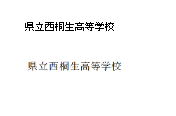
rather use a nicely hinted bitmap font. I have created a comparision of
this issue: First MS Mincho 11 pt with a 70% zoom in MS Word (where
bitmap fonts are used), second MS Mincho with 11 pt and 200% zoom (no
bitmap fonts at this zoom), afterwards shrinking it to 35%. Admitely,
rather a bad method, but you can clearly see the difference.
http://abload.de/img/comparisonidqpu.png

3. The white shadow makes it at some points even more difficult, but I
cannot say that for sure.

This is connected to the Chinese characters, Korean works relatively
fine I guess (although I don't speak Korean).

By the way, there is also a DroidSansJapanese font with Japanese characters.

Am 12.01.2014 14:19, schrieb Paul Norman:
> Right now the main OpenStreetMap.org stylesheet uses Unifont as a
> fallback font to render Chinese, Japanese and Korean (CJK) characters,
> as well as any other characters not present in the DejaVu font. Unifont
> is mainly designed to support all characters, and is not designed to
> look good.
>
> I'm looking at Droid Sans Fallback, a free font developed for Android,
> and evaluating if it would be a better fallback font than Unifont.
> Because I don't read Chinese, Japanese or Korean, I could use help.
>
> I have prepared a demo at http://tile.paulnorman.ca/demo/fonts.html with
> three layers: conventional OSM.org, tiles without any fallback font, and
> tiles using Droid Fallback as a fallback font.
>
> What I would like is for people to look at the difference between the
> conventional OSM.org and Droid Fallback tiles and see which is easier to
> read for the CJK glyphs. The tiles without any fallback font can be used
> to find areas where DejaVu doesn't have glyphs and the fallback font is
> being used.
>
> Some examples
>
> Japanese cities: http://tile.paulnorman.ca/demo/fonts.html#9/35.443/138.247
>
> Japanese train stations:
> http://tile.paulnorman.ca/demo/fonts.html#16/36.415/139.325
>
> Korean cities: http://tile.paulnorman.ca/demo/fonts.html#9/37.25/127.22
>
> Chinese tourist attraction:
> http://tile.paulnorman.ca/demo/fonts.html#15/39.94/116.48
>
> Please keep in mind that
>
> - My server is not nearly as powerful as tile.osm.org, so renders slower
>   and has less cached data
> - Only Asia is loaded on my server
> - The data is a couple of days old and isn't being updated
>
> I would like some feedback on if Unifont or Droid Sans Fallback looks
> better. Please keep in mind that I don't read the languages being rendered.
>
>
> _______________________________________________
> talk mailing list
> [email protected]
> https://lists.openstreetmap.org/listinfo/talk
>
<<attachment: comparison.png>>
_______________________________________________
talk mailing list
[email protected]
https://lists.openstreetmap.org/listinfo/talk