texascavers Digest 15 Sep 2009 17:42:44 -0000 Issue 853

Topics (messages 12080 through 12089):
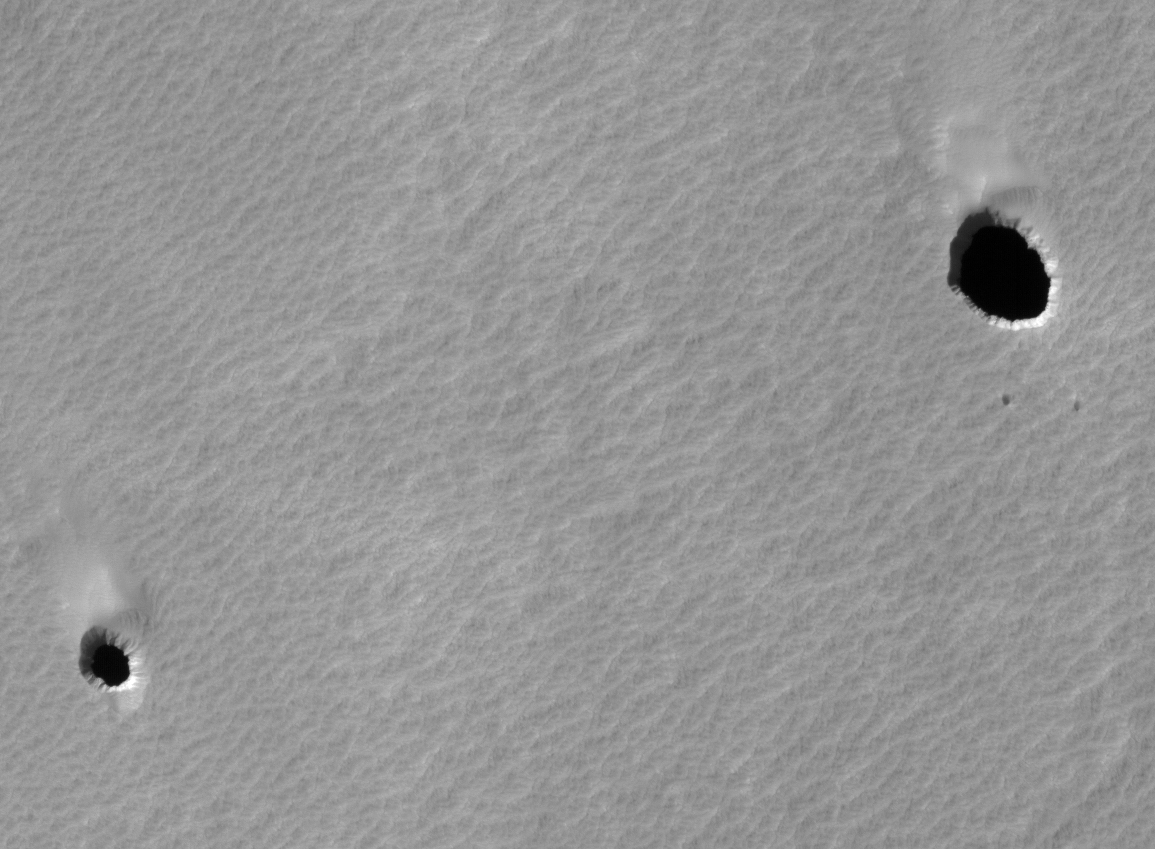
Re: Low Altitude Photos of Mars
        12080 by: Ed Alexander

UT Grotto Sep 16, 2009
        12081 by: Gary Franklin

BSEACD adopts additional extreme drought rules :
        12082 by: JerryAtkin.aol.com

Rope
        12083 by: Schuyler Reidel

Slightly TCR related
        12084 by: Rick Corbell

cavers in the news
        12085 by: David
        12089 by: Louise Power

OT - internet related
        12086 by: David

RFIDs and Cave Radios, Re: [Texascavers] For those of you who are crossing the
border...
        12087 by: Rod Goke
        12088 by: SS

Administrivia:

To subscribe to the digest, e-mail:
        <[email protected]>

To unsubscribe from the digest, e-mail:
        <[email protected]>

To post to the list, e-mail:
        <[email protected]>


----------------------------------------------------------------------
--- Begin Message ---
Scale?

Chris Vreeland wrote:
Through trip!

On Sep 8, 2009, at 9:51 PM, David wrote:
http://hirise.lpl.arizona.edu/images/2008/details/cut/PSP_009488_1745_cut_a.jpg
--- End Message ---
--- Begin Message ---
Underground Texas Grotto meeting Sep 16, 2009
www.utgrotto.org
The meeting is on Wednesday from 7:45 P.M. - 9:00 P.M.
on the University of Texas Campus in 2.48 Painter Hall
http://www.utexas.edu/maps/main/buildings/pai.html
The Program will be Tabasco - Feb 2009 by Vickie Siegel. Vickie took some time
from her year long whirlwind of International adventure to make progress in
the Tabasco project. She has been highly involved in this project for multiple
trips, along with many others, and will update us on the most recent progress
of this exciting project. Come out for a cool time in Austin Texas and
experience all the things that we take for granted on a daily basis.
For information on Underground Texas Grotto activities, please see the web
site. All of our information is available including officer contact info, trips
reports, new caver training, event calendar for beginner trips, vertical rope
training, or other cool activities.
Occasionally, some cavers gather before the meeting about 6:30 at Sau Paulo
www.saopaulos.net for happy hour, then migrate to the meeting. The official
aftermeeting is at Posse East www.posseeast.com immediately after the meeting,
about 9:30, where we go for burgers & beer, recruit for upcoming trips, and
share caving stories.
The UT Grotto needs you, YES YOU, the caver with photos and a story to share
about your adventures, scientific research, or something else really cool.
Contact Gary. [email protected]
--- End Message ---
--- Begin Message ---
For Immediate Release:   Friday, September 11,  2009
For more  information, contact:  Kirk Holland, General  Manager


Aquifer District Adopts Additional Rules to Protect  Groundwater
Austin, Texas; September  11, 2009 – The Barton Springs/Edwards  Aquifer
Conservation District has changed its rules to manage more equitably its
groundwater resources and to respond more effectively to severe and prolonged
droughts.  At its Board meeting last night, the District’s Board of
Directors approved a sweeping set of rule changes to accomplish those
objectives.
The changes were adopted after an extraordinary amount of  stakeholder input
over the last nine months, with public interest heightened by  the ongoing
severe groundwater drought in the  District.
The  adopted rules  establish a new Exceptional Drought stage, with
mandatory 40% curtailments in  pumping for all permitted users; differentiate
among
several aquifers as to  drought management measures and other regulations;
specify accelerated and  additional curtailments for certain types of
permits if the aquifer water levels  fall to historic low levels; and also
propose
a new temporary transfer permit  system that allows certain permittees to
contractually transfer water pumpage  rights under certain conditions during
extreme drought to minimize socioeconomic  impacts and that provides at the
same time a net benefit to the aquifer  accompanying the transaction.
“The new rules  evidence the District’s commitment to conserving and
protecting the groundwater  in the District and the uses that are dependent
upon
it under all aquifer  conditions”, remarked Kirk Holland, the District’s
General Manager.  “This  is a finite and shared resource, and right now,
anyone using groundwater in the  District should consider their water supply in
peril.  These rule changes  balance aquifer protection and groundwater use
for the benefit of all users for  as long as possible during drought.”
Holland noted that, “Despite  the severity of the current drought and the
very hot and dry summer, the  District’s permittees and their end-user
customers have performed admirably in  meeting the required 30% curtailments in
authorized pumpage.  The current  aquifer conditions and the new rules are not
caused by profligate well pumping  but by a lack of rainfall and creek
flow, which replenish the primary Edwards  aquifer, for more than two years.
But there is no avoiding the fact that  if the current drought worsens, the
larger curtailments and water-source  substitutions required under the new
rules will be more difficult to make and  likely more expensive for virtually
all those who use the  aquifer.”
A tabular summary of the  rule changes and the new Rules & Bylaws document
may be viewed on the  District website early in the week of September 14th.
For more  information, contact the District office at (512)  282-8441.
The Barton Springs/Edwards  Aquifer Conservation District is charged by the
State of Texas to manage the  groundwater resources of southern Travis,
northern Hays, and adjacent parts of  Bastrop and Caldwell Counties. These
groundwater systems serve more than 50,000  Central Texans as a water supply
and
feed the iconic recreational and cultural  resource of Barton Springs and
its habitat of federally-protected endangered  species living there.
###
Tammy Raymond
Barton Springs Edwards Aquifer Conservation  District
1124 Regal Row
Austin, TX 78748
(512) 282-8441
--- End Message ---
--- Begin Message ---
Hello all,
My Uncle has come into possession of a few pallets of arbor rope
(rope for trees). I don't have the exact specifications but he is
asking 50 cents a foot. If anybody has any need for some cheap rope,
please send me an email and I will get you the specs and more details.
Rocky Reidel
[email protected]
--- End Message ---
--- Begin Message ---
All,

While keeping an eye on water levels during this recent glorious period of
rainfall, I discovered this intersting web page that shows the daily water
levels important to my interests.  It includes the Aquifer level as measured at
the J-17 well used as the reference for San Antonio and the level of Lake
Medina that influences the flow at Paradise Canyon (see there is a TCR
reference here).


http://www.saws.org/our_water/aquifer/


Rick Corbell


"It is the mark of an educated mind to be able to entertain a thought without
accepting it." - Aristotle

"Empty pockets never held anyone back.Only empty heads and empty hearts can do
that."- Norman Vincent Peale


_________________________________________________________________
Your E-mail and More On-the-Go. Get Windows Live Hotmail Free.
http://clk.atdmt.com/GBL/go/171222985/direct/01/
--- End Message ---
--- Begin Message ---
I think someone's mentioned this already, but this is the official
Aggie version of the story:

http://media.www.thebatt.com/media/storage/paper657/news/2009/09/14/News/Marine.Biology.Professors.Research.Reaches.New.Depths-3770406.shtml
--- End Message ---
--- Begin Message ---
The article said: "...with a longitude of more than four miles."


I think I'd be very careful believing someone who didn't know the difference
between length and longitude.


Louise

> From: [email protected]
> Date: Mon, 14 Sep 2009 22:14:35 -0500
> To: [email protected]
> Subject: [Texascavers] cavers in the news
>
> I think someone's mentioned this already, but this is the official
> Aggie version of the story:
>
> http://media.www.thebatt.com/media/storage/paper657/news/2009/09/14/News/Marine.Biology.Professors.Research.Reaches.New.Depths-3770406.shtml
>
> ---------------------------------------------------------------------
> Visit our website: http://texascavers.com
> To unsubscribe, e-mail: [email protected]
> For additional commands, e-mail: [email protected]
>
--- End Message ---
--- Begin Message ---
I thought I would share an interesting tip that I stumbled on accidentally:

In your web browser bar where you type the web address, type

a worded math statement such as:

"63 percent of 80"

and hit enter.


The answer will be your first link, and it will show up in big
black bold numbers.


if your browser doesn't do that yet, try doing it in the search box.


This beats having to hunt for a calculator
--- End Message ---
--- Begin Message ---
The following discussion was written in response to Terry's question about
possible use of aluminum foil to shield an RFID device, but the answer involves
an interesting comparison with "cave radios" and an often overlooked weakness
in Faraday cage style shielding.

Wrapping an RFID equipped card or passport in aluminum foil might shield it,
but the devil is in the details. Aluminum foil, or any other material that is a
good electrical conductor, tends to reflect radio waves and, hence, be
effective as RF shielding. If there are any gaps or holes in the shield, then
radio waves may leak through the holes, depending on hole size in comparison
with the wavelength of the radio waves. Higher frequency signals have shorter
wavelengths and, hence, can leak through smaller gaps or holes in a shield.
(Notice that the window in the door of a typical microwave oven has lots of
small holes in a conductive shield. The holes allow you to see through, since
they are larger than the wavelength of light, but they block the microwaves,
since they are smaller than the microwave wavelength.) Shielding effectiveness
also can be reduced if part of the metal shield does not make a good electrical
connection with the rest of the shield. For example if the metal lid or door of
a metal box does not make good electrical contact with the rest of the box,
then the effectiveness of the box as a Faraday cage can be compromised.

Another potential shielding problem with aluminum foil and with most practical
Faraday cage designs is that they don't shield very effectively against
magnetic fields. Faraday cages made of aluminum, copper, or other nonferrous
metals tend to shield effectively against electrical fields and typical radio
signals, but they have very limited value in shielding against magnetic fields.
A steady magnetic field, such as that of a permanent magnet, passes easily
through this type of shield. A changing magnetic field, such as that produced
by an alternating current in a coil of wire, tends to be reduced by a
nonferrous metal shield, because the changing magnetic field induces a circular
alternating current in the shield, and this induced current produces a magnetic
field that tends to cancel out the external magnetic field. This effect would
produce very effective shielding against changing magnetic fields if the
Faraday cage were made of superconducting material, but it is not nearly as
effective when using ordinary metals. With ordinary materials, this shielding
effect tends to be most effective for rapidly changing (high frequency)
magnetic fields and least effective for slowly changing (low frequency)
magnetic fields.

In case you are wondering why anyone should care about how well a Faraday cage
shields against changing magnetic fields, it is essentially the same issue we
face when trying to achieve wireless communication between people in a cave and
people on the surface. The earth surrounding a cave acts much like a Faraday
cage, effectively blocking most radio signals, but providing only limited
shielding against changing magnetic fields. The communication/location devices
known as "cave radios" were designed to exploit this weakness in the natural
Faraday-cage-like shielding surrounding a cave. A "cave radio" communicates
through this natural "Faraday cage" by using a changing magnetic field produced
by a coil of wire in the transmitter and detected by a similar coil in the
receiver.

So what does this have to do with using aluminum foil or some similar Faraday
cage package to shield an RFID device? Well, it's essentially the same issue we
face in cave-to-surface communications. If the RFID device is designed to
communicate using conventional radio signals transmitted and received through a
radio style antenna, then a Faraday cage could be expected to provide very
effective shielding. If on the other hand, the RFID device is designed to
communicate via magnetic induction, like a "cave radio", then the Faraday cage
might only weaken the signal and reduce the range of the device instead of
totally blocking its communication. Magnetic induction devices tend to be
practical only for relatively short range communication, as compared with
ordinary radio communication, but they are better suited for transmitting
through materials that would reflect or absorb conventional radio signals. I
have not investigated the technologies of current RFID devices in much detail,
but at least some of the designs I've seen appear to have spiral coils
occupying much of the chip area, leading me to suspect that at least some of
them are using magnetic induction.

The bottom line is that, in principle, relying on a Faraday cage style package
to block operation of an RFID device is like relying on a cave environment to
block wireless communication. The shielding might be very effective against
some, or even most, devices, but it also should be possible to design a device
that would transmit through this kind of shield, at least over a short
distance. It would be hard to predict how effective a particular shield would
be against a particular device without access to either technical details of
the device or some way to test its operation. I haven't investigated what does
and doesn't work with the various RFID devices currently in use, but you can
bet that some people are investigating this and that some of them are
disclosing their results and others are not.

Rod

-----Original Message-----
>From: TM Raines <[email protected]>
>Sent: Sep 11, 2009 10:48 PM
>To: Rod Goke <[email protected]>
>Subject: Re: [Texascavers] For those of you who are crossing the border...
>
>Say Rod,
>
>Could you wrap your card or passport in aluminum foil and shield it??
>
>Curious, Terry
>
>
>On Sep 10, 2009, at 11:56 PM, Rod Goke wrote:
>
>> The most dangerous aspect of this in my opinion is the use of RFID
>> chips in passports and other documents, since these chips can be
>> read without your knowledge at any time by anyone within range with
>> a suitable RFID reader, even when your documents are stored out of
>> sight in your pocket or luggage. In principle, it should be
>> possible to store your passport or other RFID equipped documents
>> inside a special envelope or case designed to act like a Faraday
>> cage, blocking any radio frequency signals traveling to or from the
>> RFID chip. I've heard some discussion that envelopes of this type
>> might be provided with the new RFID equipped passports, but have
>> not checked into this, since I still have a valid old passport with
>> no RFID chip. Have any of you had any experience with special
>> passport envelopes or other packaging designed to prevent
>> surreptitious detection and reading of RFID chips?
>>
>> The closest experience I've had with a similar issue was during the
>> late 1990s with a credit card sized access card that was provided
>> to me by my employer to access the building where I worked. The
>> access card apparently contained an RFID chip or some similar
>> wireless technology, since it did not have to be inserted into a
>> reader but could activate the automatic door lock simply by holding
>> the access card near the reader. Normally, I carried this card in
>> my wallet and used it for after hours access to my office. The
>> problem, however, was that this access card also would trigger the
>> anti-theft alarm at a local Target store whenever I walked through
>> the scanner at their door. The Target security guard didn't suspect
>> me of shoplifting, since the alarm went off immediately whenever I
>> entered the store, but it was a nuisance for both of us, since we'd
>> have to waste time verifying that my access card was the cause
>> every time it triggered the alarm. One night the security guard
>> gave me a special card designed to eliminate this problem. It was a
>> card about the size of a credit card or business card and it
>> appeared to be made of thick paper, similar to a business card. I
>> suspect, however, that this paper contained some kind of
>> electrically conductive material designed to shield against
>> whatever electromagnetic signals were used by their reader. All I
>> had to do was to place this card next to my access card in my
>> wallet, and as long as I carried the 2 cards next to each other,
>> there were no more false alarms.
>>
>> Rod
>
--- End Message ---
--- Begin Message ---
Rod,

I'm not sure that your hypothesis is entirely correct.

In layman's terms a faraday cage works by conducting radiation around the
structure thru redistribution. If you took two pieces of copper foil and
sandwiched your passport between them it would effectively redistribute the
field around the resonant element inside.

The problem in a cave isn't so much that it's a faraday cage.  It's an issue
of power, density, and wavelength.  Rock is a poor conductor of low power
high frequency EM. As you lower the frequency scale however, from the UHF to
VHF to HF and finally down to the LF, SLF, and ULF ranges you suddenly find
that the earth is a great transmitter.  In fact. Signals, with enough
energy, can travel not only miles but hundreds and even thousands of miles.
Naval submarines today use SLF (super low frequency) ground stations to
communicate.  Just like the low frequency sound made by a whale can travel
through water so can very low frequency EM waves.


-----Original Message-----
From: Rod Goke [mailto:[email protected]]
Sent: Tuesday, September 15, 2009 3:36 AM
To: TM Raines; Rod Goke; TexasCavers
Subject: [Texascavers] RFIDs and Cave Radios, Re: [Texascavers] For those of
you who are crossing the border...

The following discussion was written in response to Terry's question about
possible use of aluminum foil to shield an RFID device, but the answer
involves an interesting comparison with "cave radios" and an often
overlooked weakness in Faraday cage style shielding.

Wrapping an RFID equipped card or passport in aluminum foil might shield it,
but the devil is in the details. Aluminum foil, or any other material that
is a good electrical conductor, tends to reflect radio waves and, hence, be
effective as RF shielding. If there are any gaps or holes in the shield,
then radio waves may leak through the holes, depending on hole size in
comparison with the wavelength of the radio waves. Higher frequency signals
have shorter wavelengths and, hence, can leak through smaller gaps or holes
in a shield. (Notice that the window in the door of a typical microwave oven
has lots of small holes in a conductive shield. The holes allow you to see
through, since they are larger than the wavelength of light, but they block
the microwaves, since they are smaller than the microwave wavelength.)
Shielding effectiveness also can be reduced if part of the metal shield does
not make a good electrical connection with the rest of the shield. For
example if the metal lid or door of a metal box does not make good
electrical contact with the rest of the box, then the effectiveness of the
box as a Faraday cage can be compromised.

Another potential shielding problem with aluminum foil and with most
practical Faraday cage designs is that they don't shield very effectively
against magnetic fields. Faraday cages made of aluminum, copper, or other
nonferrous metals tend to shield effectively against electrical fields and
typical radio signals, but they have very limited value in shielding against
magnetic fields. A steady magnetic field, such as that of a permanent
magnet, passes easily through this type of shield. A changing magnetic
field, such as that produced by an alternating current in a coil of wire,
tends to be reduced by a nonferrous metal shield, because the changing
magnetic field induces a circular alternating current in the shield, and
this induced current produces a magnetic field that tends to cancel out the
external magnetic field. This effect would produce very effective shielding
against changing magnetic fields if the Faraday cage were made of
superconducting material, but it is not nearly as effective when using
ordinary metals. With ordinary materials, this shielding effect tends to be
most effective for rapidly changing (high frequency) magnetic fields and
least effective for slowly changing (low frequency) magnetic fields.

In case you are wondering why anyone should care about how well a Faraday
cage shields against changing magnetic fields, it is essentially the same
issue we face when trying to achieve wireless communication between people
in a cave and people on the surface. The earth surrounding a cave acts much
like a Faraday cage, effectively blocking most radio signals, but providing
only limited shielding against changing magnetic fields. The
communication/location devices known as "cave radios" were designed to
exploit this weakness in the natural Faraday-cage-like shielding surrounding
a cave. A "cave radio" communicates through this natural "Faraday cage" by
using a changing magnetic field produced by a coil of wire in the
transmitter and detected by a similar coil in the receiver.

So what does this have to do with using aluminum foil or some similar
Faraday cage package to shield an RFID device? Well, it's essentially the
same issue we face in cave-to-surface communications. If the RFID device is
designed to communicate using conventional radio signals transmitted and
received through a radio style antenna, then a Faraday cage could be
expected to provide very effective shielding. If on the other hand, the RFID
device is designed to communicate via magnetic induction, like a "cave
radio", then the Faraday cage might only weaken the signal and reduce the
range of the device instead of totally blocking its communication. Magnetic
induction devices tend to be practical only for relatively short range
communication, as compared with ordinary radio communication, but they are
better suited for transmitting through materials that would reflect or
absorb conventional radio signals. I have not investigated the technologies
of current RFID devices in much detail, but at least some of the designs
I've seen appear to have spiral coils occupying much of the chip area,
leading me to suspect that at least some of them are using magnetic
induction.

The bottom line is that, in principle, relying on a Faraday cage style
package to block operation of an RFID device is like relying on a cave
environment to block wireless communication. The shielding might be very
effective against some, or even most, devices, but it also should be
possible to design a device that would transmit through this kind of shield,
at least over a short distance. It would be hard to predict how effective a
particular shield would be against a particular device without access to
either technical details of the device or some way to test its operation. I
haven't investigated what does and doesn't work with the various RFID
devices currently in use, but you can bet that some people are investigating
this and that some of them are disclosing their results and others are not.

Rod

-----Original Message-----
>From: TM Raines <[email protected]>
>Sent: Sep 11, 2009 10:48 PM
>To: Rod Goke <[email protected]>
>Subject: Re: [Texascavers] For those of you who are crossing the border...
>
>Say Rod,
>
>Could you wrap your card or passport in aluminum foil and shield it??
>
>Curious, Terry
>
>
>On Sep 10, 2009, at 11:56 PM, Rod Goke wrote:
>
>> The most dangerous aspect of this in my opinion is the use of RFID
>> chips in passports and other documents, since these chips can be
>> read without your knowledge at any time by anyone within range with
>> a suitable RFID reader, even when your documents are stored out of
>> sight in your pocket or luggage. In principle, it should be
>> possible to store your passport or other RFID equipped documents
>> inside a special envelope or case designed to act like a Faraday
>> cage, blocking any radio frequency signals traveling to or from the
>> RFID chip. I've heard some discussion that envelopes of this type
>> might be provided with the new RFID equipped passports, but have
>> not checked into this, since I still have a valid old passport with
>> no RFID chip. Have any of you had any experience with special
>> passport envelopes or other packaging designed to prevent
>> surreptitious detection and reading of RFID chips?
>>
>> The closest experience I've had with a similar issue was during the
>> late 1990s with a credit card sized access card that was provided
>> to me by my employer to access the building where I worked. The
>> access card apparently contained an RFID chip or some similar
>> wireless technology, since it did not have to be inserted into a
>> reader but could activate the automatic door lock simply by holding
>> the access card near the reader. Normally, I carried this card in
>> my wallet and used it for after hours access to my office. The
>> problem, however, was that this access card also would trigger the
>> anti-theft alarm at a local Target store whenever I walked through
>> the scanner at their door. The Target security guard didn't suspect
>> me of shoplifting, since the alarm went off immediately whenever I
>> entered the store, but it was a nuisance for both of us, since we'd
>> have to waste time verifying that my access card was the cause
>> every time it triggered the alarm. One night the security guard
>> gave me a special card designed to eliminate this problem. It was a
>> card about the size of a credit card or business card and it
>> appeared to be made of thick paper, similar to a business card. I
>> suspect, however, that this paper contained some kind of
>> electrically conductive material designed to shield against
>> whatever electromagnetic signals were used by their reader. All I
>> had to do was to place this card next to my access card in my
>> wallet, and as long as I carried the 2 cards next to each other,
>> there were no more false alarms.
>>
>> Rod
>


---------------------------------------------------------------------
Visit our website: http://texascavers.com
To unsubscribe, e-mail: [email protected]
For additional commands, e-mail: [email protected]
--- End Message ---