That's hot. My first million, I'm buying one of those.

via Asus Eee Pad Transformer tablet
On Jan 10, 2013 9:11 PM, "Cary Preston" <[email protected]> wrote:
>
>
> http://arstechnica.com/gadgets/2013/01/17000-linux-powered-rifle-brings-auto-aim-to-the-real-world/
>
> $17,000 Linux-powered rifle brings “auto-aim” to the real world ** ** ** Ars
> at CES 2013
>
>    - Vegas in full swing: a CES centerfold
>
> <http://arstechnica.com/gadgets/2013/01/vegas-in-full-swing-a-ces-centerfold/>
>    - Why the UN’s push to control the Internet isn’t
> over<http://arstechnica.com/tech-policy/2013/01/why-the-uns-push-to-control-the-internet-isnt-over/>
>    - SSD predictions at CES: fewer OEMs, lower
> prices<http://arstechnica.com/gadgets/2013/01/ssd-predictions-at-ces-fewer-oems-lower-prices/>
>    - Wireless mesh networks at 65MPH—linking cars to prevent
> crashes<http://arstechnica.com/information-technology/2013/01/wireless-mesh-networks-at-65mph-linking-cars-to-prevent-crashes/>
>    - FCC says it will open up Gov’t radio spectrum to improve
> Wi-Fi<http://arstechnica.com/tech-policy/2013/01/fccs-genachowski-govt-will-open-up-radio-spectrum-to-improve-wi-fi/>
>
> View all… <http://arstechnica.com/feature-series/ces-2013/> **
>
> CES is about technology of all kinds; while we're busy covering cameras,
> TVs, and CPUs, there's a huge number of products that fall outside our
> normal coverage. Austin-based startup
> TrackingPoint<http://tracking-point.com/>isn't typical Ars fare, but its use
> of technology to enable getting
> *just* the perfect shot was intriguing enough to get me to stop by and
> take a look at the company's products.
>
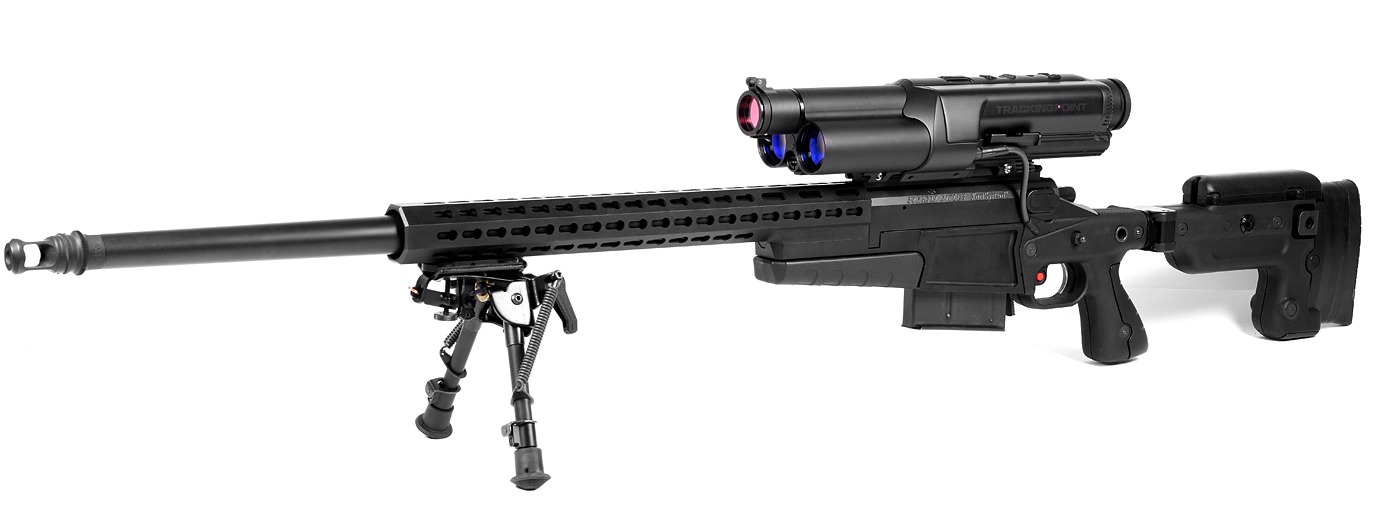
> TrackingPoint makes "Precision Guided Firearms, or "PGFs," which are a
> series of three heavily customized hunting rifles, ranging from a .300
> Winchester Magnum with a 22-inch barrel up to a .338 Lapua Magnum with
> 27-inch barrel, all fitted with advanced computerized scopes that look like
> something directly out of *The Terminator*. Indeed, the comparison to
> that movie is somewhat apt, because looking through the scope of a
> Precision Guided Firearm presents you with a collection of data points and
> numbers, all designed to get a bullet directly from point A to point B.
> ****
>
> The view through the TrackingPoint's computerized optics.
>
> TrackingPoint
> ****
>
> The PGF isn't just a fancy scope on top of a rifle. All together, the PGF
> is made up of a firearm, a modified trigger mechanism with variable
> weighting, the computerized digital tracking scope, and hand-loaded match
> grade rounds (which you need to purchase from TrackingPoint). This is a
> little like selling both the razor and the razor blades, but the rounds
> must be manufactured to tight tolerances since precise guidance of a round
> to a target by the rifle's computer requires that the round perform within
> known boundaries.
> **<http://cdn.arstechnica.net/wp-content/uploads/2013/01/338T-leftside-quarterfront.jpg>
> **
> Enlarge<http://cdn.arstechnica.net/wp-content/uploads/2013/01/338T-leftside-quarterfront.jpg>/
>  The TrackingPoint XS1, chambered in a .338 Lapua Magnum, with a 27-inch
> Krieger barrel and 300 grain match rounds.
>
> TrackingPoint
> ****
>
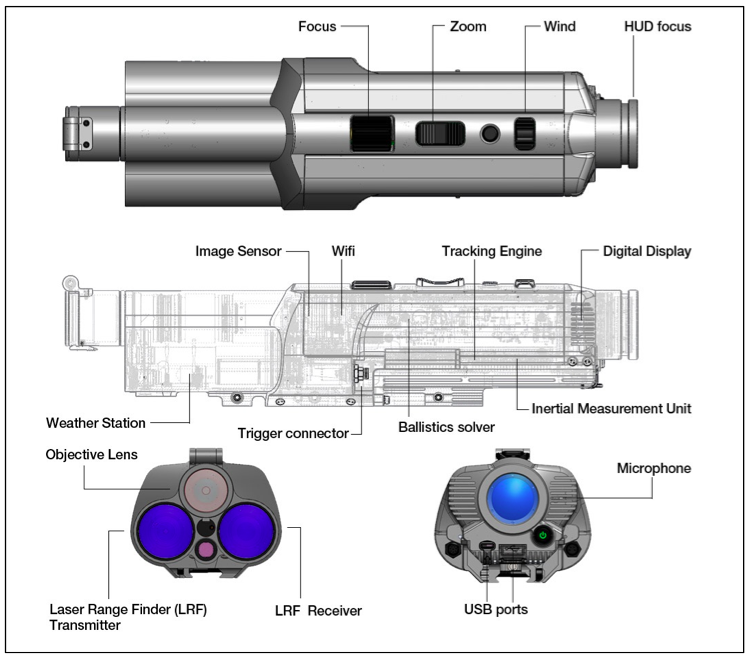
> The image displayed on the scope isn't a direct visual, but rather a video
> image taken through the scope's objective lens. The Linux-powered scope
> produces a display that looks something like the heads-up display you'd see
> sitting in the cockpit of a fighter jet, showing the weapon's compass
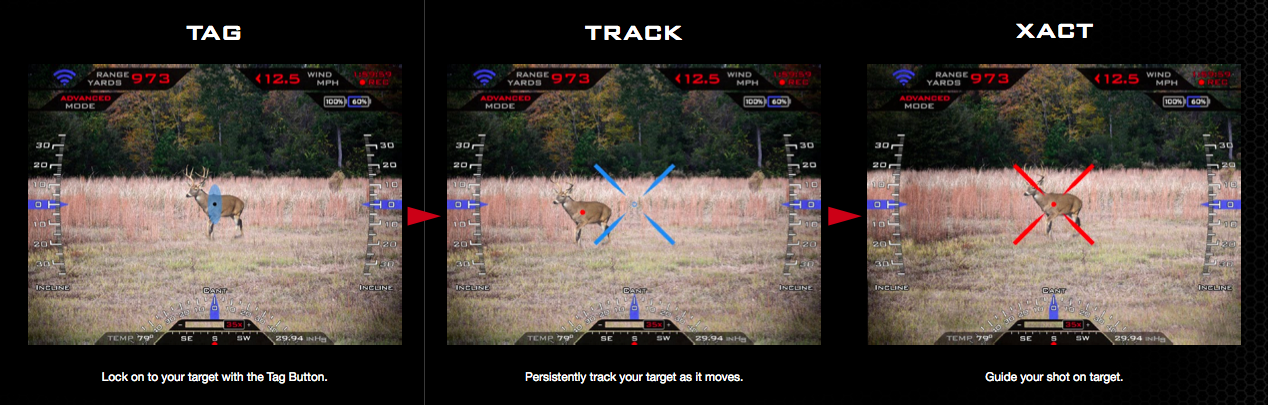
> orientation, cant, and incline. To shoot at something, you first "mark" it
> using a button near the trigger. Marking a target illuminates it with the
> tracking scope's built-in laser, and the target gains a pip in the scope's
> display. When a target is marked, the tracking scope takes into account the
> range of the target, the ambient temperature and humidity, the age of the
> barrel, and a whole boatload of other parameters. It quickly reorients the
> display so the crosshairs in the center accurately show where the round
> will go.
>
> Image recognition routines keep the pip stuck to the marked target in the
> scope's field of view, and at that point, you squeeze the trigger. This
> doesn't fire the weapon; rather, the reticle goes from blue to red, and
> while keeping the trigger held down, you position the reticle over the
> marked target's pip. As soon as they coincide, the rifle fires.
> ** <http://cdn.arstechnica.net/wp-content/uploads/2013/01/tp-track.png>**
> Enlarge<http://cdn.arstechnica.net/wp-content/uploads/2013/01/tp-track.png>/
> Mark a target, squeeze the trigger, and line up the crosshairs to the
> target's pip.
>
> TrackingPoint
> ****
>
> TrackingPoint is quick to emphasize the rifle doesn't fire "by itself,"
> but rather the trigger's pull force is dynamically raised to be very high
> until the reticle and pip coincide, at which point the pull force is reset
> to its default. In this way, the shooter is still in control of the rifle's
> firing, and at any point prior to firing you can release the trigger. In
> the mockups the company had on display for the press to experiment with,
> the action appeared to be the same—I pulled the trigger and lined up the
> dots and the blue plastic toy gun went *click*.
> ** <http://cdn.arstechnica.net/wp-content/uploads/2013/01/tp-scope.png>**
> Enlarge<http://cdn.arstechnica.net/wp-content/uploads/2013/01/tp-scope.png>/
> The computerized scope.
> ****
>
> Having the round fire when the shot is lined up rather than in immediate
> response to a trigger pull eliminates a tremendous amount of uncertainty
> from the shot. Even the most experienced shooters can upset a weapon's aim
> when pulling the trigger, and overcoming the reflex to twitch or
> preemptively move against a weapon's recoil is very, very difficult. By
> allowing the computer to choose the precise moment to take the shot,
> accuracy is greatly enhanced.
>
> Putting lead accurately on targets is only part of what TrackingPoint's
> PGF system does. The computerized tracking scope contains some amount of
> nonvolatile storage, and like an airplane's "black box," it's constantly
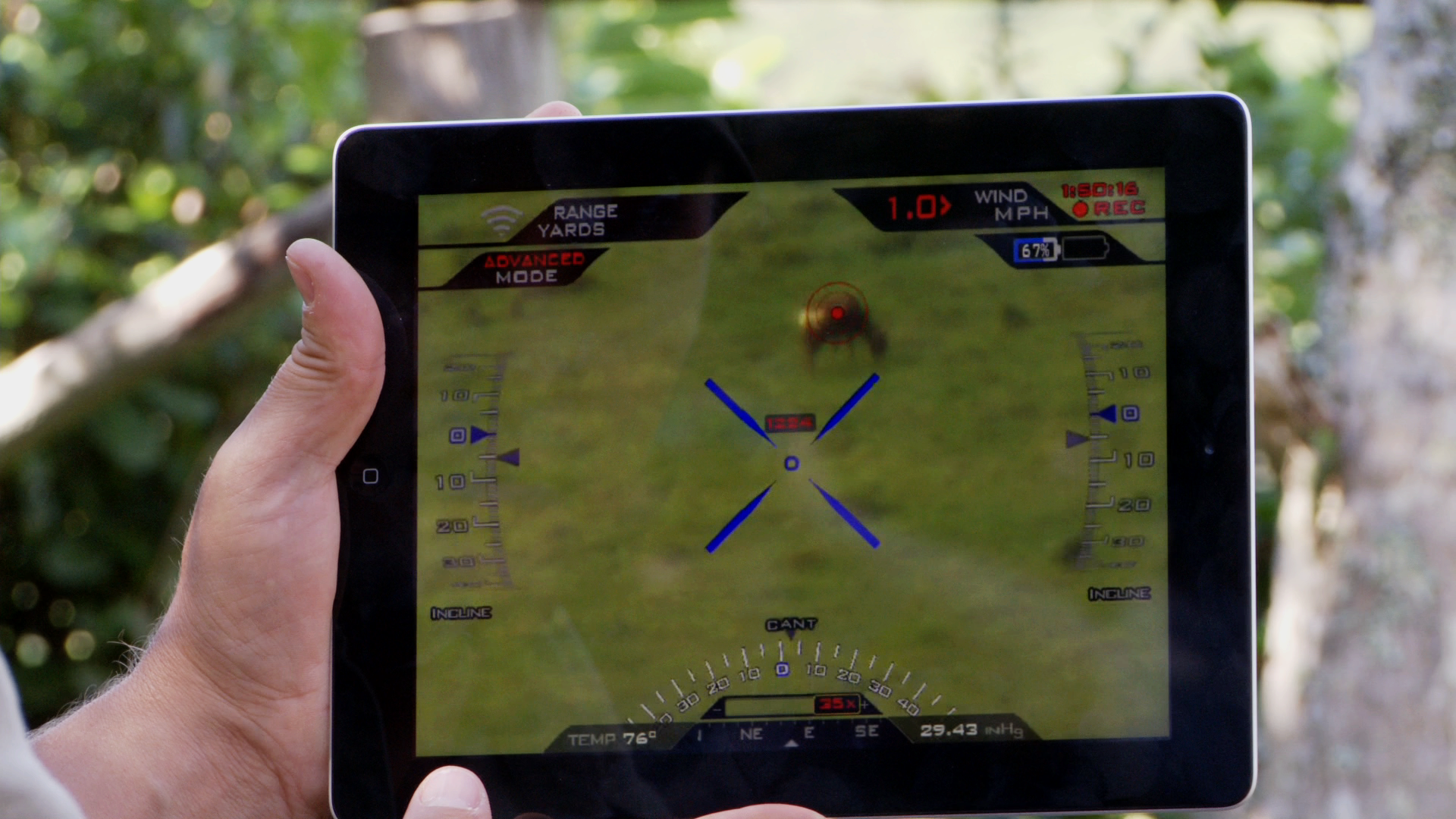
> recording the visual feed from the optics. It also contains a small Wi-Fi
> server, and TrackingPoint offers an iOS app that connects to the scope via
> an ad-hoc Wi-Fi network and streams the scope's display to the app,
> allowing someone with an iPad or iPhone to act as a spotter. TrackingPoint
> notes that for novice hunters, having the ability to duplicate the scope's
> picture onto an external display makes it a lot easier for an experienced
> spotter to give advice on how and when to shoot.
> ** <http://cdn.arstechnica.net/wp-content/uploads/2013/01/39-iPad.png>**
> Enlarge<http://cdn.arstechnica.net/wp-content/uploads/2013/01/39-iPad.png>/
> The iPad app mirrors the scope's display, allowing a spotter to assist
> with shots.
>
> TrackingPoint
> ****
>
> There's a social media aspect, too—the scope's video recordings can be
> uploaded to video sharing sites like YouTube. Rather than bragging to
> buddies about that amazing 1000-yard shot you took at the range or out in
> the field last week, you can simply show them, complete with all the
> heads-up display data about conditions and range.
>
> TrackingPoint had one actual rifle on display in the press room, along
> with several mock-ups equipped with iPhones in place of scopes. The iPhones
> were running a simulated version of the TrackingPoint scope software,
> letting demo users line up their shots on polygonal deer and hogs in a
> landscape much like popular hunting video games. It felt a bit like playing
> with an "easy mode" cheat turned on, though, as it was nearly impossible to
> miss, even at tremendous distances. TrackingPoint is considering selling
> the demo software as a standalone hunting app, though from my brief
> experience with it, there wasn't a whole lot of challenge to felling game
> once you had the mark-and-fire procedure worked out.
>
> This might not make a compelling video game, but it certainly does make
> for an accurate weapon system. TrackingPoint says the "first shot success
> probability"—that is, a shooter's ability to successfully land a round on
> target in a single try—is drastically increased. The TrackingPoint
> representatives present brought this up when I commented on the necessity
> of buying (more expensive) ammunition directly from TrackingPoint rather
> than buying or loading one's own rounds. TrackingPoint contends the ability
> to be drastically more precise with aiming means fewer rounds have to be
> fired for the same effect, ultimately saving money.
> ** <http://cdn.arstechnica.net/wp-content/uploads/2013/01/tp-fssp.jpg>**
> Enlarge<http://cdn.arstechnica.net/wp-content/uploads/2013/01/tp-fssp.jpg>
>
> TrackingPoint
> ****
>
> I asked about potential military applications, since they are obvious, but
> TrackingPoint was quick to downplay involvement with the Department of
> Defense. The "connected shooter" goal of the PGF system in many ways lines
> up with the Army's limping, on-again-off-again Land
> Warrior<https://en.wikipedia.org/wiki/Land_Warrior>program. However, the very
> nature of the government contract and
> procurement process ensures that any technology developed for military use
> must go through an incredibly lengthy and convoluted development process,
> meeting shifting and sometimes outdated design goals along the way.
> TrackingPoint said that its goal is to produce the technology first, and
> then find the market and applications once it actually had something ready
> to go—and this is what it has done.
>
> The company is also keenly aware of the potential negative public
> perception right now around firearms and firearm manufactures, in the wake
> of recent mass-shooting events like the ones in Sandy
> Hook<https://en.wikipedia.org/wiki/Sandy_Hook_Elementary_School_shooting>and
> Aurora <https://en.wikipedia.org/wiki/2012_Aurora_shooting>. The three
> models of PGF are bolt-action hunting rifles, unwieldy for any kind of
> close-quarters work; the tracking system itself requires patience and care
> to line up and fire, and it doesn't appear at all to be the kind of thing a
> mass-shooter would employ. At this time, TrackingPoint indicated that it
> has no intention of producing a PGF system for anything other than
> bolt-action rifles.
>
> Hunting is a controversial pastime, but it's an undeniably popular one,
> and TrackingPoint is dialed in very well at its target market. The price is
> relatively high—the rifles start at about $17,000 (a price which includes
> an iPad with the TrackingPoint app pre-configured and ready to go), but
> that isn't a huge premium over parting together one's own rifle and
> precision optics.
>
>  --
> You received this message because you are subscribed to the Google Groups
> "The Unique Geek" group.
> To post to this group, send email to [email protected].
> To unsubscribe from this group, send email to
> [email protected].
> For more options, visit this group at
> http://groups.google.com/group/theuniquegeek?hl=en.
>

--
You received this message because you are subscribed to the Google Groups "The
Unique Geek" group.
To post to this group, send email to [email protected].
To unsubscribe from this group, send email to
[email protected].
For more options, visit this group at
http://groups.google.com/group/theuniquegeek?hl=en.