At 2:56 PM +0100 1/20/06, Alberto di Bene wrote:
>David Forbes wrote:
>>
>>  The result is a wiggly line on a graph, which is what most radio
>>  astronomy results look like.
>>
>
>So in the movie Contact they were right when saying that very few,
>if any, radio astronomers actually "listen" to what is received...
>
>73  Alberto  I2PHD
True, in the same way that no one looks into the eyepiece on a big
optical telescope. There's always some piece of electronic
mumbo-jumbo getting between the astronomer and the sky.

The Hubble people are lucky in that they get to publish big color
photographs of the sky as it was 10 billion years ago. Most
astronomers just look at numbers or wiggly lines.

I remember my gather participated in a groundbreaking infrared
Fourier spectrum of the sun in 1972, which produced a wiggly line
that wrapped all the way around his laboratory when printed on chart
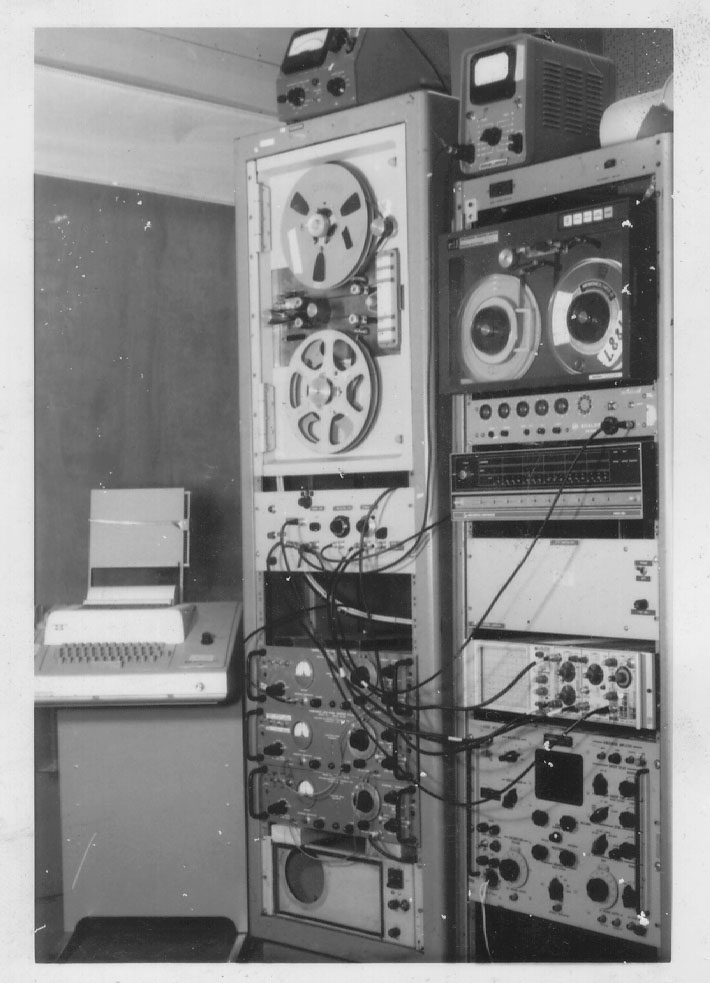
paper. If you're curious as to what the computers of the day looked
like...
http://www.nixiebunny.com/datareduction.jpg

There's a Nova in there, a counter that uses Dekatron tubes, and a
variety of ancient surplus test equipment. Dad's boss was a real
surplus hound. I can't explain the presence of the Tek 5000 series
scope - it had to have been brand-new!


--

--David Forbes, Tucson, AZ
http://www.cathodecorner.com/

_______________________________________________
time-nuts mailing list
[email protected]
https://www.febo.com/cgi-bin/mailman/listinfo/time-nuts