--------
In message <[email protected]>, jimlux writes:
>On 12/5/18 5:39 AM, Poul-Henning Kamp wrote:
>All manner of PLLs don't work as well when the input signal is of
>varying amplitude.  Maybe it works well enough here.

The PLL needs a phase offset input, if you do the circular buffer you
can stick three tracking points into it and use them to feed the PLL.

I did this with my "AducLoran" SDR receiver, and it worked great.

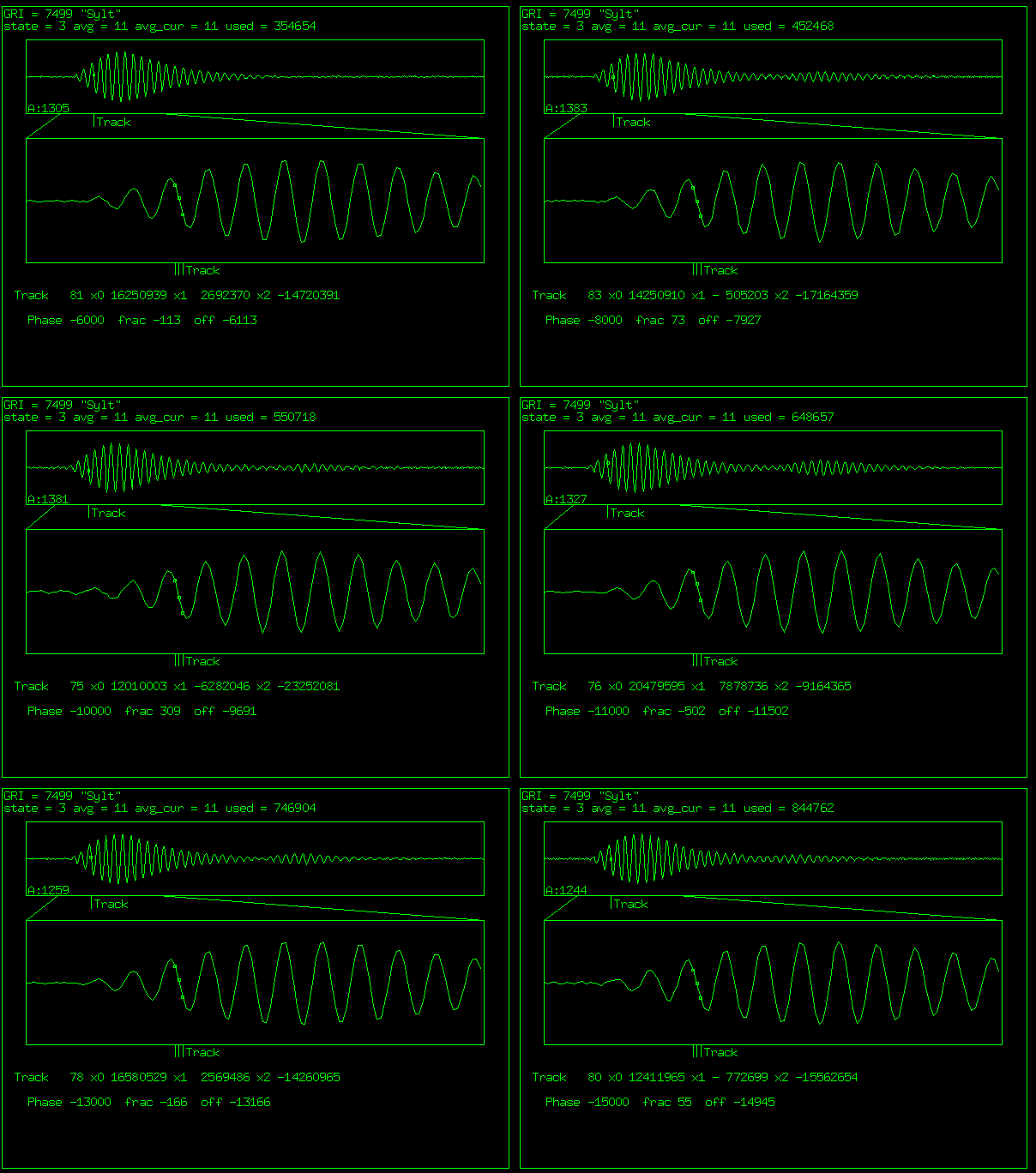
You can see a real life run here:

        http://phk.freebsd.dk/AducLoran/animation2.gif

I saved this one, because it shows beautifully how the Loran-C
signal was designed to be night-wave resistant.

The receiver ran of a free-running OCXO here, which is why you see
the three sample-points 'phase-slip' periodically.  In closed loop
mode, the OCXO was disciplined by the AducLoran and the middle point
haunted the 3rd zero-crossing.

The AducLoran ran om a Analog Devices "Aduc" ARM chip and used the
internal ADC for direct sampling of the antenna signal (from the
aforementioned $20 loop antenna)

Full details here:

        http://phk.freebsd.dk/AducLoran/


>The real intent was to show that you can do the processing with a very
>simple implementation - no need to fire up SDR# or gnuradio.

100% agree, those are not useful for any timenut purpose involving phase.

--
Poul-Henning Kamp       | UNIX since Zilog Zeus 3.20
[email protected]         | TCP/IP since RFC 956
FreeBSD committer       | BSD since 4.3-tahoe
Never attribute to malice what can adequately be explained by incompetence.

_______________________________________________
time-nuts mailing list -- [email protected]
To unsubscribe, go to
http://lists.febo.com/mailman/listinfo/time-nuts_lists.febo.com
and follow the instructions there.