--------
Bill Byrom writes:

> Figure 6 shows differences between daytime and nighttime propagation of
> pulsed signals. The received signal is a combination of the ground wave
> signal and one or more skywave signals (which are delayed with respect to the
> ground wave signal).
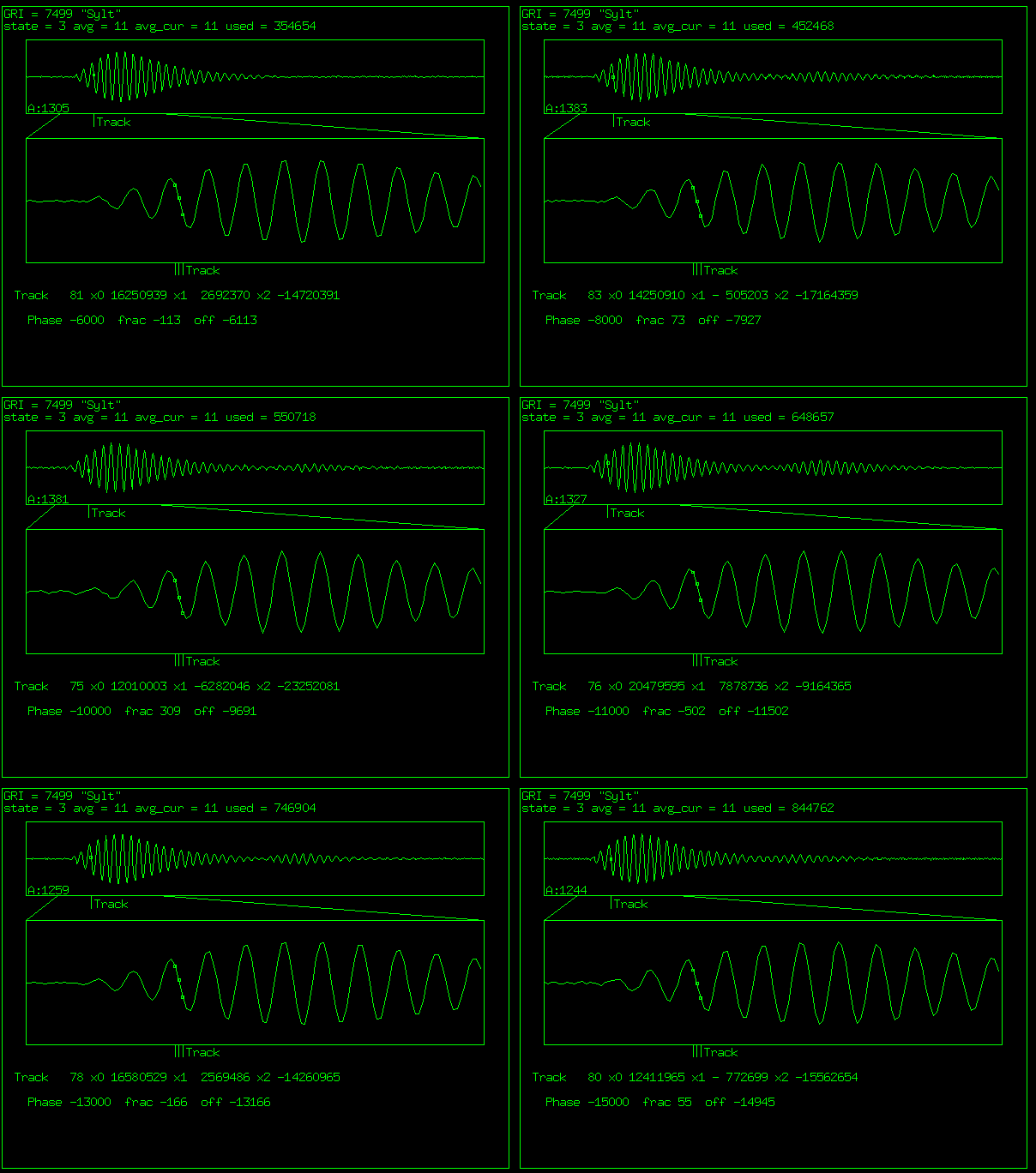
This is a time-lapse "gif" of night's worth of Loran-C.

        http://phk.freebsd.dk/AducLoran/animation2.gif

If you have a minutes worth of patience, you will see the skywave start dancing
around after the groundwave.

In this case there were only 200 km between me and the transmitter, so the
skywave takes a big detour.

The further out you are from the transmitter, the smaller the difference
becomes.

Loran-C's specification calls for timing the 3rd positive zero-crossing, and
the published coverage areas are truncated at the distances where the skywave
might interfere with the timing.

When you monitor Loran-C outside the "official" coverage area, the skywave can
easily swamp the 3rd positive zero crossing.

(The gif above tracks the 3rd negative crossing, because that transmitter is on
the "backside" of my loop-antenna.)

--
Poul-Henning Kamp       | UNIX since Zilog Zeus 3.20
[email protected]         | TCP/IP since RFC 956
FreeBSD committer       | BSD since 4.3-tahoe
Never attribute to malice what can adequately be explained by incompetence.

_______________________________________________
time-nuts mailing list -- [email protected]
To unsubscribe, go to
http://lists.febo.com/mailman/listinfo/time-nuts_lists.febo.com
and follow the instructions there.