Reminder, this talk is happening today.

http://www.stanford.edu/class/ee380/winter-schedule-20122013.html
http://www.stanford.edu/class/ee380/Abstracts/130220.html
I think this is the link to watch the video stream:
http://stanford-online.stanford.edu/live/ee380.asx
("Open Network Stream" in VLC.)

These are the speaking materials I'll be using.
http://bamsoftware.com/talks/ee380-flashproxy/index.html
I tried to put everyone who has contributed code on the credits page. If
I left you out, let me know and I'll fix it; it is only because of
scatterbrainedness and not for any lack of love.

David Fifield

----- Forwarded message -----

Date: Wed, 20 Feb 2013 09:59:12 -0800 (PST)
Subject: [EE CS Colloq] JavaScript anticensorship proxies * 4:15PM, Wed
February 20, 2013 in Skilling Auditorium

                    Stanford EE Computer Systems Colloquium

                     4:15PM, Wednesday, February 20, 2013
                     Skilling Auditorium, Stanford Campus
                         [1]http://ee380.stanford.edu

                       JavaScript anticensorship proxies

                                 David Fifield
                     Stanford University, The Tor Project

About the talk:

Censorship is an everyday reality for many of the world's Internet users. Users
turn to circumvention systems like Tor; censors respond by blacklisting the
addresses of those systems. This talk will cover the use of "flash proxies" to
evade such blacklisting. [2]Flash proxies—which despite the name, do not use
Adobe Flash—are miniature proxies implemented in JavaScript running in web
browsers. Browsers can become temporary circumvention proxies just by viewing a
web page, and stop being a proxy just by closing a tab. Browsers provide a
large, diverse pool of IP addresses, which change too quickly to be effectively
blocked by blacklisting. The system, originally a research idea, is now
deployed on the Internet. The talk will discuss the overall design of the flash
proxy system, and how it fits into a larger circumvention scheme. It will
include challenges in implementation and deployment, and highlight some future
directions for development. Flash proxies were the subject of a [3]research
paper, "Evading Censorship with Browser-Based Proxies" by David Fifield, Nate
Hardison, Jonathan Ellithorpe, Emily Stark, Roger Dingledine, Phil Porras, and
Dan Boneh; and the system now has more contributors from the Tor Project.

Slides:

There is no downloadable version of the slides for this talk available at this
time.

About the speaker:

David Fifield is a Master's student in computer science at Stanford, an
aficionado of freedom and free software. Public software projects he is
involved with include the Tor anonymity network and the Nmap security scanner.

Contact information:

David Fifield
[email protected]

ABOUT THE COLLOQUIUM:

See the Colloquium website, [4] http://ee380.stanford.edu, for scheduled
speakers, FAQ, and additional information. Stanford and SCPD students can
enroll in EE380 for one unit of credit. Anyone is welcome to attend; talks are
webcast live and archived for on-demand viewing over the web.

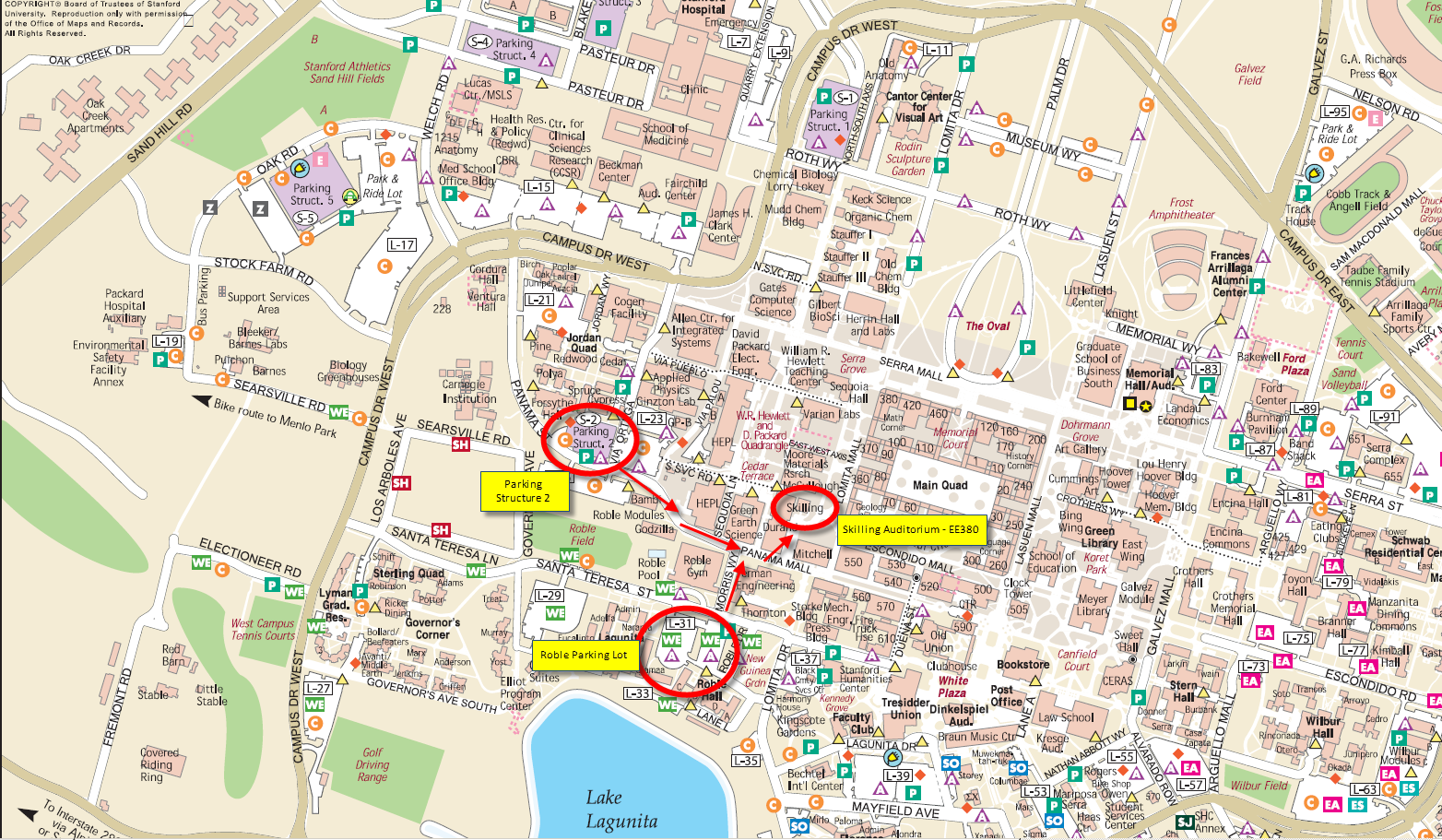
WHERE IN THE WORLD IS SKILLING AUDITORIUM:

The Colloquium meets in Skilling Auditorium on the Stanford Campus. For a map
showing the location of Skilling Auditorium and recommended parking, [5]CLICK
HERE. Parking restrictions is free and unrestricted in most lots after 4PM.

MAILING LIST INFORMATION:

This announcement is sent to multiple mailing lists. If you are signed up on
our private EE380 list you can remove yourself using the widget at the upper
left hand corner of the Colloquium web page. Other lists have other management
protocols.


References:

[1] http://ee380.stanford.edu/
[2] http://crypto.stanford.edu/flashproxy/
[3] https://crypto.stanford.edu/flashproxy/flashproxy.pdf
[4] http://ee380.stanford.edu/
[5] http://ee380.stanford.edu/Skilling-Map.png

----- End forwarded message -----
_______________________________________________
tor-talk mailing list
[email protected]
https://lists.torproject.org/cgi-bin/mailman/listinfo/tor-talk