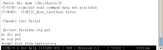
Output is now more similar to the Linux userspace tool "tpm2_pcrread".
The old semantics that require specifying one PCR number are
retained. In addition with no arguments the command now prints
contents of all PCR registers.

Signed-off-by: Ludwig Nussel <[email protected]>

---

(no changes since v3)

Changes in v3:
- fix test failure

Changes in v2:
- fix return value handling

 cmd/tpm-v2.c               | 69 +++++++++++++++++++++++++++-----------
 test/py/tests/test_tpm2.py |  9 ++---
 2 files changed, 53 insertions(+), 25 deletions(-)

diff --git a/cmd/tpm-v2.c b/cmd/tpm-v2.c
index 847b2691581..e9f4bc24e33 100644
--- a/cmd/tpm-v2.c
+++ b/cmd/tpm-v2.c
@@ -8,6 +8,7 @@
 #include <dm.h>
 #include <log.h>
 #include <mapmem.h>
+#include <malloc.h>
 #include <tpm-common.h>
 #include <tpm-v2.h>
 #include "tpm-user-utils.h"
@@ -150,10 +151,11 @@ static int do_tpm_pcr_read(struct cmd_tbl *cmdtp, int
flag, int argc,
        u32 index, rc;
        int algo_len;
        unsigned int updates;
-       void *data;
+       u8 *data;
        int ret;
+       u32 pcr_start, pcr_end;

-       if (argc < 3 || argc > 4)
+       if (argc > 4)
                return CMD_RET_USAGE;
        if (argc == 4) {
                algo = tpm2_name_to_algorithm(argv[3]);
@@ -168,25 +170,51 @@ static int do_tpm_pcr_read(struct cmd_tbl *cmdtp, int
flag, int argc,

        priv = dev_get_uclass_priv(dev);
        if (!priv)
-               return -EINVAL;
-
-       index = simple_strtoul(argv[1], NULL, 0);
-       if (index >= priv->pcr_count)
-               return -EINVAL;
+               return CMD_RET_FAILURE;

-       data = map_sysmem(simple_strtoul(argv[2], NULL, 0), 0);
+       if (argc >= 2) {
+               pcr_start = simple_strtoul(argv[1], NULL, 0);
+               if (pcr_start >= priv->pcr_count) {
+                       log_err("Index %u out of range (max %u)\n", pcr_start,
priv->pcr_count - 1);
+                       return CMD_RET_FAILURE;
+               }
+               pcr_end = pcr_start + 1;
+       } else {
+               pcr_start = 0;
+               pcr_end = priv->pcr_count;
+       }

-       rc = tpm2_pcr_read(dev, index, priv->pcr_select_min, algo,
-                          data, algo_len, &updates);
-       if (!rc) {
-               printf("PCR #%u %s %d byte content (%u known updates):\n",
index,
-                      tpm2_algorithm_name(algo), algo_len, updates);
-               print_byte_string(data, algo_len);
+       if (argc >= 3) {
+               data = map_sysmem(simple_strtoul(argv[2], NULL, 0), 0);
+       } else {
+               data = malloc(algo_len);
+               if (!data) {
+                       log_err("Failed to allocate %u bytes for PCR data\n",
algo_len);
+                       return CMD_RET_FAILURE;
+               }
        }

-       unmap_sysmem(data);
+       printf("%8s:\n", tpm2_algorithm_name(algo));
+       for (index = pcr_start; index < pcr_end; ++index) {
+               printf("%6u: ", index);
+               rc = tpm2_pcr_read(dev, index, priv->pcr_select_min, algo,
+                                  data, algo_len, &updates);
+               if (rc == 0) {
+                       printf("0x");
+                       for (int i = 0; i < algo_len; ++i)
+                               printf("%02X", data[i]);
+                       printf(" (%u known updates)\n", updates);
+               } else {
+                       log_err("PCR #%u read failed: %d\n", index, rc);
+                       ret = report_return_code(rc);
+               }
+       }
+       if (argc >= 3)
+               unmap_sysmem(data);
+       else
+               free(data);

-       return report_return_code(rc);
+       return ret;
 }

 static int do_tpm_get_capability(struct cmd_tbl *cmdtp, int flag, int argc,
@@ -548,10 +576,13 @@ U_BOOT_CMD(tpm2, CONFIG_SYS_MAXARGS, 1, do_tpm, "Issue a
TPMv2.x command",
 "    Extend PCR #<pcr> with digest at <digest_addr> with digest_algo.\n"
 "    <pcr>: index of the PCR\n"
 "    <digest_addr>: address of digest of digest_algo type (defaults to
SHA256)\n"
-"pcr_read <pcr> <digest_addr> [<digest_algo>]\n"
+"pcr_read [<pcr> [<digest_addr> [<digest_algo>]]]\n"
 "    Read PCR #<pcr> to memory address <digest_addr> with <digest_algo>.\n"
-"    <pcr>: index of the PCR\n"
-"    <digest_addr>: address of digest of digest_algo type (defaults to
SHA256)\n"
+"    With no arguments, print all PCR registers.\n"
+"    If only <pcr> is specified, a buffer is allocated internally.\n"
+"    <pcr>: index of the PCR (optional, defaults to all PCRs)\n"
+"    <digest_addr>: address of digest of digest_algo type (optional)\n"
+"    <digest_algo>: digest algorithm type (defaults to SHA256)\n"
 "get_capability <capability> <property> <addr> <count>\n"
 "    Read and display <count> entries indexed by <capability>/<property>.\n"
 "    Values are 4 bytes long and are written at <addr>.\n"
diff --git a/test/py/tests/test_tpm2.py b/test/py/tests/test_tpm2.py
index 9be85999d46..1baf86dd065 100644
--- a/test/py/tests/test_tpm2.py
+++ b/test/py/tests/test_tpm2.py
@@ -198,8 +198,7 @@ def test_tpm2_pcr_read(ubman):
     updates = int(re.findall(r'\d+', str)[0])

     # Check the output value
-    assert 'PCR #10 sha256 32 byte content' in read_pcr
-    assert '00 00 00 00 00 00 00 00 00 00 00 00 00 00 00 00' in read_pcr
+    assert 'sha256:\r\r\n    10:
0x0000000000000000000000000000000000000000000000000000000000000000' in read_pcr

 @pytest.mark.buildconfigspec('cmd_tpm_v2')
 @pytest.mark.notbuildconfigspec('target_chromebook_coral')
@@ -230,8 +229,7 @@ def test_tpm2_pcr_extend(ubman):
     read_pcr = ubman.run_command('tpm2 pcr_read 10 0x%x' % (ram + 0x20))
     output = ubman.run_command('echo $?')
     assert output.endswith('0')
-    assert 'f5 a5 fd 42 d1 6a 20 30 27 98 ef 6e d3 09 97 9b' in read_pcr
-    assert '43 00 3d 23 20 d9 f0 e8 ea 98 31 a9 27 59 fb 4b' in read_pcr
+    assert 'sha256:\r\r\n    10:
0xF5A5FD42D16A20302798EF6ED309979B43003D2320D9F0E8EA9831A92759FB4B' in read_pcr

     str = re.findall(r'\d+ known updates', read_pcr)[0]
     new_updates = int(re.findall(r'\d+', str)[0])
@@ -244,8 +242,7 @@ def test_tpm2_pcr_extend(ubman):
     read_pcr = ubman.run_command('tpm2 pcr_read 10 0x%x' % (ram + 0x20))
     output = ubman.run_command('echo $?')
     assert output.endswith('0')
-    assert '7a 05 01 f5 95 7b df 9c b3 a8 ff 49 66 f0 22 65' in read_pcr
-    assert 'f9 68 65 8b 7a 9c 62 64 2c ba 11 65 e8 66 42 f5' in read_pcr
+    assert '10:
0x7A0501F5957BDF9CB3A8FF4966F02265F968658B7A9C62642CBA1165E86642F5' in read_pcr

     str = re.findall(r'\d+ known updates', read_pcr)[0]
     new_updates = int(re.findall(r'\d+', str)[0])
--
2.43.0