What is really scuttling South Sudan peace?

February 12, 2014  <http://www.herald.co.zw/author/wmurape/> Wenceslaus
Murape  <http://www.herald.co.zw/category/articles/opinion-a-analysis/>
Opinion & Analysis
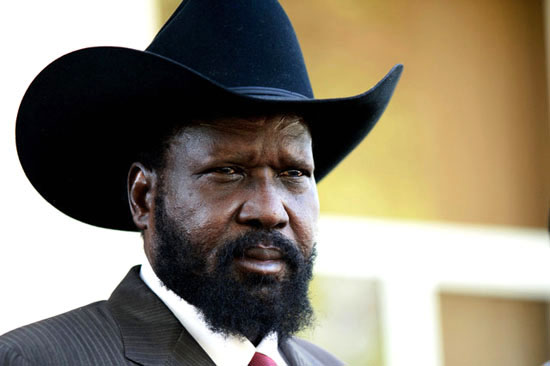
<http://www.herald.co.zw/wp-content/uploads/2013/09/Salva-Kiir.jpg> Description: President Salva Kiir President Salva Kiir Sibongile Gida On December 16 last year, fighting erupted within the presidential guard of South Sudan. President Salva Kiir quickly classified this as an attempted coup by former vice president Riek Machar, who had been dismissed just a few months earlier. Machar denied responsibility and the conflict rapidly spread from the capital of Juba to other states, including Jonglei. The crisis, which started as a political issue, has since taken on ethnic undertones between the Dinka and Nuer communities. This has highlighted a number of long-standing grievances in the country. Both sides have undertaken mass atrocities and the United Nations (UN) has reported killings, arbitrary detention, forced disappearances, sexual violence and widespread destruction of property during the conflict. Thousands have been killed, with an estimated 70 000 people seeking protection at UN camps and 30 000 in the two UN compounds in Juba alone. The response of the international community has been largely one of surprise. Closer examination, however, reveals fundamental flaws in many of their peace-building strategies. In a 1992 report named An Agenda for Peace, the UN defines peace-building as actions to identify and support structures to solidify peace and avoid a relapse to conflict. This view, which remains the core of peace-building interventions even today, assumes that if the right kind of state can be created (most times democratic), this will contribute towards stability. Yet this fundamentally ignores problems associated with statehood in most parts of Africa, such as the politics of power and ethnicity that are currently manifesting in South Sudan. These problems need to be overcome if lasting peace is to be achieved. The fact that peace-building and state-building are closely connected and mutually reinforcing cannot be disputed; indeed, peace is more likely and sustainable if states function well and serve their citizens. Such a state is more likely to provide public goods that citizens rightly expect of it when it operates under peaceful conditions. However, this nexus is not as easy to reach in fragile states. As it stands, the focus of peace-building has been to strengthen states and their institutions, which assumes that peace can be designed. A recent ISS paper notes that effective peace-building must tackle the tensions between building states and government on the one hand, while working at grass-roots level on the other. In South Sudan, community-based programmes such as dialogues did not sufficiently feed into national level or include those elites with influence. These programmes also failed to address the national systems that regulate and enable violence, such as the presidents excessive power, the lack of party structures within the Sudan Peoples Liberation Movement (SPLM), ethnic-based recruitment, corruption and the legislature being at the mercy of the executive. There is another dimension to peace-building that deserves greater focus in the case of South Sudan: that of reconciliation and dialogue. The international community had high expectations for peace after the signing of the 2005 Sudanese Comprehensive Peace Agreement (CPA), which led to the eventual independence of the South in 2011. The international community saw the conflict between North and South as the main threat to peace and overlooked the deeply entrenched divisions within South Sudan that would continue to shape relationships post-independence. Although a number of peace conferences took place in subsequent years, the role of ethnicity and power relations needed to be recognised as a major cause of vulnerability. Without the active involvement of key political actors in the country, these peace conferences seem not to have been taken seriously by influential powers, as they were not put in practice in terms of the government procedure. The majority of the aid sector in South Sudan has also assumed that greater development (by way of improved services) would lead to stability and lasting peace. A report by the Organisation for Economic Co-operation and Development (OECD) challenged these assumptions and found no evidence of a causal link between the provision of basic services and a reduction in conflict. Transition from war to peace is thus not simply a technical exercise; rather it is a highly political process that requires an appreciation of underlying issues that fuel the conflict. It is not just the provision of basic services that matters, but how they are distributed, and to whom. The Intergovernmental Authority on Development (IGAD) sponsored a ceasefire agreement between the warring parties in South Sudan that was signed in Addis Ababa on 30 January 2014. Both sides agreed to halt hostilities and South Sudans government agreed to release 11 high-profile political detainees. The UN, under Resolution 2132 (2013), is in the process of deploying an extra 5 500 peacekeepers to South Sudan, bringing the eventual total number to 12 500. Although interventions are a good step in re-establishing peace, previous approaches require serious revision in order to produce long-term solutions. Post-conflict states need to take ownership of their own peace-building processes in a holistic manner that addresses the concerns of the whole population, with the international communitys support. The international community also needs to be less prescriptive in its solutions and more flexible in its approaches. In post-conflict states it is important to invest in pillars of lasting peace such as reconciliation and dialogue, rule of law, good governance, social cohesion, as well as economic and environmental sustainability. The UN Mission in South Sudan (UNMISS) mandate addresses some of these elements of peace-building, but these are largely state-centric. Given the rise in conflict, UNMISS must also consider if it has the capacity to address such issues. Short-term interventions lack an understanding of causality. In South Sudan, the majority of interventions have occurred without a good understanding of context, applying a one size fits all approach. Future peace-building strategies should not marginalise any of the parties involved, such as armed groups, the diplomatic community, civil society actors and traditional and community leaders. A strategy for citizen engagement should be devised in order to address the many deep-rooted grievances. Most importantly, peace-building processes need to have political buy-in from the influential elite who have contributed to existing tensions. ISS. Thé Mulindwas Communication Group "With Yoweri Museveni and Dr. Kiiza Besigye Uganda is in anarchy" Kuungana Mulindwa Mawasiliano Kikundi "Pamoja na Yoweri Museveni na Dk. Kiiza Besigye Uganda ni katika machafuko"
<<image001.jpg>>
_______________________________________________
Ugandanet mailing list
[email protected]
http://kym.net/mailman/listinfo/ugandanet

UGANDANET is generously hosted by INFOCOM http://www.infocom.co.ug/

All Archives can be found at http://www.mail-archive.com/[email protected]/

The above comments and data are owned by whoever posted them (including
attachments if any). The List's Host is not responsible for them in any way.
---------------------------------------